Artwork
Pendón de Fernando III el Santo
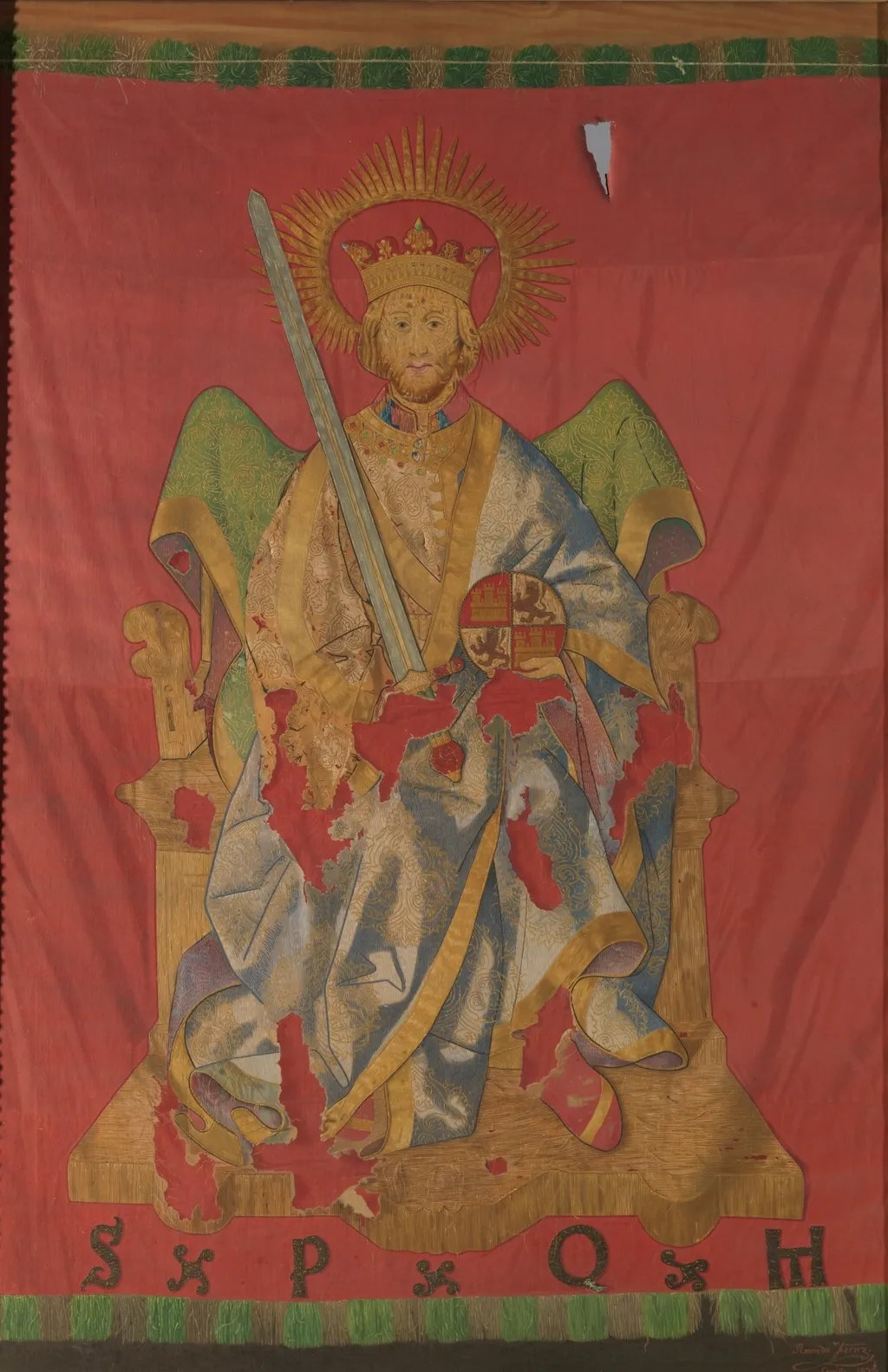
Pendón de Fernando III el Santo is an oil painting by the Post-Impressionist artist Rosendo Fernández. It dates from 1890 and is held in the collection of the Museo del Prado.
About this work
Technique & Style
The work is executed in oil paint on canvas, a traditional support used by the artist to achieve rich color and fine detail. The surface shows a smooth handling of brushwork that emphasizes the crisp rendering of the sword, coat of arms and crown depicted in the composition, reflecting a formal approach characteristic of 19th‑century academic painting.
History & Provenance
The painting entered the museum’s collection shortly after its completion and has been part of the permanent exhibition since its acquisition.
The work titled Pendón de Fernando III el Santo was painted by Rosendo Fernández in 1878 using oil on canvas. It is housed in the Museo del Prado where it remains on display.
The painting entered the museum’s collection shortly after its completion and has been part of the permanent exhibition since its acquisition.
The artwork measures 184 cm in height and 120 cm in width, reflecting its large-scale format.
The work is held by the Museo del Prado, where it has been accessioned under its standard collection designation. It was created by Rosendo Fernández in 1878 using oil paint on canvas and has been exhibited periodically within the museum's Spanish nineteenth‑century painting galleries. The painting measures 184 cm in height and 120 cm in width.
Overview
Created in 1890 by Spanish painter Rosendo Fernández, this oil work titled Pendón de Fernando III el Santo is part of the Prado Museum’s collection. The composition centers on a seated, crowned figure bearing a sword, set against a deep red backdrop. Rich decorative elements, gold throne, blue robe with gold trim, green cape, and an emblazoned coat of arms, contribute to a solemn, regal atmosphere.
Subject & Meaning
The painting portrays the saint‑king Ferdinand III, recognizable by his royal insignia: a crown, sword, and heraldic shield displayed on his chest. The inclusion of these symbols underscores his dual identity as a monarch and a holy figure, emphasizing the intertwining of temporal authority and spiritual virtue that defined his legacy in medieval Spain.
Own this work as a print
Artist & collection

- Sf. Nicolae
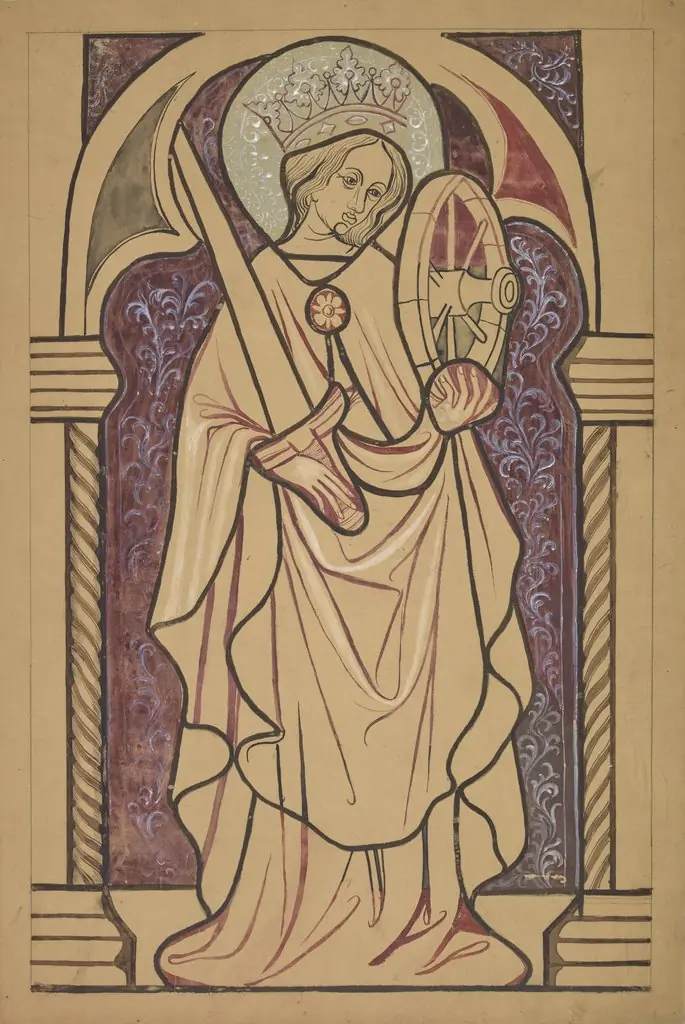 Saint Catherine of Alexandria. Artistic reconstruction of a stained-glass panel from the Dominican church in Kraków
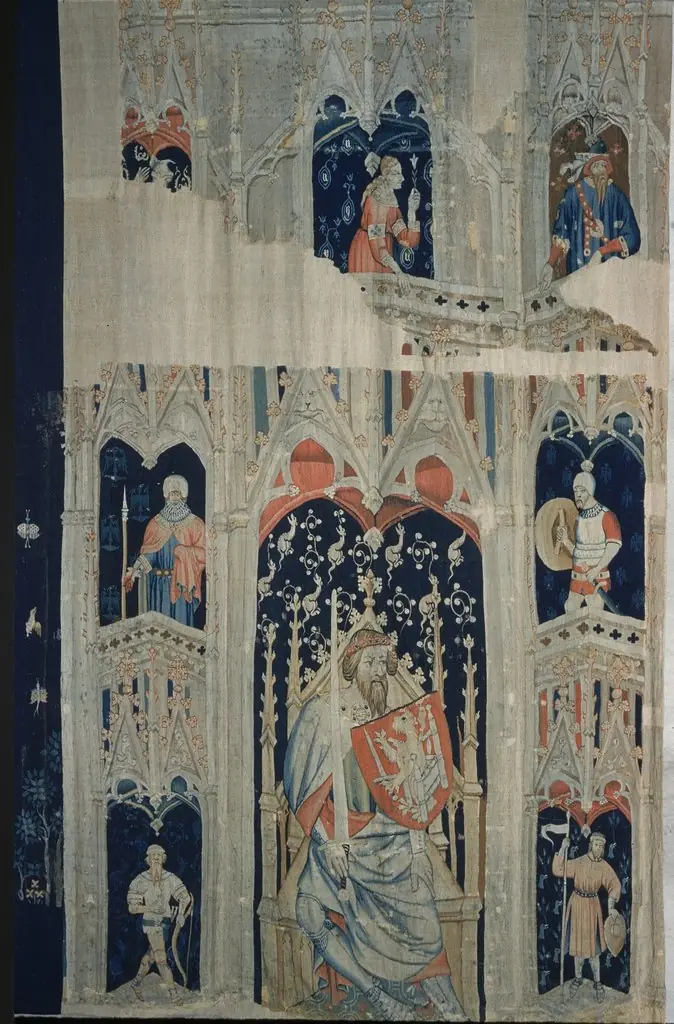 Alexander the Great or Hector of Troy (from The Nine Heroes Tapestries)
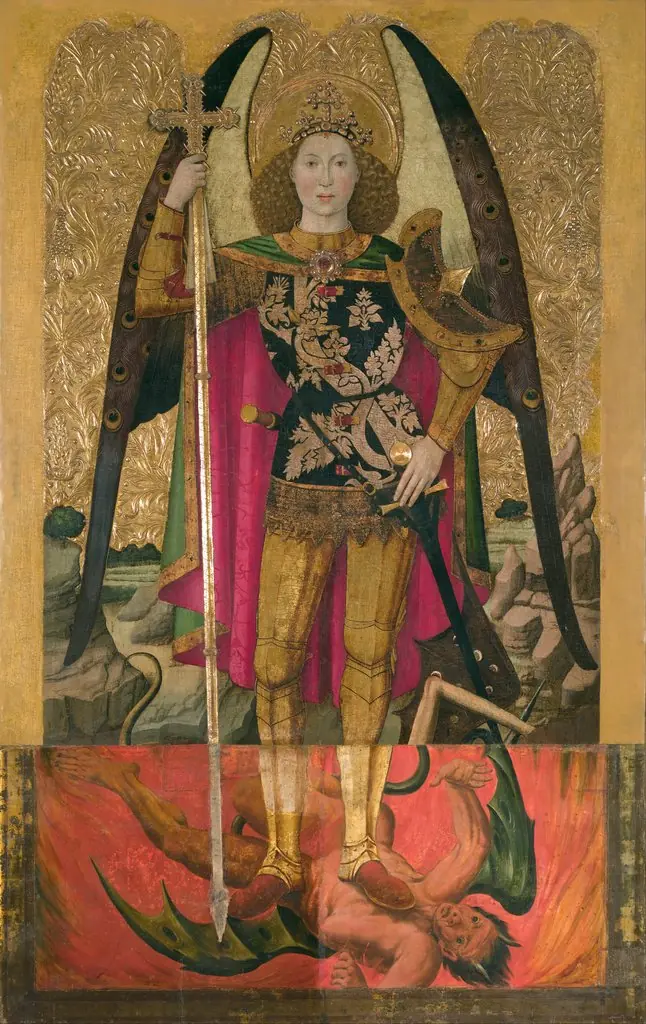 Saint Michael
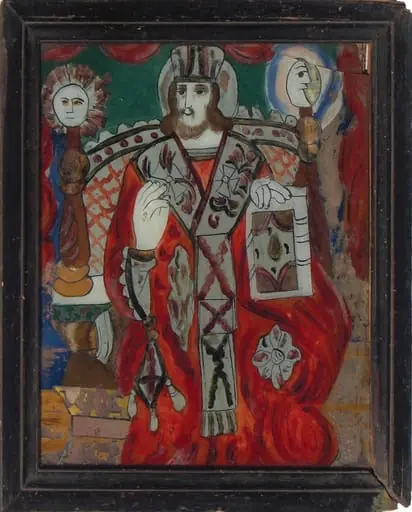 Iisus Hristos Mare Arhiereu și Învățător
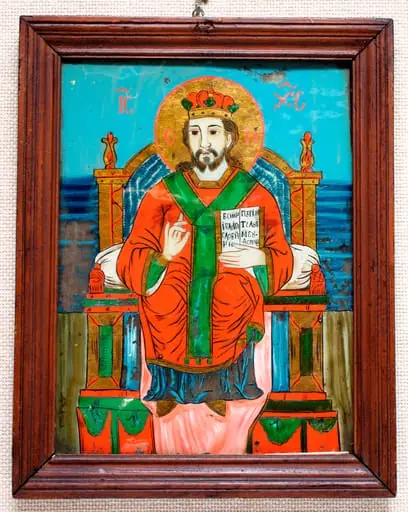 Icoa
Icoa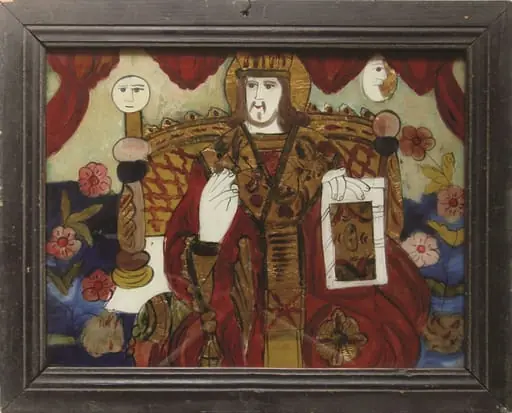 Iisus Hristos arhiereu și învățător, tronând
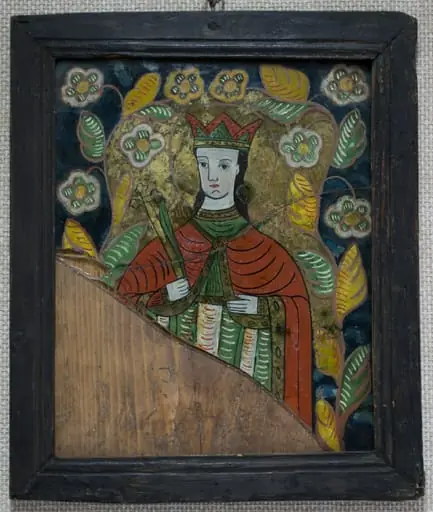 Icoana este pictată "în oglindă", pe un suport de glajă de formă dreptunghiulară în ax vertical.Cuvioasa Parascheva, redată din ușor semiprofil, ține în mâna dreaptă o ramură verde și o cruce. Fața pătrățoasă, expresivă, ochii mari, negri, gura mică, strânsă, părul , lung, negru, lăsat pe spate..Pe cap coroană împărătească. Este înveșmîntată cu o mantie roșie cu galon aurit cu decor geometric. Câmpul este realizat din foiță aurie în interiorul unei arcade formate din două tulpini sinuase de floare. În afara arcadei albastrul oliv creează un contrast surprinzător.Accentul cade pe chipul sfintei, pus în valoare de contrastul alb/negru/auriu. Desenul este simplu, linia fină, precisă, paleta cromatică bogată , culorile vii. Contrastele cromatice creează perspectivă Rama subțire profilată, din lemn de brad, pictată cu cafeniu, Dos din scândură de brad. Aproximativ un sfert din icoană lipsește. Țăranii considerau că sfânta Parascheva păzește de grindină și de dureri de cap.
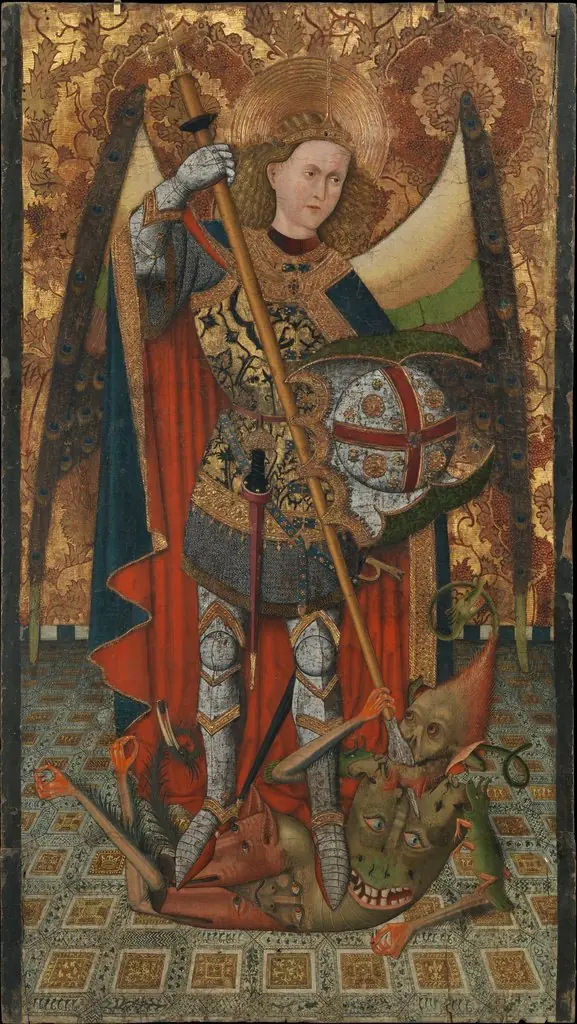 Saint Michael
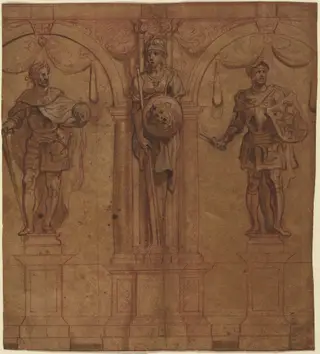 Rudolf I and Albert I with Pallas
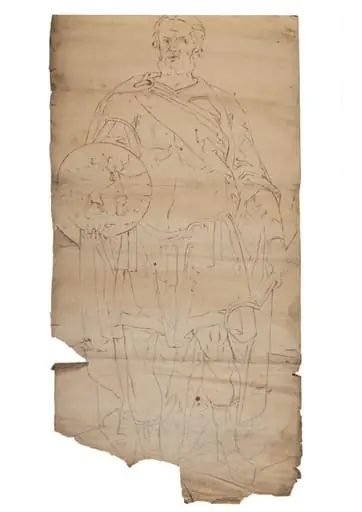 Martirul Eustatiu
 Mars (from the Tarocchi, series A: Firmaments of the Universe, #45)
 The Pérussis Altarpiece
 Madonna and Child with the Donor, Pietro de' Lardi, Presented by Saint Nicholas
 The Virgin Mary and Five Standing Saints above Predella Panels
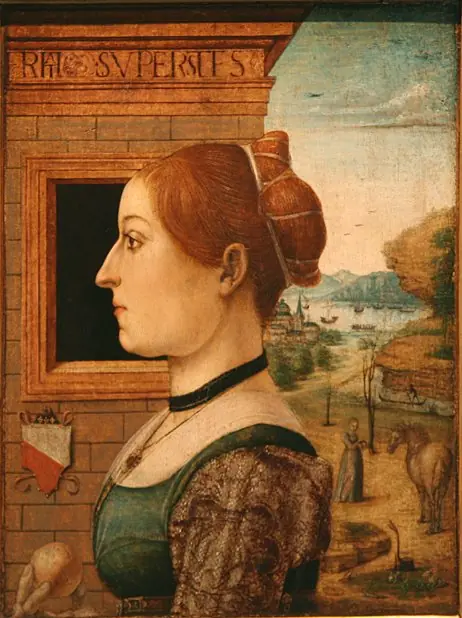 Portrait of a Woman, possibly Ginevra d'Antonio Lupari Gozzadini
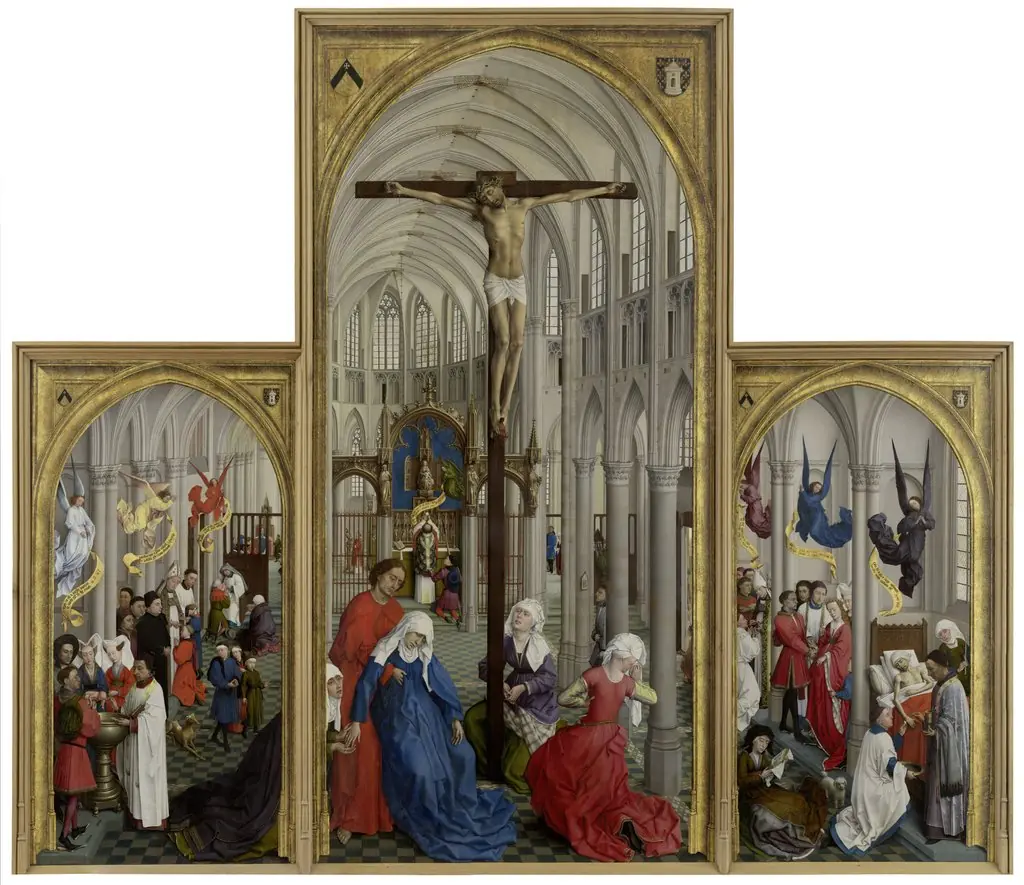 The Seven Sacraments
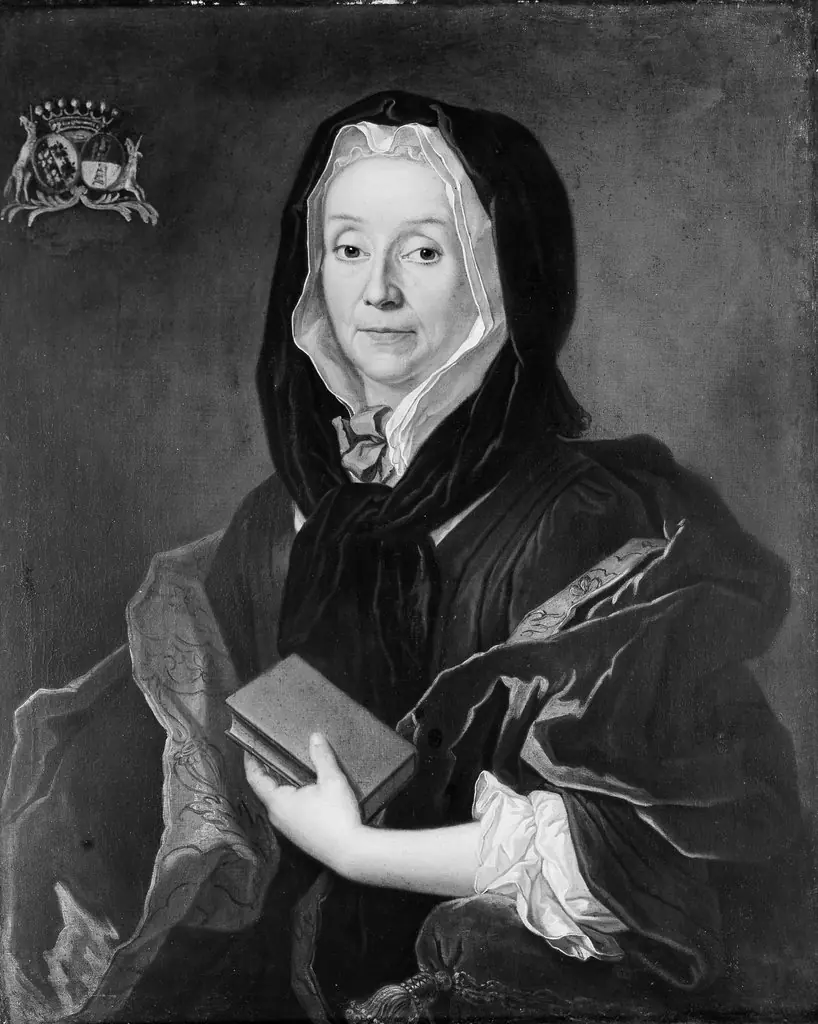 Portrait of a Woman Holding a Book
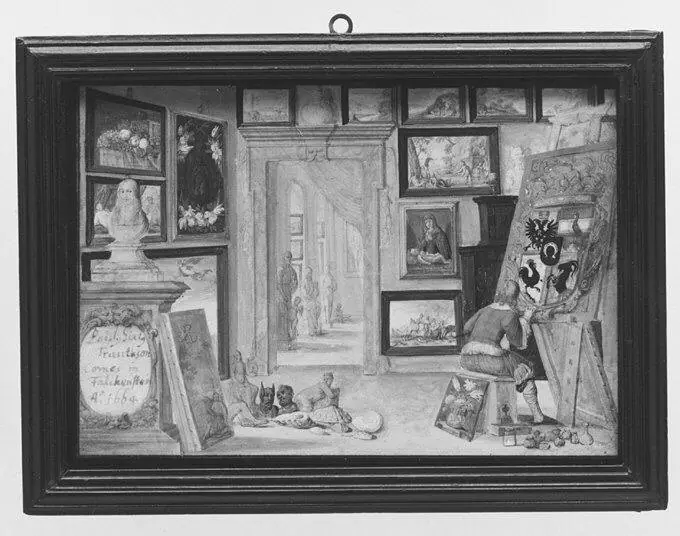 An Artist Painting a Heraldic Shield in a Cabinet of Curiosities
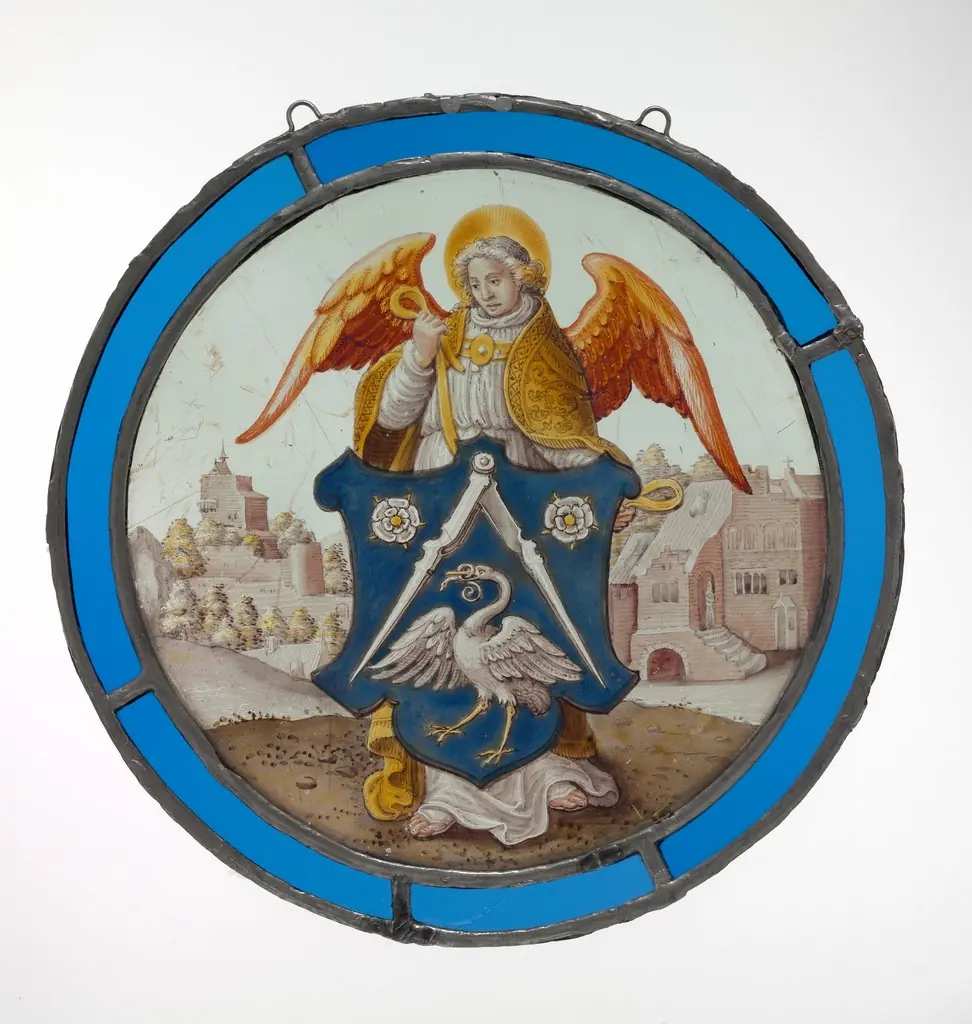 Angel Supporting a Heraldic Shield