Artwork
Alexander the Great or Hector of Troy (from The Nine Heroes Tapestries)
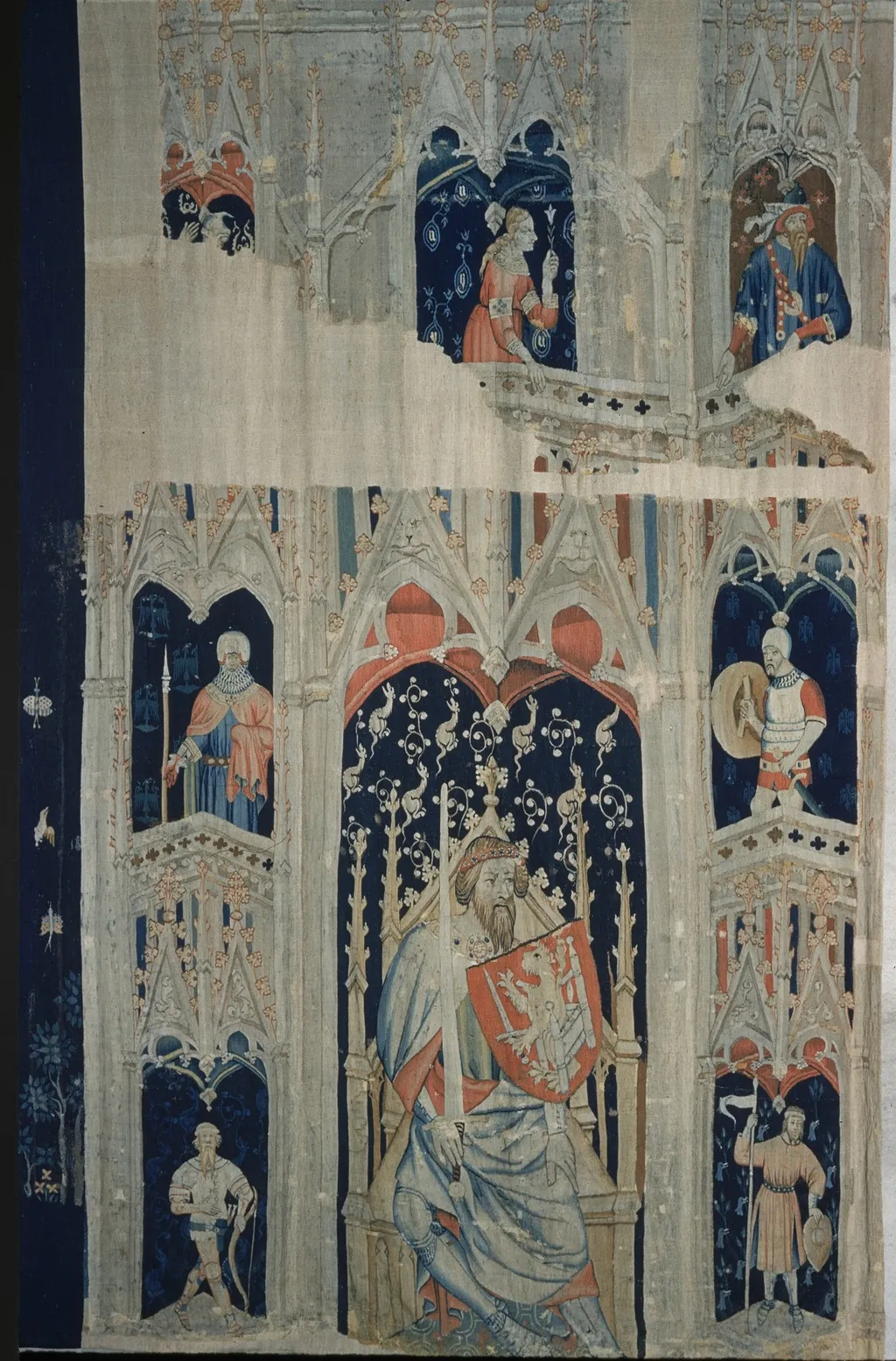
Alexander the Great or Hector of Troy (from The Nine Heroes Tapestries) is an unspecified painting. It dates from 1400 and is held in the collection of the Metropolitan Museum of Art.
About this work
Subject & Meaning
The composition includes a man and a woman alongside symbolic elements such as a bow and arrow and a butterfly.
Created circa 1400, this wool tapestry depicts a scene centered on the Nine Worthies, specifically representing either Alexander the Great or Hector of Troy as the primary figure. The composition includes a man and a woman alongside symbolic elements such as a bow and arrow and a butterfly. These figures serve as embodiments of chivalric virtue within the broader cycle of the Nine Heroes.
The work functions as a visual celebration of historical and legendary paragons, illustrating the medieval tradition of honoring nine idealized warriors who exemplified the highest standards of knighthood and leadership. The inclusion of specific attributes like the bow and arrow helps distinguish the heroic identity, while the presence of the butterfly may introduce additional layers of allegorical meaning regarding the soul or transformation, though the primary focus remains on the glorification of these renowned worthies.
Technique & Style
The work is an anonymous wool tapestry woven in the early 15th century (c. 1400) and classified as a painting within the medium of wool. It was produced using traditional tapestry weaving techniques, with the fabric support formed by interlaced wool threads that create a dense, pictorial surface. The piece measures approximately 420.4 cm in height by 264.2 cm in width and belongs to the series of The Nine Heroes, portraying Hector and Alexander the Great as two of the Nine Worthies.
Its formal composition follows the narrative conventions of medieval chivalric imagery, emphasizing heroic poses and symbolic attributes such as a bow and arrow. The tapestry’s condition is not detailed in the available records, but its material integrity is confirmed by the documented wool composition.
History & Provenance
The tapestry titled Alexander the Great or Hector of Troy, part of The Nine Heroes series, is held in the collection of the Metropolitan Museum of Art. Specifically, it resides within The Cloisters, a branch of the museum dedicated to medieval art. The work, created anonymously around 1400 from wool, depicts the figures of Alexander the Great and Hector as two of the Nine Worthies.
While the source material confirms its permanent location and institutional home, it does not provide a specific accession or inventory number, nor does it detail a history of exhibitions beyond its current status in the collection.
Overview
Alexander the Great or Hector of Troy is a late Gothic tapestry woven from wool around 1400, originally part of a series depicting the Nine Heroes. The composition is organized into five vertical panels framed by pointed arches, a hallmark of the International Gothic style. The central figure, seated on a throne, wears a red robe with fur trim and holds a staff, representing either Alexander the Great or Hector of Troy.
Flanking and above this central scene are smaller vignettes featuring other armored figures holding shields and spears, set against a background of gold stars. This work exemplifies the high medieval tradition of using tapestries to convey chivalric ideals and classical heroism to a courtly audience. The piece reflects the period's fascination with synthesizing ancient history with contemporary aristocratic values, utilizing vibrant colors and intricate detailing to create a narrative of legendary virtue.
Artist & collection

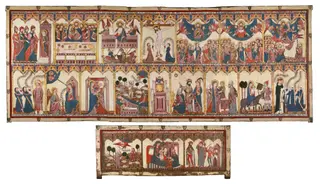 Retable and Frontal of the Life of Christ and the Virgin
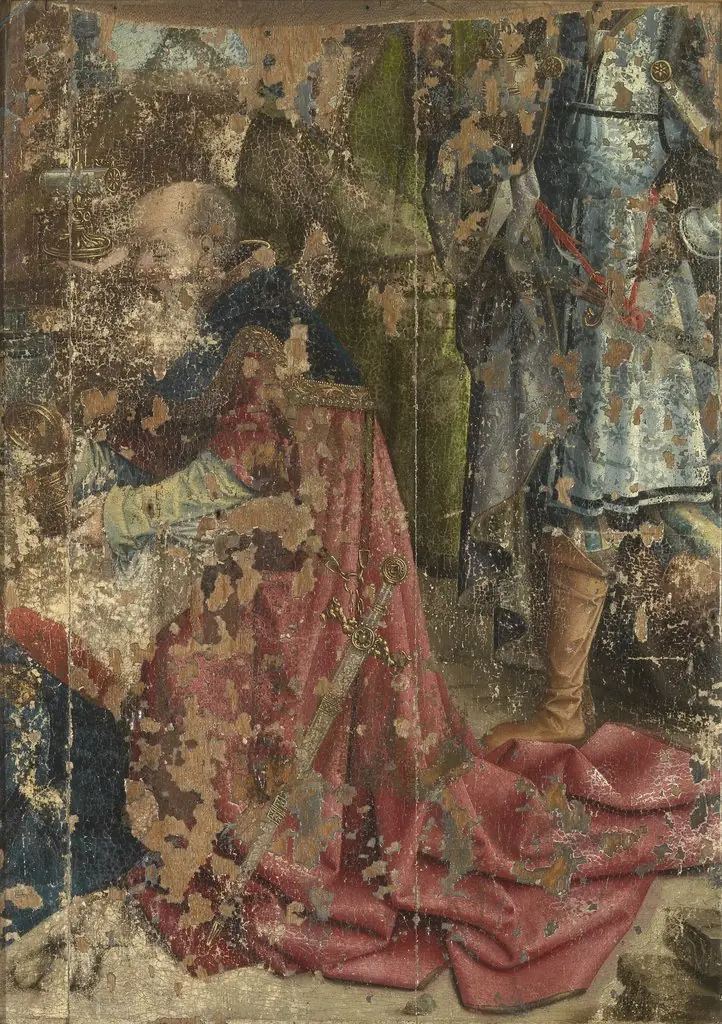 Aanbidding door de koningen
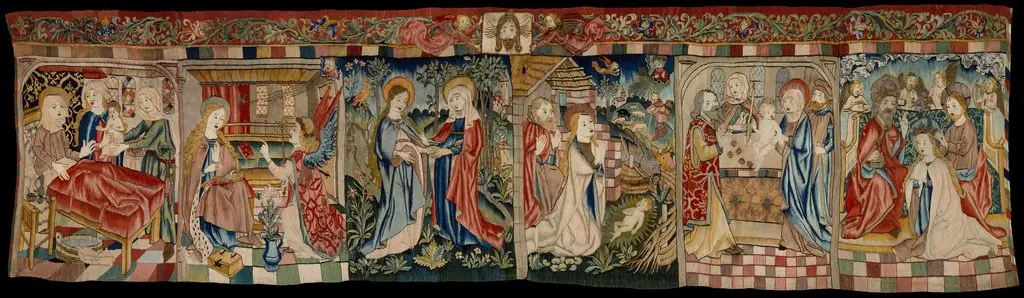 Scenes from the Life of the Virgin
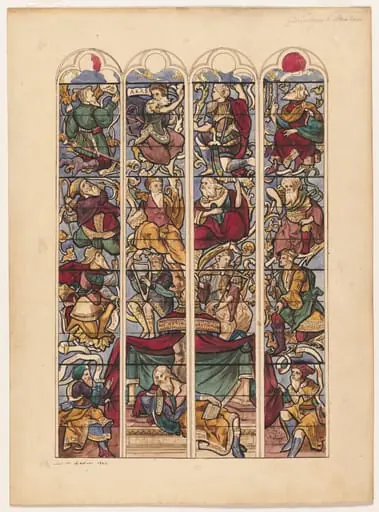 Study for Four Stained Glass Windows "Généalogie d'Abraham"
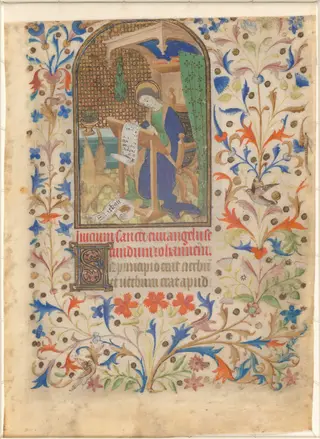 Saint John
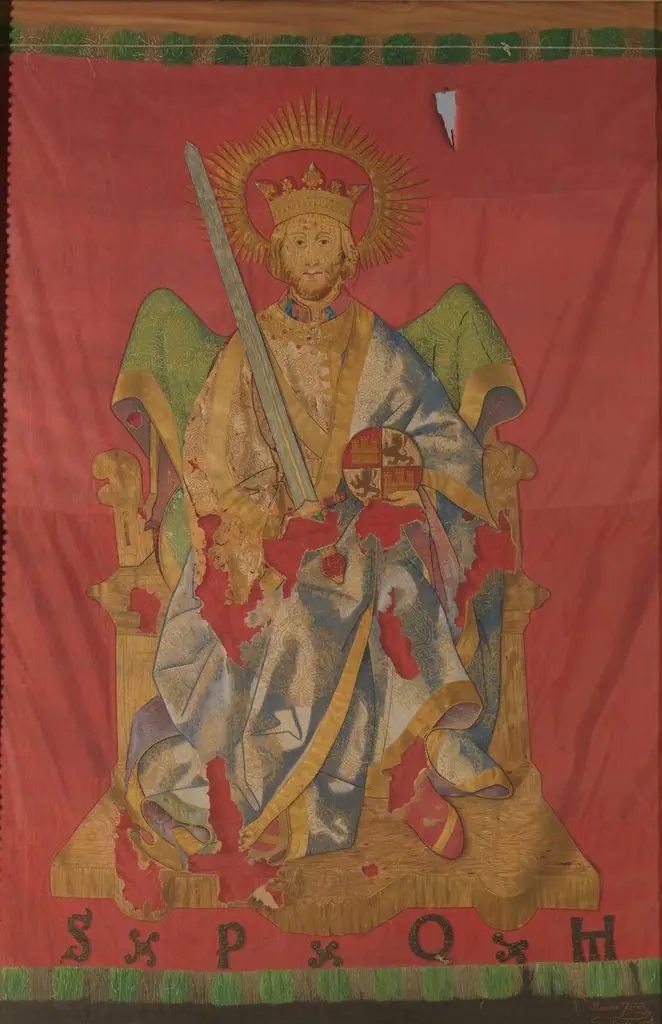 Pendón de Fernando III el Santo
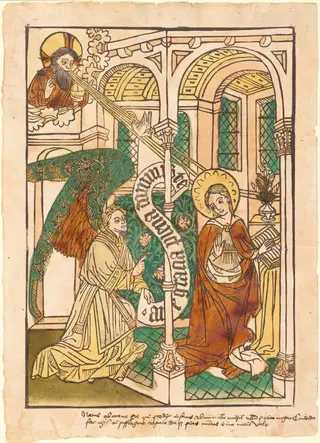 The Annunciation
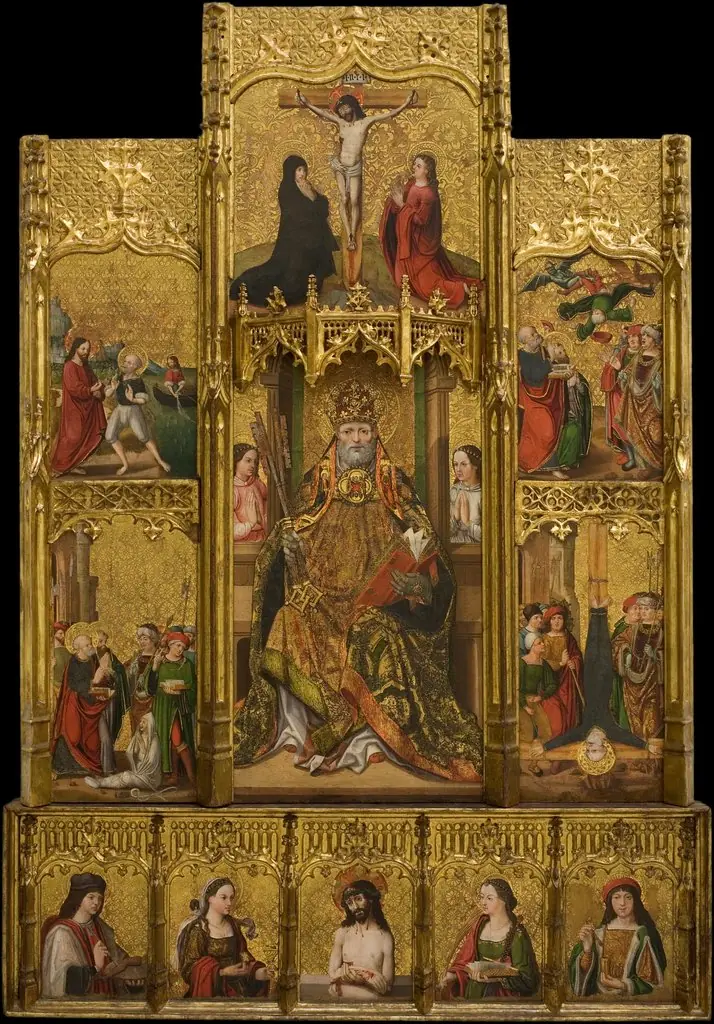 Altarpiece of Saint Peter
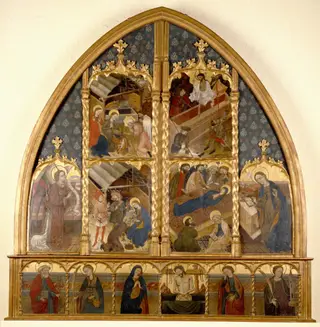 Nativity, Annunciatory Angel, Adoration of the Magi, Resurrection, Death of the Virgin, The Annunciate, Saints Peter and Lucy, Virgin Mary, Resurrected Christ, Saints John and Barbara
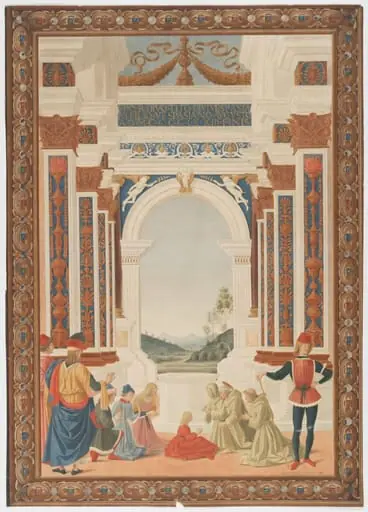 Copy after the painting St Bernard healing a man by Fiorenzo di Lorenzo in the Galleria Nazionale, Perugia.