Artwork
Portret de femeie
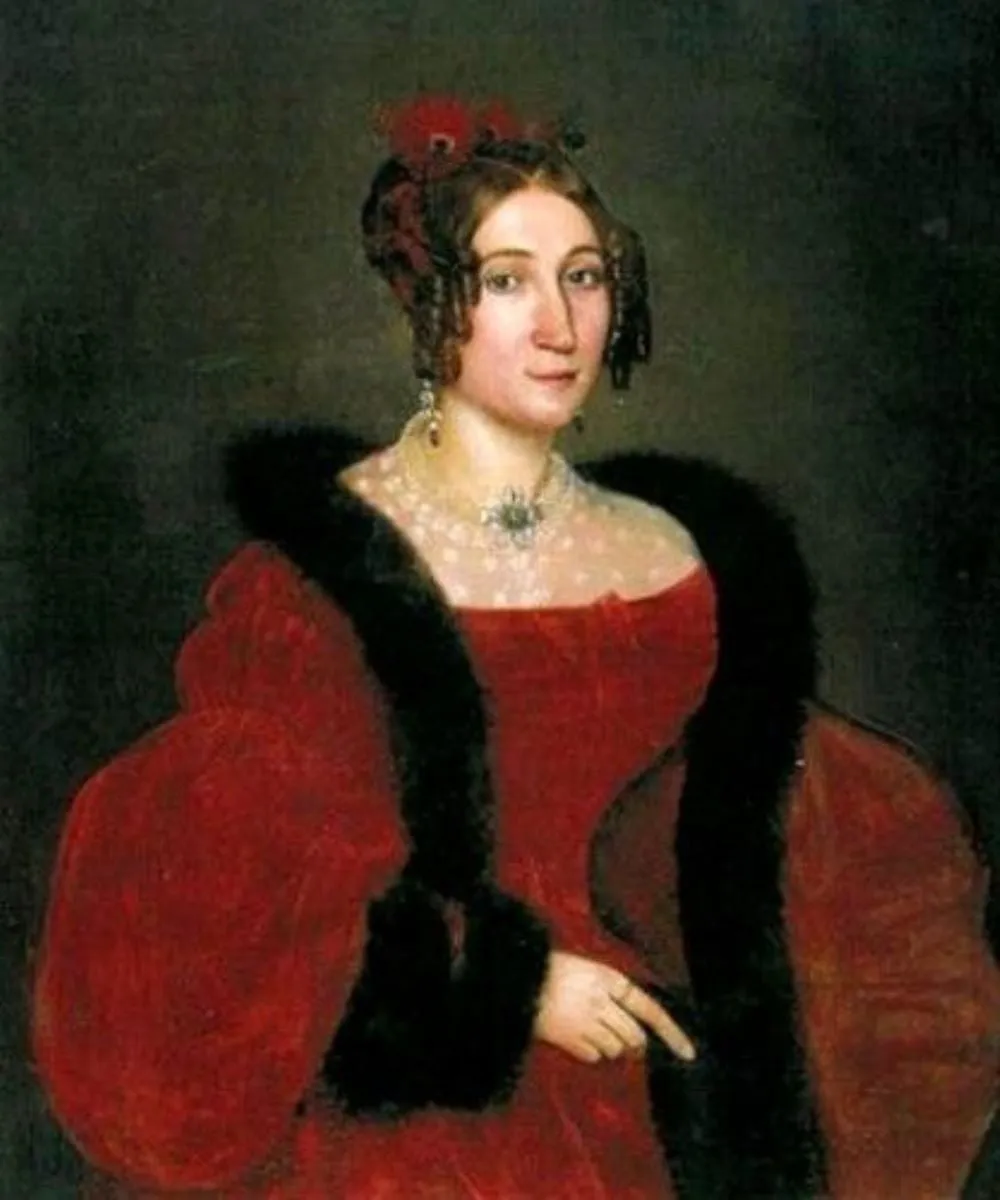
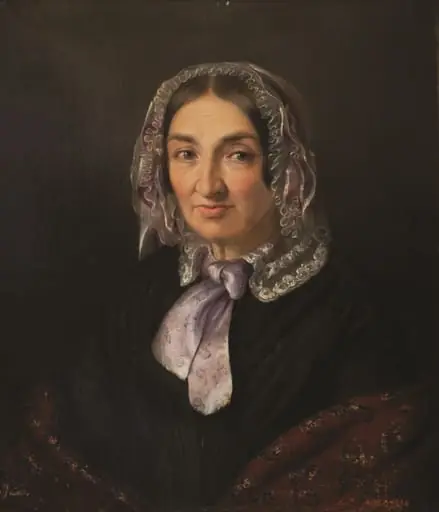
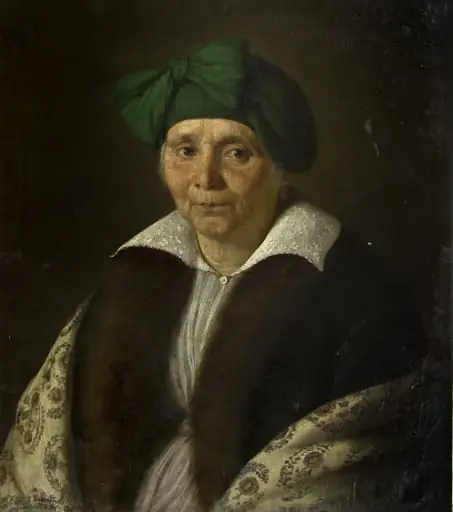
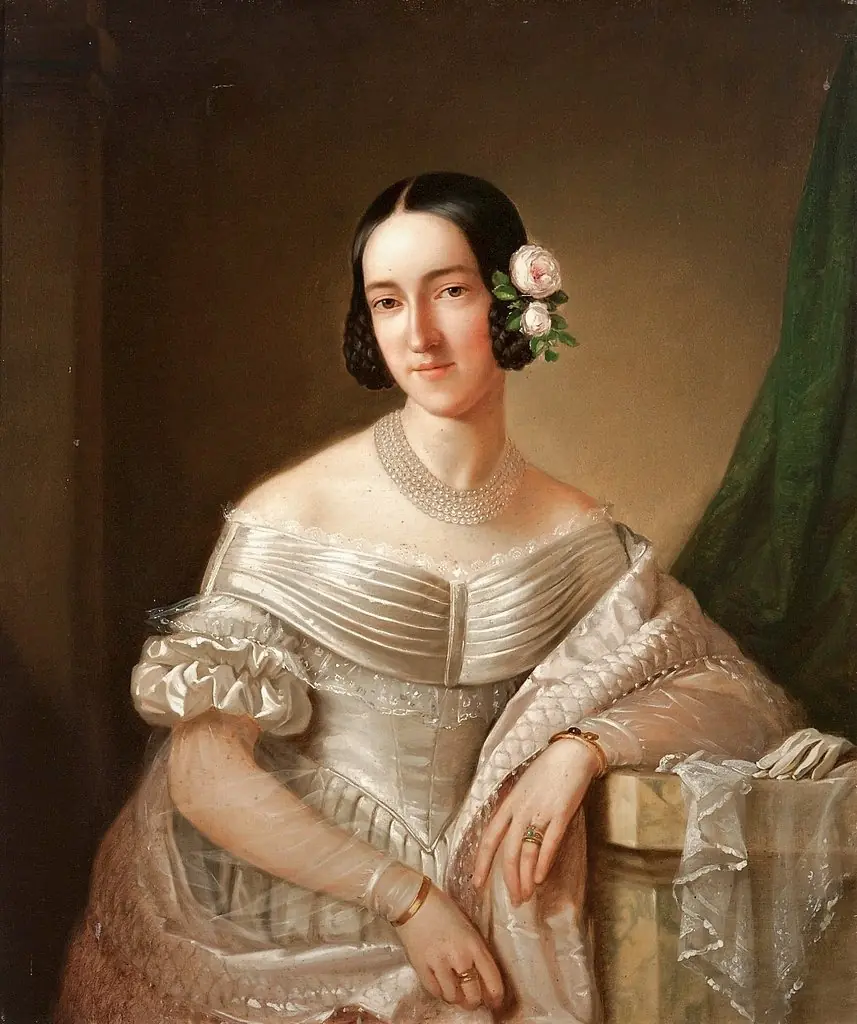
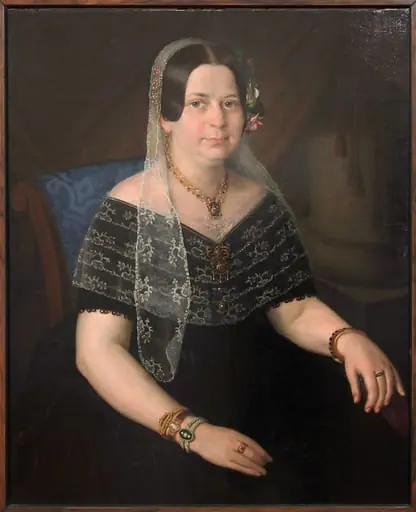
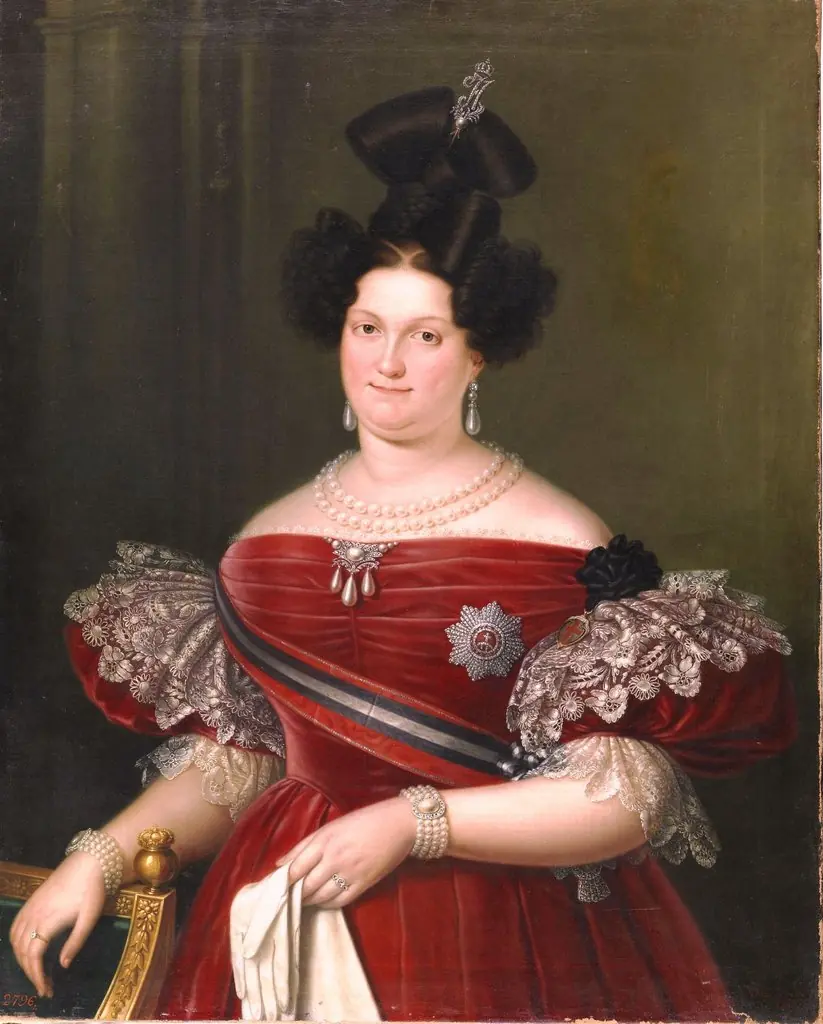
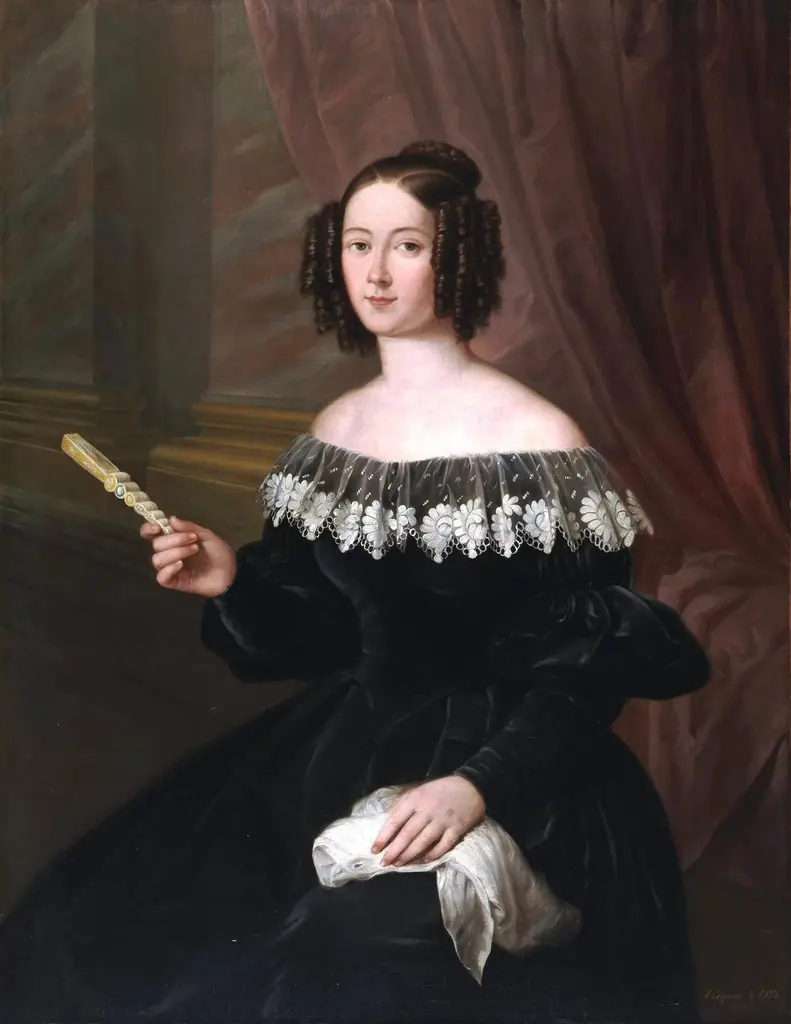
Portret de femeie is an unspecified painting by the Aestheticist artist Constantin Daniel Rosenthal. It dates from 1845 and is held in the collection of the Moldova National Museum Complex.
About this work
Overview
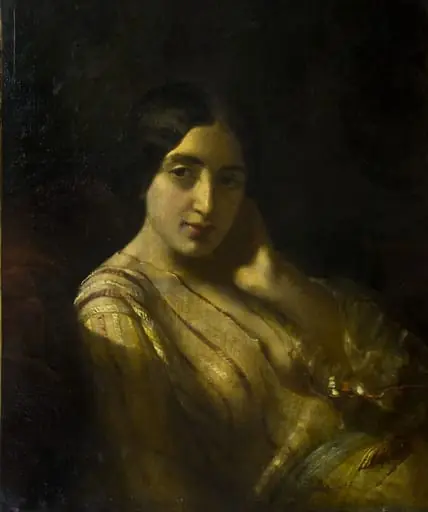
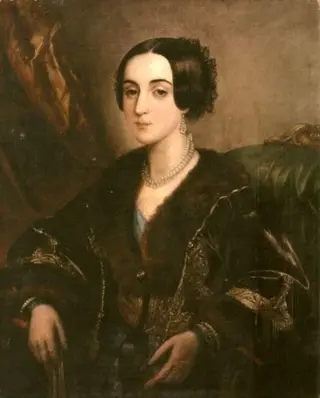
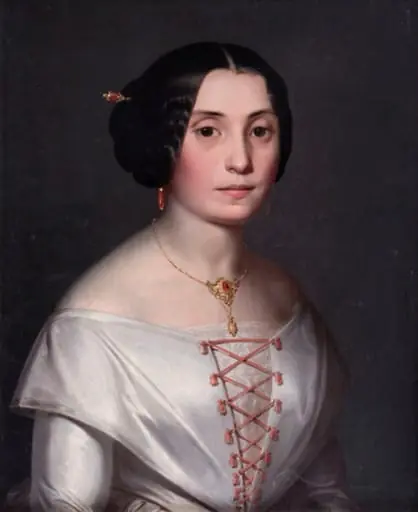
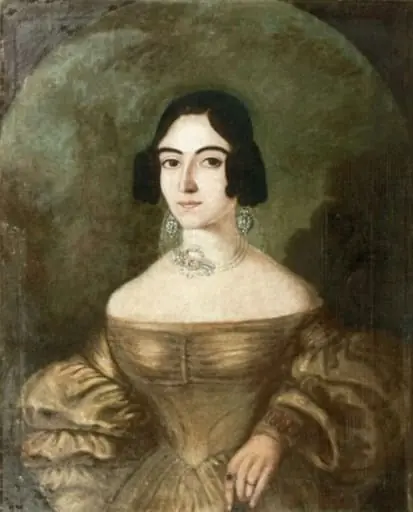
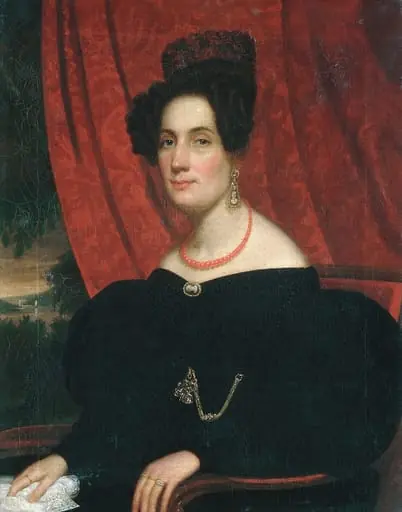
Painted around 1845 by Constantin Daniel Rosenthal, this portrait depicts a woman in a vivid red gown, set against a dark, unadorned background.
Painted around 1845 by Constantin Daniel Rosenthal, this portrait depicts a woman in a vivid red gown, set against a dark, unadorned background. The composition emphasizes her figure through concentrated lighting and restrained detail, directing attention to her expression and attire. The work reflects mid-19th-century portraiture trends in the Danubian Principalities, where personal identity and social presentation were rendered with quiet formality.
Subject & Meaning
The woman’s attire, rich red fabric, dark fur shawl, and a single red flower in her hair, suggests deliberate presentation, possibly indicating status or occasion. The green stone in her necklace adds a subtle accent, hinting at personal adornment rather than overt luxury. Her direct gaze and composed posture convey dignity, though the lack of contextual elements leaves her identity and role deliberately ambiguous.
Technique & Style
Rosenthal employed smooth, even brushwork, particularly on the face, to achieve a soft, lifelike texture. The contrast between the bright red gown and the deep background enhances volume through controlled chiaroscuro. Details are simplified, avoiding ornate flourishes; the fur shawl and jewelry are rendered with minimal strokes, reinforcing a focus on form over decoration.
History & Provenance
The painting’s early provenance is undocumented, but it likely originated in Wallachia or Moldavia, where Rosenthal was active. As a Romanian artist trained in Vienna and Paris, he brought European academic influences to local portraiture. The work survives as one of few surviving portraits from his early period, offering insight into the visual culture of the region before the 1848 revolutions.
Context
Created during a period of rising national consciousness in the Romanian principalities, the portrait reflects a shift toward individual representation in art. While Western European portraiture often emphasized aristocratic grandeur, Rosenthal’s approach is more restrained, aligning with emerging middle-class sensibilities and a preference for modest elegance over theatrical display.
Legacy
Though not widely exhibited during Rosenthal’s lifetime, this portrait remains a key example of early Romanian academic portraiture. Its simplicity and emotional reserve distinguish it from more ornate contemporary works, and it continues to be referenced in studies of 19th-century Romanian visual identity and the evolution of local artistic practice.
Artist & collection

Artist
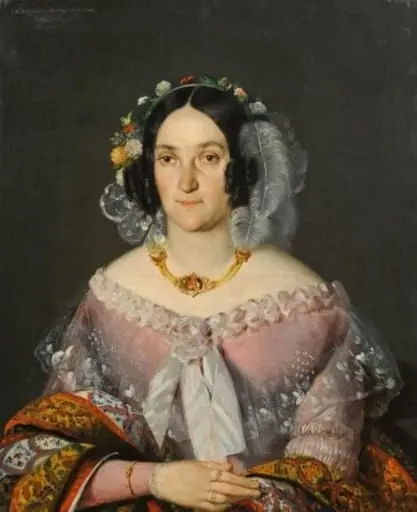
Constantin Daniel Rosenthal (b.Rosenthal Konstantin, 1820 – July 23, 1851) was a painter and sculptor of Austrian birth and a Romanian 1848 revolutionary, best known for his portraits and his choice of Romanian Romantic nationalist…