Artwork
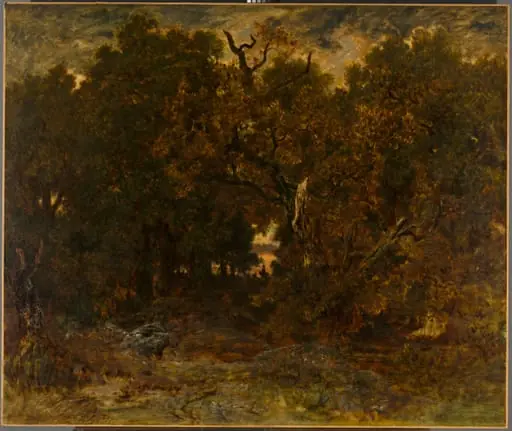
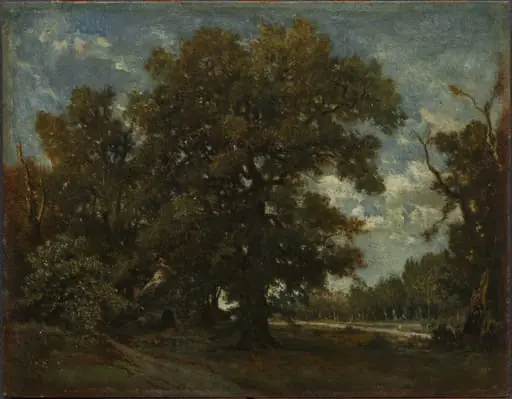
A Tree in Fontainebleau Forest
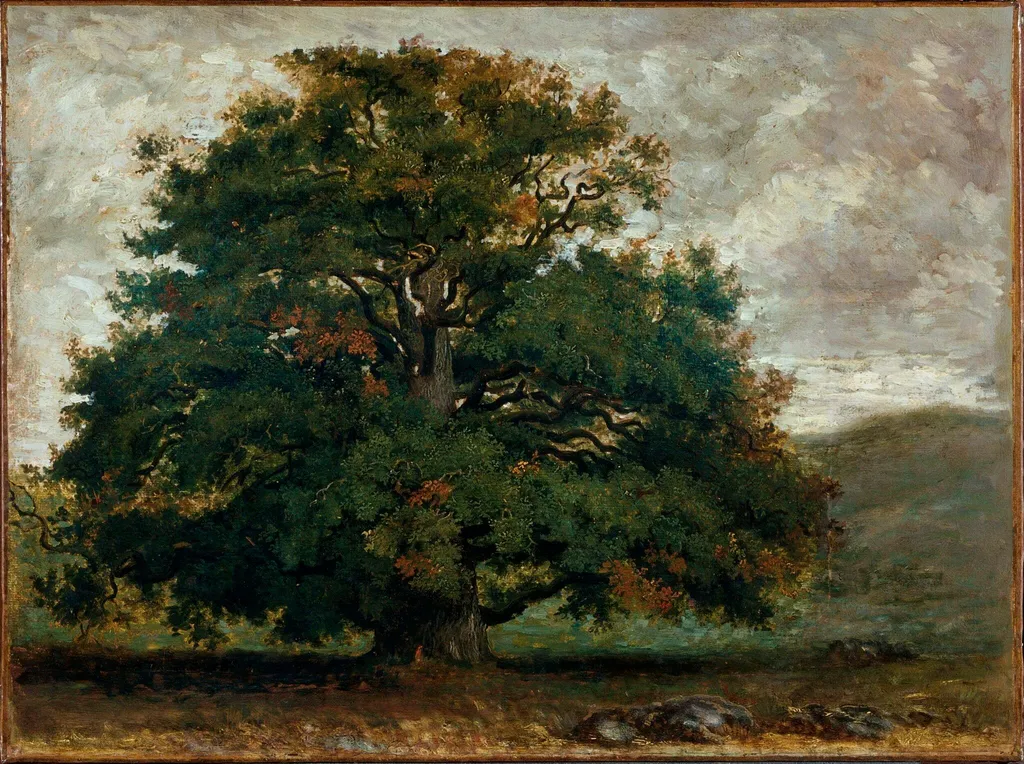
A Tree in Fontainebleau Forest is an oil painting by the Barbizon school artist Pierre-Etienne-Théodore Rousseau. It dates from 1844 and is held in the collection of the Victoria and Albert Museum.
About this work
Overview
A Tree in Fontainebleau Forest is an oil painting by Théodore Rousseau, a prominent figure in the Barbizon school of landscape painting.
Subject & Meaning
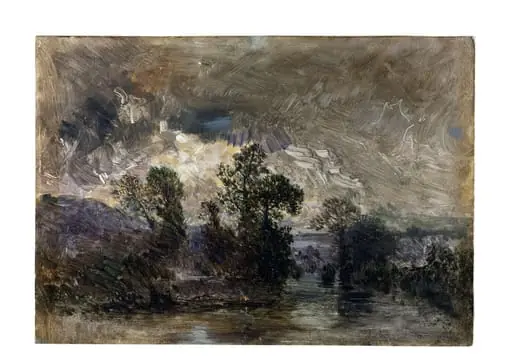
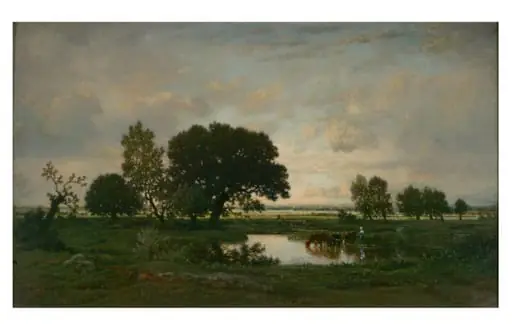
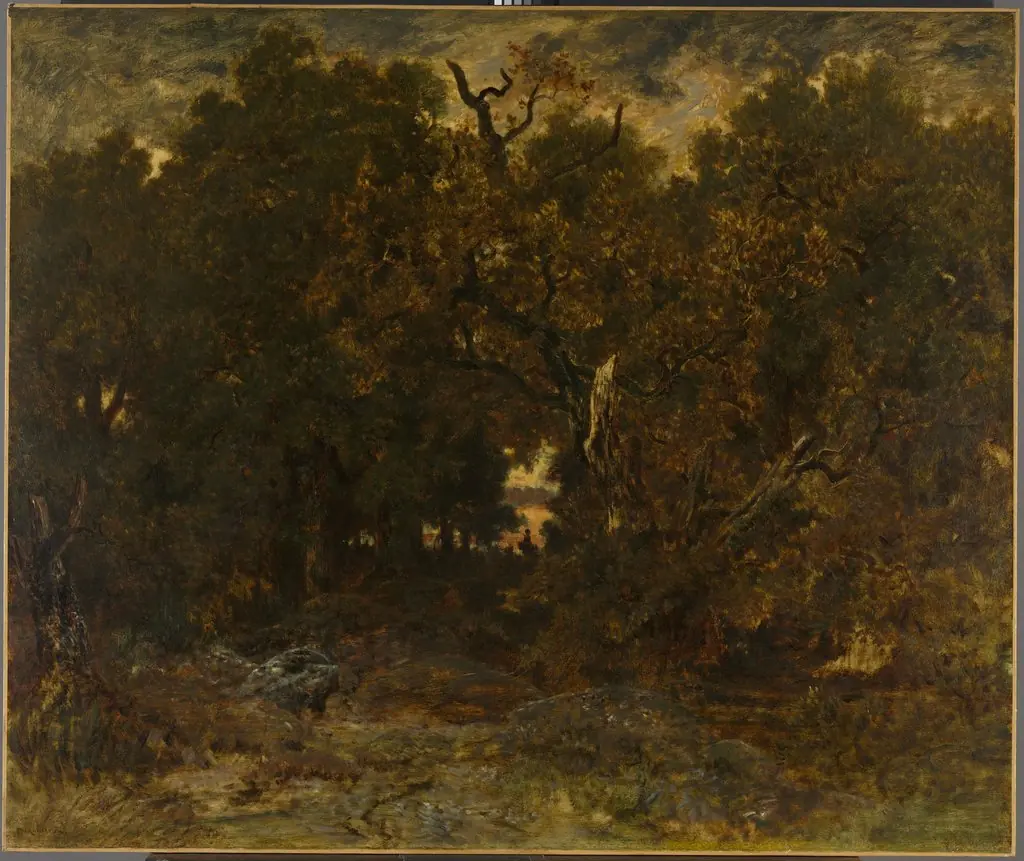
The painting depicts a solitary oak tree set against a dramatic sky, with sunlight struggling to penetrate the dense foliage. Rousseau often focused on trees as a subject, capturing their intricate forms and textures.
Technique & Style
Originally executed on paper and later transferred to canvas, the work is likely a product of Rousseau's plein-air practice, directly observing and rendering the natural scene.
Context
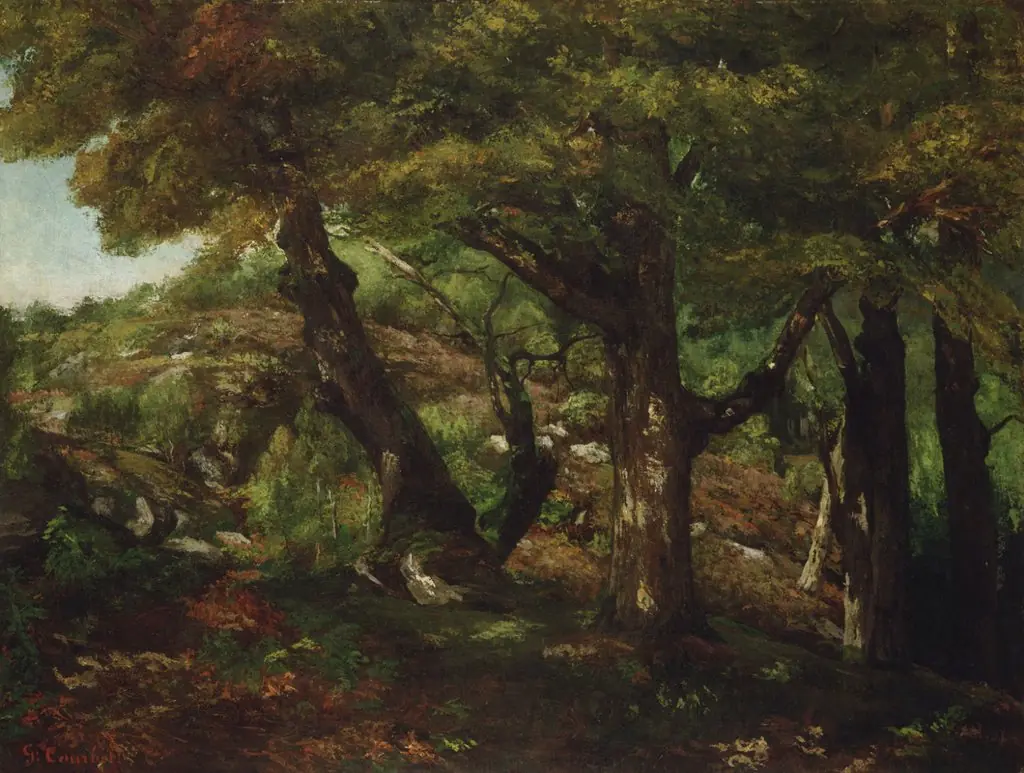
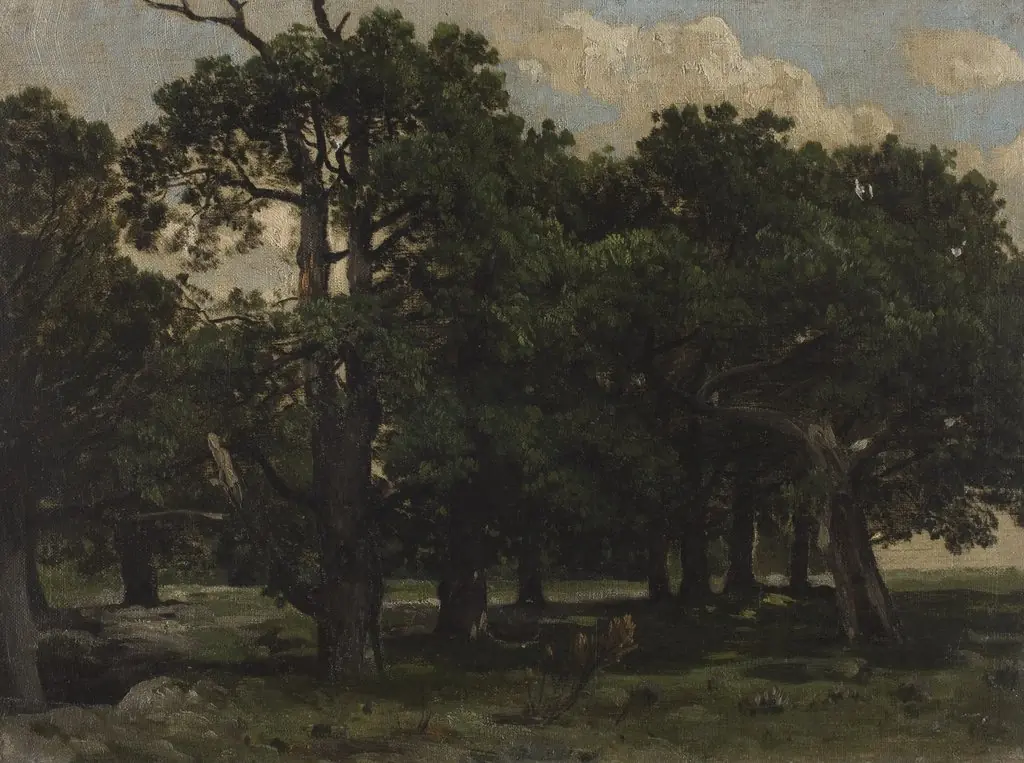
Rousseau's work was influenced by his time in Fontainebleau Forest, where he and other Barbizon artists sought to capture the natural world with accuracy and attention to detail.
Own this work as a print
Artist & collection
Artist
Pierre-Etienne-Théodore Rousseau
French landscape painter of the 1820s–1850s, Rousseau built mood from weather and woodland.