Artwork
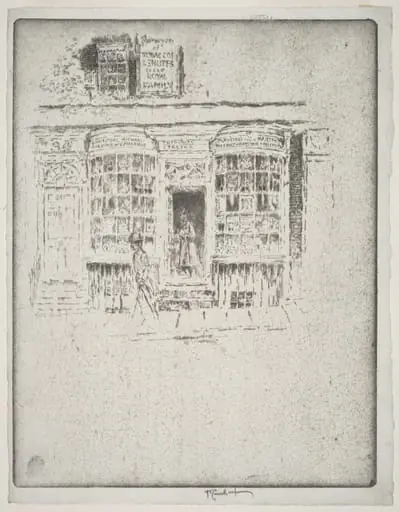
The Window Cleaner, Chelsea
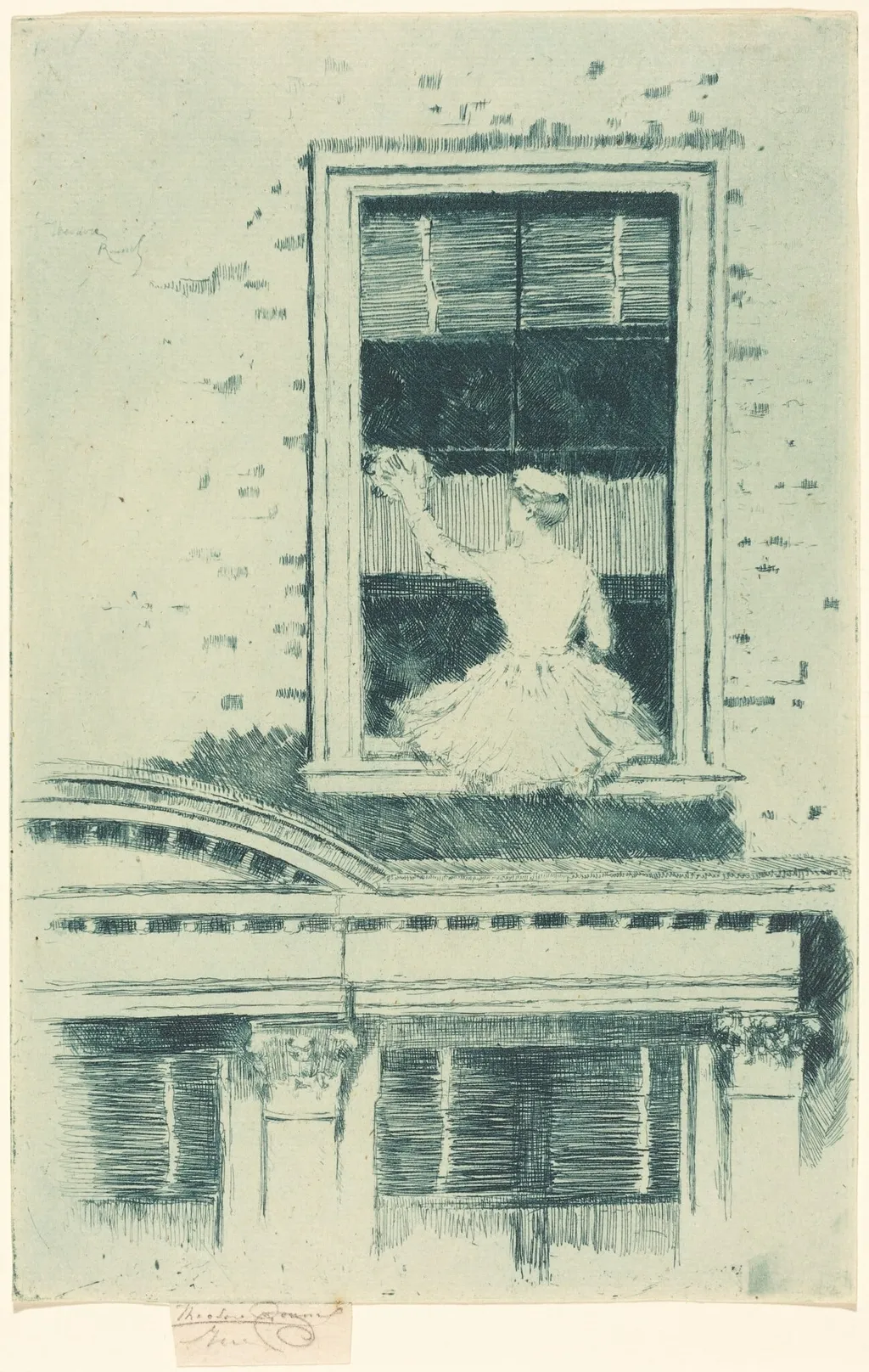
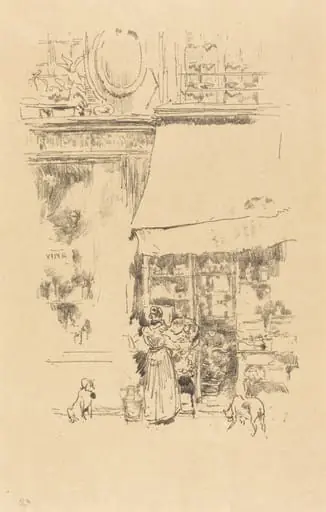
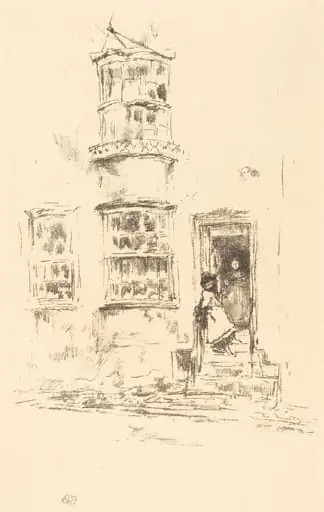
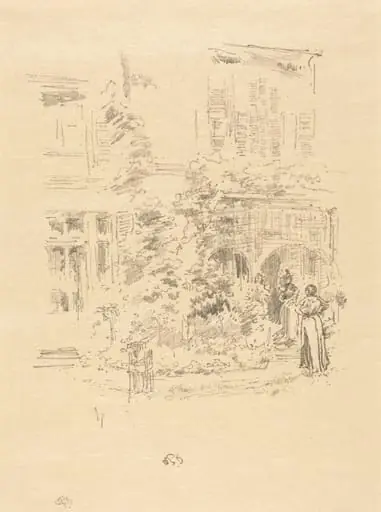
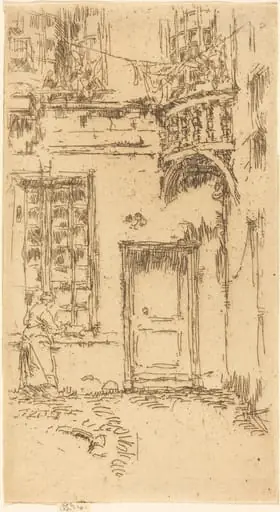
The Window Cleaner, Chelsea is an ink print by the Impressionist artist Théodore Roussel. It dates from 1888 and is held in the collection of the National Gallery of Art.
- Inscription
- Inscribed:"Theodore Roussel" lower left tab, graphite, artist's hand. Not dated. "Imp" lower left tab, graphite, artist's hand. "258/18 / CNS" verso, lower right, graphite, unknown hand.
- Markings
- Marked:"LRJ" verso, black stamped ink, (Lugt 1760b). "National Gallery of Art" verso, black stamped ink, (Lugt 1932d).
About this work
Overview
Théodore Roussel’s etching titled The Window Cleaner, Chelsea dates from around 1888. Executed on laid paper, the work employs a distinctive green ink that contrasts with the pale surface, giving the composition a vivid yet understated presence. The piece is a single‑sheet print, catalogued among Roussel’s late‑nineteenth‑century output.
Subject & Meaning
The scene captures a domestic interior where a window’s shutters stand ajar, exposing a figure engaged in cleaning the glass from within. Beneath the opening, a narrow ledge supports a modest plant and a tiny vase, suggesting a quiet, lived‑in space. The focus on ordinary labor and everyday objects reflects a modest, observational approach to urban life.
Technique & Style
Roussel worked the plate with a green ink, allowing the tonal lines to emerge sharply against the light background. The drawing is marked by uneven, hurried strokes and dense shading around the window frame, conveying a sense of immediacy. The etching’s texture and the use of green ink differentiate it from more conventional monochrome prints of the period.
History & Provenance
Created circa 1888, the print belongs to the later phase of Roussel’s career, when he explored urban subjects in a more informal manner. While specific ownership records are scarce, the work has appeared in several catalogues of British etchings, indicating its circulation among collectors of late‑Victorian prints.
Context
Roussel, a French‑born artist who settled in England, often depicted scenes of everyday life in London’s neighborhoods. This work aligns with the broader nineteenth‑century interest in portraying the mundane, echoing contemporary trends in realism and the rise of print media that made such images more widely accessible.
Own this work as a print
Artist & collection