Artwork
The Crucifixion
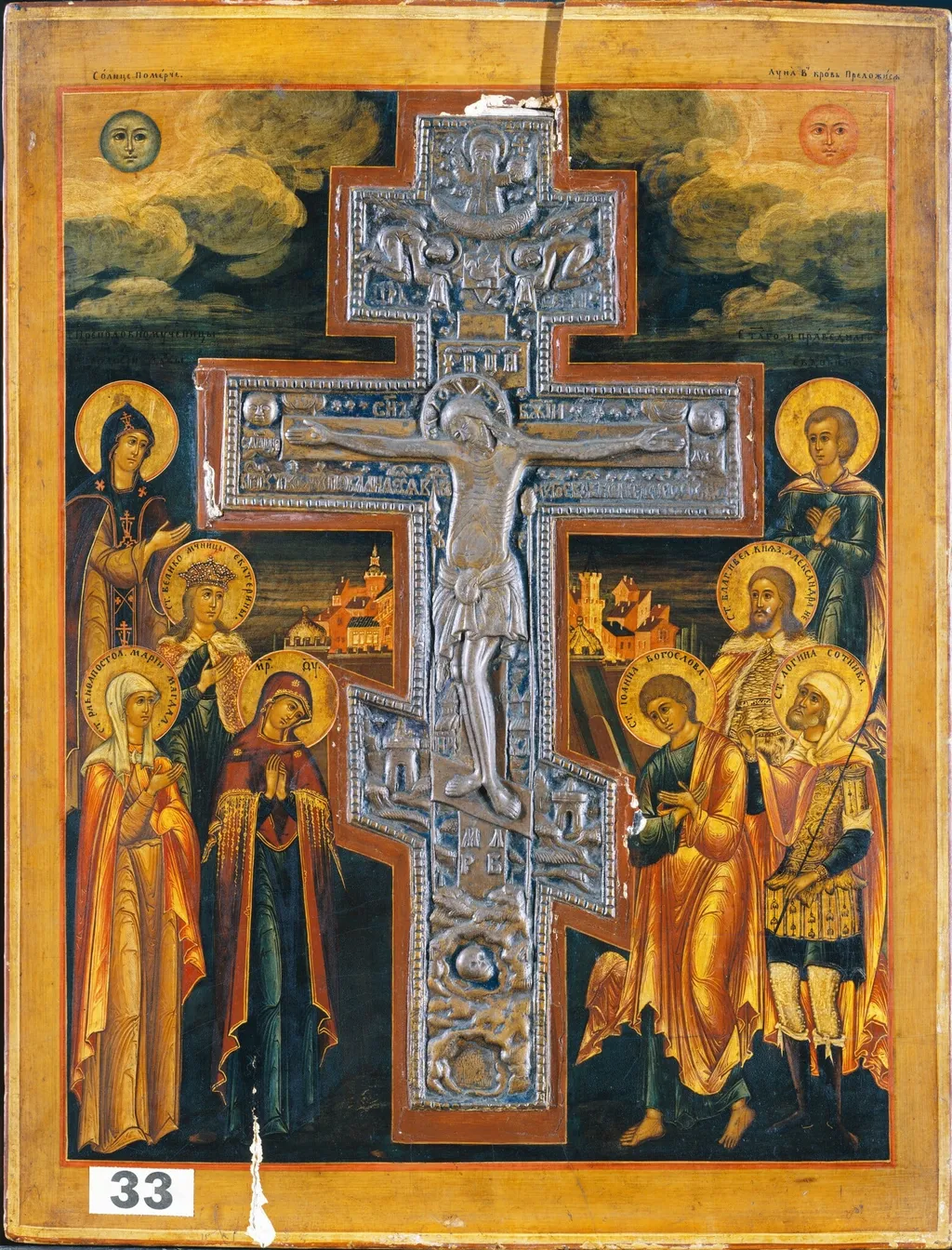
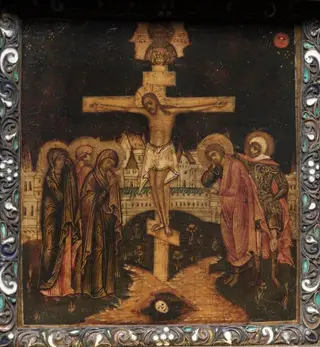
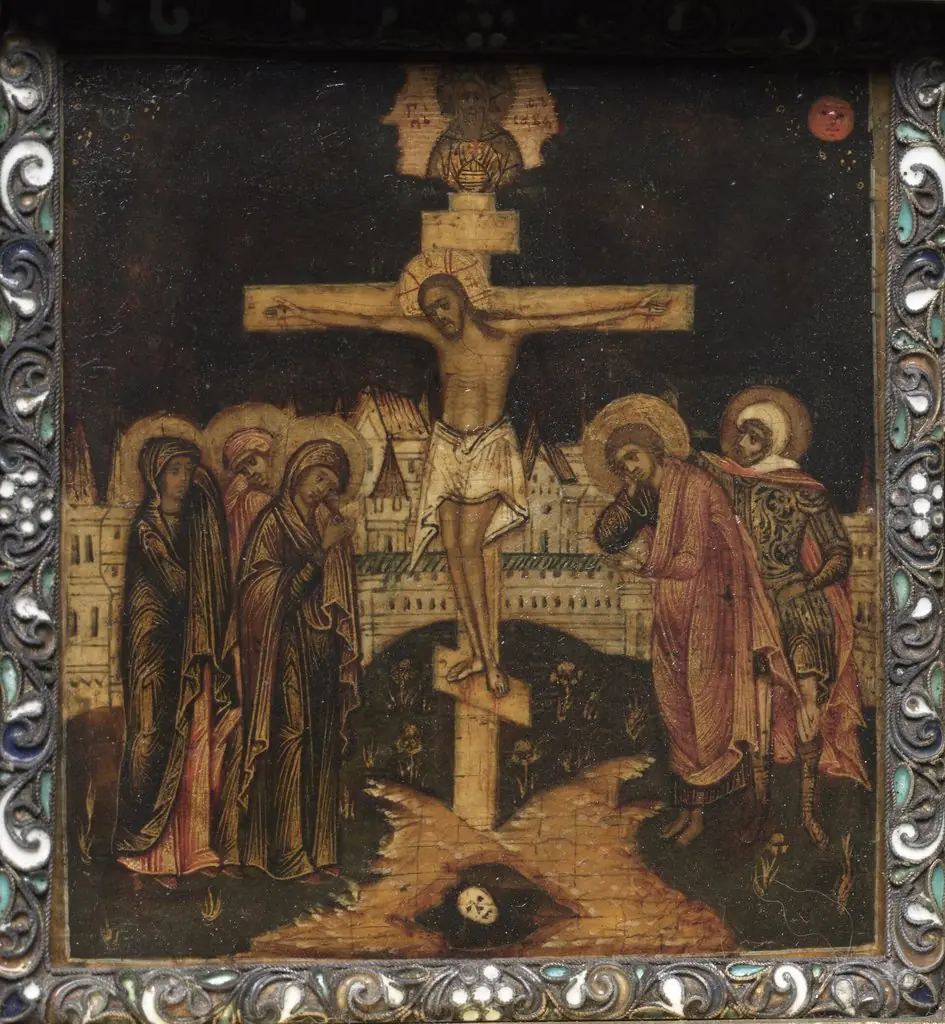
The Crucifixion is an oil painting. It dates from 1850 and is held in the collection of the National Gallery of Art.
- Inscription
- Inscribed:on halos the saints are identified by cyrillic inscriptions; across center above saints, further cyrillic inscriptions
About this work
Subject & Meaning
Together, the visual motif and documented lineage convey the theological meaning of Christ's atoning death within the broader tradition of sacred imagery.
The Crucifixion presents the central figure of Jesus Christ on the cross, the canonical iconography of the Passion that signifies redemption and sacrifice in Christian art. The Russian nineteenth-century painting, executed in oil on wood with an inset brass cross, follows traditional compositional elements such as the upright cross and solitary figure, while surrounding labels and provenance trace its history from the collection of William R. Timken to the National Gallery of Art, Washington, D.C. The work's religious subject is recorded in its cataloguing data, which identifies it as a depiction of the crucifixion of Jesus and places its creation in 1850. Together, the visual motif and documented lineage convey the theological meaning of Christ's atoning death within the broader tradition of sacred imagery.
Technique & Style
Created in 1850 by an unidentified nineteenth-century Russian artist, this religious painting uses oil as its primary medium. While one record identifies the support as canvas, physical examination confirms the work is executed on a wood panel featuring an inset brass cross. The composition depicts the crucifixion of Jesus Christ.
The reverse of the panel and frame bear numerous historical labels and inscriptions, including references to a "Tableau russe" and the Osterrieth collection, alongside crayon markings such as "Plaza" and numerical identifiers. These attributes and the integration of metal into the wooden support distinguish the object's material construction within the genre of Russian religious art.
History & Provenance
The Crucifixion is an oil-on-wood panel with an inset brass cross, created in 1850 by a Russian artist working in the nineteenth-century religious tradition. Its ownership is documented through a series of labels indicating passage through the collection of William R. Timken and subsequently to his widow, Lillian Guyer Timken. Upon Lillian's death the painting was bequeathed in 1960 to the National Gallery of Art in Washington, D.C., where it remains.
Several labels on the reverse document an earlier provenance, including a printed label inscribed "No 77. Tableau russe. Christ en croix," a small red-ink label reading "#33.
Crucifix. Ikon (Greek)," and two red paper labels stamped with a coat of arms and "Collection Osterrieth," with "A 10" added in ink. Additional markings include "19" in white crayon and "Plaza" in black crayon on the panel, and "21" in black crayon in both upper corners of the frame's reverse, along with a small label reading "33." on the frame's lower left.
Context
The Crucifixion is a Russian religious painting of the mid-nineteenth century, created in oil on wood with an inset brass cross and dated 1850. Its iconography follows the traditional Orthodox representation of the crucifixion. The work entered the National Gallery of Art collection in Washington, D.C., where it is studied as an example of how Russian artists adapted sacred imagery for European-influenced audiences.
Provenance records trace the piece from the Timken family to the museum, illustrating twentieth-century American acquisition of Russian religious art.
Overview
This painting, titled The Crucifixion, depicts Jesus Christ upon the cross. Executed in oil on wood, the artwork is notable for its incorporation of an actual brass cross element directly into the composition. The overall presentation conveys a somber atmosphere through its use of dark tones and a restrained palette.
This unique material choice, combined with the traditional painting medium, contributes to the work's distinctive visual and textural qualities.
Artist & collection

- Răstrile
 RASTIGNIREA
 Icoană în patru registre, în centru Iisus Răstignit
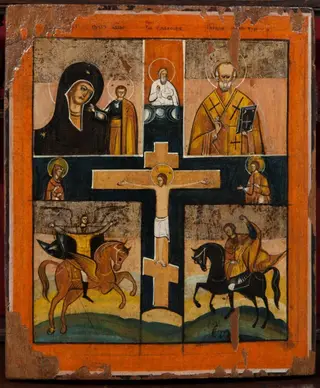 Prăznicar, "Răstignirea”
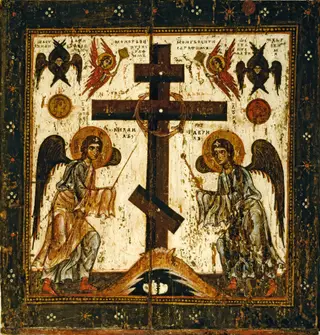 Saviour Made Without Hands. The reverse
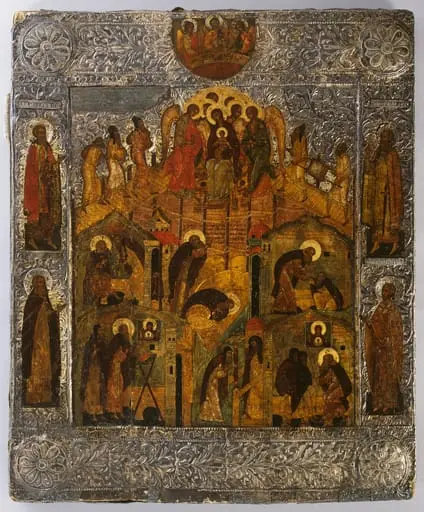 Neitsyt Marian ilmestyminen pyhittäjä Aleksanteri Syväriläiselle kirkon perustuksella
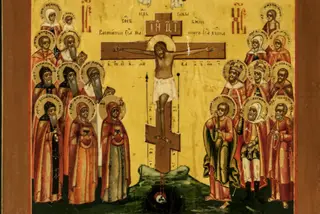 CompГавр
 Portable Triptych Icon: The Crucifixion
 Pääsiäinen ja kirkkovuoden juhlia, venäläinen ikoni
 Portable Triptych Icon: The Crucifixion
 Ascension of Christ with the Hetoimasia
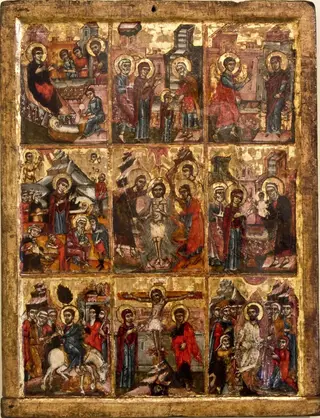 Scene din viața lui Iisus și a Maicii Domnului