Artwork
Portable Triptych Icon: The Crucifixion
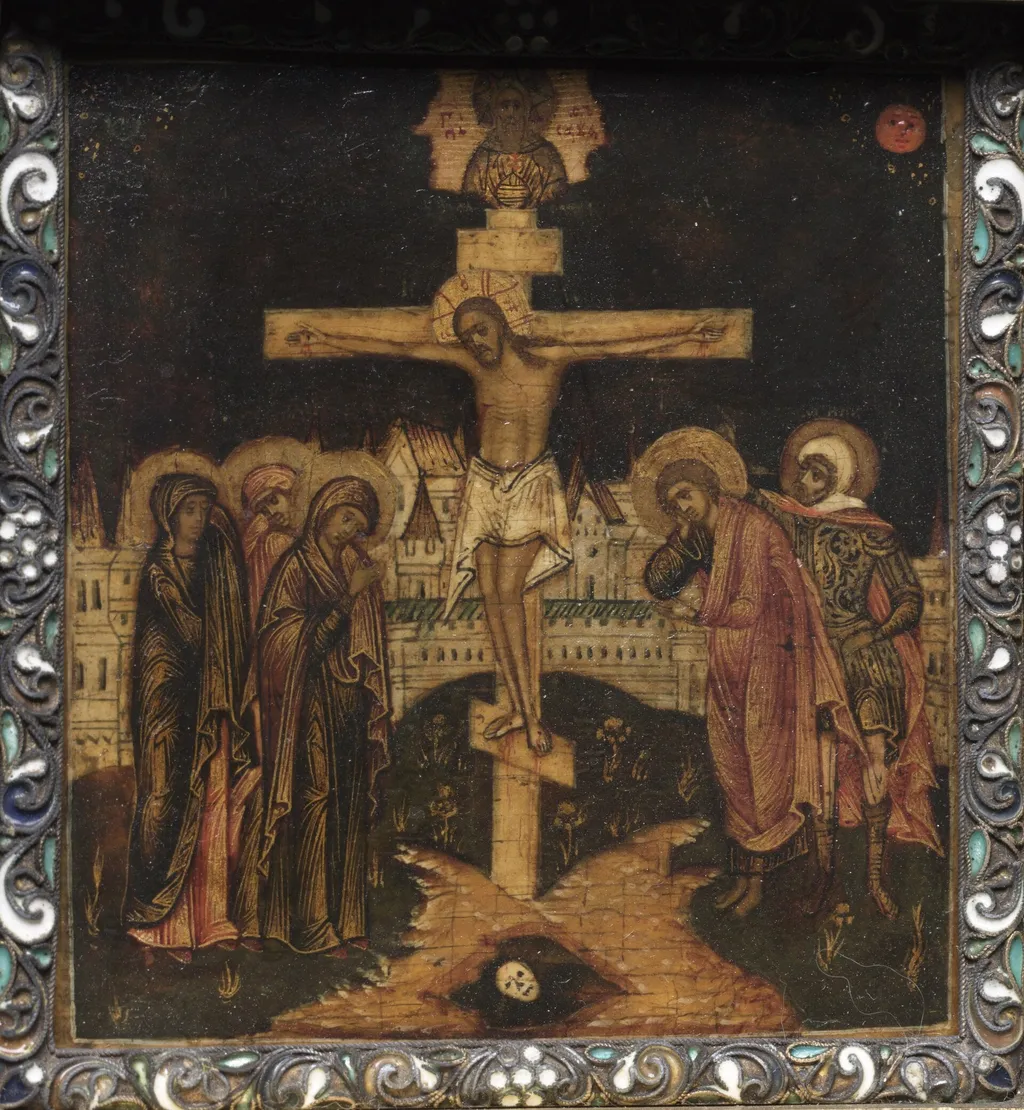
Portable Triptych Icon: The Crucifixion is an unspecified painting. It dates from 1649 and is held in the collection of the Cleveland Museum of Art.
About this work
Subject & Meaning
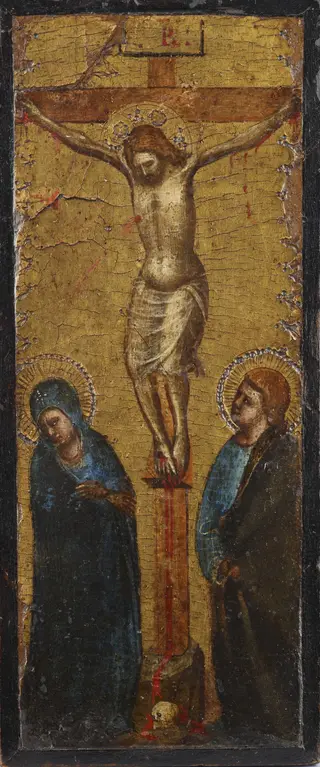
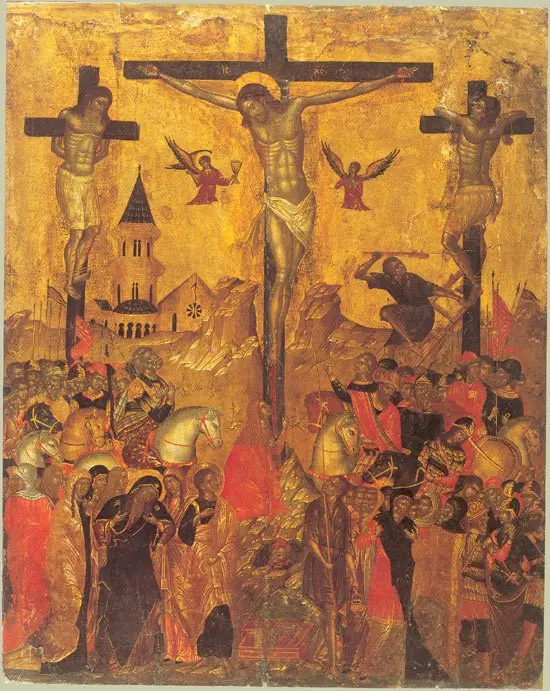
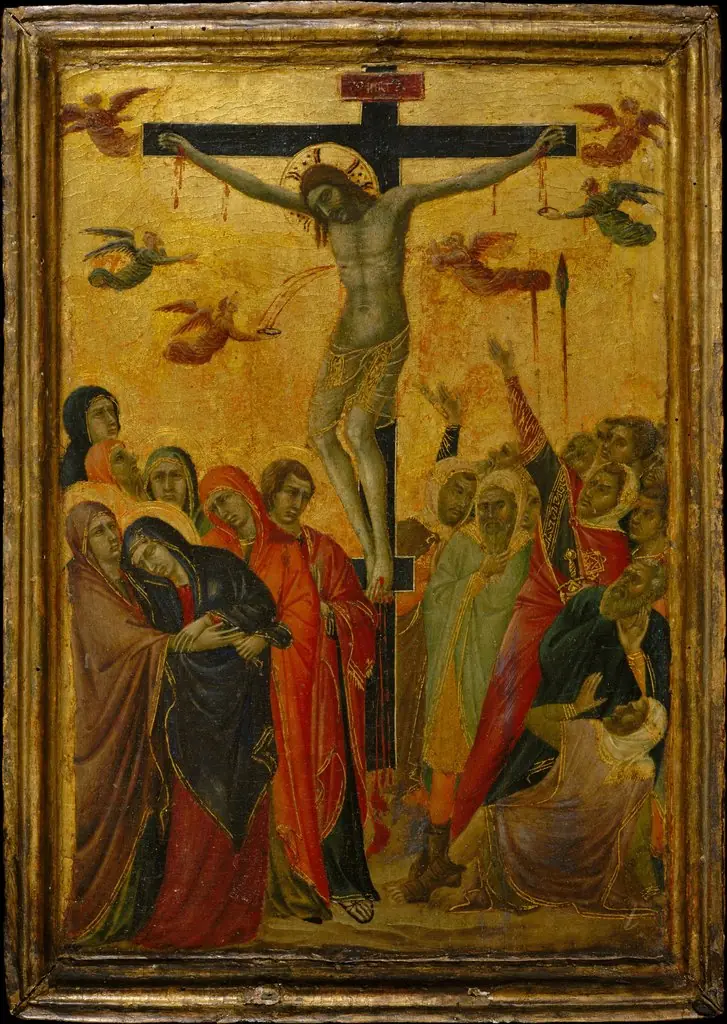
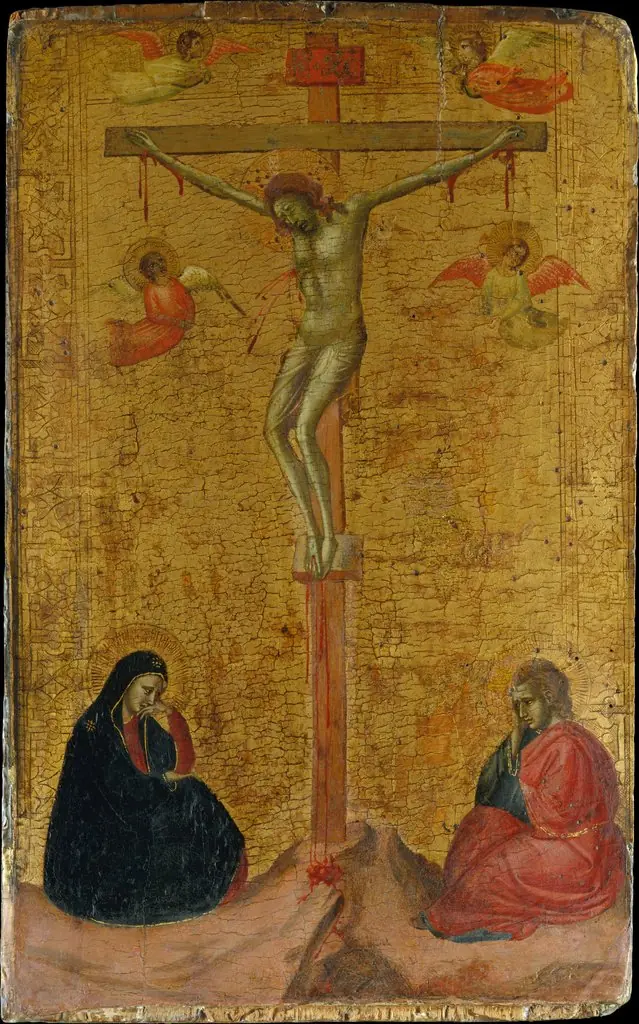
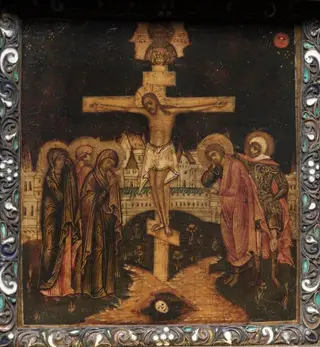
The Portable Triptych Icon: The Crucifixion portrays the crucifixion of Christ, the pivotal moment of sacrifice in the Christian narrative.
The Portable Triptych Icon: The Crucifixion portrays the crucifixion of Christ, the pivotal moment of sacrifice in the Christian narrative. As a religious painting dated to 1649, the work employs the traditional iconography of the cross and Christ's suffering to convey themes of redemption and divine love. The composition, likely intended for private devotion, reflects the devotional practices of the period, using a triptych format to frame the narrative of Christ's Passion. The piece is part of the Cleveland Museum of Art collection, within its holdings of religious art.
History & Provenance
The portable triptych icon of the Crucifixion is a painting dated to 1649, attributed to an unknown artist. Measuring approximately 6.5 cm in height and 6.2 cm in width, it is classified as a religious painting. The work has been part of the Cleveland Museum of Art's collection since 1961, where it is catalogued under accession number 1961.35.b. No exhibition history is documented in the sources consulted, and the piece remains part of the museum's permanent collection.
Context
The Portable Triptych Icon: The Crucifixion is a painted devotional object dating to 1649, measuring approximately 6.5 by 6.2 cm and attributed to an unknown artist. Its triptych format and Passion subject reflect the tradition of small, portable devotional icons. The work belongs to the collection of the Cleveland Museum of Art, where it is studied as an example of mid-17th-century devotional art.
Legacy
Portable Triptych Icon: The Crucifixion, painted in 1649, exemplifies mid‑17th‑century devotional art.
Attributed to an unknown artist, the work measures 6.5 cm by 6.2 cm and belongs to the genre of religious painting.
Its inclusion in the Cleveland Museum of Art’s collection has positioned it as a reference point for studies of portable icons, influencing scholarship on small‑scale devotional objects.
The painting’s presence in a major museum highlights its recognized artistic and historical significance within the corpus of religious art.
Overview
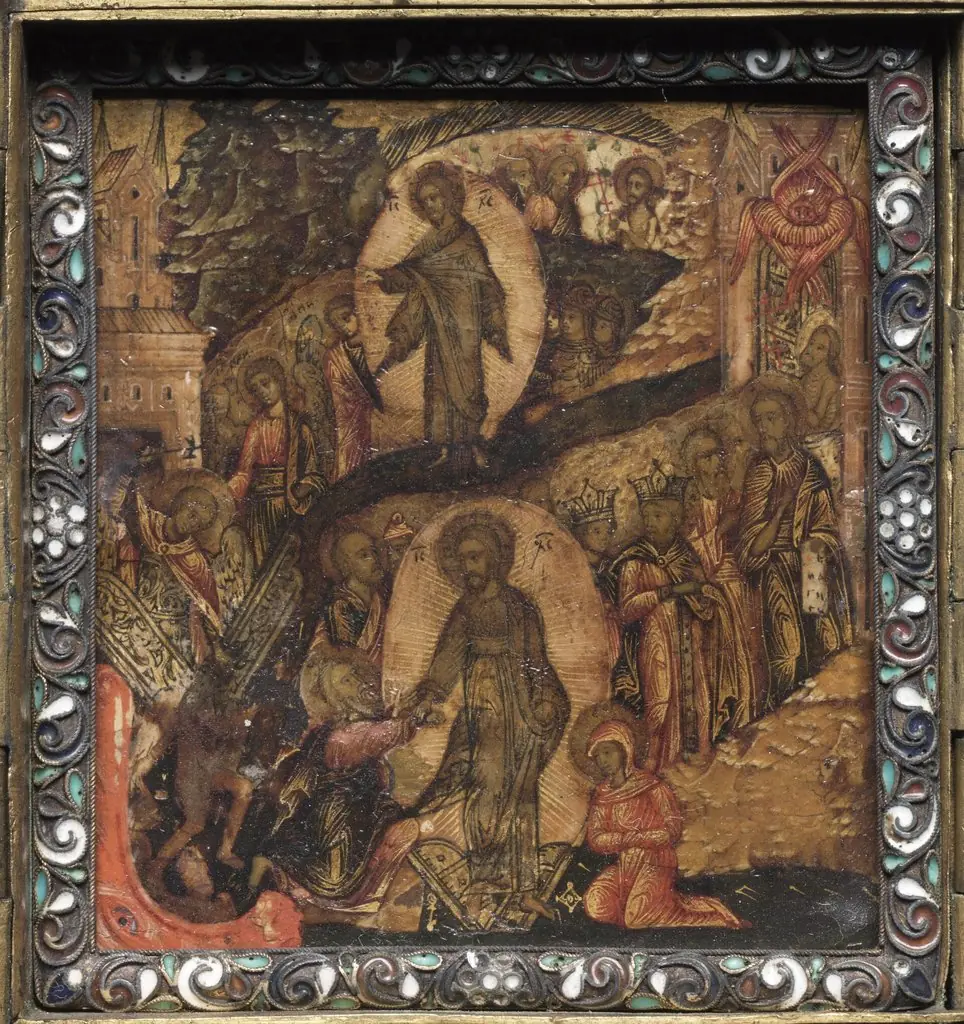
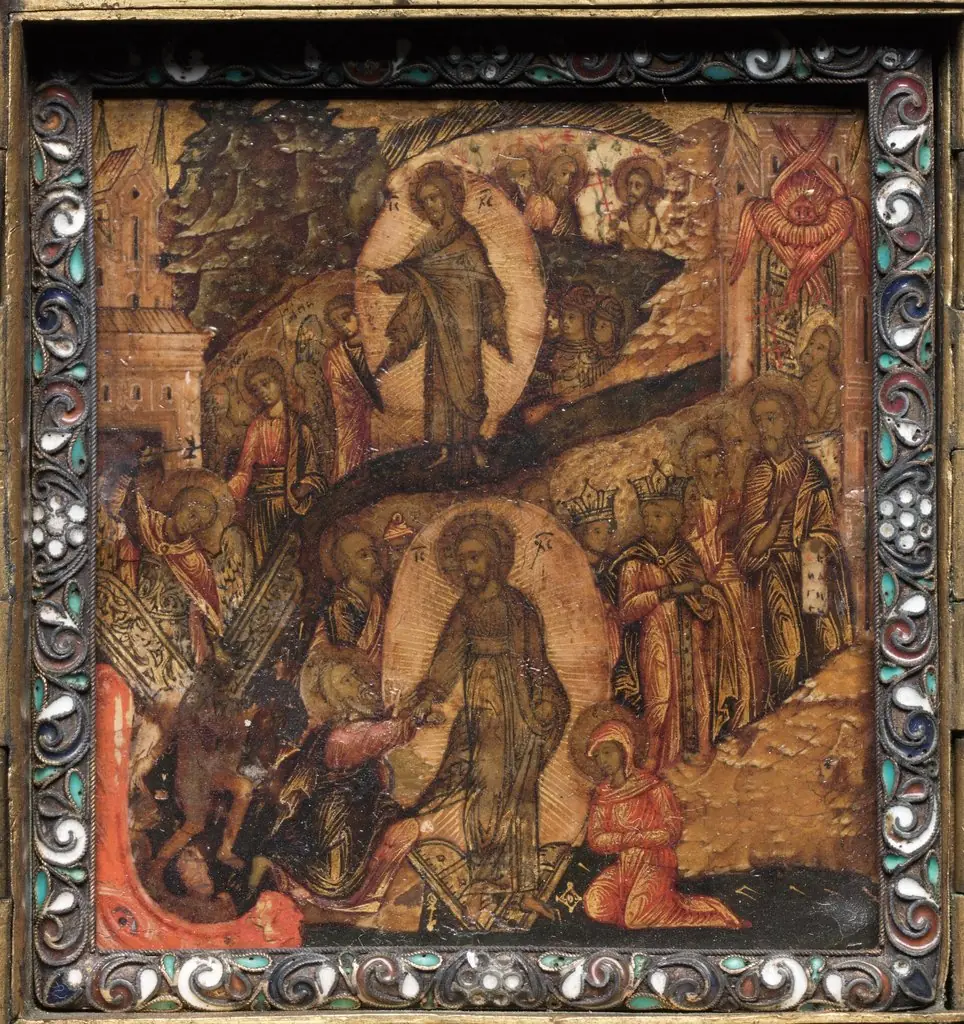
This small painted panel, titled Portable Triptych Icon: The Crucifixion, depicts a central scene from Christian theology. It features a figure affixed to a cross, flanked by three standing individuals. The artwork's compact size and triptych format suggest its function as a devotional object, likely intended for personal contemplation or travel. The composition emphasizes the solemnity of the event through its focused arrangement of figures.
Technique & Style
The artist employed a dark, unadorned background, which serves to sharply delineate the figures, making them appear almost as distinct cutouts against the deep space. This use of strong contrasts between light and shadow, known as chiaroscuro, enhances the dramatic impact and three-dimensionality of the forms. The panel's frame is further adorned with intricate, repetitive patterns, suggesting a metallic or carved decorative border that encloses the sacred image.
Artist & collection