Artwork
Reconciliation of Absalom and David (Réconciliation d'Absalom et de David)
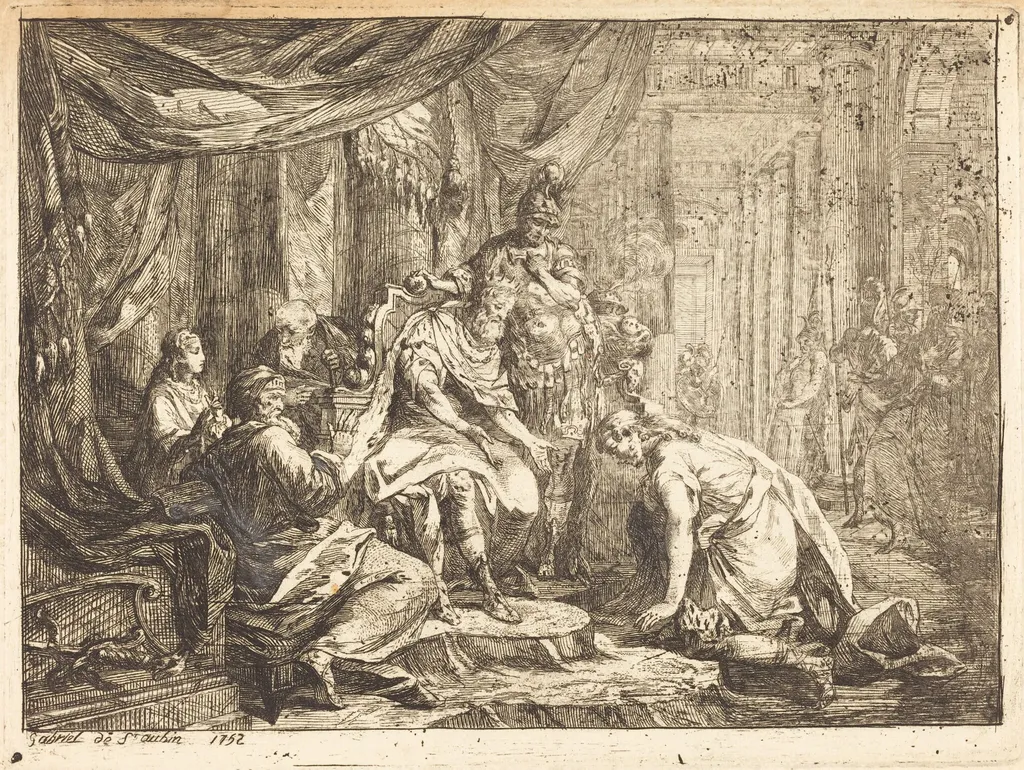
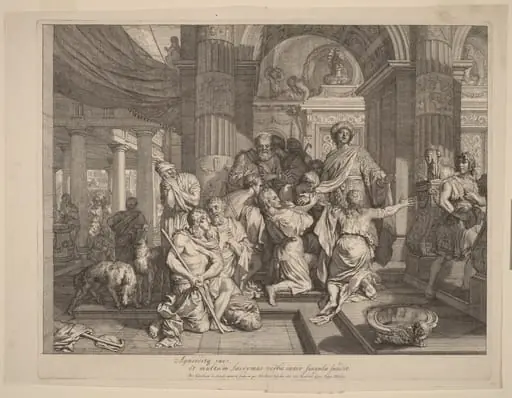
Reconciliation of Absalom and David (Réconciliation d'Absalom et de David) is a graphite print by the Romanticist artist Gabriel de Saint-Aubin. It dates from 1752 and is held in the collection of the National Gallery of Art.
- Inscription
- Inscribed:recto: in plate, below image, at left: Gabriel de St. Aubin 1752; verso: none
- Markings
- Marked:recto: at lower right, blind stamp of Alexandre-Pierre-François Robert-Dumesnil (Lugt 2200); verso: National Gallery of Art
About this work
Overview
This piece reflects the artist's engagement with historical and religious subjects alongside his more famous genre scenes and caricatures.
Gabriel de Saint-Aubin's 'Reconciliation of Absalom and David' (1752) is an etching reworked in graphite on laid paper, depicting the biblical narrative from 2 Samuel where King David forgives his rebellious son Absalom. The composition centers on David seated upon a throne, receiving the kneeling Absalom, surrounded by courtiers who witness the emotional restoration of their relationship. Executed in 1752, the work demonstrates Saint-Aubin's skill in combining the precision of etching with the soft tonal modulation of graphite to enhance the dramatic gravity of the scene.
The artist utilized the metal plate to create the primary linear structure, subsequently applying graphite to soften contours and deepen shadows, a technique characteristic of his experimental approach to printmaking during the mid-18th century. This piece reflects the artist's engagement with historical and religious subjects alongside his more famous genre scenes and caricatures. While the figures possess a certain rigidity typical of the period's academic training, the work effectively conveys the psychological weight of the reconciliation.
It stands as a significant example of Saint-Aubin's graphic output, illustrating his ability to adapt traditional biblical iconography to the intimate scale and expressive possibilities of the etching medium.
Subject & Meaning
The composition depicts the moment from the Old Testament when King David receives his wayward son Absalom, who kneels before the throne. Though the figures appear formally rigid, the gesture of kneeling and the juxtaposition of regal authority with filial supplication suggest themes of forgiveness and political restoration.
Technique & Style
Saint‑Aubin incised the image directly into a copper plate, allowing the burr of the drypoint to hold ink in the furrows. After printing, he added graphite strokes on the paper, softening shadows and enhancing texture. The laid‑paper surface, with its faint ribbed pattern, contributes to the work’s subtle tonal range.
History & Provenance
Created in Paris during the artist’s mature period, the print was circulated among collectors of French prints in the mid‑eighteenth century. Documentation traces its ownership through several European collections before entering a museum holding in the early twentieth century.
Context
The subject aligns with the Enlightenment’s interest in moral exempla drawn from biblical narratives. Saint‑Aubin, known for both genre scenes and technical experiments, employed drypoint, a method favored for its expressive line quality, to render a scene traditionally illustrated in larger oil paintings.
Legacy
While not as widely reproduced as later biblical prints, this work illustrates Saint‑Aubin’s skill in merging printmaking with drawing, influencing subsequent French artists who explored mixed‑media approaches in the late eighteenth century.
Own this work as a print
Artist & collection


- Paul before Félix (Large Plate)
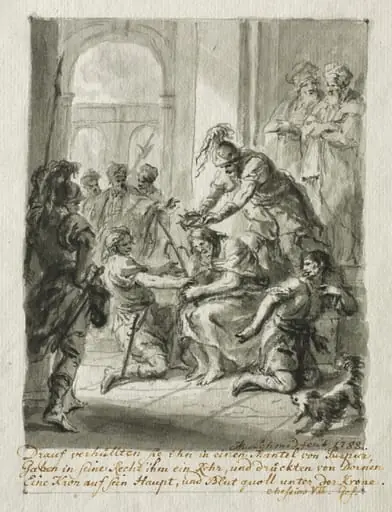 Christ Crowned with Thorns
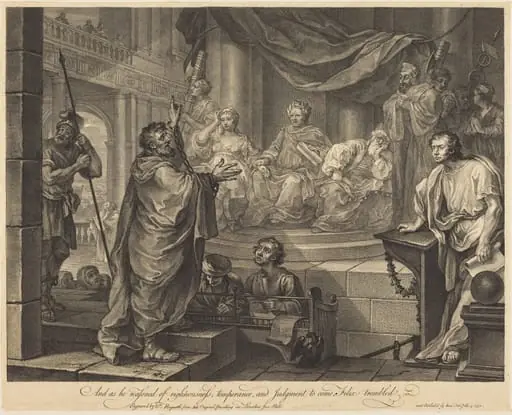 Paul before Felix
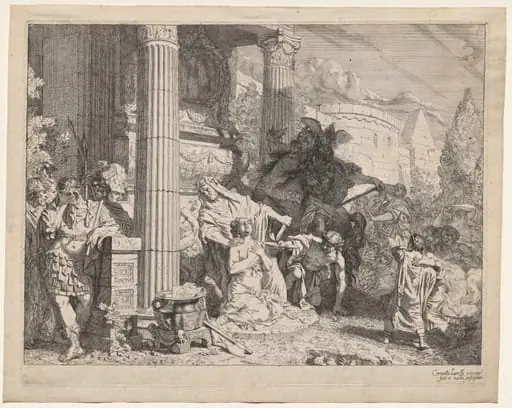 The Sacrifice of Polyxena
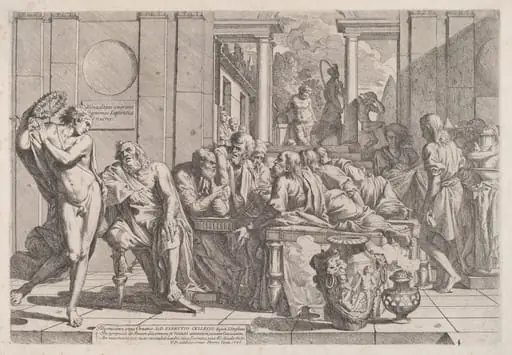 The Symposium
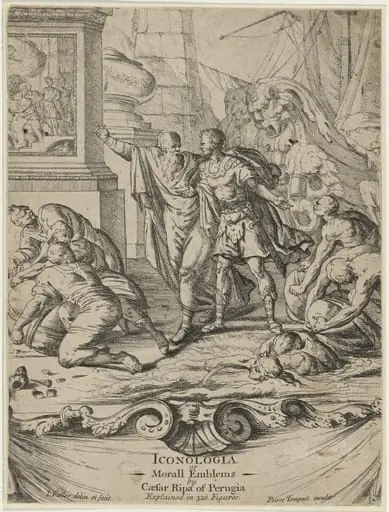 Iconologia or Morall Emblems by Caesar Ripa
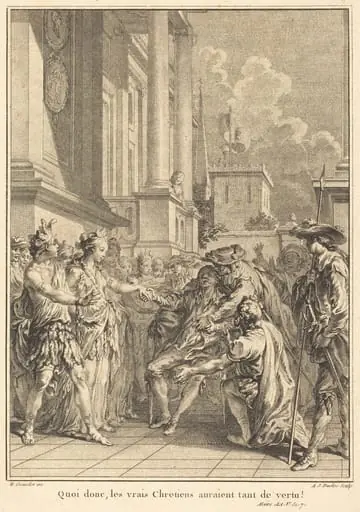 Quoi donc, les vrais Chretiens auraient tant de vertu!
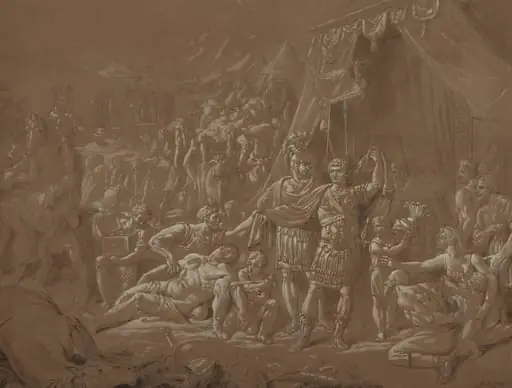 A Scene from the Life of Trajan
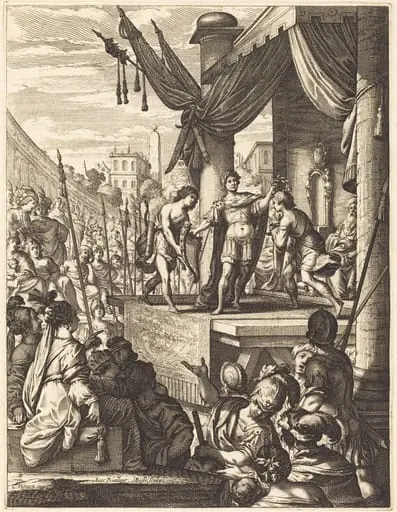 Illustration to Jean Desmarets' "L'Ariane"
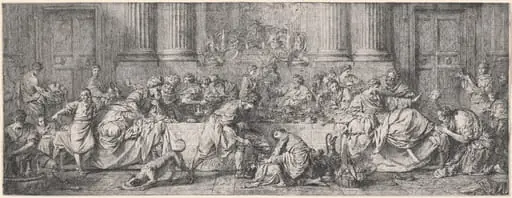 The Feast in the House of Simon
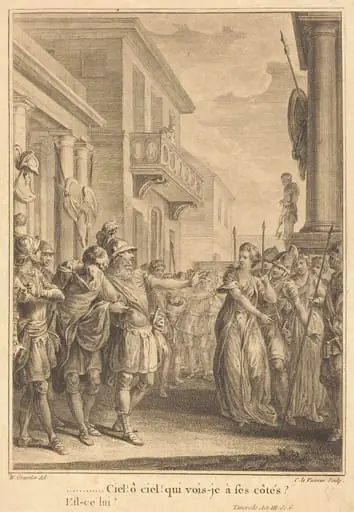 Ciel! ô ciel! qui vois-je à ses côtés?
 Joseph Reveals Himself to His Brothers