Artwork
Shimla. View North of Mount Jakko
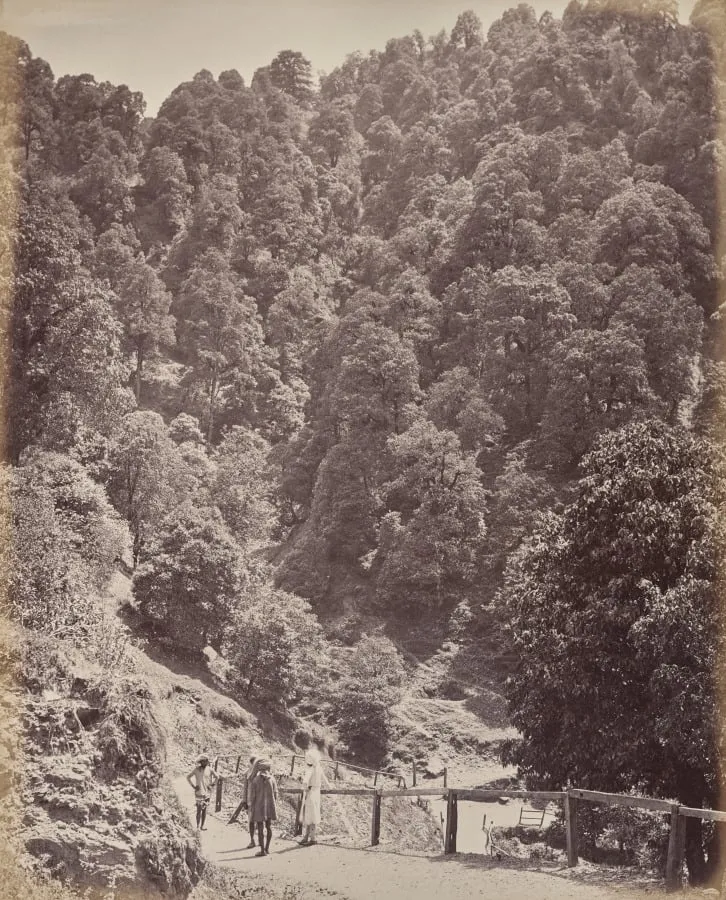
Shimla. View North of Mount Jakko is a photography by the Impressionist artist Samuel Bourne. It dates from 1866 and is held in the collection of the Cleveland Museum of Art. This photograph, titled 'Shimla.
- Accession no.
- 2024.5.12
- Credit line
- Severance and Greta Millikin Purchase Fund
About this work
The image shows Shimla just as the British made it their summer capital, freezing a moment before modern roads and hotels changed the view.
You see a quiet hillside town under a wide sky, with snow-capped peaks in the distance. Houses and trees dot the slopes, and a few people walk along a dirt path.
This isn’t a painting, it’s an early photograph. Bourne lugged heavy cameras and glass plates up the Himalayas in the 1860s, long before most people could travel there. The image shows Shimla just as the British made it their summer capital, freezing a moment before modern roads and hotels changed the view.
To see how photography shaped how we picture faraway places, look up Samuel Bourne (British, 1834–1912).
Overview
This photograph, titled 'Shimla. View North of Mount Jakko', is one of a series of images captured by Samuel Bourne in the 1860s. It presents a serene view of Shimla, a hillside town in the Himalayas.
Subject & Meaning
The image depicts a tranquil hillside town with snow-capped peaks in the distance, houses and trees on the slopes, and people walking along a dirt path. It captures Shimla at a particular moment, just before the arrival of modern infrastructure.
Technique & Style
The photograph is a product of early photographic techniques, involving heavy cameras and glass plates. Bourne's work demonstrates the challenges and capabilities of photography during this period.
History & Provenance
Samuel Bourne, a British photographer, traveled to the Himalayas in the 1860s, documenting the region's landscapes and towns. This image is part of a larger album that includes architectural studies and cityscapes from the same period.
Context
The photograph was taken as Shimla was being established as the British summer capital, freezing a moment in the town's history before significant changes occurred.
Artist & collection

Artist
Samuel Bourne was a British photographer known for his prolific seven years' work in India, from 1863 to 1870.

 Ceylon Views to Adam's Tooth
 Shimla
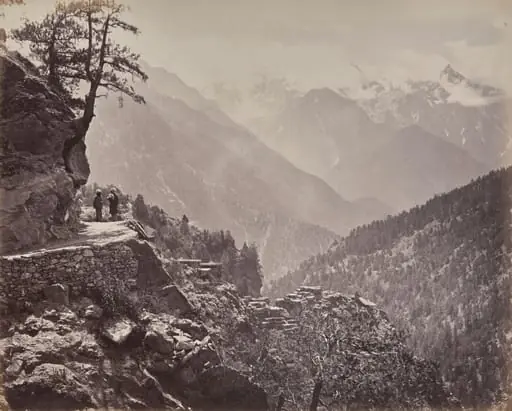 The Upper Himmalayahs. View on the New Road between India and China. Mt. Pangi with the Snowy Peaks of China in the Distance
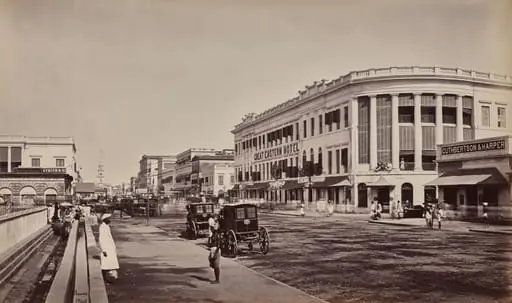 Calcutta. Old Court House Street
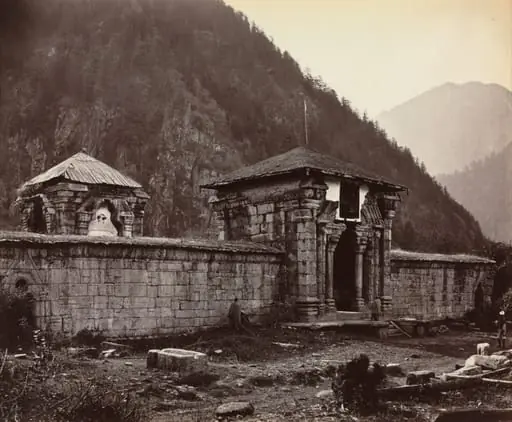 Temple at Naveshera, Kashmir, India
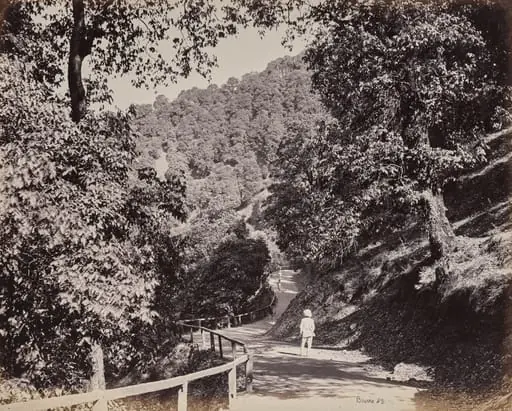 Shimla. The Mall near Rabq Lodge
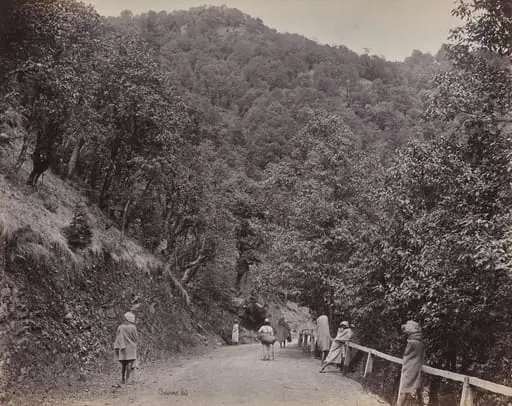 Shimla. The Mall or Principal
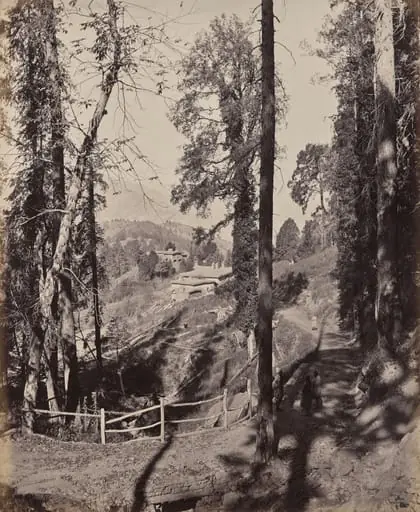 Murree. A Hill Station in the Himmalayahs, View Through the Forest
- Shimla. Sir Hugh Rose's Bungalow at Mahasso
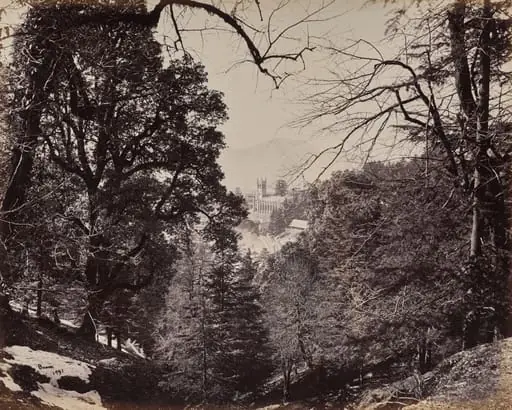 Shimla. The Church Through the Trees, from Jakko
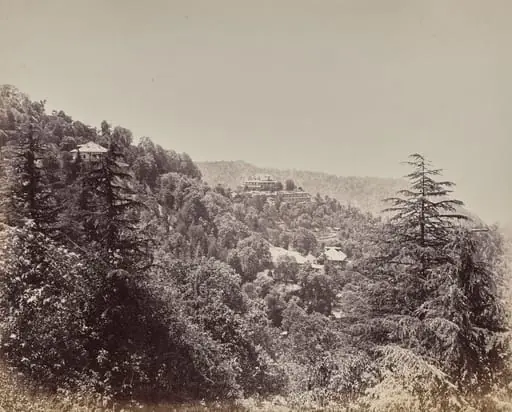 Shimla. The Yarrows and Neighboring Hills
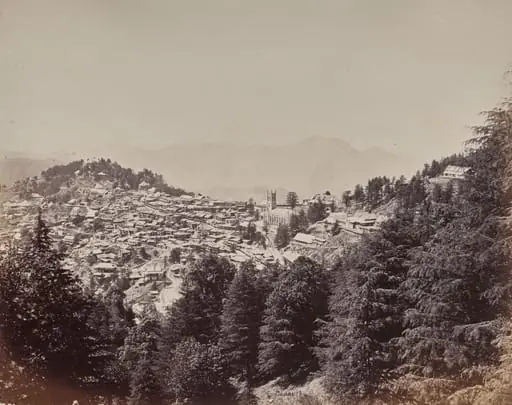 Shimla. From Mount Jakko, Looking West
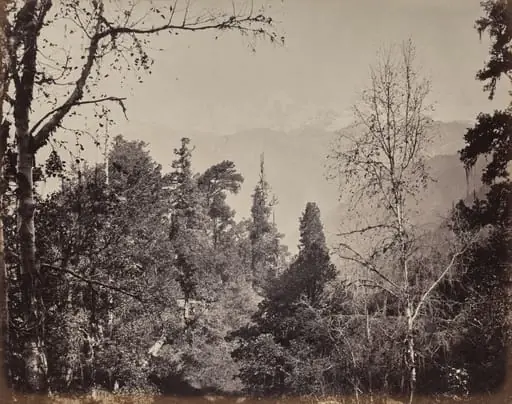 The Upper Himmalayahs. View of the Mountain of Bunderpoonch with the Jumnootri Peak, 20,458 above the Level of the Sea
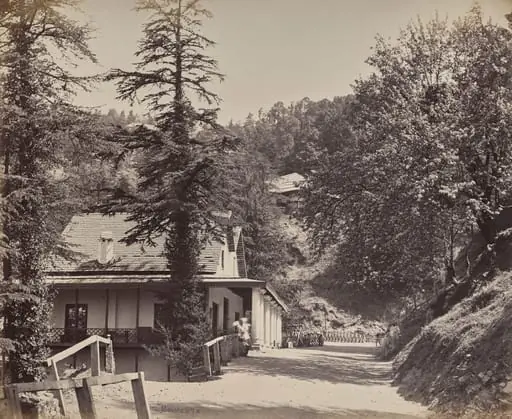 Simla. The Mall near Combermere Bridge
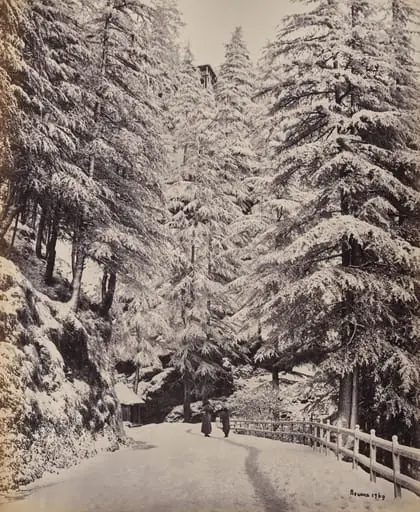 Shimla. View on the Mall in Winter
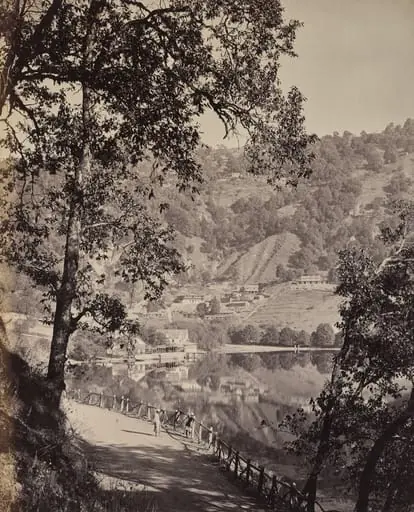 Hyree Lake. Hill Station in the Himmalayahs. View of the Taj Lake with Assembly Rooms, Lhutse
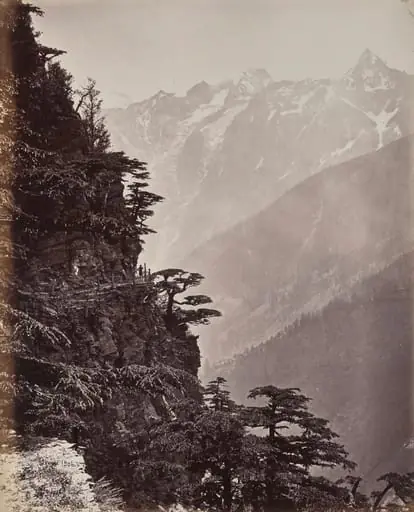 The Upper Himmalayahs. View on the New Road Near Rogi