Artwork
Spanish Peaks, Southern Colorado, Late Afternoon
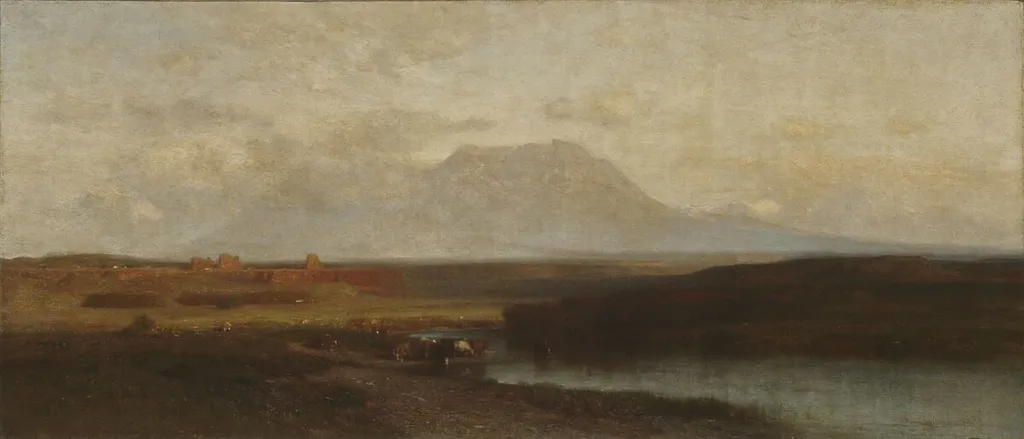
Spanish Peaks, Southern Colorado, Late Afternoon is an oil painting by the Hudson River School artist Samuel Colman. It dates from 1887 and is held in the collection of the Metropolitan Museum of Art.
About this work
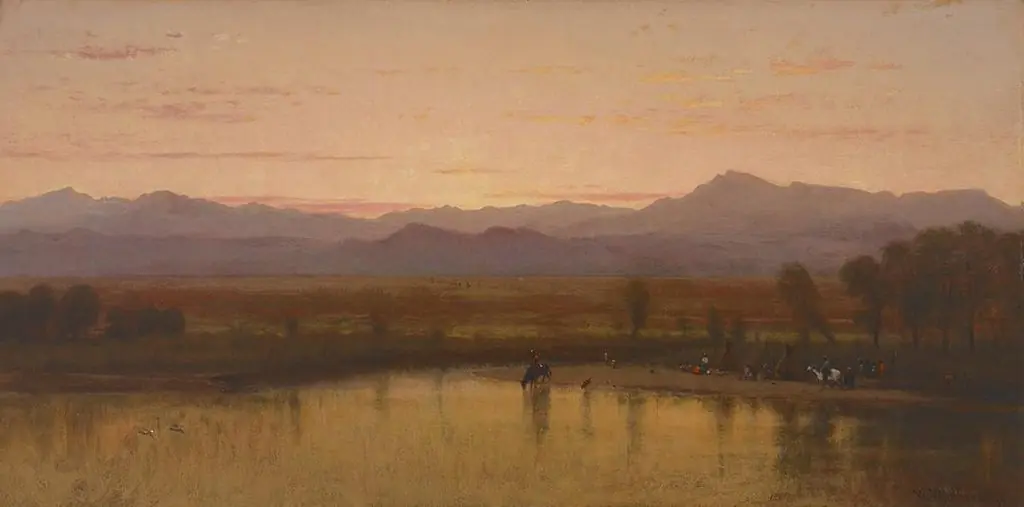
Two purple mountains rise over a wide river, with a few cattle grazing near the water at dusk. Colman painted this in 1887 after traveling through Colorado by train. He wanted city viewers back East to feel the quiet vastness of the West, no drama, just light fading on rock and water. To see how other artists painted rivers at twilight, look up landscapes.
Overview
In the foreground, a few cattle graze peacefully near the water's edge, grounding the monumental landscape in a sense of quiet, pastoral tranquility.
Painted in 1887, Samuel Colman's Spanish Peaks, Southern Colorado, Late Afternoon depicts the distinctive twin summits of the Spanish Peaks rising above a broad river valley in the American West. Executed in oil on canvas, the composition features the mountains rendered in soft purple hues against a fading sky, emphasizing the atmospheric effects of late afternoon light. In the foreground, a few cattle graze peacefully near the water's edge, grounding the monumental landscape in a sense of quiet, pastoral tranquility.
Colman created this work following a train journey through Colorado, aiming to convey the serene vastness of the region to an Eastern urban audience rather than dramatizing the frontier. The painting reflects Colman's mature style within the Hudson River School tradition, where he moved away from the turbulent, sublime narratives of earlier generations toward a more poetic and luminous interpretation of the American landscape. This piece stands as a significant example of late 19th-century American landscape painting, illustrating the shift toward capturing the specific light and mood of the Western terrain.
Subject & Meaning
Colman's depiction of the Spanish Peaks aimed to convey the expansive, undramatic character of the American West to an Eastern audience. Rather than focusing on grand, heroic narratives, the artist emphasized the subtle beauty of natural light at twilight. The scene, with its grazing cattle and fading light on rock and water, was intended to immerse urban viewers in the quiet immensity of the landscape, inviting contemplation rather than spectacle.
Context
Samuel Colman created this painting in 1887, following his travels through Colorado by train. His journey provided direct inspiration for capturing the region's distinctive topography and atmospheric conditions. The artwork served as a visual bridge, transporting the experience of the Western landscape to city dwellers in the East.
It reflects a desire to share the serene, unadorned beauty of the American frontier with those who had not witnessed its quiet grandeur firsthand.
Artist & collection
Artist
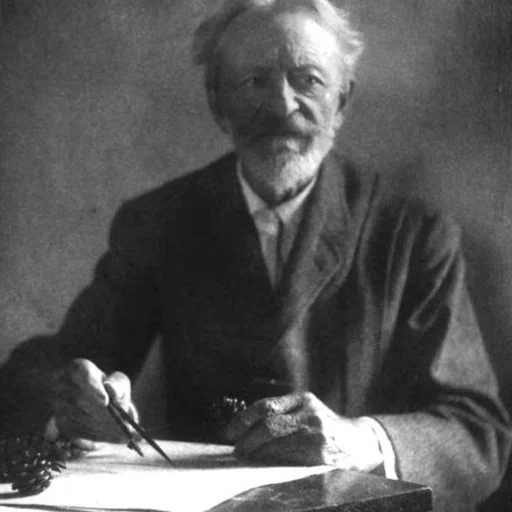
Samuel Colman (March 4, 1832 – March 26, 1920) was an American painter, interior designer, and writer, probably best remembered for his paintings of the Hudson River.

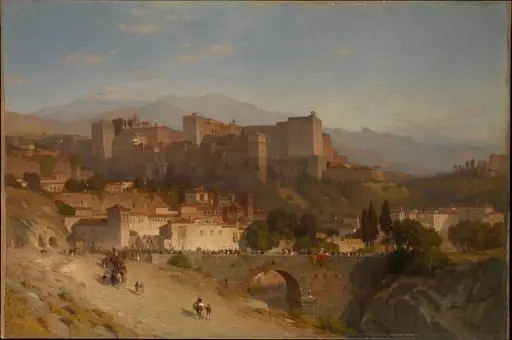
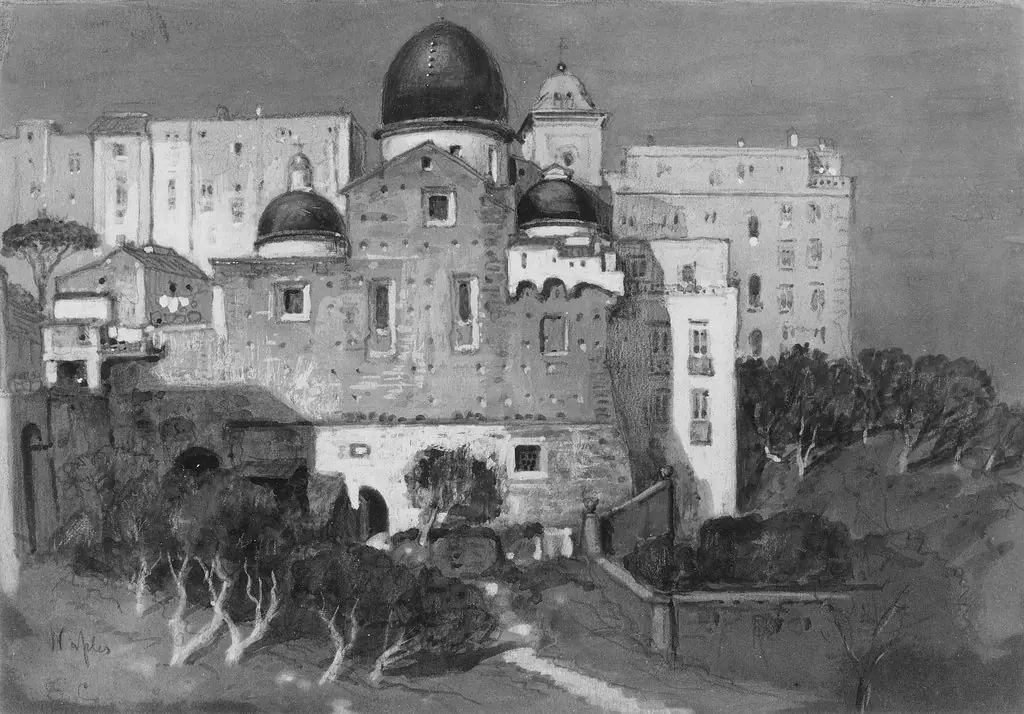
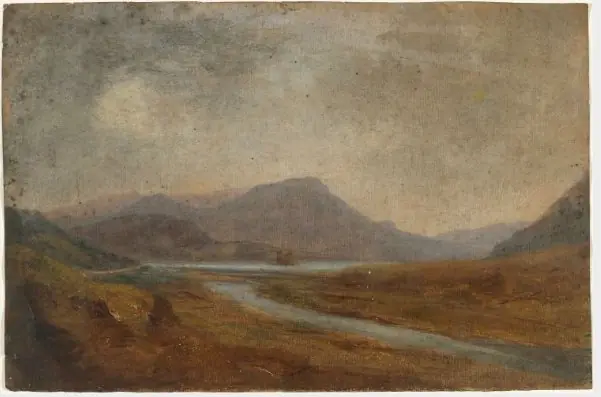 Hen's Castle, Lough Corrib, County Galway
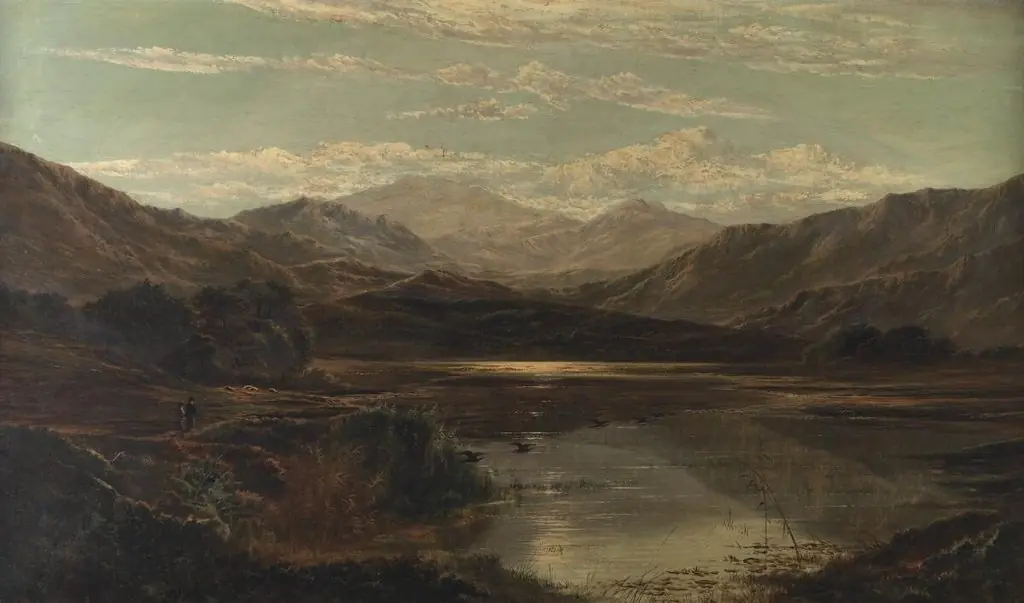 Snowdon from Capel Curig
 Gegend in der Rheinpfalz
 Landscape with Sheep
 A View of the Maritime Alps
 Landscape with Cattle, Italy
 Monte Circeo Seen from the District of Terracina
 Landscape near Blokhus, Jutland
 Souvenir of Roquemaure in the Gard
 Twilight Landscape
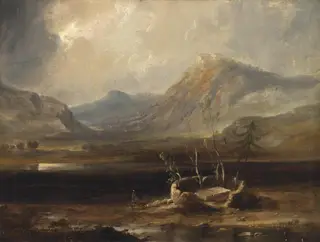 North Wales Landscape Llanberis
- Twilight on the Plains, Platte River, Colorado