Artwork
Naples

Naples is an unspecified painting by the American Impressionist artist Samuel Colman. It dates from 1888 and is held in the collection of the Metropolitan Museum of Art.
About this work
Technique & Style
Colman’s technique combines wet-on-wet passages for atmospheric effects with fine, controlled strokes to define architectural details and leaf textures.
Executed in 1876, Naples is a small oil-on-panel landscape by Samuel Colman.
The painting’s modest support measures 13.7 cm in height by 20.2 cm in width, and the handling is fluid yet precise, with quick, confident brushwork that captures luminous Mediterranean light and foliage. Colman’s technique combines wet-on-wet passages for atmospheric effects with fine, controlled strokes to define architectural details and leaf textures. The palette is dominated by warm greens and ochres enlivened by bright highlights, evoking the southern Italian climate and vegetation.
The composition balances close observation of nature with a picturesque framing of buildings and trees, characteristic of Colman’s plein-air approach during his European travels.
History & Provenance
Samuel Colman created the painting Naples in 1876. The work is currently held in the collection of the Metropolitan Museum of Art. While the specific commission details and earlier ownership chain are not documented in the provided sources, the creation date is established as 1876. The painting depicts a tree and is classified as an oil painting on canvas.
The painting Naples by Samuel Colman is part of the Metropolitan Museum of Art's collection, recorded under inventory number 24.158. It entered the museum's holdings in 1876 and has been exhibited in the institution's American Wing galleries.
The work measures 13.7 cm in height and 20.2 cm in width, and was created in 1876. It has been included in exhibitions focused on 19th-century American landscape painting at the museum.
Overview
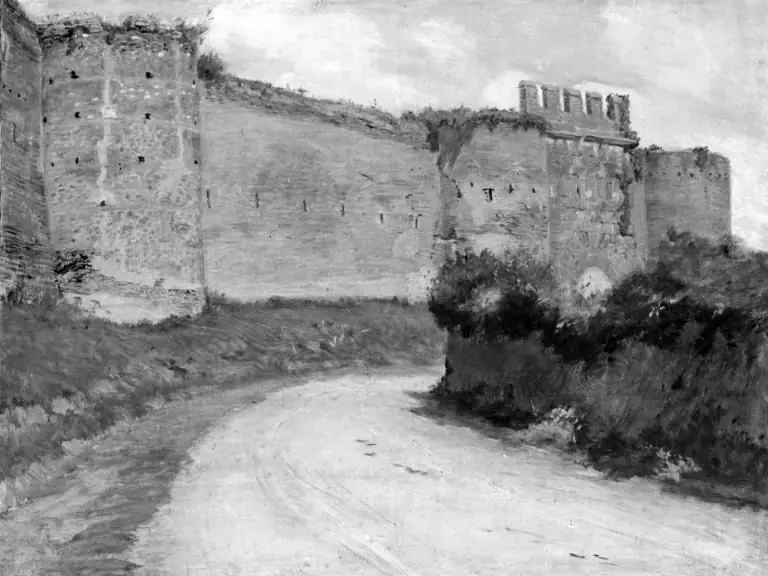
Samuel Colman’s 1888 canvas titled Naples depicts a muted cityscape of the Italian port, rendered in a palette of grays, whites, and occasional darker shadows. The composition foregrounds a textured, rocky surface that leads the eye toward a cluster of modest buildings capped with domed roofs, while a few sparse trees punctuate the scene.
Subject & Meaning
The painting presents a quiet, perhaps weather‑worn view of Naples, emphasizing the architectural forms rather than bustling activity. The subdued tones and lack of human figures suggest a contemplative observation of the city’s historic fabric, inviting viewers to consider the passage of time on its structures.
Context
At the time of its execution, American artists were increasingly traveling abroad, absorbing European light and architecture. Colman’s choice of Naples fits within this trend, offering an American perspective on a classic Mediterranean setting while maintaining his characteristic brushwork.
Own this work as a print
Artist & collection

Artist
Samuel Colman (March 4, 1832 – March 26, 1920) was an American painter, interior designer, and writer, probably best remembered for his paintings of the Hudson River.




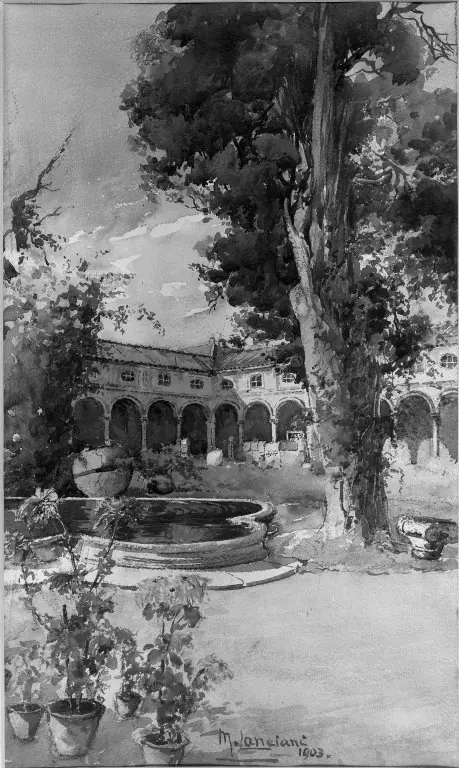
- ''Cloister'' - Cloister of Santa Maria degli Angeli (Rome).
 Antibes
 Vila de la Balcic
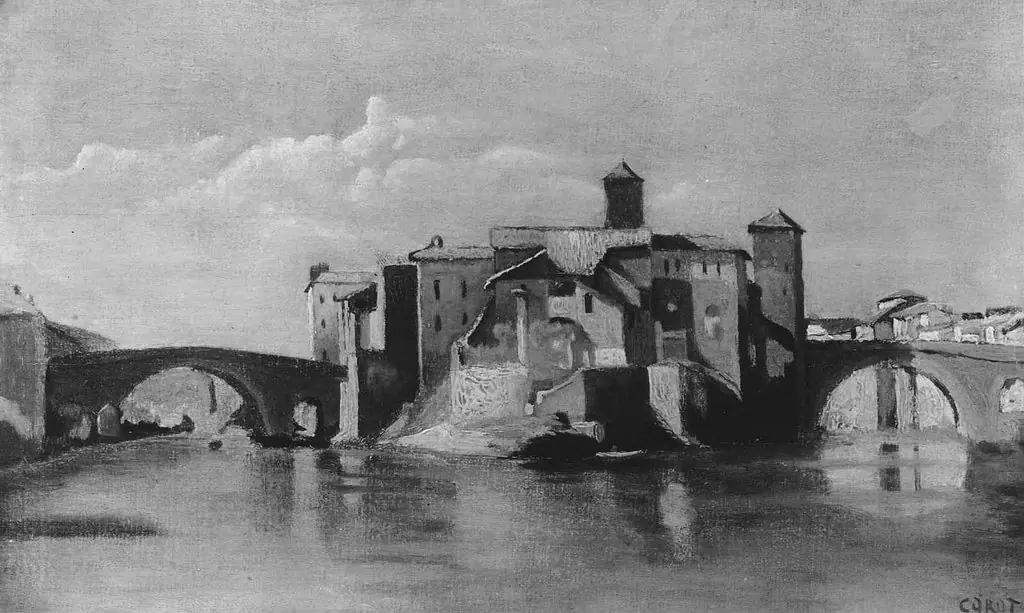 Island of San Bartolomeo, Rome
 Convent of Xirapatamo
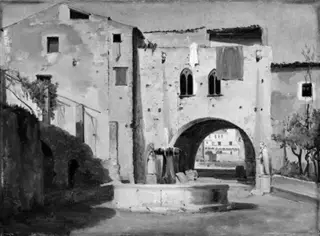 A Fountain in an Italian Town
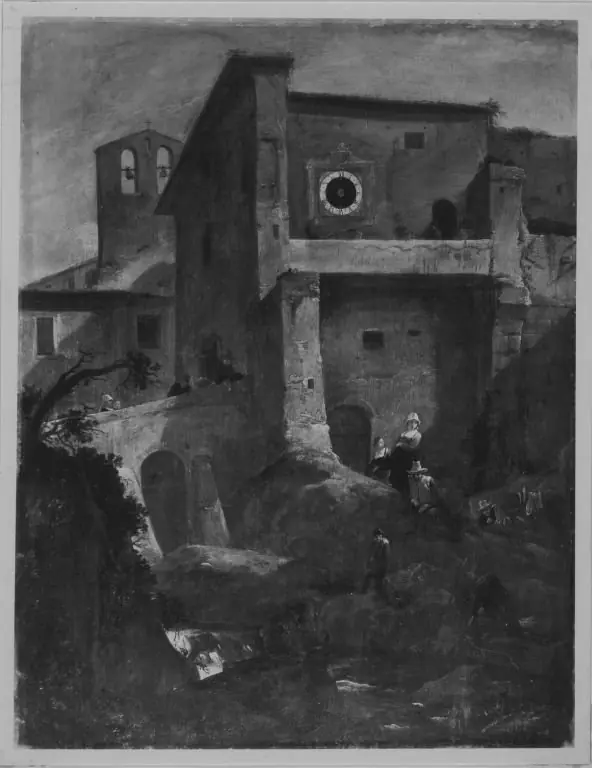 Gebirgskloster
 St. Julien le Vauvre, Vue extérieur
 În cartierul vechi (Marsilia)
 View From Beirut
 Montagnes de l'Ermitage, Provence
 Muren om Rom ved Porta Latina