Artwork
The Hill of the Alhambra, Granada
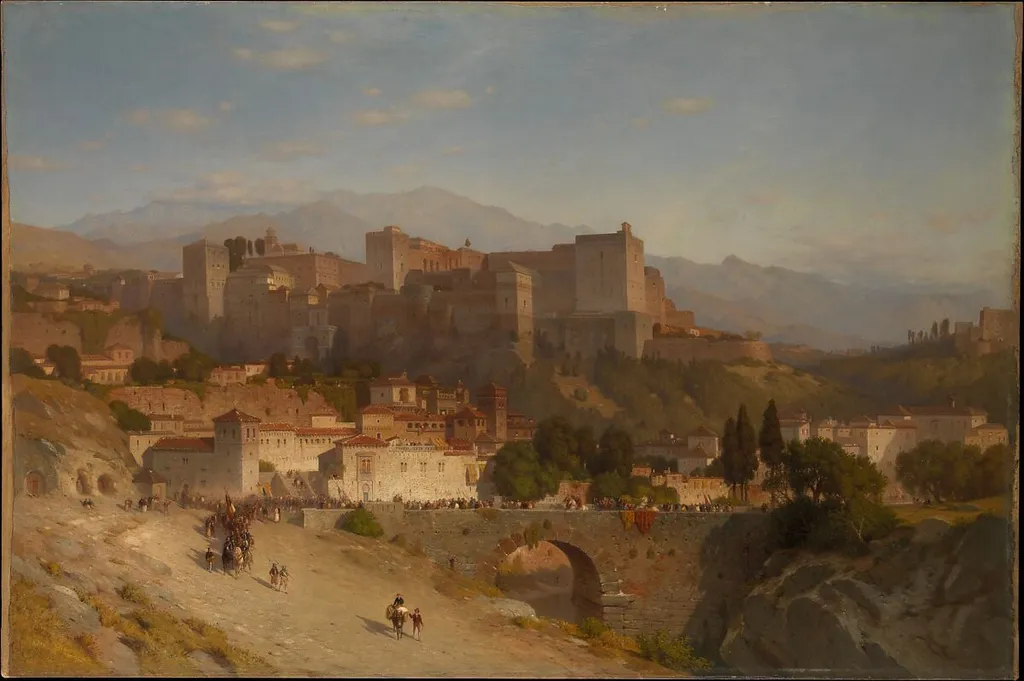
The Hill of the Alhambra, Granada is an oil painting by the Hudson River School artist Samuel Colman. It dates from 1865 and is held in the collection of the Metropolitan Museum of Art.
About this work
Subject & Meaning
Painted by Samuel Colman in 1865, the work functions as a landscape genre piece that captures the physical setting of the Alhambra hill.
The Hill of the Alhambra, Granada portrays a scenic view of the Spanish town, featuring specific architectural and natural elements such as buildings, a bridge, and trees. Painted by Samuel Colman in 1865, the work functions as a landscape genre piece that captures the physical setting of the Alhambra hill. The composition centers on the town and its structures, presenting a visual record of the location rather than an allegorical narrative.
While the title references the famous fortress complex, the painting's subject matter is defined by its depiction of the surrounding town, infrastructure, and vegetation. The artwork stands as a representation of the site's topography and built environment, focusing on the tangible features of the landscape as observed by the artist.
Technique & Style
Executed in 1865, Samuel Colman's The Hill of the Alhambra, Granada is an oil painting on canvas. The work measures approximately 120.7 by 184.2 centimeters, establishing a substantial horizontal format typical of grand landscape compositions. As a landscape genre piece, the artist utilized oil paint to render specific architectural and natural elements, including buildings, a bridge, trees, and the surrounding town.
The application of oil on this woven support allowed for the depiction of the complex topography and structures associated with the Alhambra site. While the specific handling of the brushwork or current conservation state is not detailed in the available records, the material composition remains defined by traditional nineteenth-century practices of applying pigmented oil to a fabric ground.
History & Provenance
The Hill of the Alhambra, Granada is an 1865 oil on canvas landscape by American painter Samuel Colman (1832–1920). Executed while the artist was in Spain, the work portrays the eponymous hill, a bridge, a town, and surrounding trees, matching the subject described in both sources. After its creation, the painting entered the collection of the Metropolitan Museum of Art in New York, where it has remained on permanent display in The American Wing.
The Met’s records list the accession as part of its American art holdings, confirming continuous ownership by the museum since acquisition. The painting’s dimensions (120.7 × 184.2 cm) and medium are documented in the museum’s catalog.
The Hill of the Alhambra, Granada, an 1865 oil on canvas by Samuel Colman, is held in the collection of the Metropolitan Museum of Art in New York. Within the museum's structure, the work is classified under the American Wing. The painting measures 120.7 cm in height and 184.2 cm in width.
While the sources confirm its current location and physical dimensions, no specific inventory or accession numbers are provided in the available records. Furthermore, the provided documentation does not contain details regarding a specific exhibition history for this landscape depicting a bridge, buildings, and trees.
Legacy
The Hill of the Alhambra, Granada, painted by Samuel Colman in 1865, entered the Metropolitan Museum of Art’s collection and is displayed in The American Wing, a placement that has shaped its scholarly reception. As an oil on canvas landscape depicting a bridge, town, and tree, the work exemplifies the 19th‑century American fascination with historic European locales. Its inclusion in a major institutional setting reinforced Colman’s reputation as an artist who bridged American sensibilities with Orientalist subjects, influencing later generations of painters who explored similar thematic terrain.
Documentation of its dimensions and materials, recorded in the museum’s catalog, underscores its physical presence in the museum’s holdings.
Overview
Samuel Colman's The Hill of the Alhambra, Granada, created in 1865, is an oil on canvas landscape. This work depicts a sun-drenched Spanish hillside, featuring the historic Alhambra complex, a town, and a prominent stone bridge spanning a ravine. Although Colman is primarily associated with American scenery, this painting reflects his travels abroad, offering a glimpse into European vistas through an American artistic lens.
Context
As an American artist, Samuel Colman was among the early painters to bring European landscapes directly to audiences in the United States. While known for his contributions to the Hudson River School, his travels through Europe, which yielded works like this, expanded the scope of American landscape painting. The Hill of the Alhambra, Granada thus represents a significant cultural exchange, introducing foreign vistas to a burgeoning American art scene.
Artist & collection
Artist
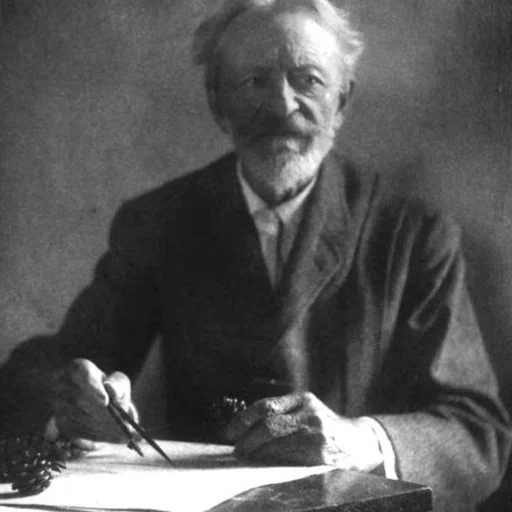
Samuel Colman (March 4, 1832 – March 26, 1920) was an American painter, interior designer, and writer, probably best remembered for his paintings of the Hudson River.

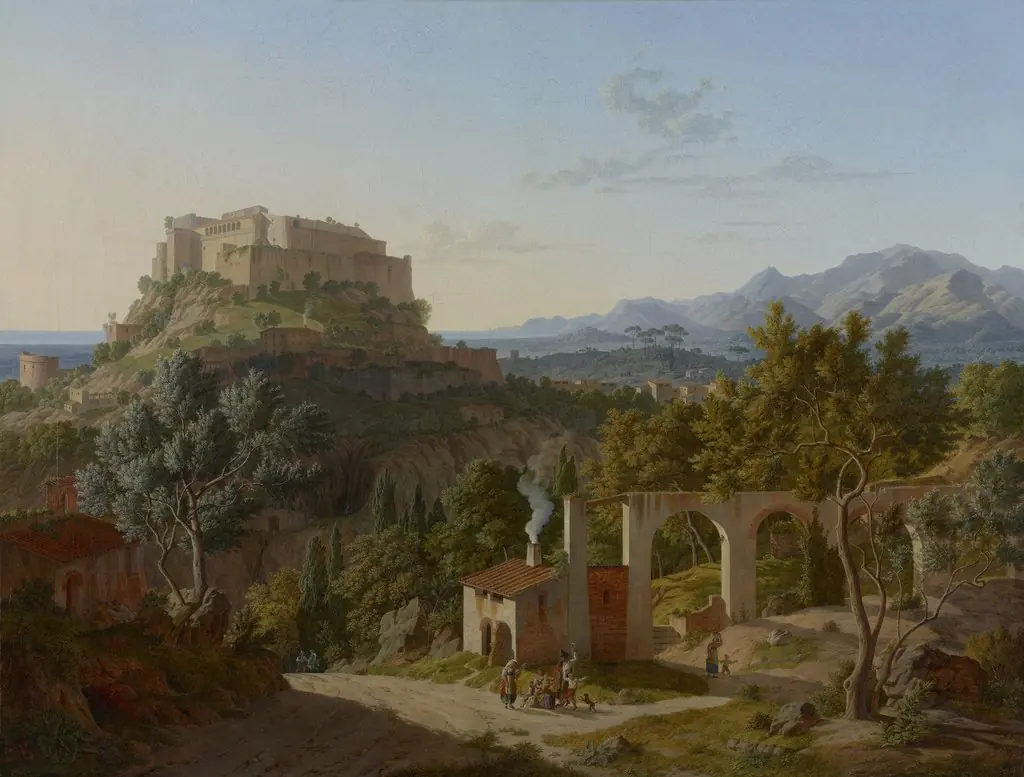 Landscape with the Castle of Massa di Carrara
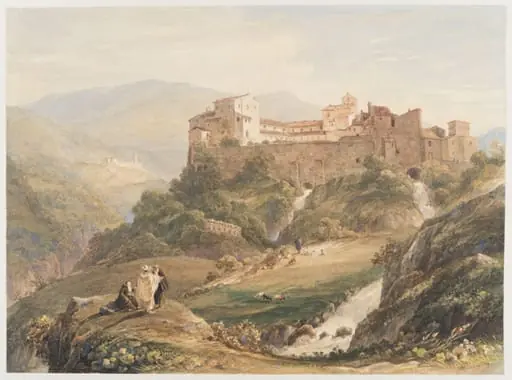 Italian landscape
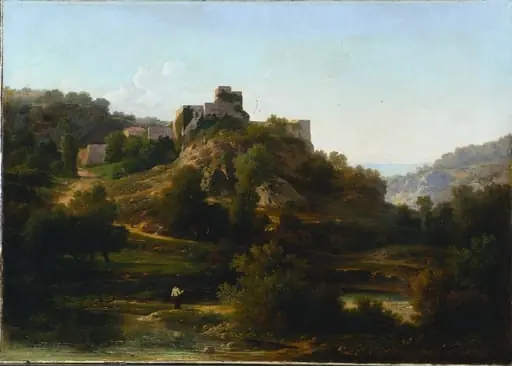 Châteauvieux-sur-Suran
 The Monastery of San Pedro (Our Lady of the Snows)
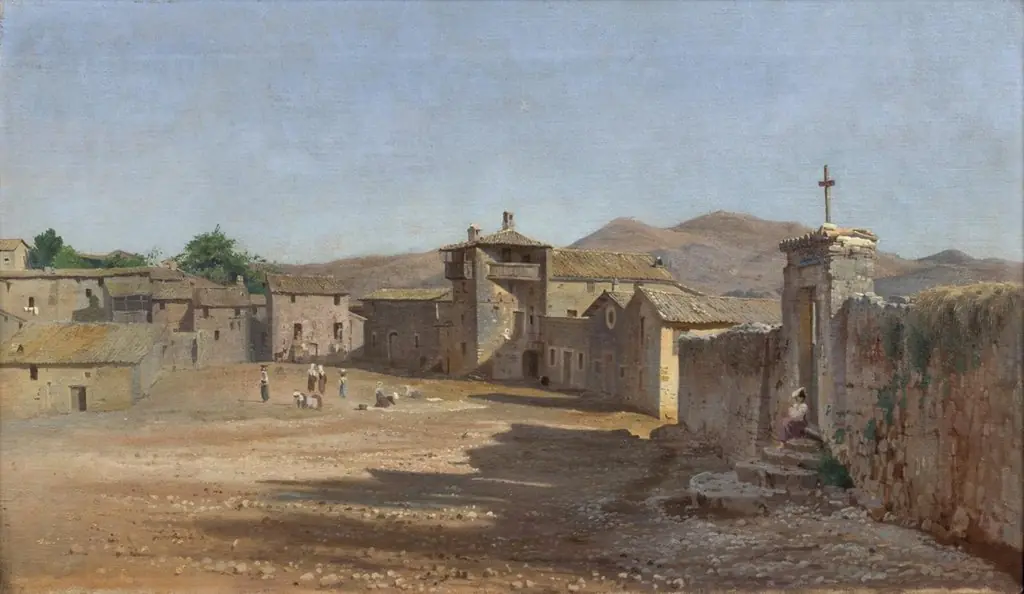 Torvet i Anticoli Corrado, Italien
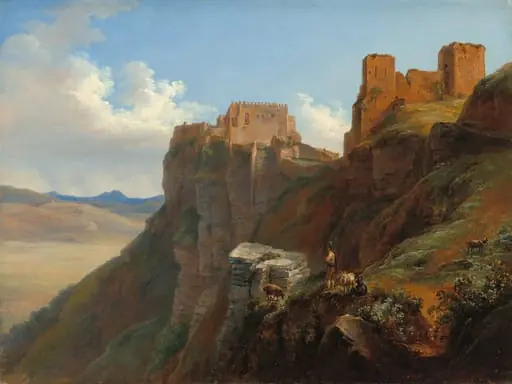 View of the Castello di San Giuliano, near Trapani, Sicily
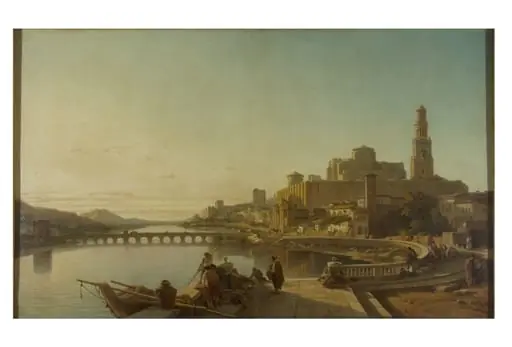 A view of Cordoba, Spain
 View of Florence
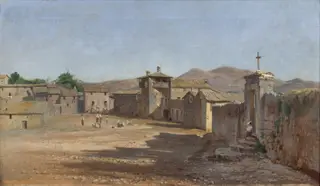 Torvet i Anticoli Corrado, Italien
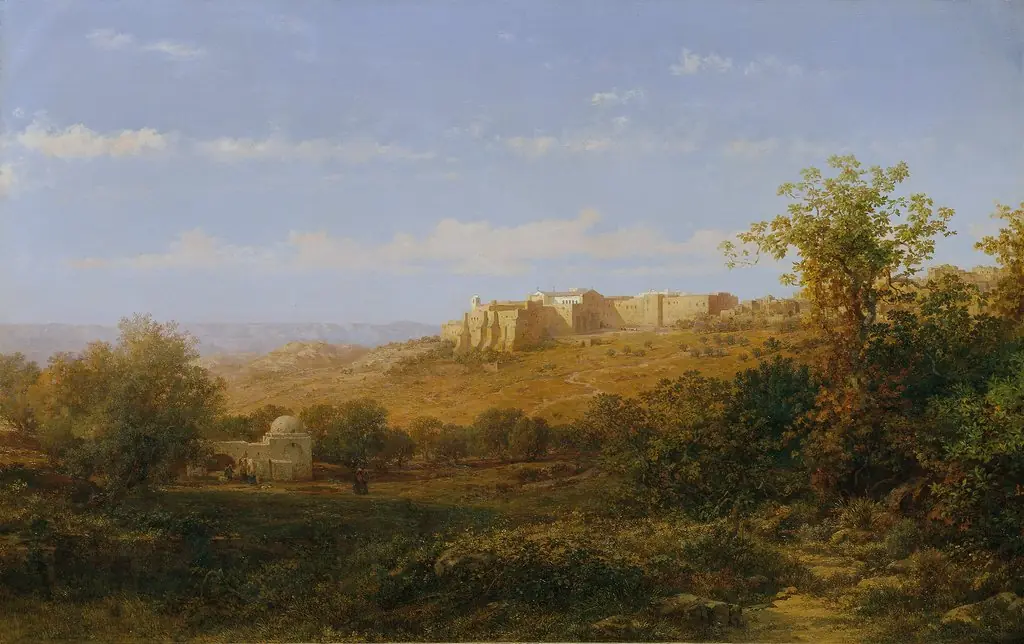 Kloster in Bethlehem
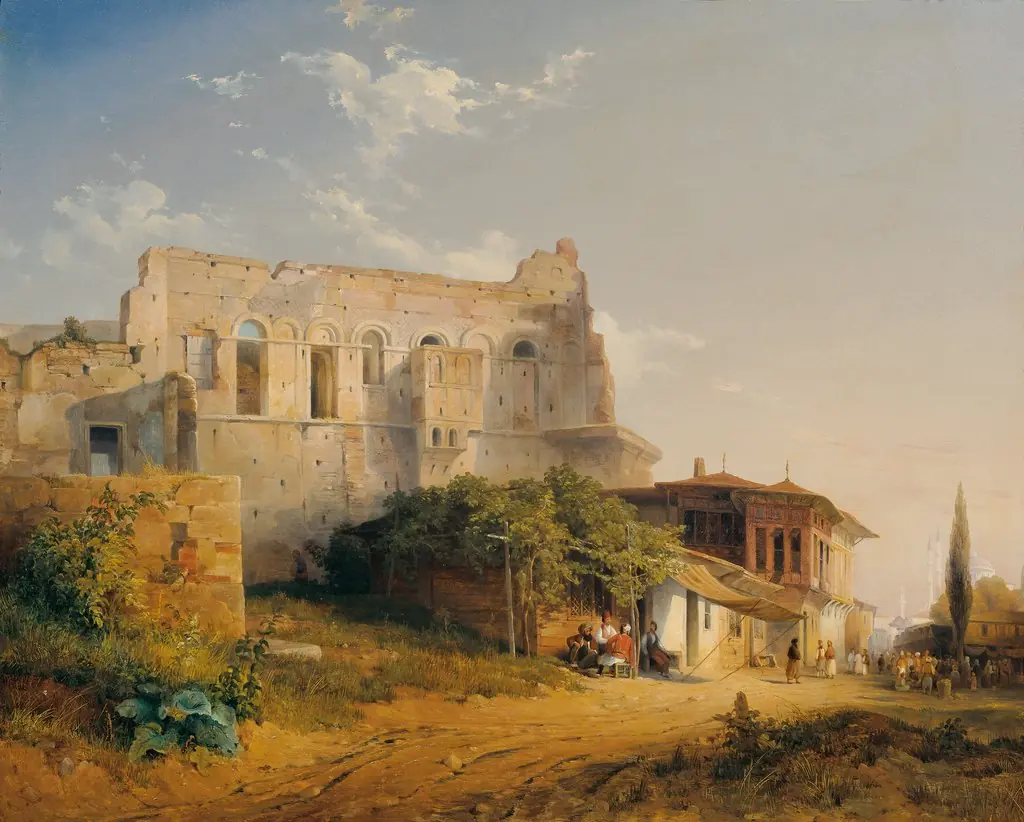 Tekfur Saray in Konstantinopel
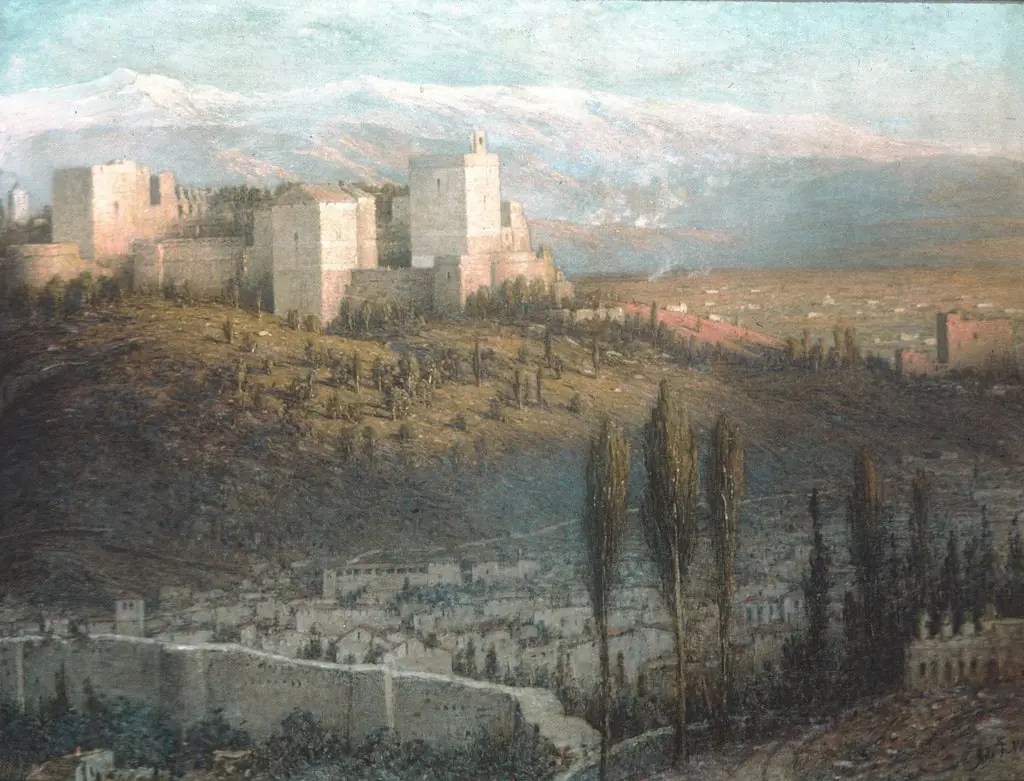
- The Alhambra, Granada, Spain