Artwork
Notre Dame, Paris
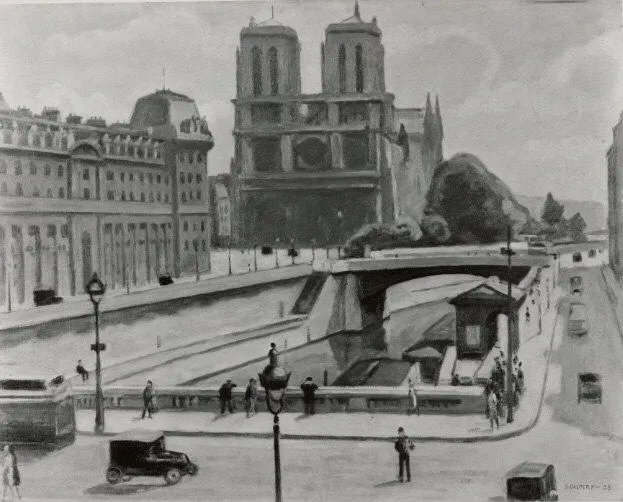
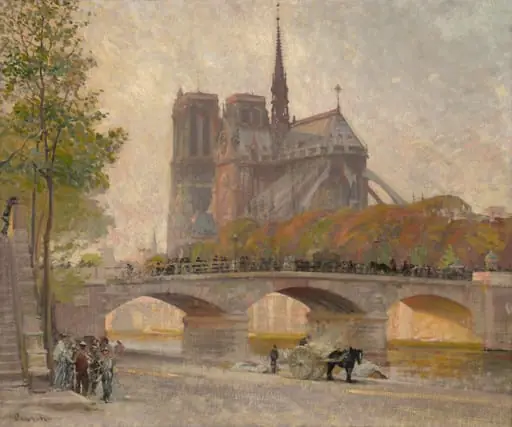
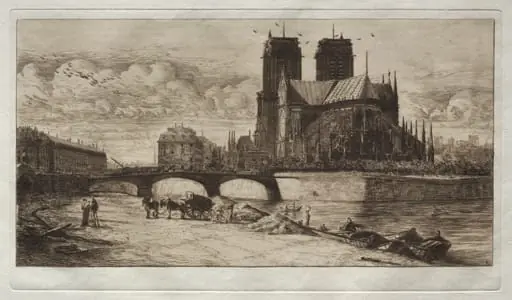
Notre Dame, Paris is an oil painting by the American Impressionist artist Samuel Halpert. It dates from 1925 and is held in the collection of the Metropolitan Museum of Art.
About this work
Subject & Meaning
The work merges urban modernity with historic religious symbolism, suggesting a dialogue between contemporary existence and France’s cultural legacy.
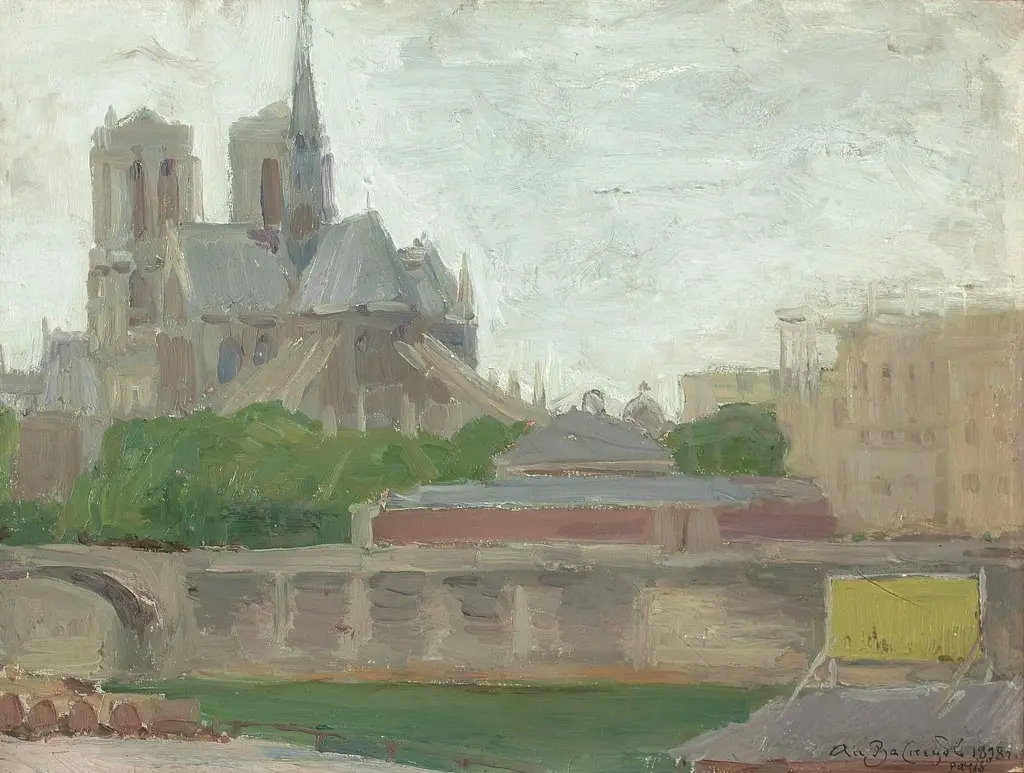
The 1925 oil painting by Samuel Halpert portrays the iconic façade of Notre‑Dame de Paris seen from the quai du Marché‑Neuf, with the Petit Pont and Pont Saint‑Michel framing the scene. A solitary human figure stands on the riverbank, while the cathedral’s towers and the nearby church structure dominate the composition, linking the sacred architecture to everyday Parisian life. The work merges urban modernity with historic religious symbolism, suggesting a dialogue between contemporary existence and France’s cultural legacy.
By situating the monument within recognizable riverine landmarks, Halpert emphasizes both the timelessness of the cathedral and its role as a visual anchor in the city’s collective memory.
History & Provenance
Samuel Halpert's 1925 oil painting, Notre Dame, Paris, is held in the collection of the Metropolitan Museum of Art in New York. The work depicts the Notre-Dame de Paris cathedral along with surrounding landmarks such as the quai du Marché-Neuf, Petit Pont, and pont Saint-Michel. While the specific inventory or accession number is not provided in the available records, the museum confirms the piece as part of its permanent holdings.
The painting measures 65.1 cm in height and 81 cm in width. No specific exhibition history or past display dates are documented in the provided sources, though its inclusion in the museum's collection implies it has been accessible to the public under the institution's stewardship since its acquisition.
Overview
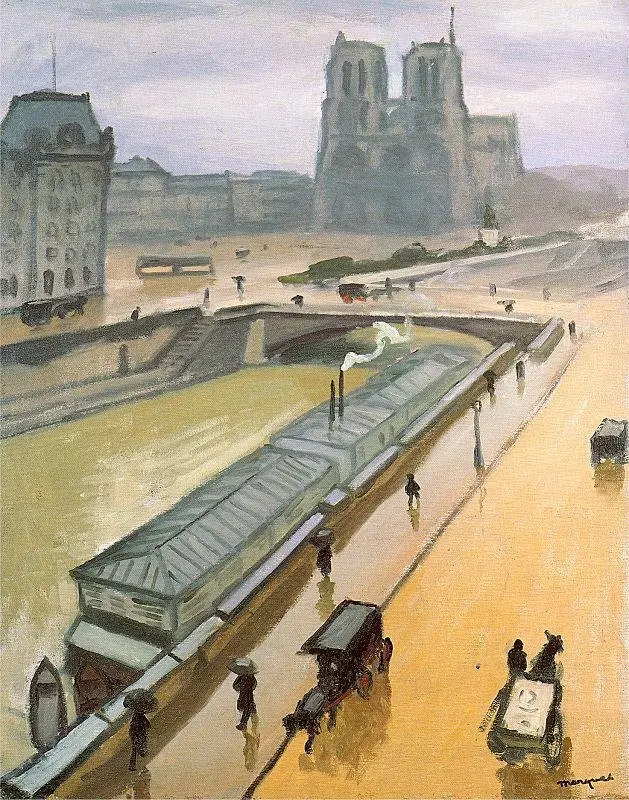
This oil painting, titled Notre Dame, Paris, captures a vibrant street scene in the French capital. The renowned Notre Dame Cathedral dominates the background, characterized by its twin towers and rose window. In the foreground, the Petit Pont, a small, curved bridge spanning the Seine River, is depicted with pedestrians and a parked vehicle, offering a glimpse into daily life.
Technique & Style
Executed in oil paint, this work presents a detailed view of a Parisian setting. The artist employs a representational approach to render the architectural features of Notre Dame Cathedral, including its two towers and circular window. The depiction extends to the urban environment, capturing elements like the curved Petit Pont, surrounding buildings, and various street details, suggesting an observational style focused on clarity and form.
Context
This artwork provides a visual record of a specific location in Paris, focusing on the area around Notre Dame Cathedral and the Petit Pont. The bridge, a real structure spanning the Seine River, is accurately portrayed as a small, curved crossing. The inclusion of contemporary elements like a parked car and a lamppost situates the scene within a particular historical period, reflecting the urban fabric of the city.
Artist & collection