Artwork
The Red Tablecloth
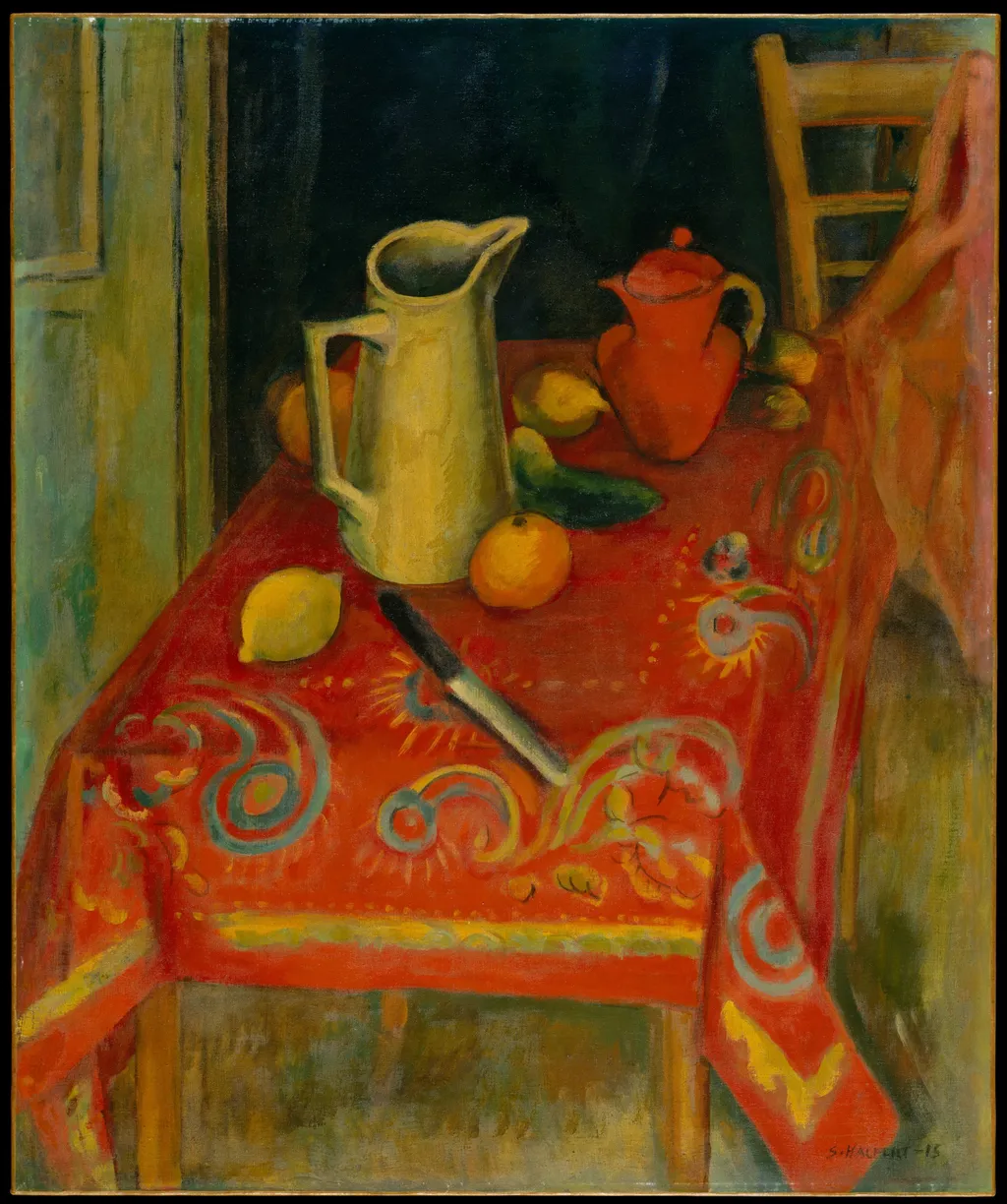
The Red Tablecloth is an oil painting by the Ashcan School artist Samuel Halpert. It dates from 1915 and is held in the collection of the Metropolitan Museum of Art.
About this work
Subject & Meaning
Consequently, the work represents a straightforward depiction of everyday objects characteristic of the still life classification.
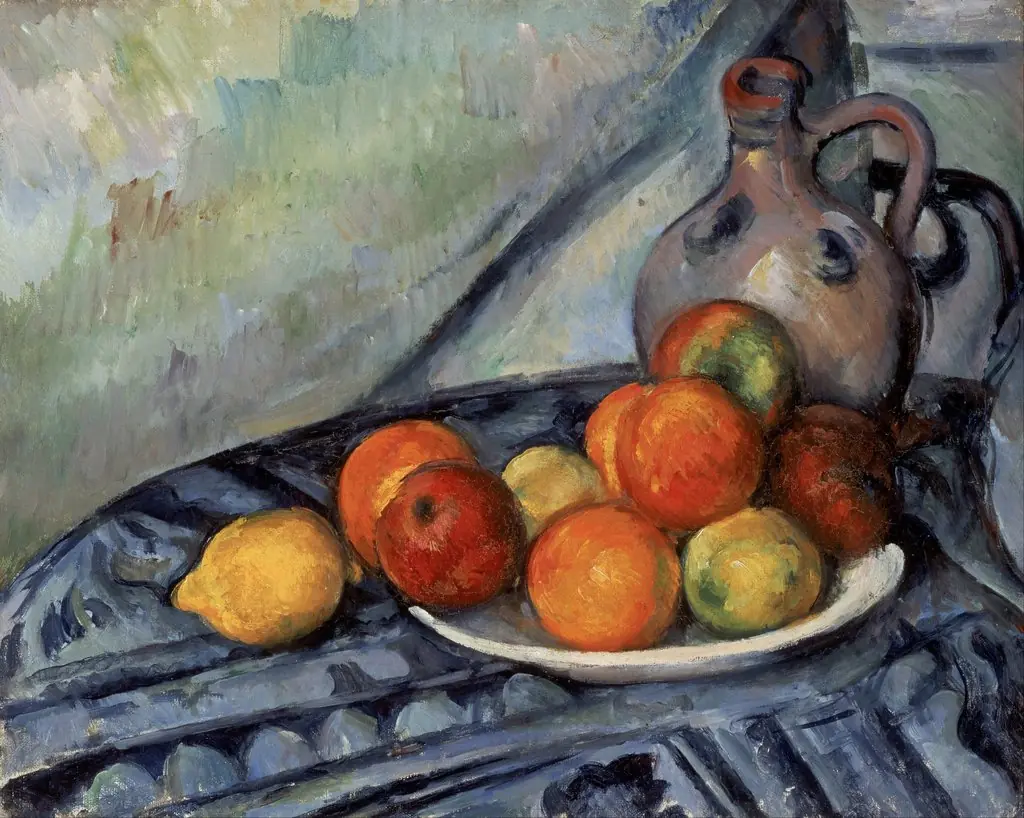
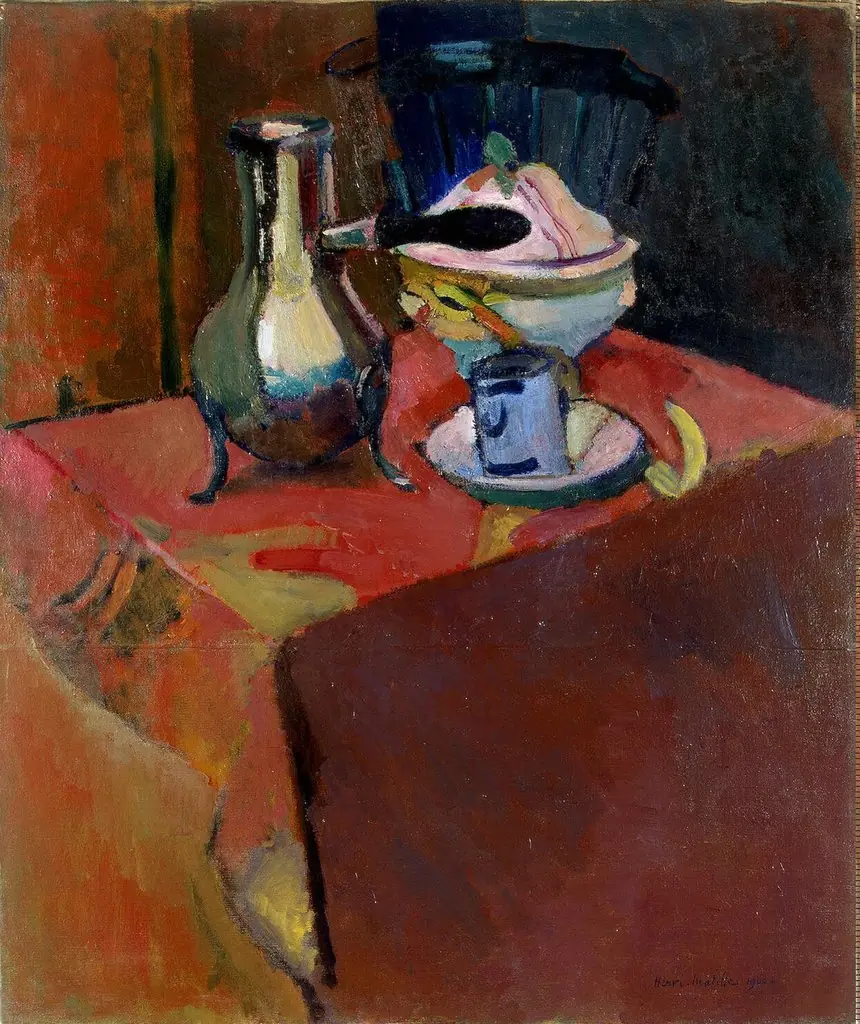
Samuel Halpert's 1915 oil painting depicts a still life arrangement centered on a red tablecloth. The composition features specific objects including fruit and a jug resting upon the draped surface. As a work within the still life genre, the piece focuses on the representation of these inanimate domestic items.
The available records identify the depicted elements strictly as fruit and a jug without providing further interpretive analysis regarding specific iconographic traditions or deeper symbolic meanings associated with the arrangement. Consequently, the work represents a straightforward depiction of everyday objects characteristic of the still life classification.
Technique & Style
Created in 1915, The Red Tablecloth is an oil painting executed on canvas by Samuel Halpert. The work functions as a still life, depicting a composition that includes fruit and a jug. Physically, the support measures 76.5 centimeters in height and 63.8 centimeters in width.
The artist utilized oil paint to render the formal qualities of the subject matter, adhering to the genre conventions of the period. The piece is currently held within the collection of the Metropolitan Museum of Art. While specific details regarding the brushwork or current conservation status are not detailed in the available records, the medium and dimensions are clearly established as oil on canvas.
History & Provenance
The Red Tablecloth is an oil-on-canvas still life painted by Samuel Halpert in 1915. The work entered the collection of the Metropolitan Museum of Art, where it remains held. No information regarding a commissioning party, prior ownership, intermediate provenance, or specific creation circumstances is documented in the available sources.
Overview
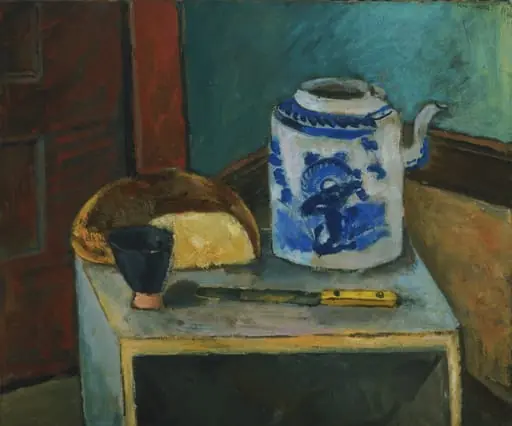
Samuel Halpert's The Red Tablecloth, executed in 1915, is a vibrant still life that exemplifies the artist's engagement with American Modernism and Fauvist color theory. The composition centers on a vivid red tablecloth adorned with swirling patterns, which dominates the foreground and serves as a dynamic stage for the arranged objects. These include a large metal pitcher, a red teapot, a lemon, an orange, and a knife, all rendered with thick, bold brushstrokes that emphasize texture and surface energy.
The background remains dark and subdued, creating a stark contrast that heightens the luminosity of the central forms, while a wooden chair is partially visible at the right edge, grounding the scene in a domestic interior. Painted during a period when Halpert was actively exploring the expressive potential of color and simplified form, the work reflects his departure from strict realism toward a more subjective interpretation of light and material. The painting stands as a significant example of early 20th-century American still life, demonstrating how Halpert synthesized European avant-garde influences with a distinct American sensibility.
Own this work as a print
Artist & collection