Artwork
Notre Dame de Paris
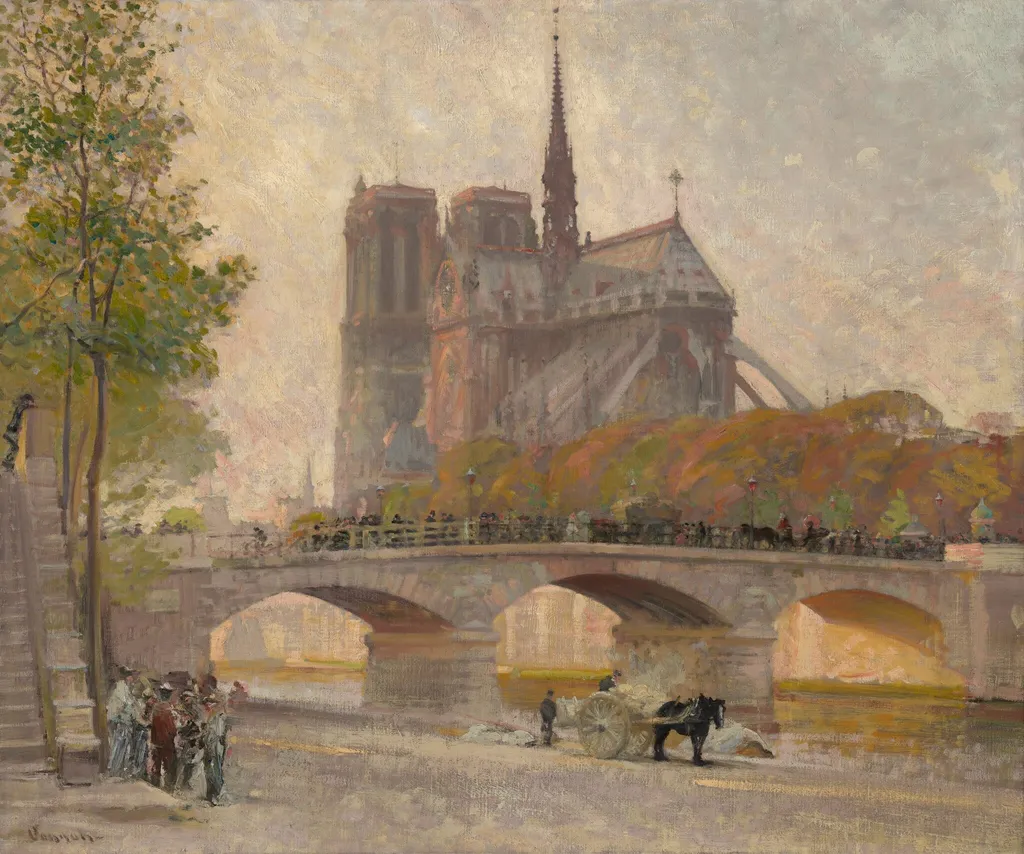
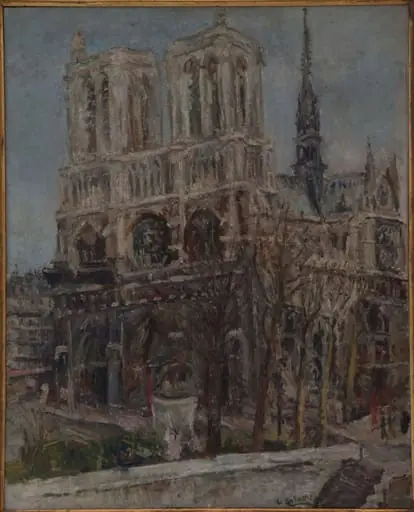
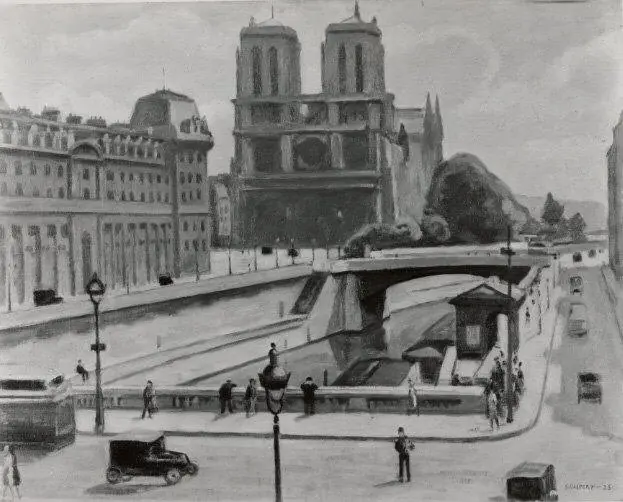
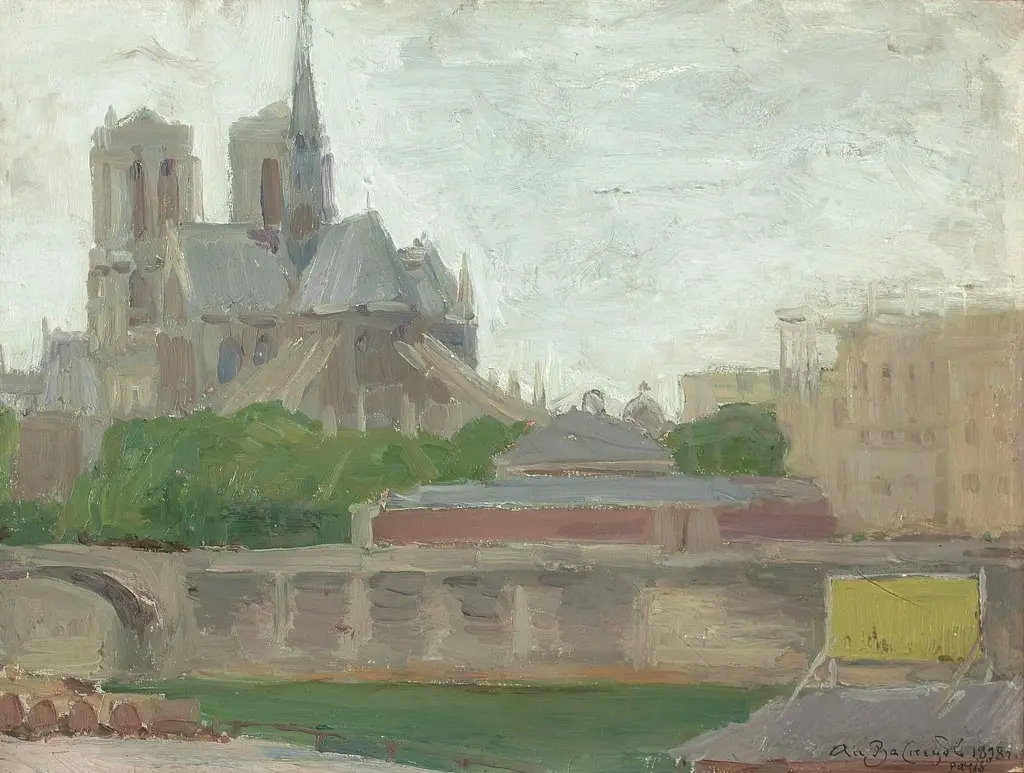
Notre Dame de Paris is an oil painting by the Impressionist artist Robert William Vonnoh. It dates from 1890 and is held in the collection of the National Gallery of Art.
- Inscription
- Inscribed:lower left: Vonnoh -
About this work
Technique & Style
The handling emphasizes a tonal, softly modeled approach, with delicate transitions between light and shadow that articulate form without sharp contrasts.
The work is executed in oil paint on canvas, measuring 76.2 cm in height and 91.44 cm in width. The handling emphasizes a tonal, softly modeled approach, with delicate transitions between light and shadow that articulate form without sharp contrasts. Stylistically, the composition aligns with late nineteenth-century academic practice, employing a restrained palette and careful attention to surface detail in depicting the architectural subject.
History & Provenance
Robert William Vonnoh's 1890 oil painting Notre Dame de Paris is currently held by the National Gallery of Art in Washington, D.C. The work entered the gallery's collection in 2015 after being acquired from the Corcoran Gallery of Art. Prior to this transfer, the painting was bequeathed to the Corcoran Gallery of Art in 1955 by Bessie Potter Vonnoh Keyes, the artist's wife, following the death of the artist and the management of his estate. The National Gallery of Art serves as the work's primary location, having succeeded the Corcoran as its institutional home.
Overview
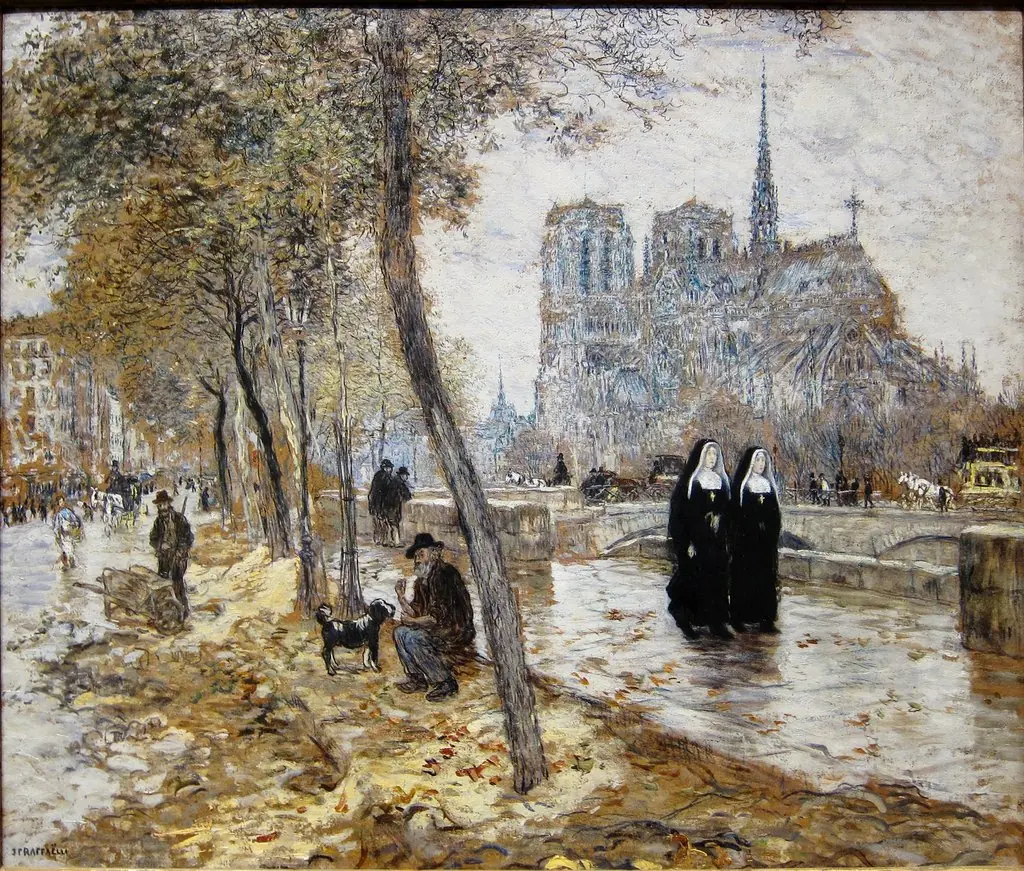
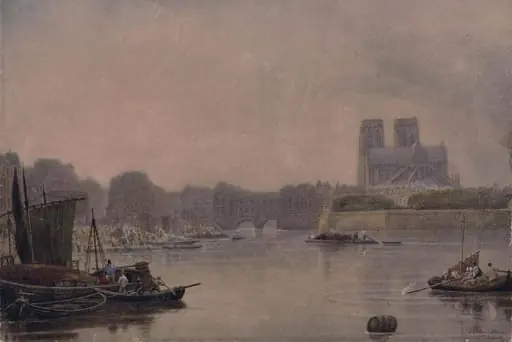
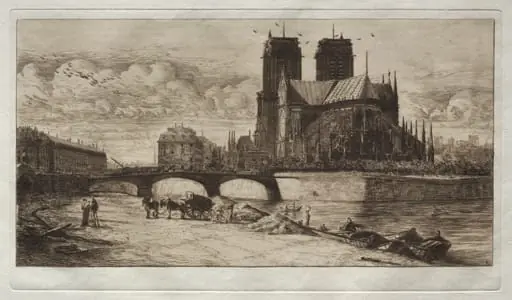
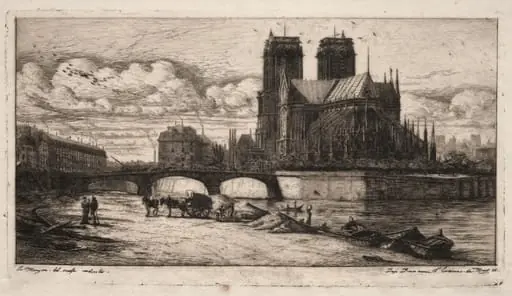
Robert William Vonnoh’s oil on canvas, dated around 1890, depicts a Parisian riverscape dominated by the silhouette of Notre‑Dame cathedral. A multi‑arched bridge spans the water, populated with pedestrians, trees, and a horse‑drawn carriage, while figures linger on the riverbank. The composition balances architectural grandeur with everyday activity.
Subject & Meaning
The work juxtaposes the enduring presence of the cathedral’s twin towers and spire against the transient flow of city life. By placing ordinary commuters and a carriage in the foreground, Vonfrey highlights the coexistence of historic monument and modern urban rhythm, suggesting a quiet continuity within a bustling environment.
Own this work as a print
Artist & collection