Artwork
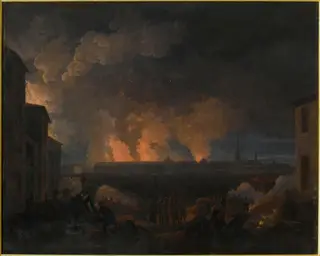
Conflagration of the Masonic Hall, Chestnut Street, Philadelphia, Pennsylvania
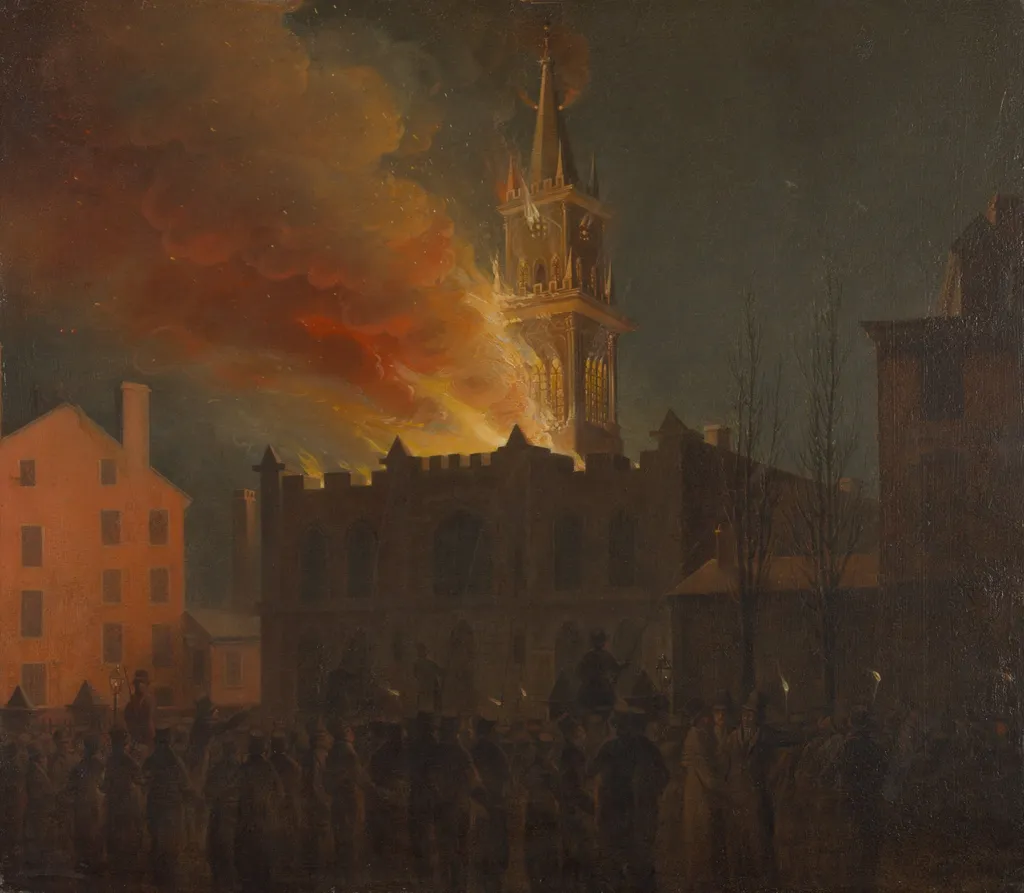
Conflagration of the Masonic Hall, Chestnut Street, Philadelphia, Pennsylvania is an oil painting by the American Folk Art artist Samuel Jones. It dates from 1819 and is held in the collection of the Art Institute of Chicago.
- Accession no.
- 111295
- Credit line
- Purchased with funds provided by Wesley M. Dixon Jr., Jamee J. and Marshall Field, Gloria and Richard Manney, Brooks and Hope B. McCormick Foundation, Mrs. Philip D. Sang, and Jeffrey Shedd; gift of Emily Crane Chadbourne, Leon Mandel, Stella Manheimer, Vena F. Schaaf, and Celia Schmidt by exchange; the Edward E. Ayer, Marian and Samuel Klasstorner, and A.A. McKay funds
About this work
Overview
On March 9, 1819, the recently erected Masonic Hall on Chestnut Street in Philadelphia was consumed by fire, an event that prompted a commissioned oil painting on mahogany panel to document the disaster. The work was intended as a preparatory study for an etched print that would circulate widely as visual news.
Subject & Meaning
The canvas captures the inferno engulfing the Masonic Hall, emphasizing the intensity of the flames and billowing smoke against the urban backdrop. By portraying the catastrophe, the image functioned both as a record of a civic tragedy and as a dramatic illustration for a broader audience.
Technique & Style
Executed in oil on a smooth mahogany surface, the painting employs strong contrasts of light and dark, a chiaroscuro approach that heightens the sense of danger and movement. The composition balances the architectural ruin with a foreground populated by figures, though the exact contribution of each artist to those figures remains uncertain.
History & Provenance
Philadelphia publisher John Hill commissioned Samuel Jones to produce the initial composition, which served as the basis for Hill’s etched reproduction. John Lewis Krimmel, noted for his genre scenes, was later engaged to elaborate the figural elements for the print, though it is unclear whether he altered the original panel or worked solely from Jones’s study.
Context
In the early nineteenth century, illustrated prints were a primary means of disseminating news of sensational events. This collaboration between painters and engravers reflects the period’s expanding market for visual reportage, where artists could monetize current affairs through reproducible media.
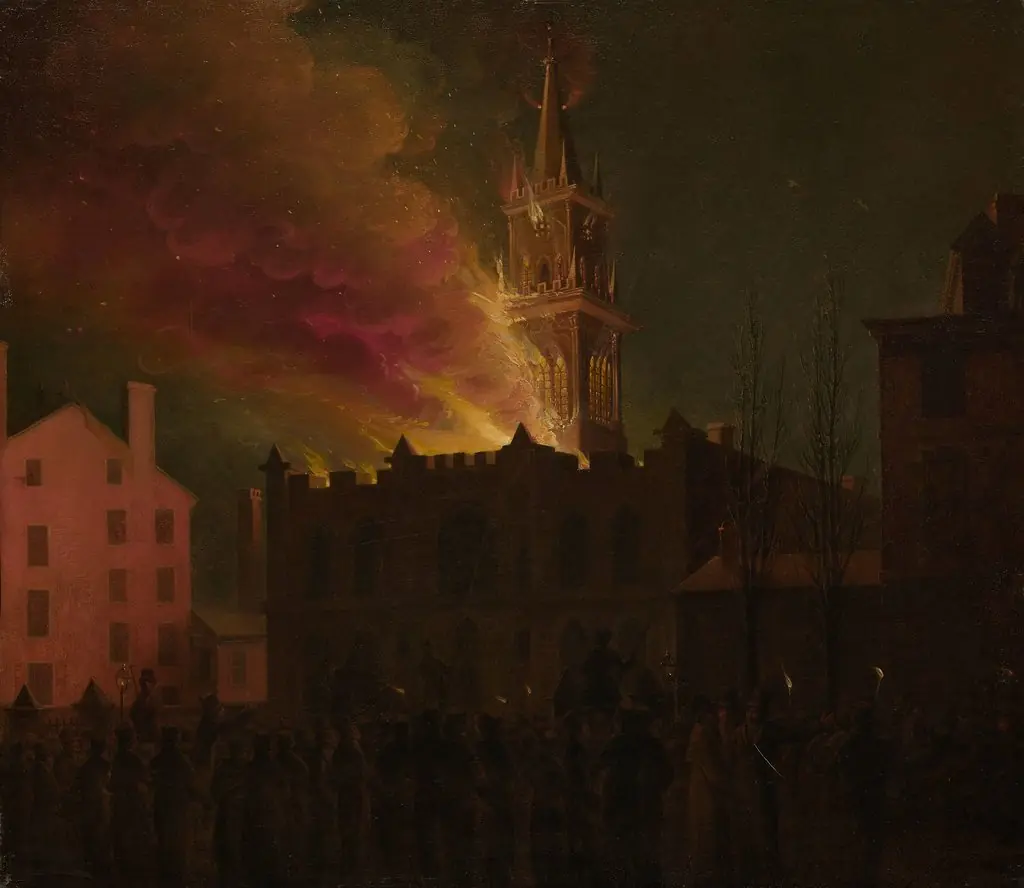
Own this work as a print
Artist & collection
Artist
Samuel Jones was the guy who showed up at fires just to paint the chaos. He made his name with a single, frenzied panel of Chestnut Street burning in 1819, mahogany panel, tiny brush, big smoke. Why he’s in Gallery…

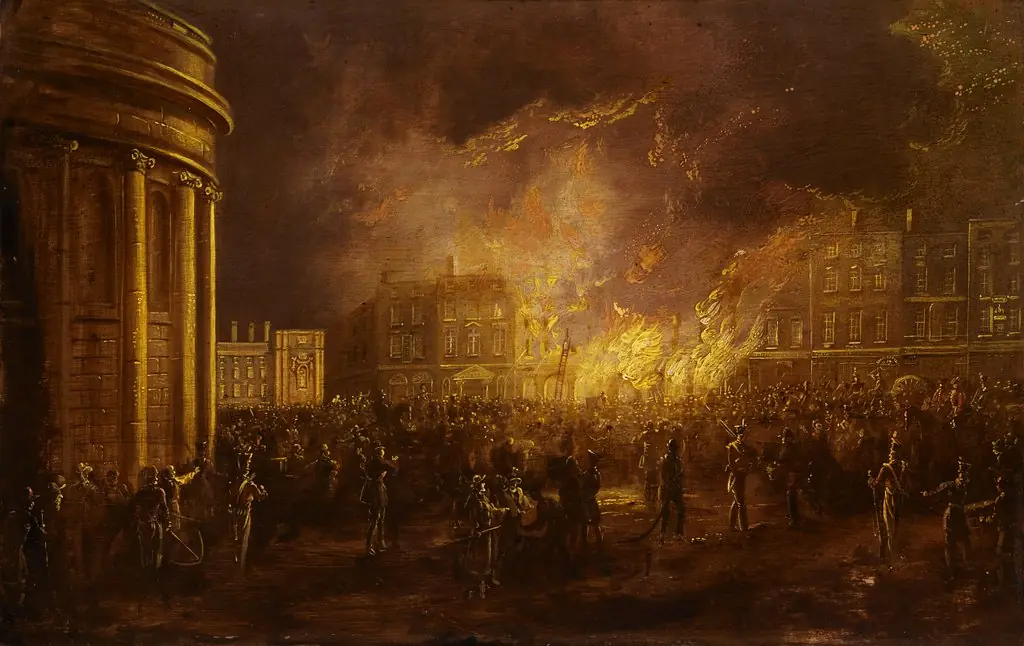 The Burning of the Arcade in College Green, Dublin
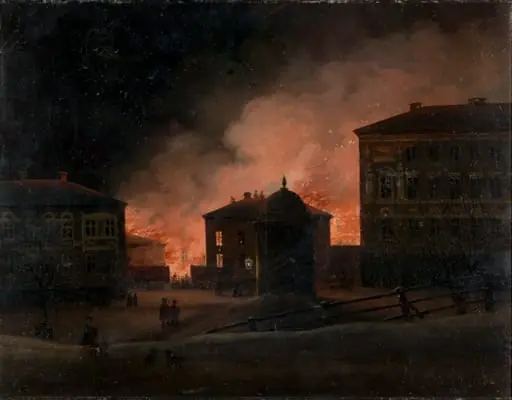 Tulipalo Eteläisellä Makasiinikadulla
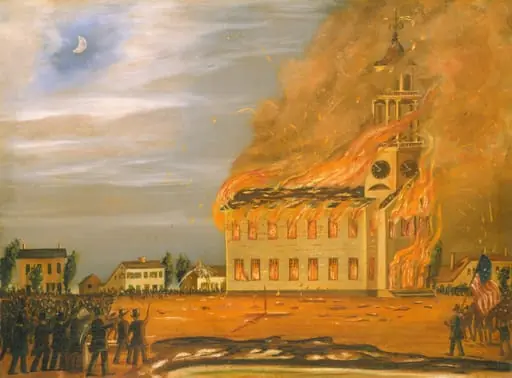 Burning of Old South Church, Bath, Maine
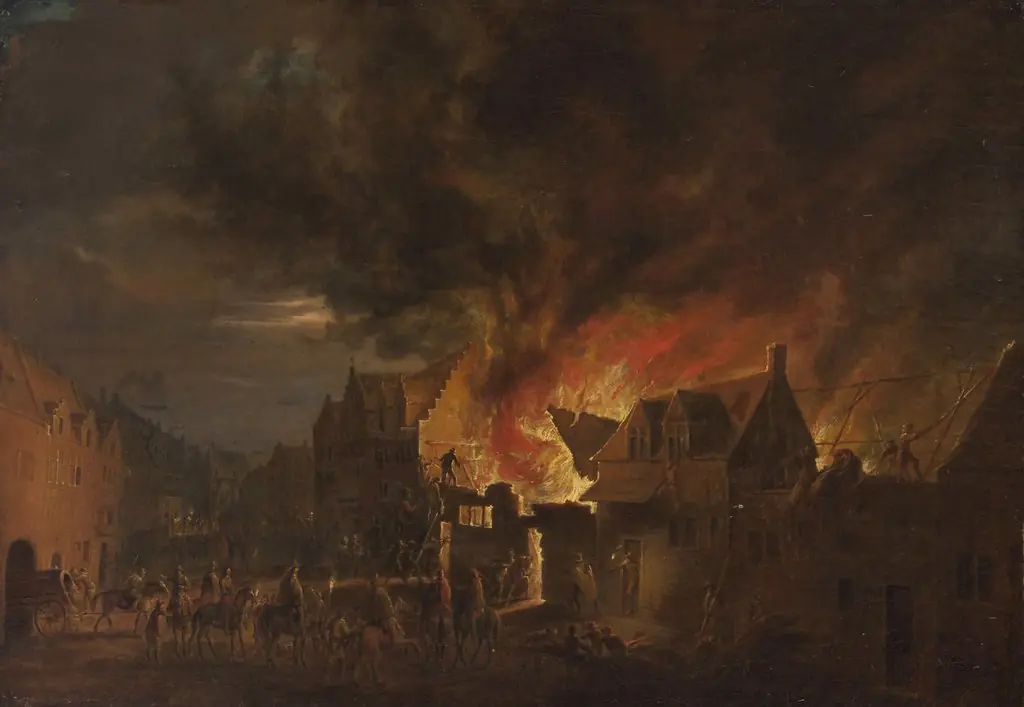 Archduke Leopold Wilhelm at a nocturnal fire
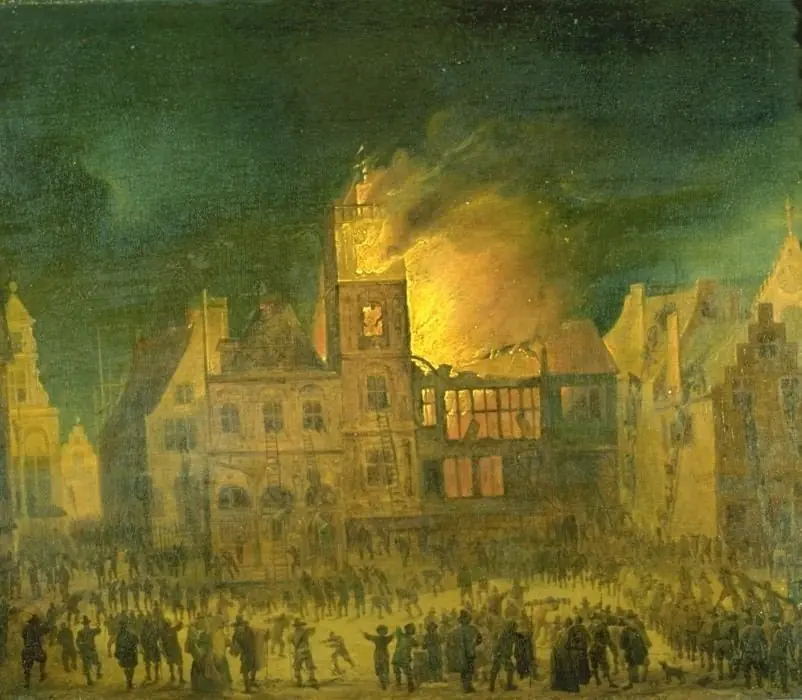 Fire in the Old City Hall of Amsterdam
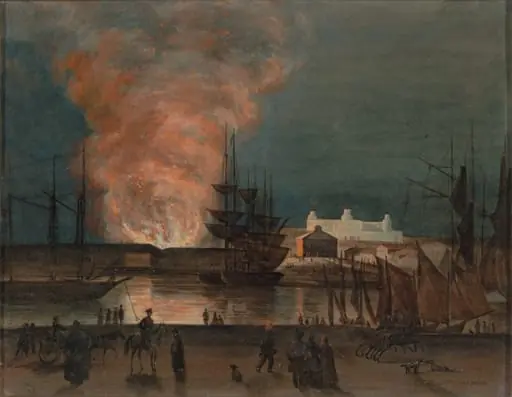 Tulipalo Kaivopuiston suunnalla
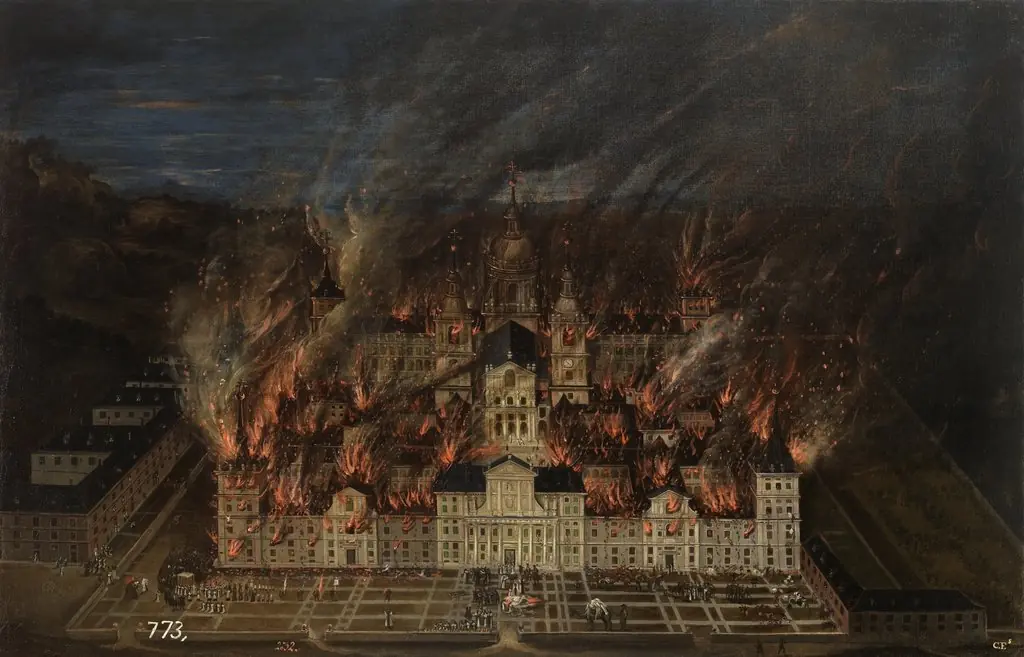 Incendio del Monasterio de El Escorial en 1671
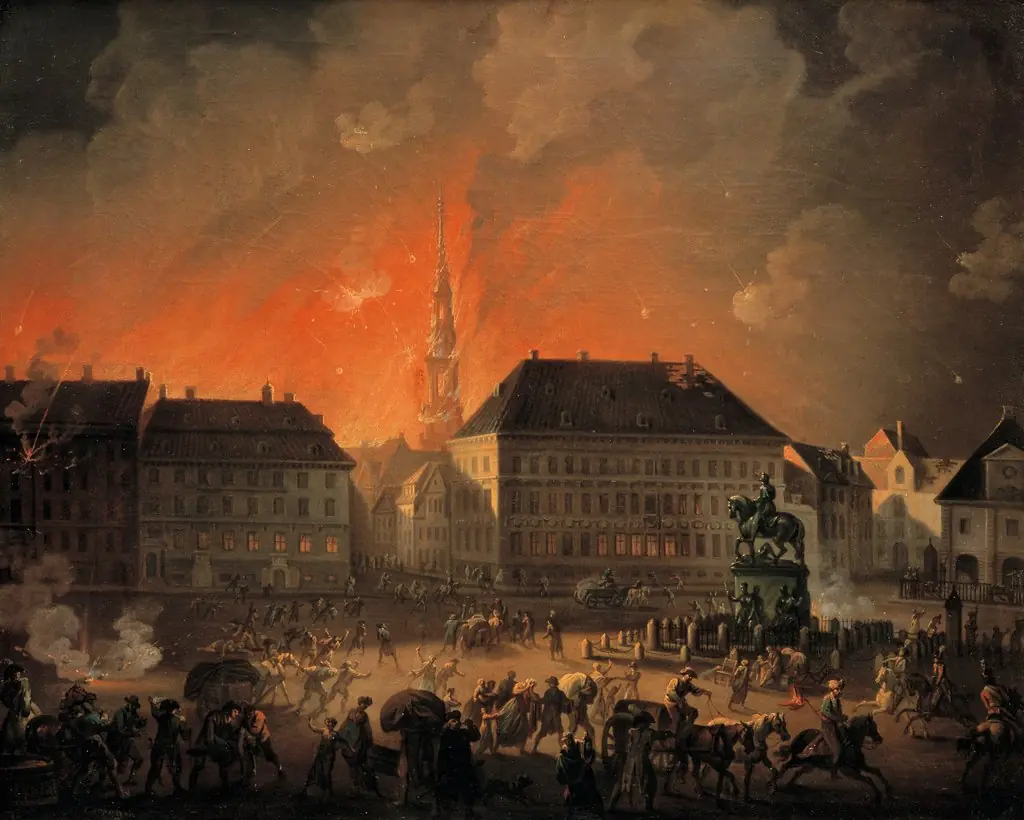 The Most Terrible Night. View of Kongens Nytorv in Copenhagen During the English Bombardement of Copenhagen at Night between 4 and 5 September 1807
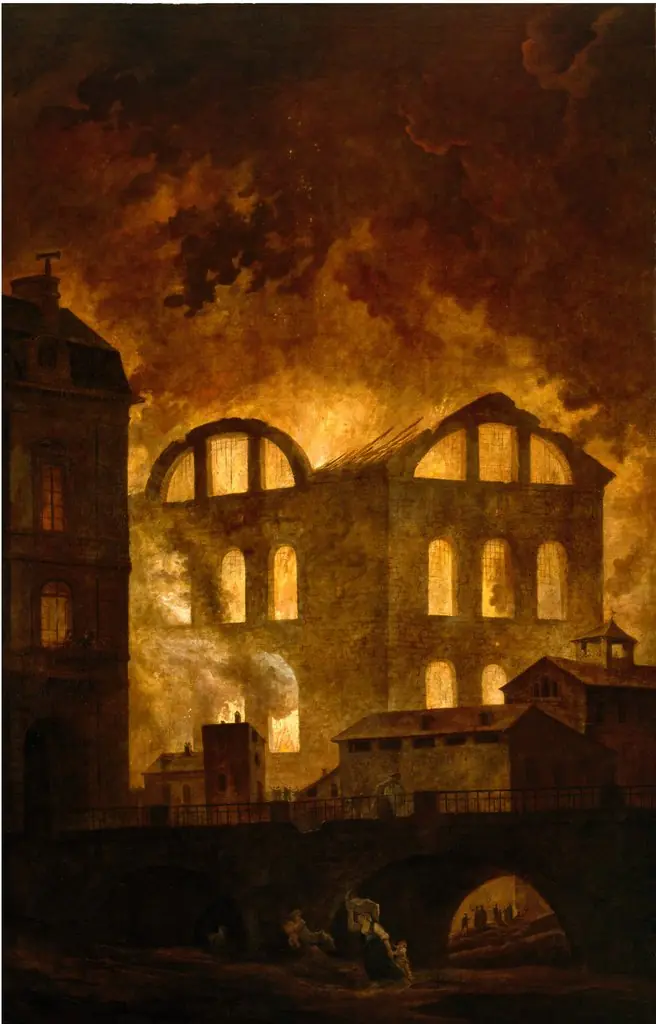 The Fire at the Opera House of the Palais-Royal
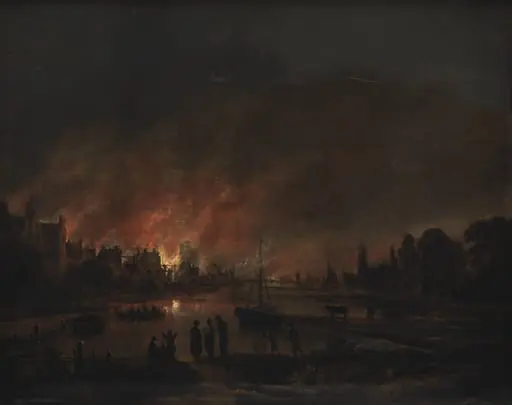 Fire at a Village by Night
 Bombardement de Vienne, 11 mai 1809
- Conflagration of the Masonic Hall, Chestnut Street, Philadelphia, Pennsylvania