Artwork
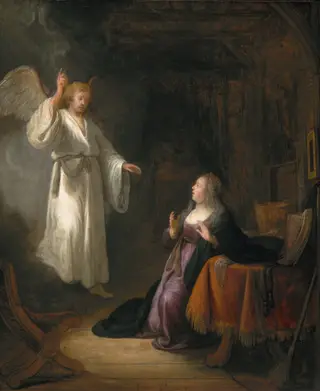
The Annunciation of the Death of the Virgin
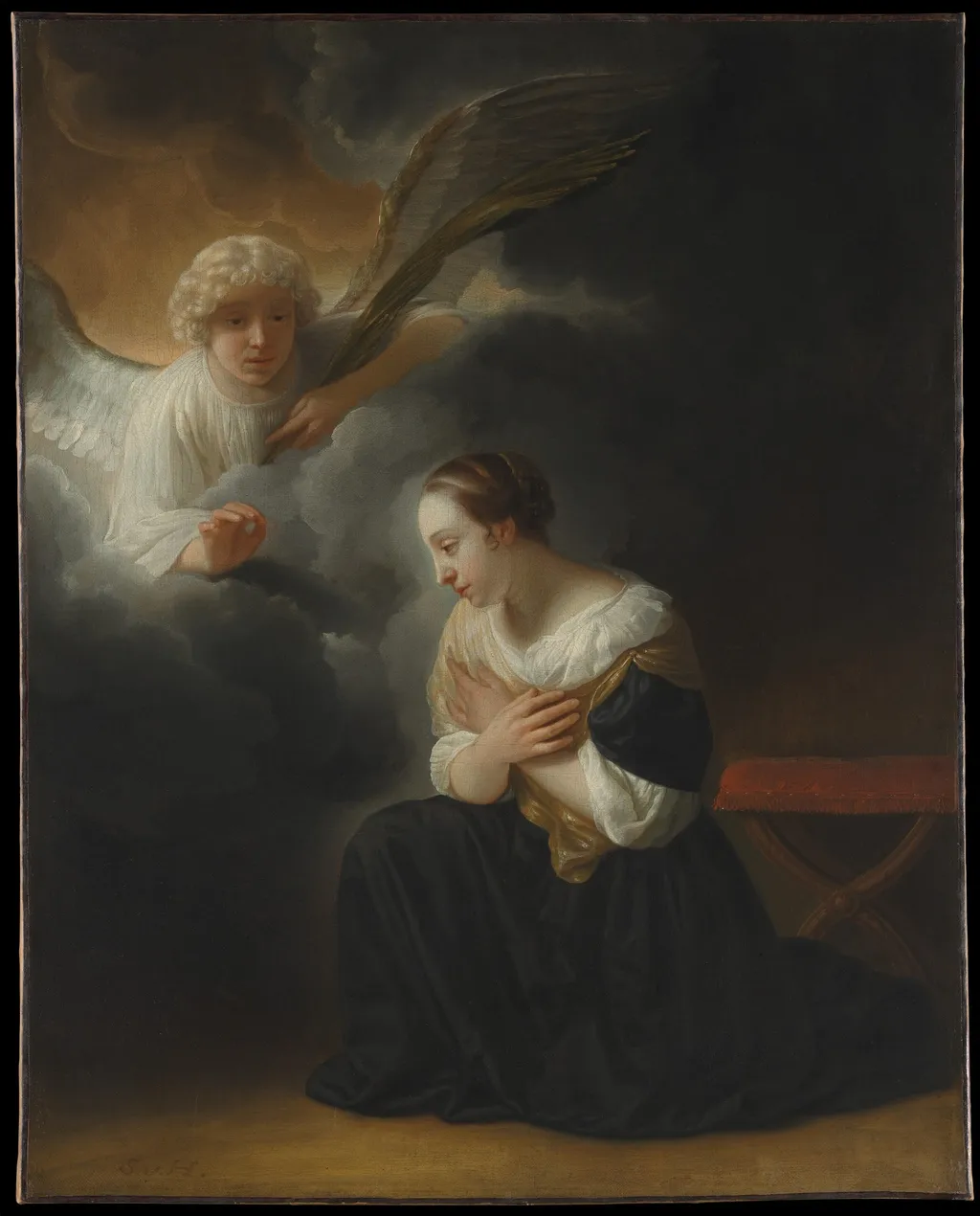
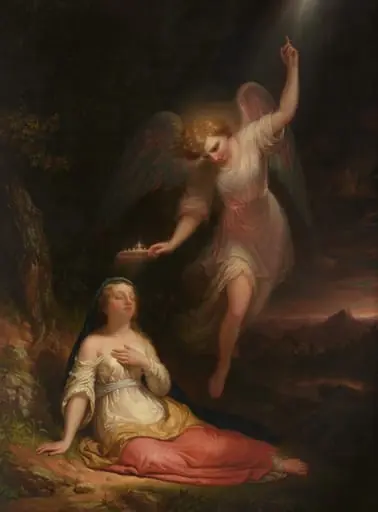
The Annunciation of the Death of the Virgin is an oil painting by the Dutch Golden Age artist Samuel van Hoogstraten. It dates from 1670 and is held in the collection of the Metropolitan Museum of Art.
About this work
Subject & Meaning
The painting depicts the Annunciation of the Death of the Virgin Mary, a non-canonical episode in which an angel announces to Mary that she will soon die.
The painting depicts the Annunciation of the Death of the Virgin Mary, a non-canonical episode in which an angel announces to Mary that she will soon die. According to the source records, the work's main subject is explicitly identified as the Annunciation of the death of the Virgin Mary, and the depicted figures are an angel and Mary. The genre is classified as religious art, consistent with the devotional subject matter drawn from apocryphal tradition rather than the canonical Gospels.
By staging this moment of celestial announcement, the painting engages with iconography associated with Mary's dormition, presenting the threshold between her earthly life and her assumption as a scene of divine communication rather than sudden death. The intimate scale of the canvas, measuring 66 by 52.7 centimeters, suits the contemplative, private character typical of such religious subjects in seventeenth-century Dutch painting.
Technique & Style
Executed in 1670 by Samuel van Hoogstraten, this religious work is an oil painting on canvas. The composition depicts the Annunciation of the Death of the Virgin, featuring the figures of an angel and Mary. Measuring 66 cm in height and 52.7 cm in width, the piece utilizes the fluidity of oil paint to render its sacred subject matter.
As a classified painting within the genre of religious art, the work's material construction relies on the traditional combination of pigments suspended in oil applied to a woven textile support. The specific handling of the medium allows for the detailed representation of the divine encounter central to the narrative.
History & Provenance
The painting titled "The Annunciation of the Death of the Virgin" was executed by Samuel van Hoogstraten in 1670 using oil on canvas, measuring approximately 66 × 52.7 cm. It portrays the Annunciation of the Death of the Virgin Mary, featuring an angel and the Virgin. According to the documented provenance, the work belongs to the collection of the Metropolitan Museum of Art in New York, where it is housed and displayed. The piece was created as a religious composition reflecting van Hoogstraten’s engagement with Counter‑Reformation themes. No further ownership history is recorded in the available sources, indicating direct accession by the museum.
Samuel van Hoogstraten's 1670 oil painting The Annunciation of the Death of the Virgin Mary belongs to the Metropolitan Museum of Art's collection and is exhibited in its galleries in New York. The work is classified as a religious painting within the museum's European paintings department. The consulted records do not provide an accession number, and no exhibition history is documented in the available sources.
Overview
Samuel van Hoogstraten, a prominent figure of the Dutch Golden Age, completed The Annunciation of the Death of the Virgin in 1670. This oil painting depicts a significant religious narrative, portraying the Virgin Mary in a contemplative state as an angelic messenger appears before her. The artwork is currently held in the collection of The Metropolitan Museum of Art, representing a notable example of Hoogstraten's artistic output.
Context
Samuel van Hoogstraten was a multifaceted artist during the Dutch Golden Age, known not only for his painting but also as a poet and art theorist. His intellectual pursuits likely influenced the thoughtful composition and narrative depth evident in his works. This painting reflects the era's engagement with religious themes and the artistic exploration of dramatic lighting and psychological depth within a single scene.
Own this work as a print
Artist & collection
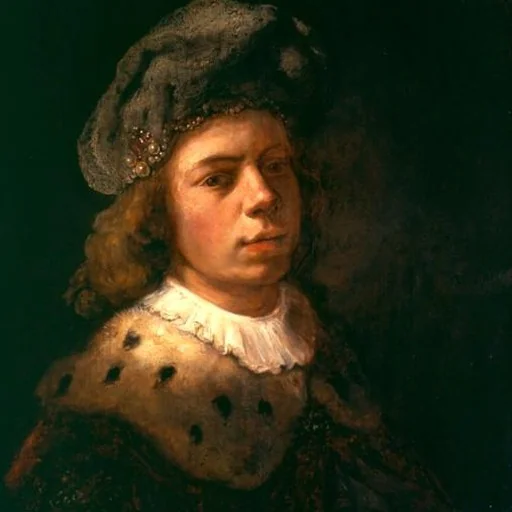
Artist
Samuel Dirksz van Hoogstraten (2 August 1627 in Dordrecht – 19 October 1678 in Dordrecht) was a Dutch Golden Age painter, who was also a poet and author on art theory.