Artwork
Tobias and the Angel
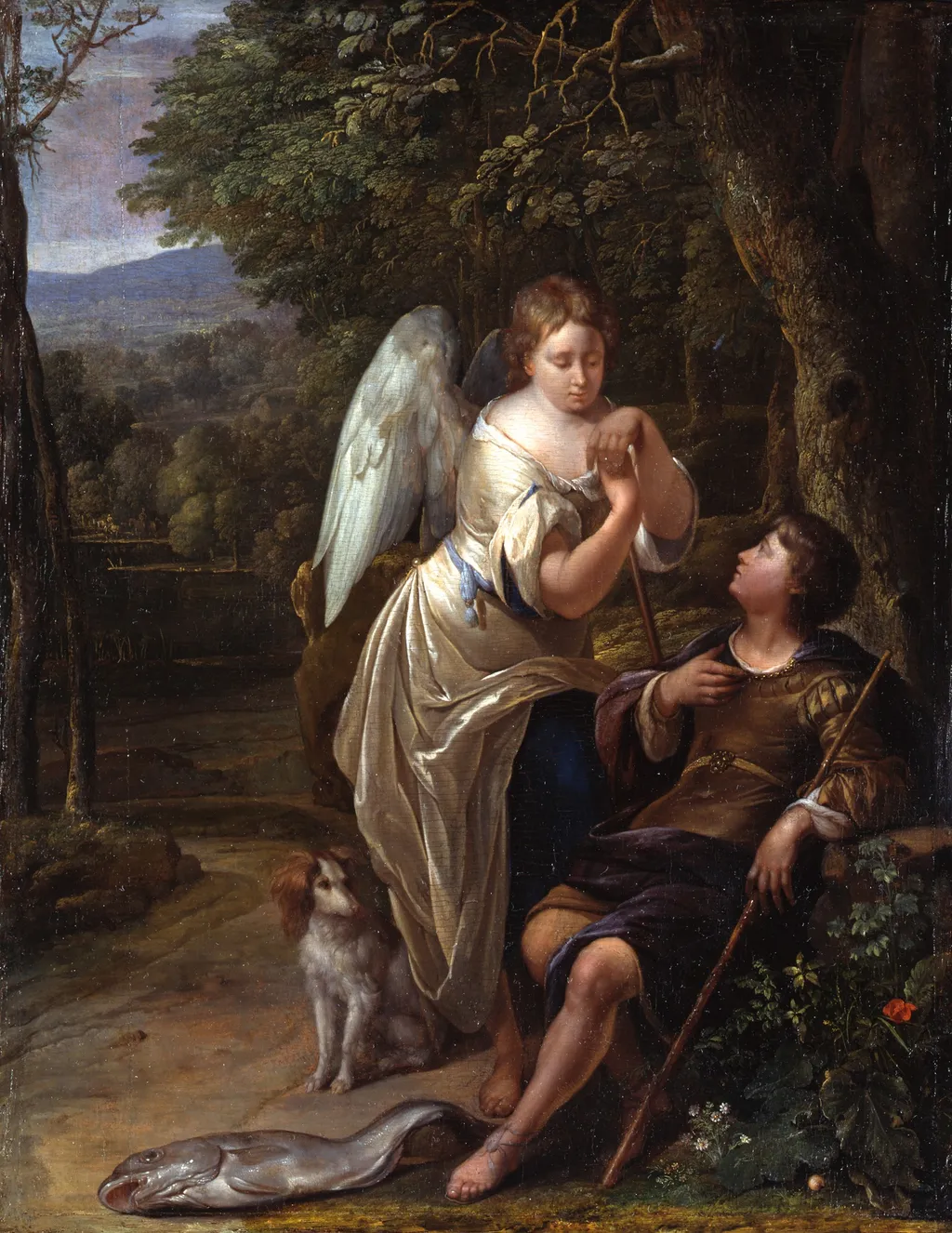
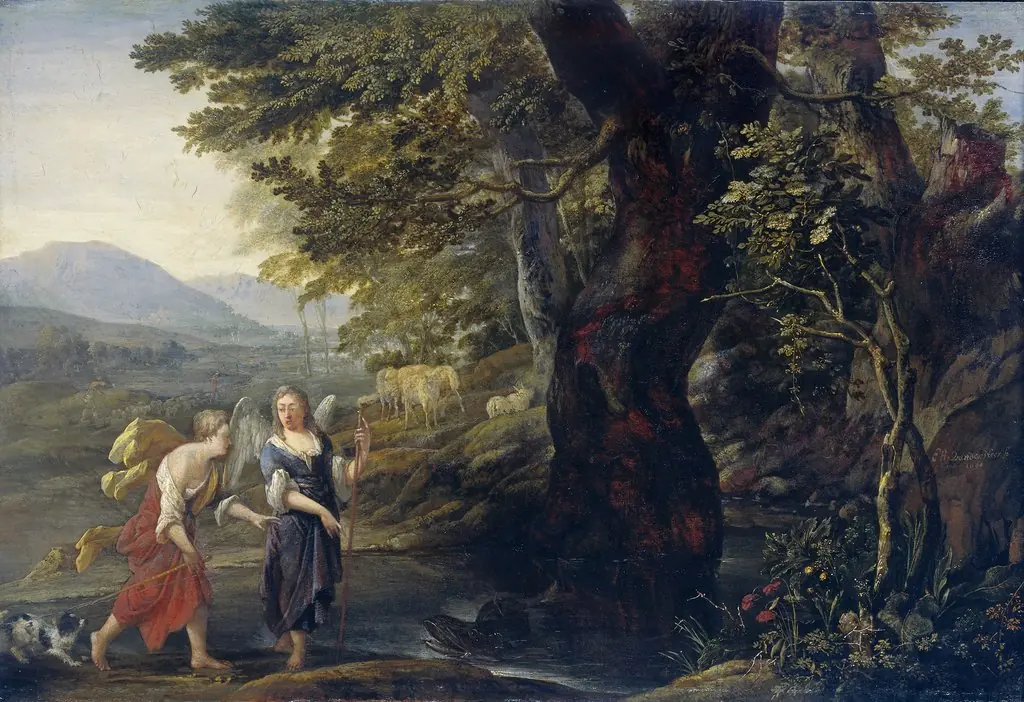
Tobias and the Angel is an oil painting by the Dutch Golden Age artist Eglon van der Neer. It dates from 1693 and is held in the collection of the Gemäldegalerie Berlin.
About this work
Overview
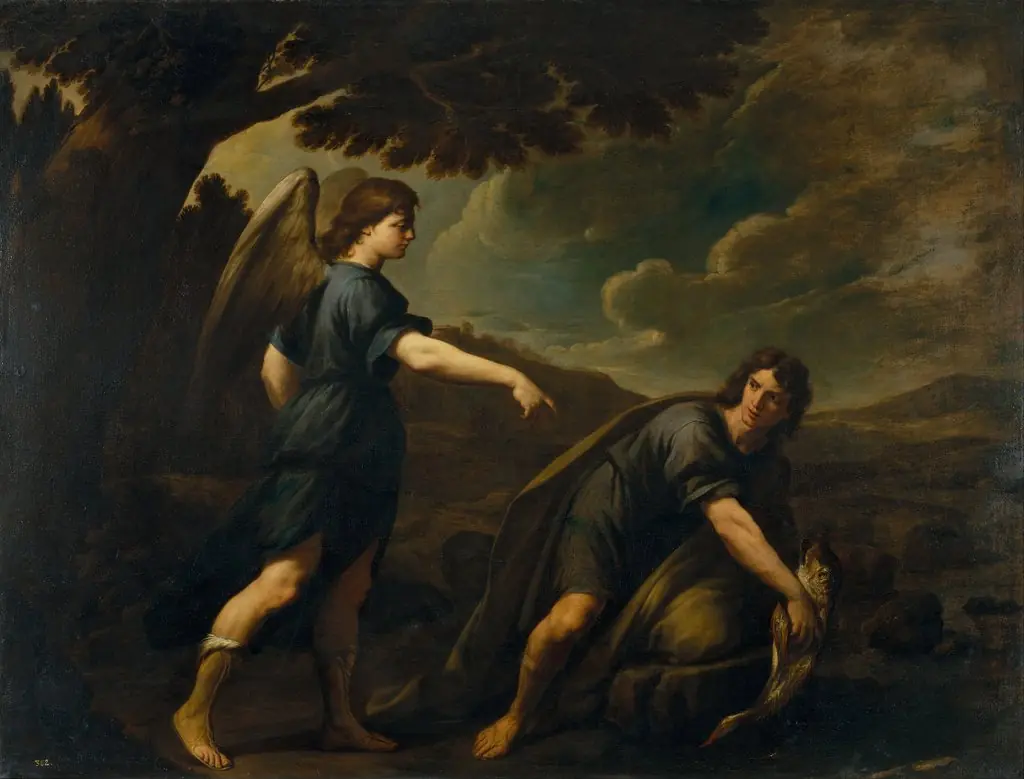
Executed in oil paint, the work depicts the biblical journey of young Tobias and the Archangel Raphael.
Tobias and the Angel is a religious painting by the Dutch artist Eglon van der Neer, dated 1685. Executed in oil paint, the work depicts the biblical journey of young Tobias and the Archangel Raphael. The painting is signed and dated on the lower left beneath the tree trunks. It is currently held in the Gemäldegalerie Berlin. The composition is notable for its detailed rendering of materials and its integration of figures within a wooded landscape, exemplifying van der Neer's skill in combining religious narrative with refined surface treatment.
Subject & Meaning
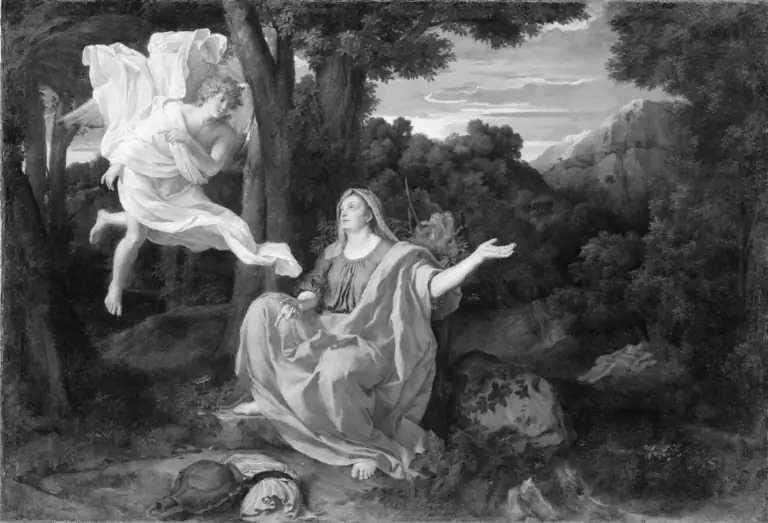
The painting illustrates a scene from the Old Testament Book of Tobit. The young Tobias, son of Tobit, is accompanied on his travels by the Archangel Raphael. The angel, identified by his wings, wears a precious white silk robe and a blue sash, and leans on a staff while raising one hand to direct Tobias's attention. Tobias sits gazing upward, dressed in an earth-toned tunic with purple drapery, holding his own staff. A dog with white and brown fur sits between them, a traditional attribute of the Tobias narrative. At Tobias's feet lies a large fish with an open mouth, referencing the pivotal moment in the story where the fish's gall will later be used to cure his father's blindness. A small red flower and white flowers appear in the lower right foreground.
Technique & Style
Executed in oil paint, the work demonstrates van der Neer's highly esteemed ability to convincingly portray materials and surfaces, a skill for which he was celebrated by his contemporaries. The brushwork is smooth, with fine detail evident in the rendering of fabrics, foliage, and the scales of the fish. The composition centrally places the two figures, framed by vertical tree trunks. Light falls from the left, illuminating the angel's garments and creating shadows among the dense trees, which open to distant hills and a pale sky. The palette combines deep greens and browns with luminous whites and soft blues.
History & Provenance
The painting was created in 1685, as established by the inscription on the lower left beneath the tree trunks, which reads 'E v. Neer. fe. / 1685'. The work is currently part of the collection of the Gemäldegalerie Berlin, part of the Staatliche Museen zu Berlin. The historical ownership chain leading to its accession in the Berlin museum is not detailed in the available records, though the painting remains a documented part of the Gemäldegalerie's holdings.
Context
Eglon van der Neer was a pupil of his father, Aert van der Neer, a landscape painter also represented in collections such as the Suermondt Collection with a moon landscape. During his lifetime, Eglon was highly regarded by his contemporaries for his technical proficiency in rendering materials and surfaces. His posthumous reputation endured throughout the 18th and 19th centuries. This painting aligns with his broader oeuvre of religious art, showcasing his characteristic refinement and attention to textural detail within a landscape setting.
Legacy
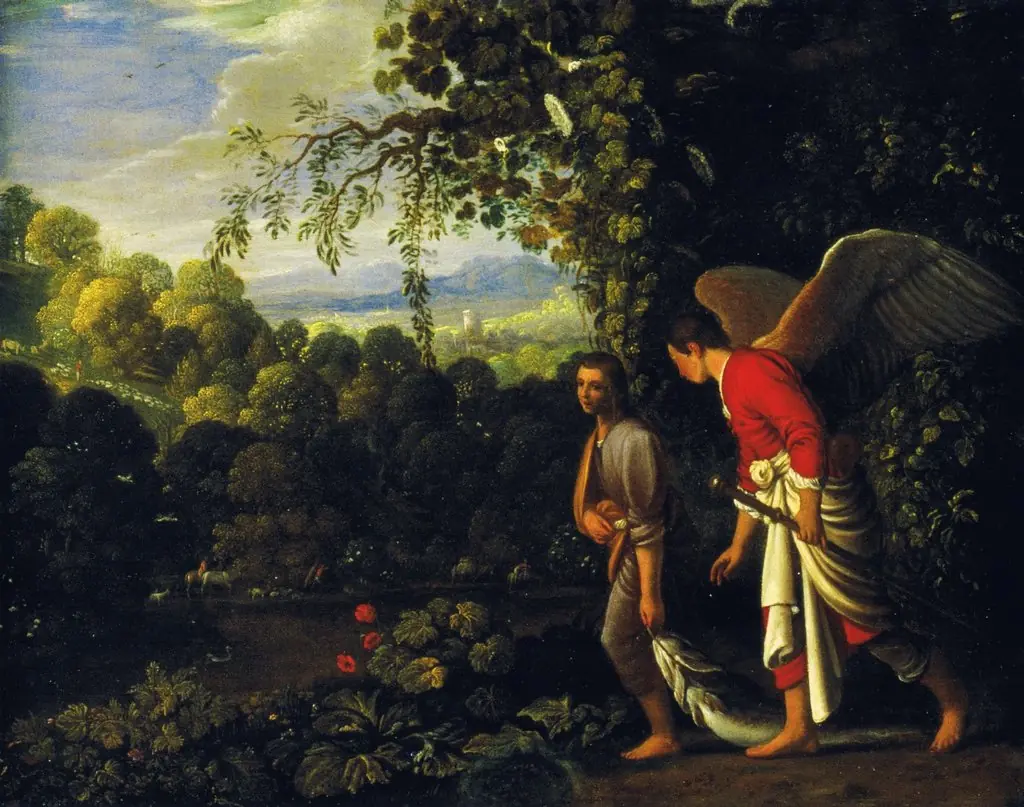
The painting's legacy is tied to the enduring reputation of Eglon van der Neer, whose fame for material illusionism survived well into the 18th and 19th centuries. Today, the work is accessible as a high-resolution digital reproduction through the Staatliche Museen zu Berlin and Wikimedia Commons, ensuring its continued visibility. The subject of Tobias and the Angel was one van der Neer explored multiple times, with another distinct version, dated 1690 and executed on a small panel measuring 16.5 cm by 24 cm, held in the Rijksmuseum Amsterdam, indicating the theme's sustained relevance in his body of work.
Own this work as a print
Artist & collection
Artist
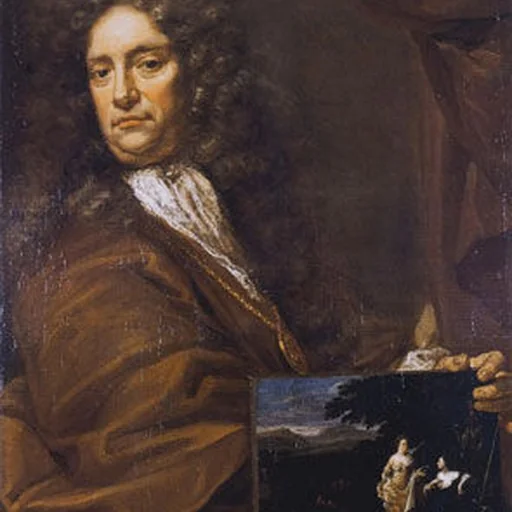
Eglon van der Neer (1635/36 – 3 May 1703) was a Dutch painter of historical scenes, portraits and elegant, fashionable people, and later of landscapes.