Artwork
Portrait of a Woman in 17th-century Clothing
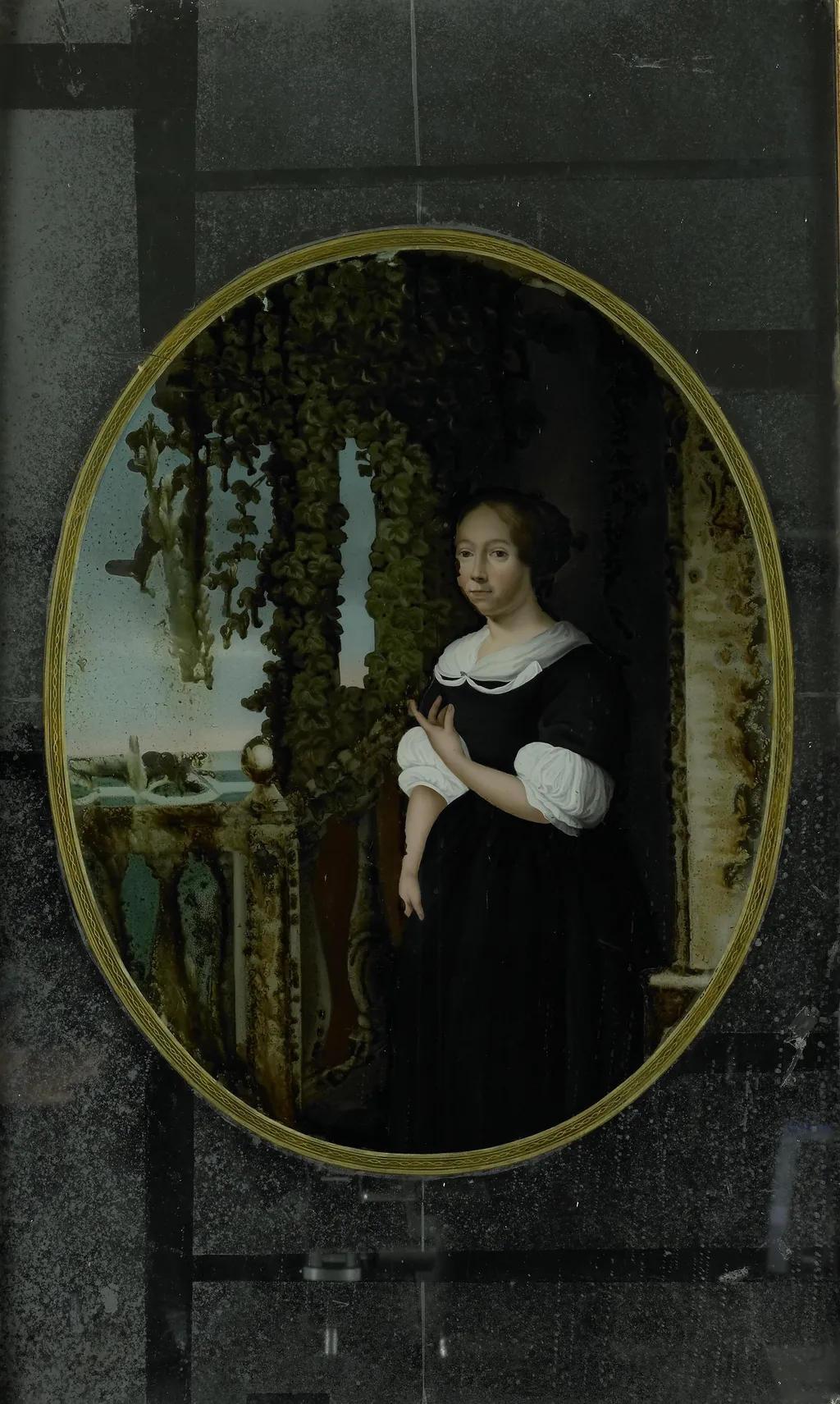
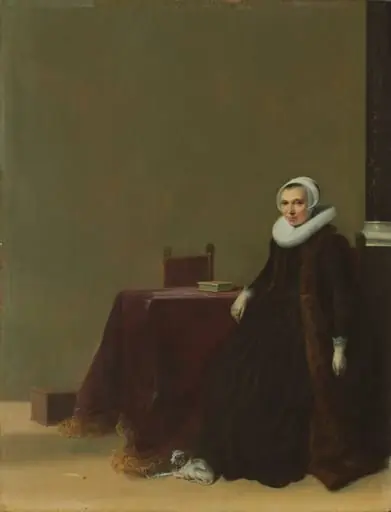
Portrait of a Woman in 17th-century Clothing is an unspecified painting. It dates from 1750 and is held in the collection of the Rijksmuseum. The work presents a seated woman attired in a dark bodice with a white ruff and voluminous sleeves typical of the 1600s.
About this work
Technique & Style
The artwork is executed in the medium of verre églomisé, a technique involving the application of gold leaf and paint to the reverse side of glass.
The artwork is executed in the medium of verre églomisé, a technique involving the application of gold leaf and paint to the reverse side of glass. Created in 1750 within the Northern Low Countries, this anonymous portrait depicts a woman dressed in 17th-century attire. Classified as a painting, the piece relies on the specific handling of glass and reflective materials to achieve its formal qualities rather than traditional canvas or panel supports.
History & Provenance
The painting was created in the Northern Low Countries in 1750 as a portrait executed in verre églomisé. It entered the collection of the Rijksmuseum, where it remains on display.
The work was commissioned anonymously and has been part of the Rijksmuseum's holdings since its inception, reflecting a continuous ownership chain tied to the institution.
The Portrait of a Woman in 17th-century Clothing is held in the collection of the Rijksmuseum, where it remains on location at the institution. Dated to 1750 and executed in verre églomisé, the work is catalogued as part of the museum's holdings of anonymous portraiture.
No specific inventory or accession number is recorded in the available sources, and no exhibition history is documented beyond its current placement within the Rijksmuseum's collection.
Context
The portrait depicts an anonymous woman in 17th-century dress, painted circa 1750 in the Northern Low Countries using verre églomisé technique. It belongs to the portrait genre and was created in the mid-18th century, situating it within the broader European portraiture tradition of the period. The work is held in the Rijksmuseum collection, reflecting its recognized cultural significance.
Scholarship emphasizes its material innovation and the historical context of portraiture in the Netherlands, though the artist remains unidentified.
Overview
The work presents a seated woman attired in a dark bodice with a white ruff and voluminous sleeves typical of the 1600s. She rests against a stone balustrade, while grapevines climb behind her and a distant seascape with a vessel and craggy shore unfolds beneath a muted sky. The composition is framed in an ornate gold border, though the pigments have softened with age.
Subject & Meaning
The figure’s attire and setting evoke a genteel domestic scene, suggesting themes of leisure and contemplation. The inclusion of climbing vines may allude to growth or abundance, while the distant ship and shoreline introduce a sense of travel or the wider world beyond the intimate foreground.
Artist & collection

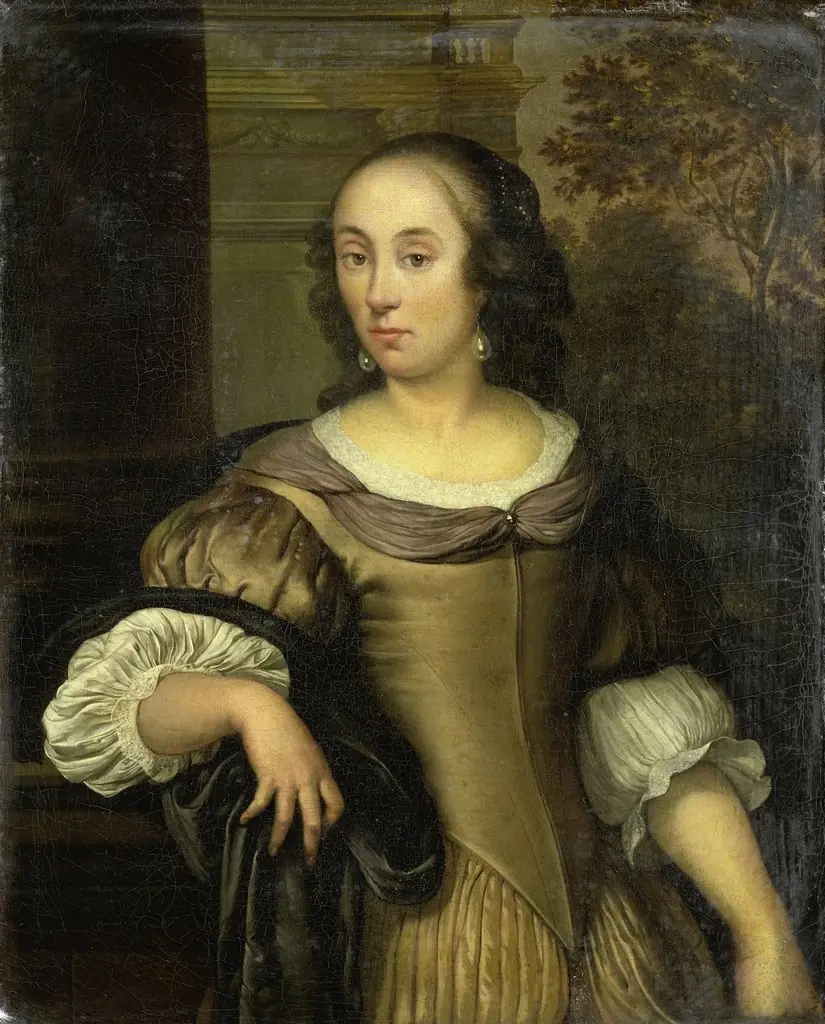
- Portrait of a young woman
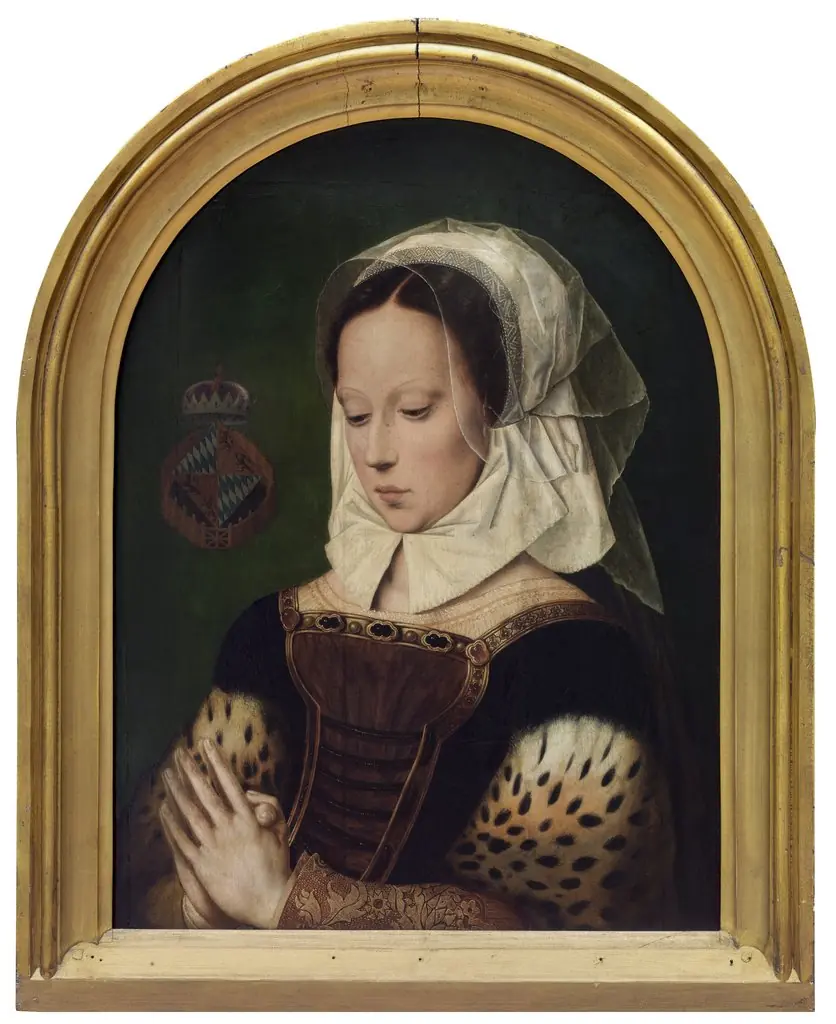 Woman at Prayers
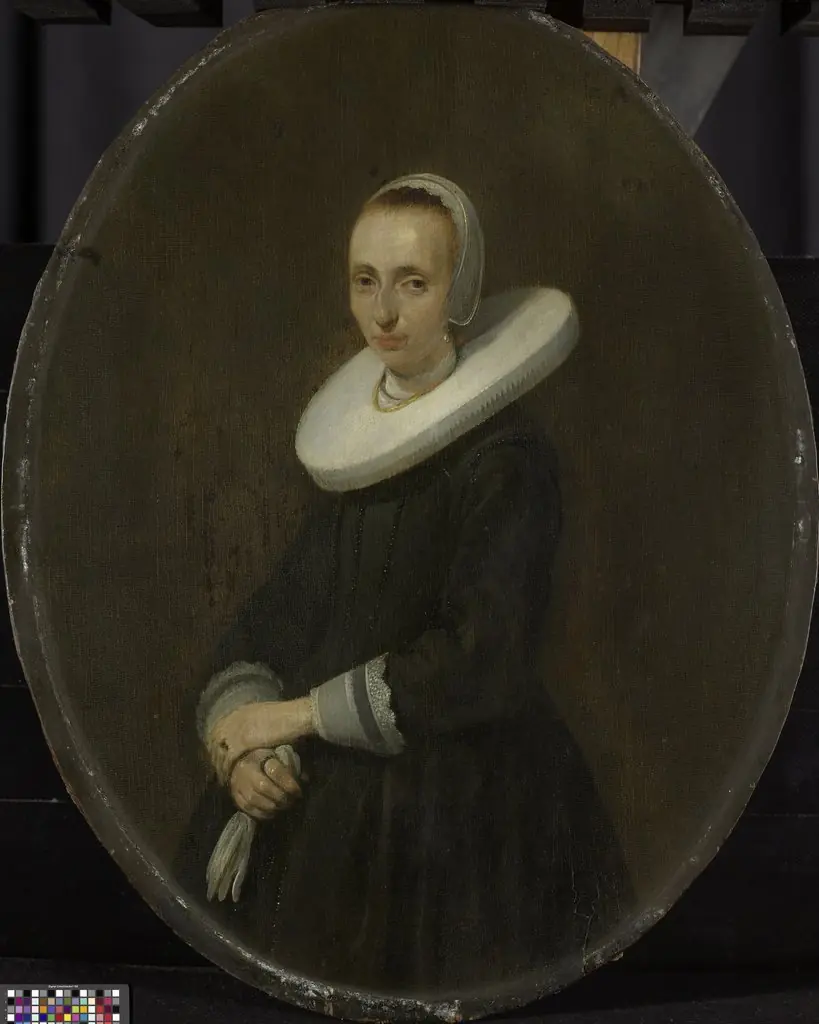 Portrait of Johanna Bardoel (d after 1667), wife of Gerard van der Schalcke
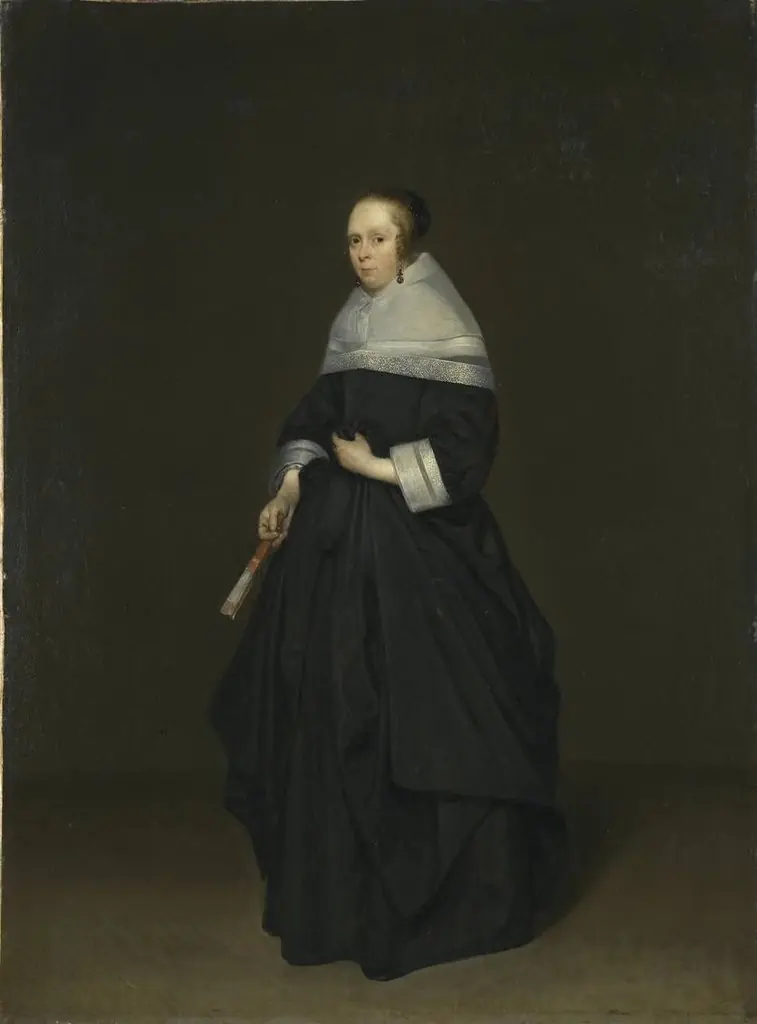 Portrait of a Woman
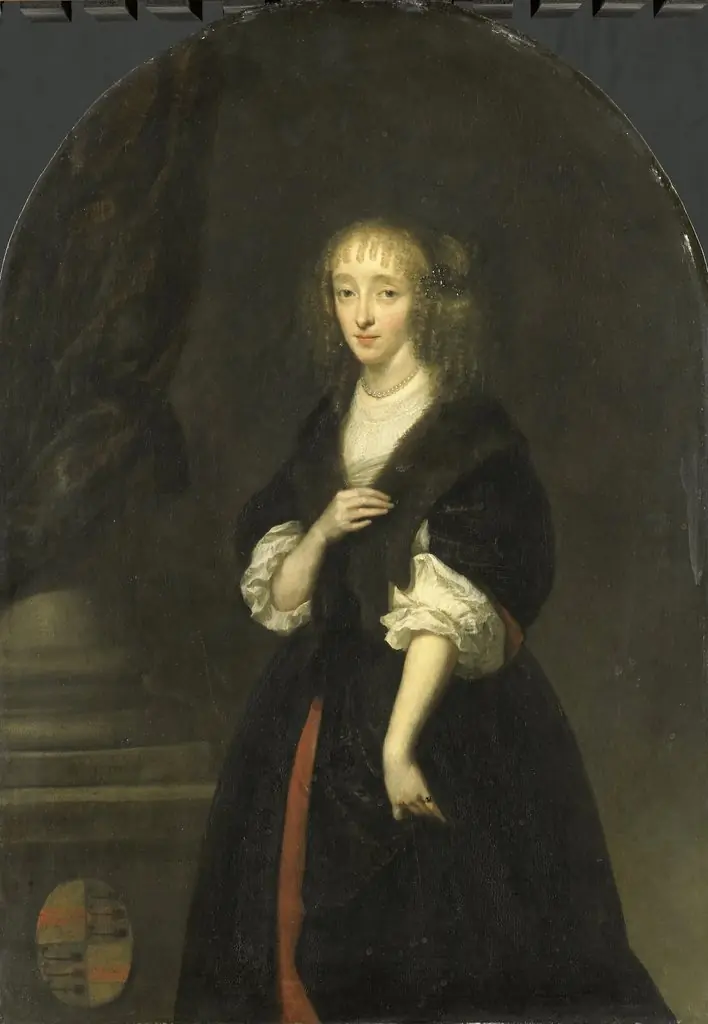 Portrait of Jacoba Bicker (1640-95), wife of Pieter de Graeff
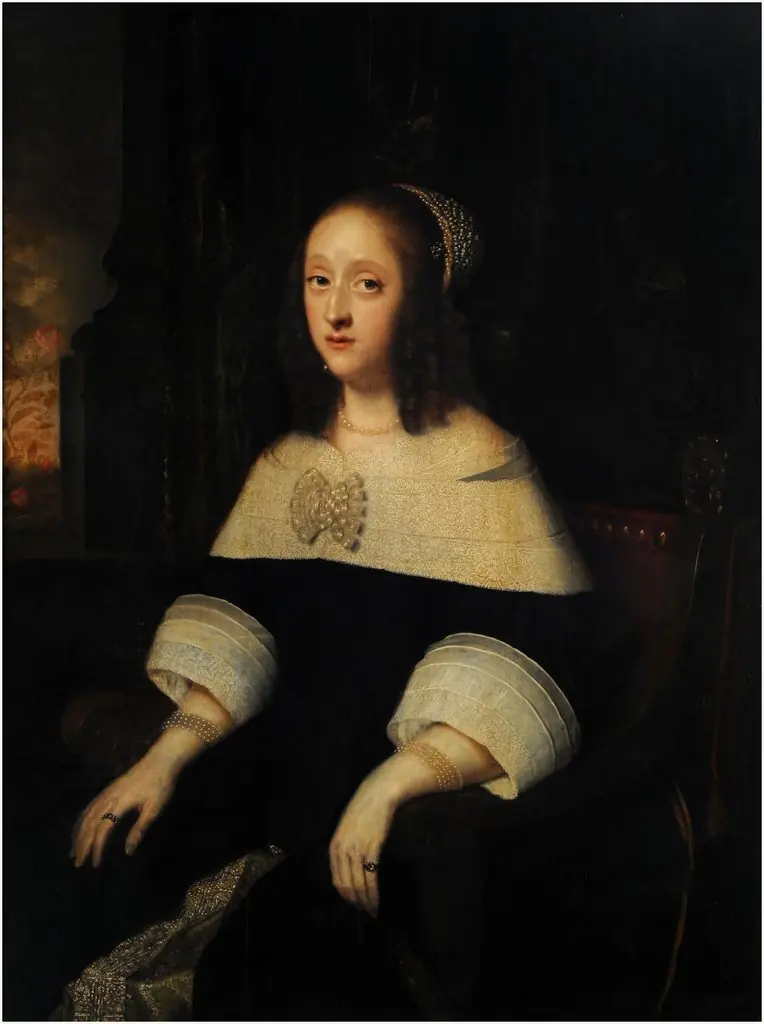 Retrato de dama
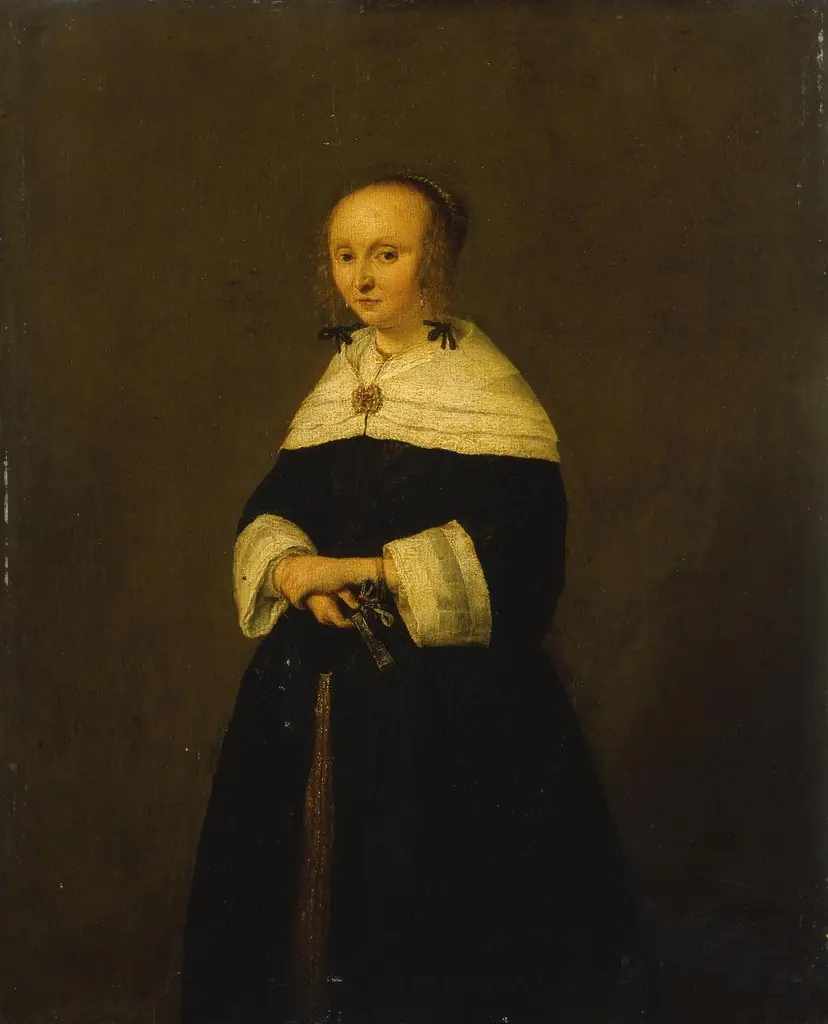 Portrait of a Woman
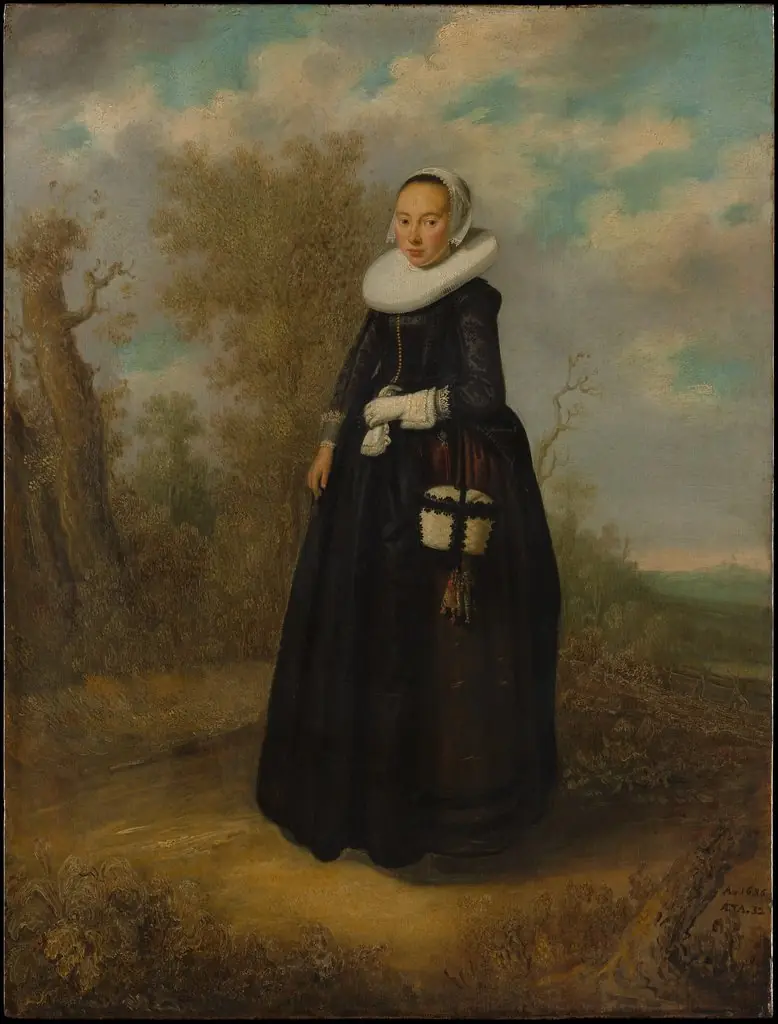 A Young Woman in a Landscape
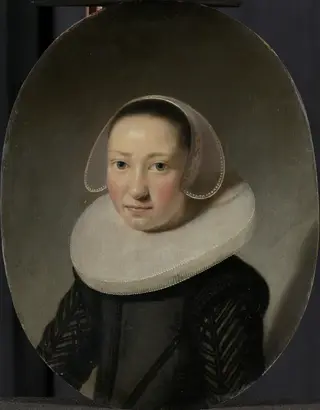 Portret van een jonge vrouw
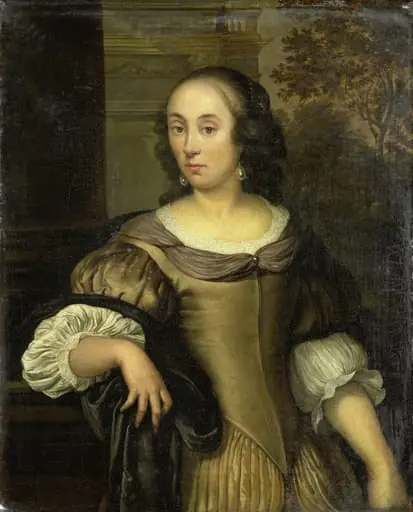 Portrait of a young woman
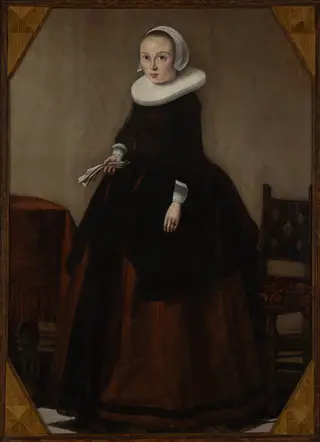 Portrait of a Young Girl
 Portrait of a Woman with a Dog