Artwork
Christ Consigning the Keys to Saint Peter
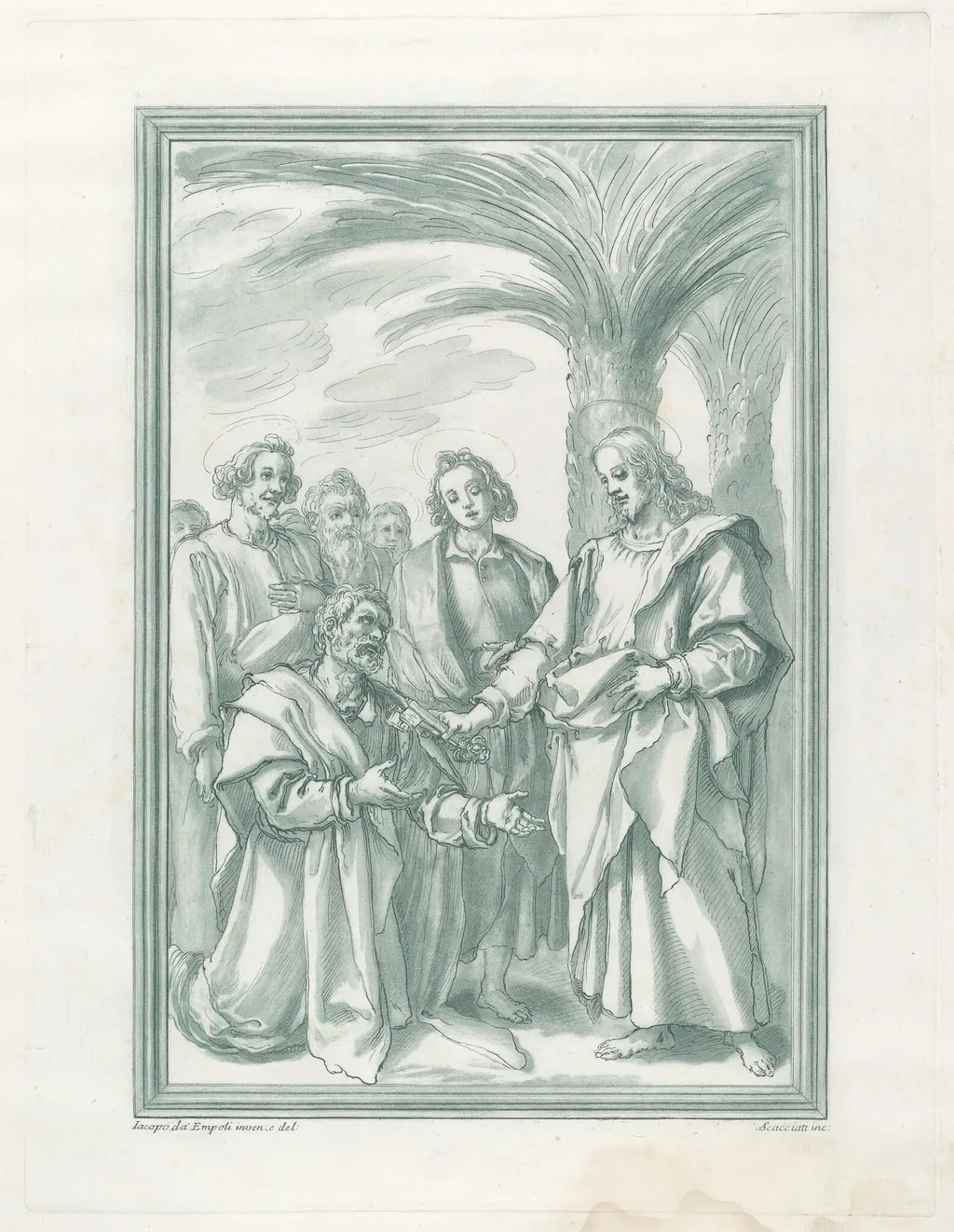
Christ Consigning the Keys to Saint Peter is an ink print by the Romanticist artist Andrea Scacciati. It dates from 1766 and is held in the collection of the National Gallery of Art.
- Inscription
- Inscribed:lower left in plate: Iacopo da'Empoli inven: e del:; lower right in plate: Scacciati inc:; by later hand, lower left, in graphite: 19; by later hand, upper right, in graphite: 4 [circled]
About this work
Overview
Andrea Scacciati’s etching Christ Consigning the Keys to Saint Peter, executed around 1766, is a modestly sized print on laid paper. The image is rendered in a green‑tinged palette achieved through a sulfur tint and roulette shading, giving the work a subdued, atmospheric quality. The composition presents a small outdoor gathering of robed figures, centered on the symbolic transfer of keys.
Subject & Meaning
The surrounding men, attired in simple robes, observe with solemn expressions, underscoring the gravity of the ecclesiastical appointment.
The central figure extends a pair of keys to a man standing slightly forward, referencing the biblical moment when Christ grants Peter the authority to bind and loose. The surrounding men, attired in simple robes, observe with solemn expressions, underscoring the gravity of the ecclesiastical appointment. The inclusion of a palm tree and delicate clouds situates the scene in an idealized, timeless landscape.
Technique & Style
Scacciati employed a traditional copper‑plate etching, enhanced by a sulfur tint that imparts a green hue to the final impression. The roulette tool creates a fine, stippled texture that models light and shadow across the figures, allowing them to emerge from the plain background. The overall handling reflects the late‑Baroque penchant for clear narrative combined with restrained decorative detail.
History & Provenance
Created circa 1766, the print belongs to the later phase of Scacciati’s career, when he focused on religious subjects for devotional circulation. While specific ownership records are scarce, the work appears in several 18th‑century print collections, indicating it was likely distributed among private collectors and ecclesiastical patrons interested in didactic imagery.
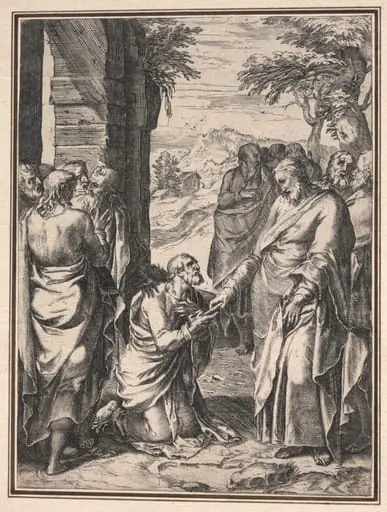
Own this work as a print
Artist & collection


 The Purification of the Virgin
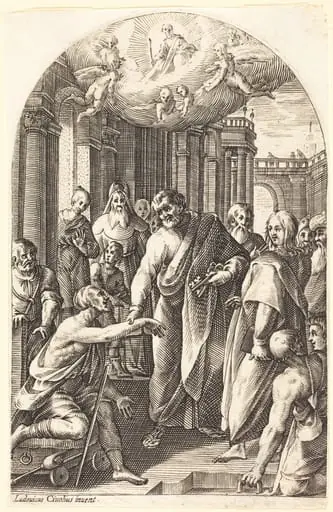 Peter and John Healing the Lame
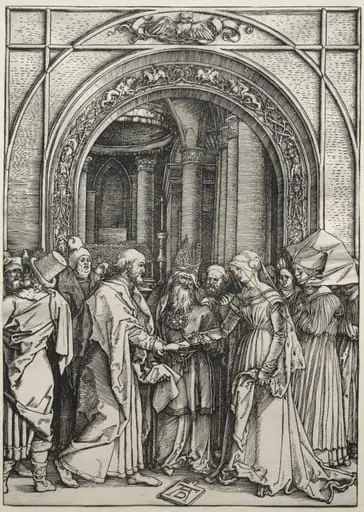 The Betrothal of the Virgin
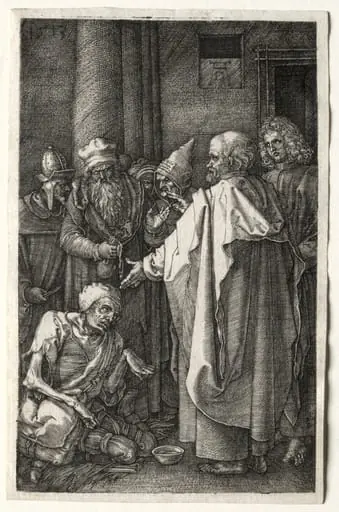 Peter and John Healing the Cripple at the Gate of the Temple
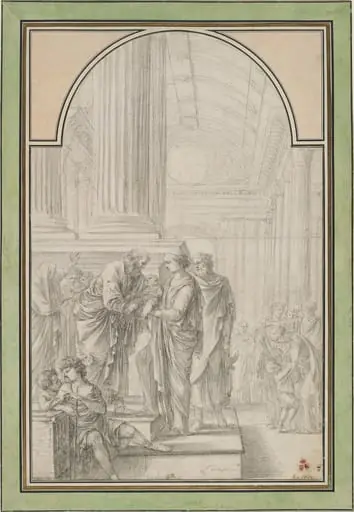 The Presentation in the Temple
 A Message Concerning the White King's Marriage
 Arundel Society print
 Christ Before Pilate: Large Plate
 The Seed finding Good Earth
 Salome Dancing Before Herod