Artwork
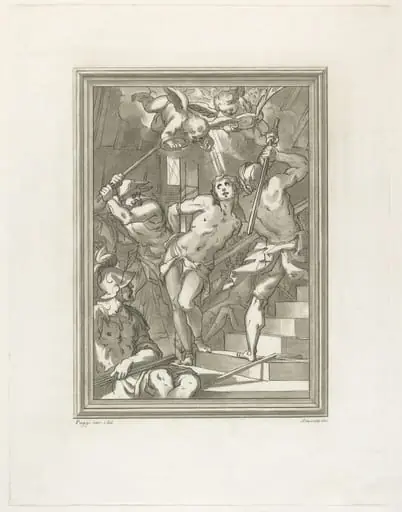
Christ Crowned with Thorns
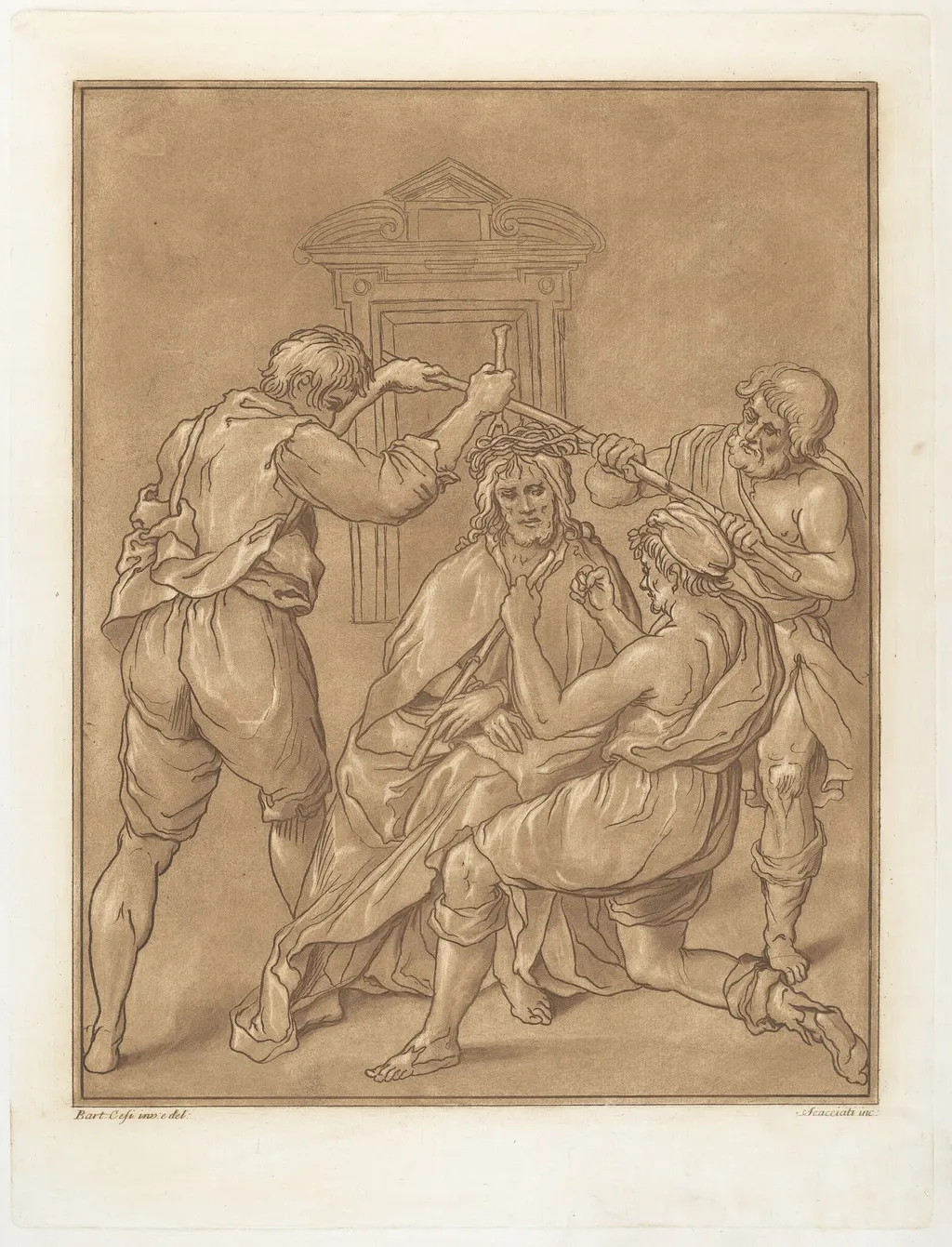
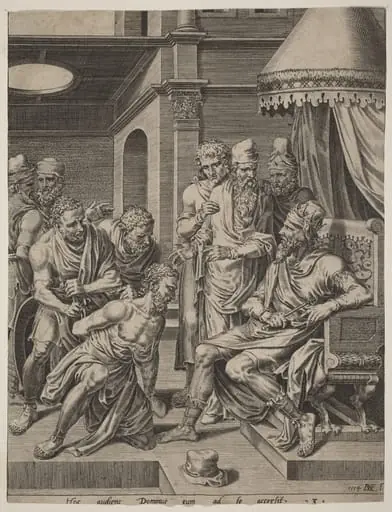
Christ Crowned with Thorns is an ink print by the Romanticist artist Andrea Scacciati. It dates from 1766 and is held in the collection of the National Gallery of Art.
- Inscription
- Inscribed:lower left in plate: Bart. Cesi inv: e del:; lower right in plate: Scacciati inc.; by later hand, lower left, in graphite: 47
About this work
Overview
Rendered in brown ink on laid paper, the work combines etching with sulfur tint and roulette techniques to achieve a textured, somber atmosphere.
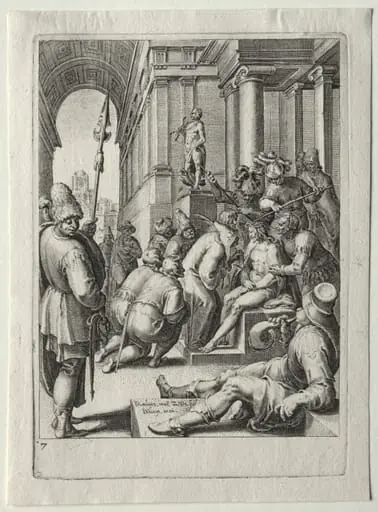
Created in 1766 by Andrea Scacciati, this print depicts the moment of Christ’s humiliation prior to his crucifixion. Rendered in brown ink on laid paper, the work combines etching with sulfur tint and roulette techniques to achieve a textured, somber atmosphere. The composition centers on Christ bound and crowned with thorns, surrounded by four figures engaged in acts of torment, all set within a confined, dimly lit interior.
Subject & Meaning
The scene illustrates the biblical episode of Christ being mocked by Roman soldiers, who place a crown of thorns upon his head and beat him with rods. Each figure around him performs a distinct act of cruelty, whipping, holding a staff, or leaning in with menace. The absence of divine light and the closeness of the figures emphasize human brutality, reinforcing the theme of suffering and abandonment.
Technique & Style
Scacciati employed etching to carve fine lines into a metal plate, then used roulette to create stippled textures and sulfur tint to add subtle tonal gradations. The heavy, overlapping strokes build volume and shadow, giving the figures a rough, almost sculptural presence. The brown ink enhances the gravity of the moment, while the lack of clear background detail focuses attention on the psychological tension between the figures.
History & Provenance
The print was produced in Rome during the mid-18th century, a period when religious imagery remained central to artistic production despite shifting secular tastes. Scacciati, active in the Roman printmaking scene, likely created this work for devotional or educational use. Its survival in collections suggests it was valued for its emotional intensity and technical precision within ecclesiastical circles.
Context
In 18th-century Italy, religious subjects continued to be rendered with psychological depth, even as Enlightenment ideals gained ground. Scacciati’s approach reflects a continuation of Baroque traditions, emphasizing drama and emotional immediacy, while adapting to the more intimate scale of printmaking. This work aligns with other devotional prints used in private prayer and monastic instruction.
Legacy
Though not widely known today, Scacciati’s etching exemplifies the quiet persistence of religious iconography in print form during a time of artistic transition. Its restrained palette and focus on human cruelty offer a counterpoint to the ornate styles of the period. The work remains a quiet testament to the enduring power of sacred narratives in graphic art.
Own this work as a print
Artist & collection


![The Surgeon [reverse copy], by Netherlandish 16th Century](https://artifactworldgallery.com/img/netherlandish-16th-century--the-surgeon-reverse-copy--12ced91956e84708-w320.webp)