Artwork
Flagellation of a Saint
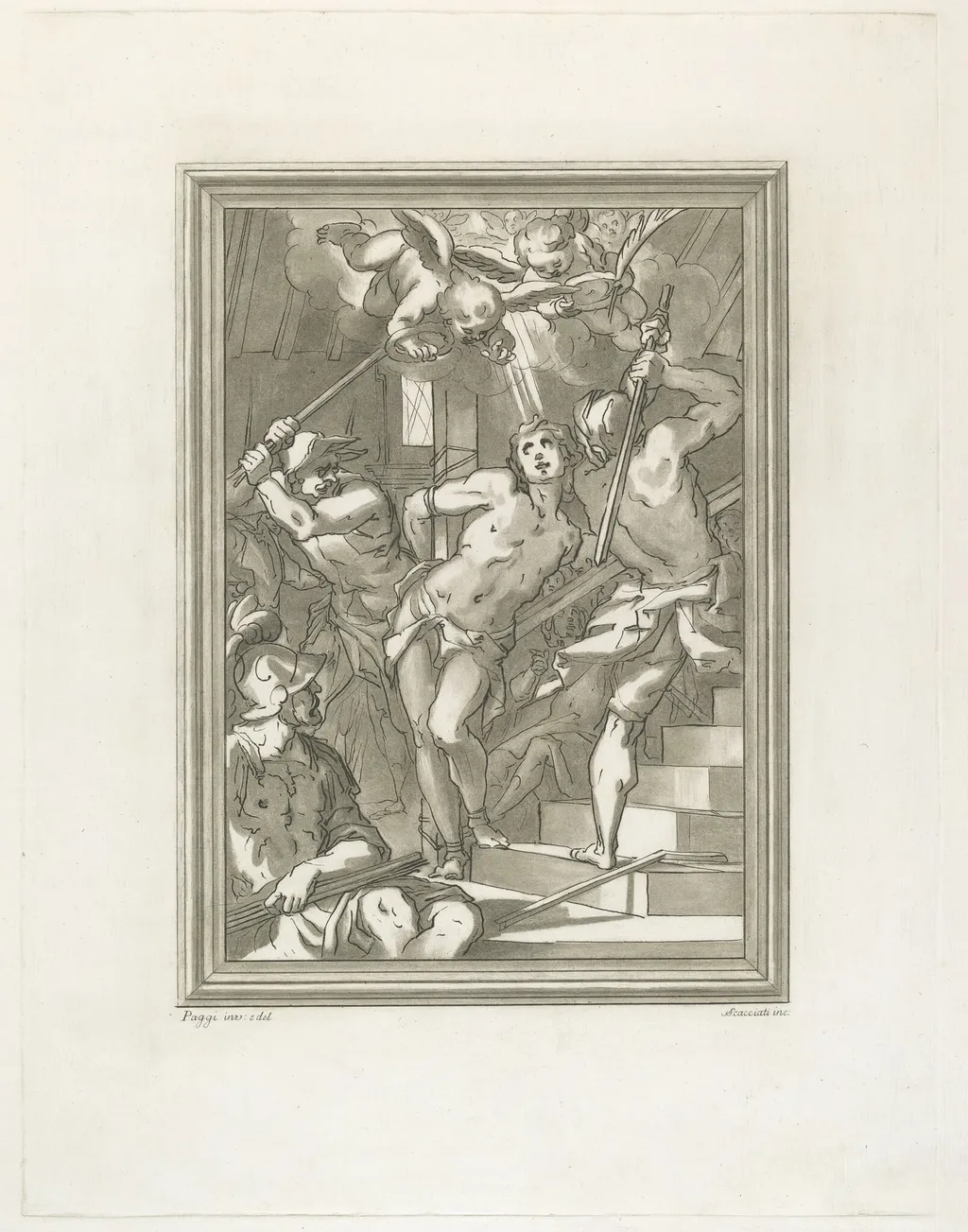
Flagellation of a Saint is an ink print by the Romanticist artist Andrea Scacciati. It dates from 1766 and is held in the collection of the National Gallery of Art.
- Inscription
- Inscribed:lower left in plate: Paggi inv: ed del; lower right in plate: Scacciati inc:; by later hand, lower left in graphite: 16; by later hand, lower left, in graphite: 3 [circled]
About this work
Overview
The work depicts a martyrdom scene where a central male figure, bound to a post, undergoes physical torment at the hands of multiple executioners.
Andrea Scacciati's 'Flagellation of a Saint,' created in 1766, is an etching executed with sulfur tint and roulette on laid paper. The work depicts a martyrdom scene where a central male figure, bound to a post, undergoes physical torment at the hands of multiple executioners. The composition emphasizes the contortion of the saint's body as he gazes upward, contrasting his spiritual focus with the violent actions of the surrounding figures dressed in classical attire.
Scacciati employs the sulfur tint technique to create soft, atmospheric tonal gradations, while the roulette tool adds textural depth to the drapery and shadows. This piece reflects the artist's engagement with religious narrative and the Baroque tradition of dramatic chiaroscuro, adapted here through the specific capabilities of 18th-century printmaking. The work stands as a representative example of Scacciati's output during his active period in Florence, demonstrating his skill in translating emotional intensity and anatomical precision into the graphic medium.
Subject & Meaning
The central figure, a saint subjected to flogging, is shown tied to a post, his body twisted in agony as he gazes upward, suggesting a spiritual appeal or transcendence amid suffering. The surrounding tormentors, dressed in classical garb, focus intently on their task, reinforcing the narrative of martyrdom and the tension between earthly cruelty and divine endurance.
Technique & Style
Scacciati employed a traditional etching process, enhanced by a sulfur tint that deepens the tonal range. The roulette tool creates a stippled background, while careful line work defines the figures and architectural elements. Strong chiaroscuro contrasts illuminate the saint’s contorted form against darker surroundings, lending the scene a heightened emotional intensity.
History & Provenance
Created in the mid‑18th century, the print reflects the period’s interest in religious martyrdom and dramatic narrative. While specific ownership records are scarce, the work is catalogued among Scacciati’s known prints and is held in several European print collections, illustrating its continued relevance to scholars of Italian printmaking.
Own this work as a print
Artist & collection


 The Flagellation
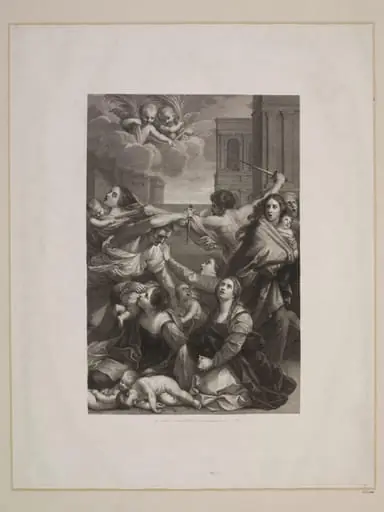 Murder of the Innocents
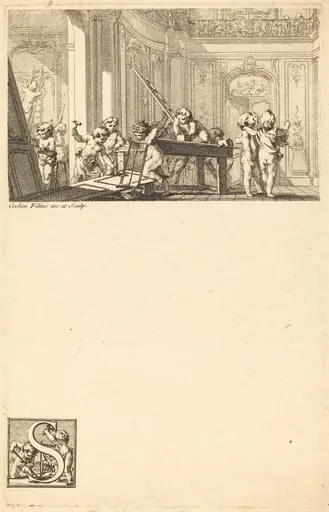 Putti Preparing the Interior Decoration of a Mansion
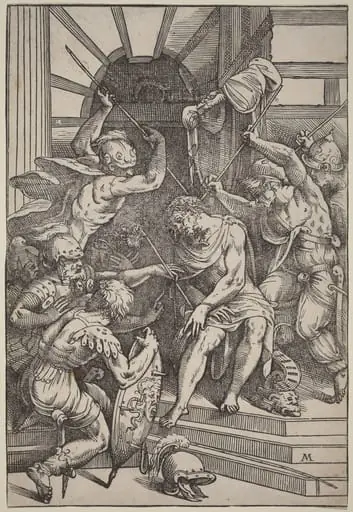 Christ Crowned with Thorns
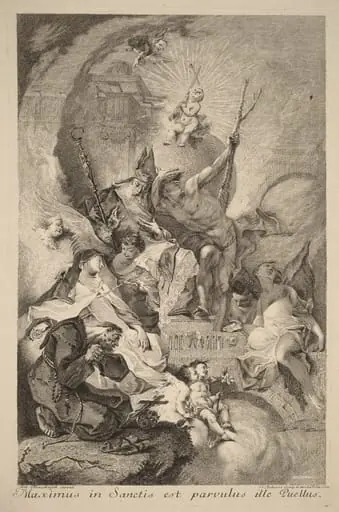 Four Saints
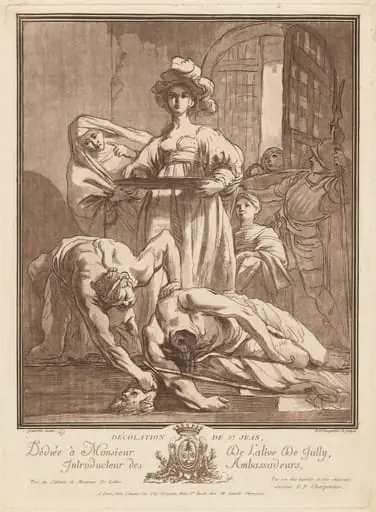 Décolation de St. Jean (Beheading of Saint John the Baptist)
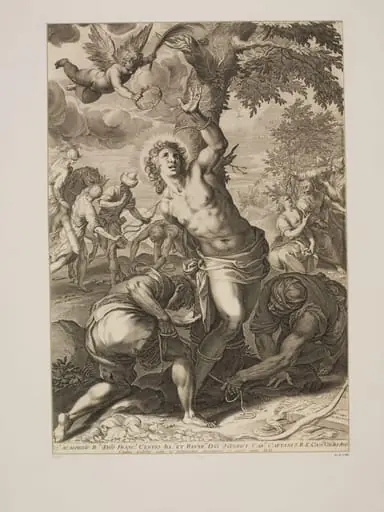 The Martyrdom of St. Sebastian
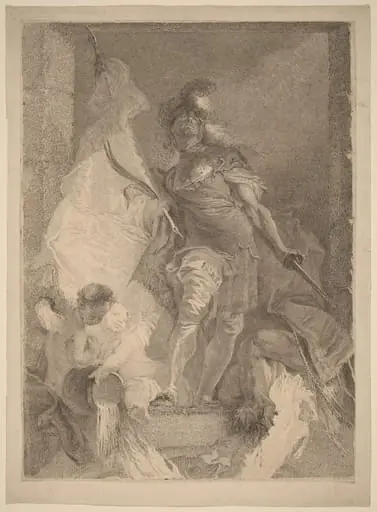 Saint Florian
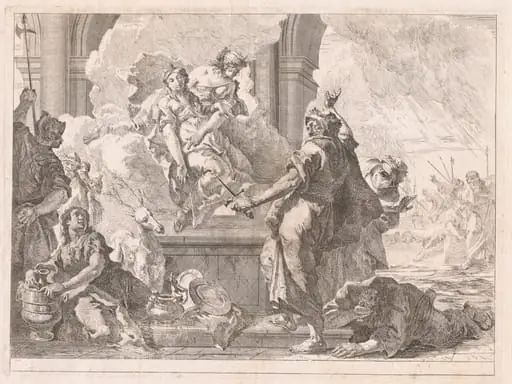 The Sacrifice of Iphigenia
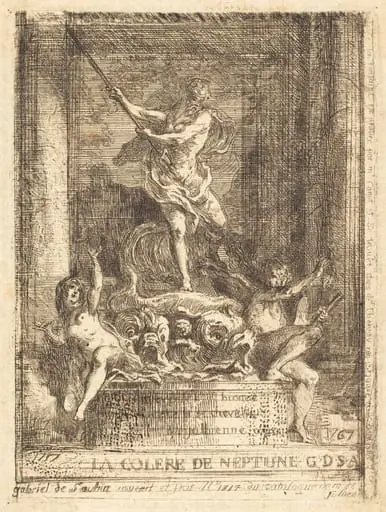 La Colère de Neptune (The Wrath of Neptune)