Artwork
Going Westward
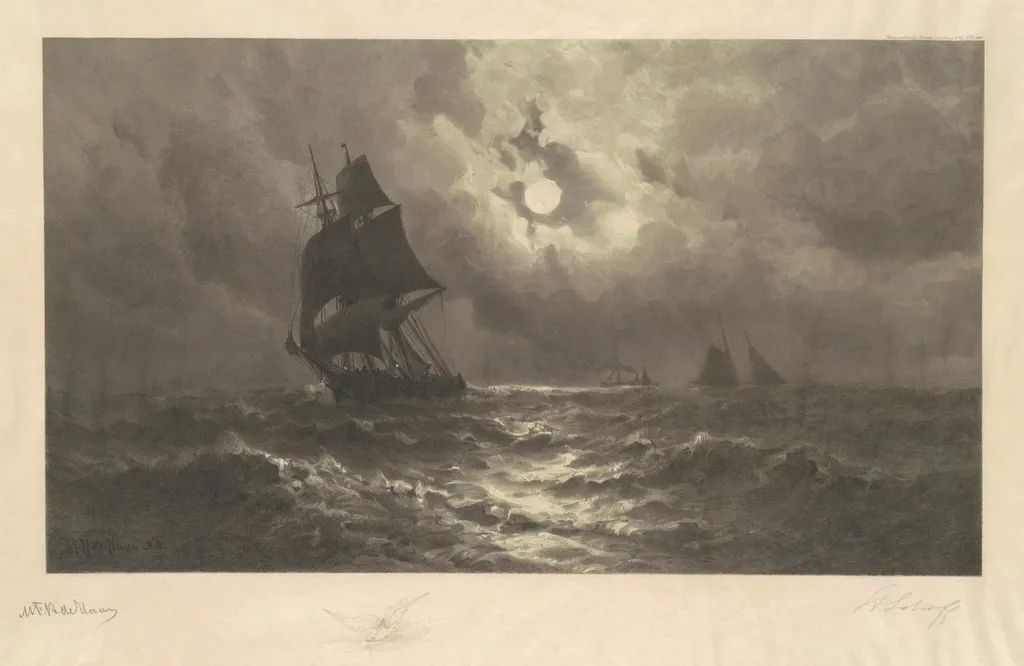
Going Westward is an ink print by the Impressionist artist Stephen Alonzo Schoff. It dates from 1888 and is held in the collection of the National Gallery of Art.
- Inscription
- Inscribed:upper right in plate: Copyrighted by Radtke, Lauckner & Co., N.Y. 1888.; lower left in plate: MFH de Haas N.A.; lower left in graphite: MFH de Haas; lower right in graphite: S.A. Schoff; lower right edge in graphite by unknown hand: Going Westward 36
About this work
Overview
The print exemplifies the precision possible in etching, a technique involving incised lines on a metal plate to hold ink for printing.
Created in 1888, Going Westward is a black-and-white etching by Stephen Alonzo Schoff. The work captures a large sailing vessel battling heavy seas beneath a brooding sky. Using only ink tones, Schoff constructs a dynamic composition where light and shadow define the motion of wind and water.
The print exemplifies the precision possible in etching, a technique involving incised lines on a metal plate to hold ink for printing.
Subject & Meaning
The scene depicts a merchant or fishing vessel pushing westward through a violent ocean, symbolizing perseverance against nature’s force. Two distant, smaller boats suggest the peril faced by others at sea, reinforcing a theme of isolation and endurance. No human figures are visible, emphasizing the ship’s solitary struggle and the overwhelming scale of the natural environment.
Technique & Style
Schoff employed etching to achieve fine, controlled lines that model the turbulence of waves and the texture of sails. Deep blacks contrast sharply with areas of minimal ink, creating the illusion of depth and movement. The rendering of water suggests spray and foam through delicate, interrupted lines, while the ship’s rigging is rendered with crisp, angular strokes that convey tension and strain.
History & Provenance
The print was produced in 1888 during Schoff’s active period as a maritime artist and engraver. It was likely issued as a standalone print or in a series documenting seafaring life. No documented early ownership records exist, but it was included in several late 19th-century exhibitions of American printmaking, suggesting modest circulation among collectors of nautical imagery.
Context
In the late 1800s, American artists increasingly turned to printmaking to depict industrial and maritime themes. Schoff’s work aligns with a broader interest in the sea as both a livelihood and a force of nature. Etching, though less common than lithography, remained a respected medium for its capacity to render detail and atmosphere, particularly in scenes of maritime drama.
Legacy
Going Westward remains a representative example of American maritime etching from the Gilded Age. While Schoff is not widely known today, this work continues to appear in institutional collections focused on 19th-century American prints. Its restrained palette and technical discipline reflect a quiet, observational approach to nature that contrasts with more romanticized depictions of the sea.
Own this work as a print
Artist & collection


- After the Storm
 The Breakers
 Cutter offshore.
 Fisherman with Pack over His Shoulder
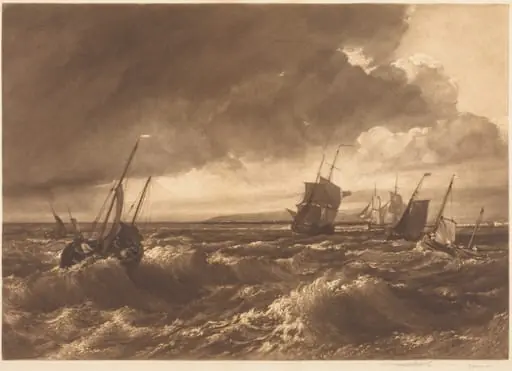 The Mouth of the Thames—Isle of Sheppey in Distance
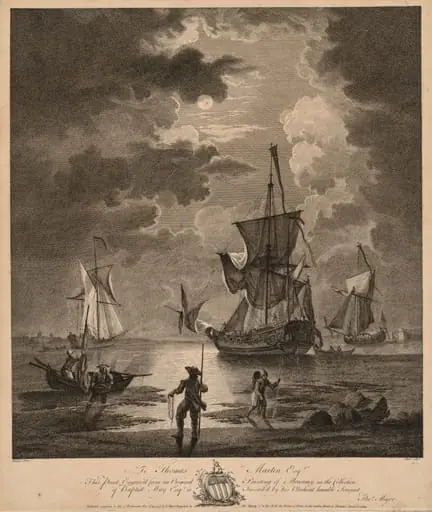 A View of the Sea by Moonlight
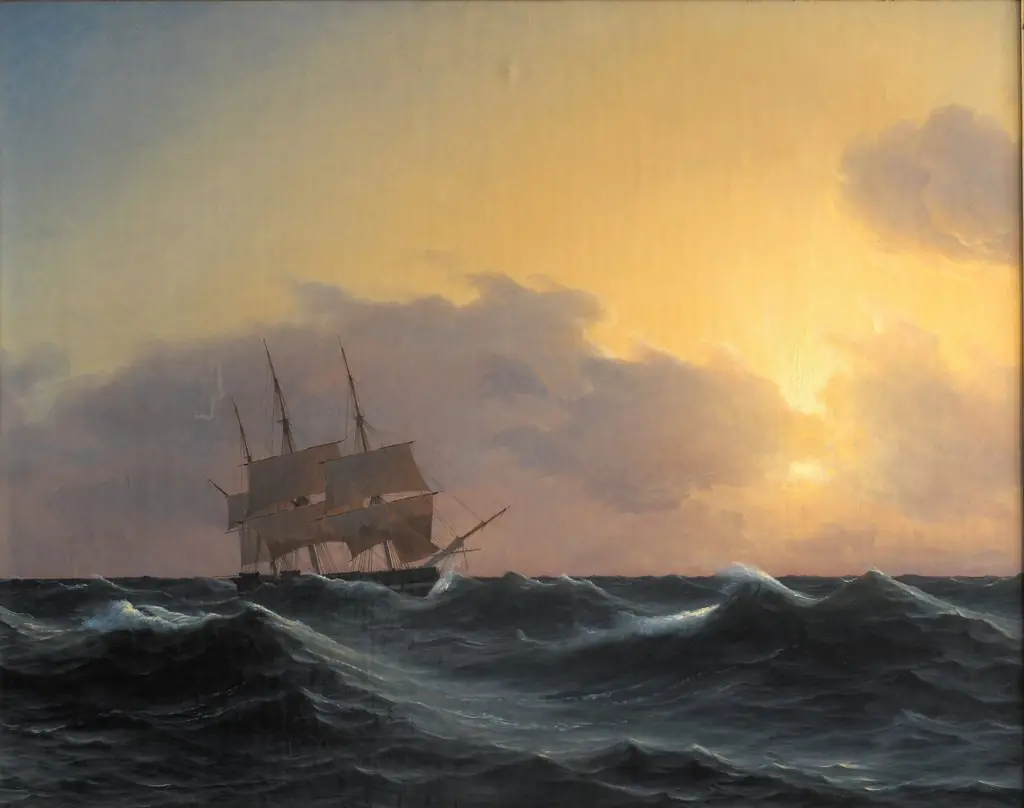 Fregat i en storm med rebede undersejl
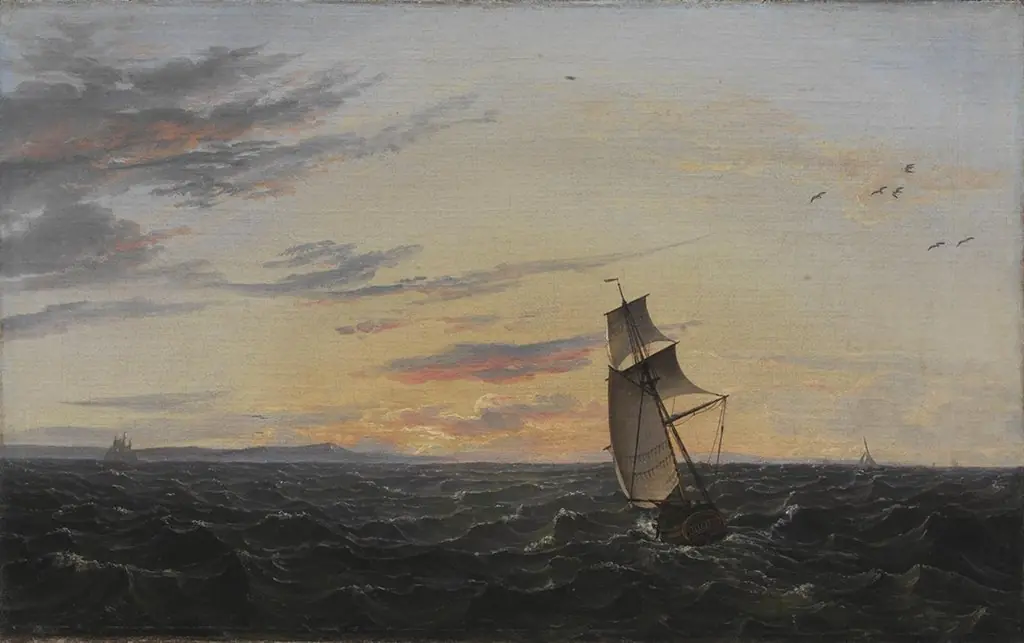 A Seascape. The coast of the Island of Rügen in Evening Light
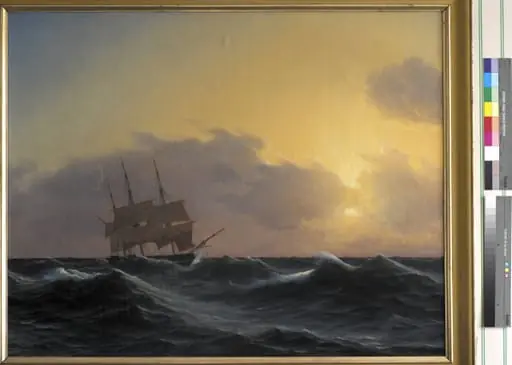 Fregat i en storm med rebede undersejl
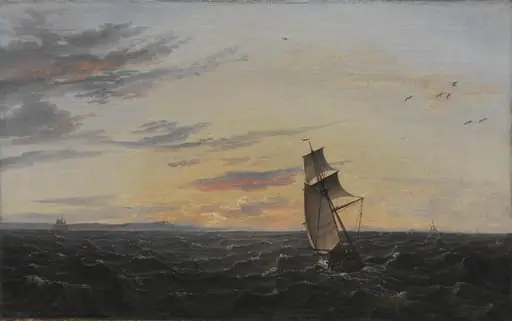 A Seascape. The coast of the Island of Rügen in Evening Light
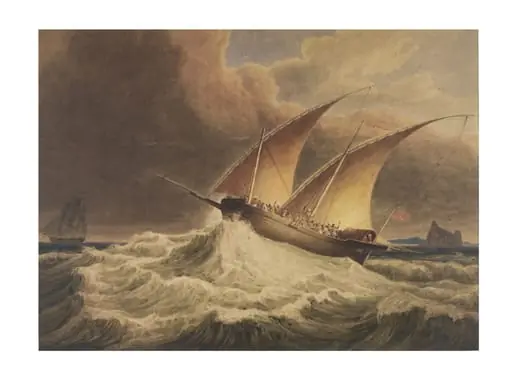 Sea Piece: Arab Dhow in the foreground, Ship in the distance
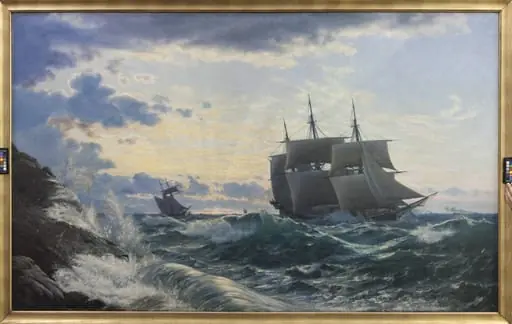 Skibe som morgenen efter en storm klarer landet for sig