Artwork
The Lamentation
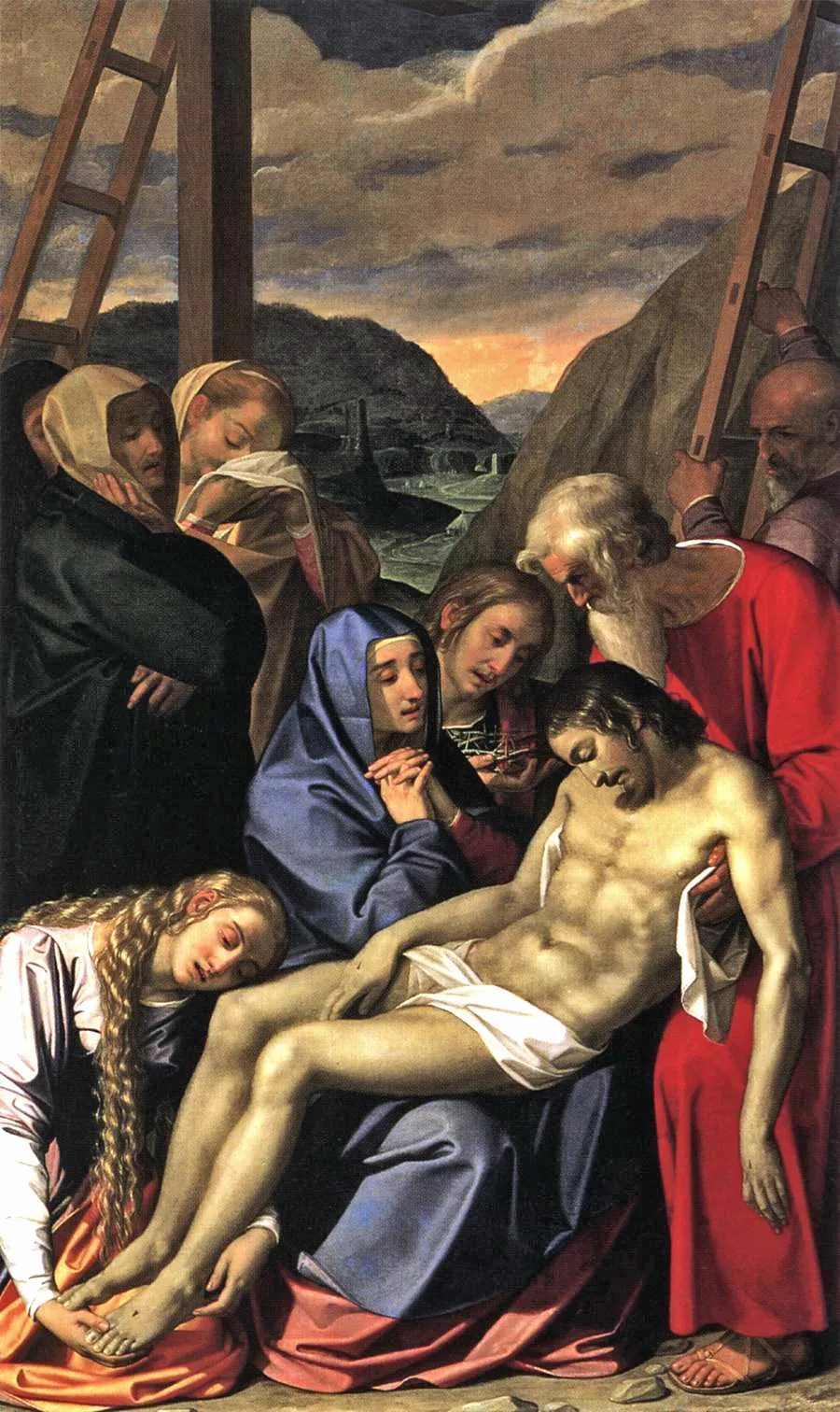
The Lamentation is an oil painting by the Late Mannerist artist Scipione Pulzone. It dates from 1597 and is held in the collection of the Metropolitan Museum of Art.
About this work
In the chapel of the Passion at Rome's Church of the Gesù, Scipione Pulzone's 1593 altarpiece laid the pale body of Christ on the Virgin's lap beneath a dawn sky. Visiting in 1594, Pope Clement VIII found Mary Magdalene insufficiently devout and asked that she be altered. The painting passed through Cardinal Fesch and a Detroit cloister before reaching the Metropolitan Museum of Art in 1984.
Overview
It was designed to encourage profound contemplation of Christ's sacrifice, aligning with the principles of Saint Ignatius of Loyola's Spiritual Exercises.
Scipione Pulzone completed The Lamentation in 1593 as an altarpiece for the Passion chapel within Rome's Church of the Gesù, the principal church of the Jesuit order. Commissioned by Bianca Mellini, this canvas served as a focal point for devotion. It was designed to encourage profound contemplation of Christ's sacrifice, aligning with the principles of Saint Ignatius of Loyola's Spiritual Exercises. The artwork's monumental scale and directness facilitated this meditative purpose.
Subject & Meaning
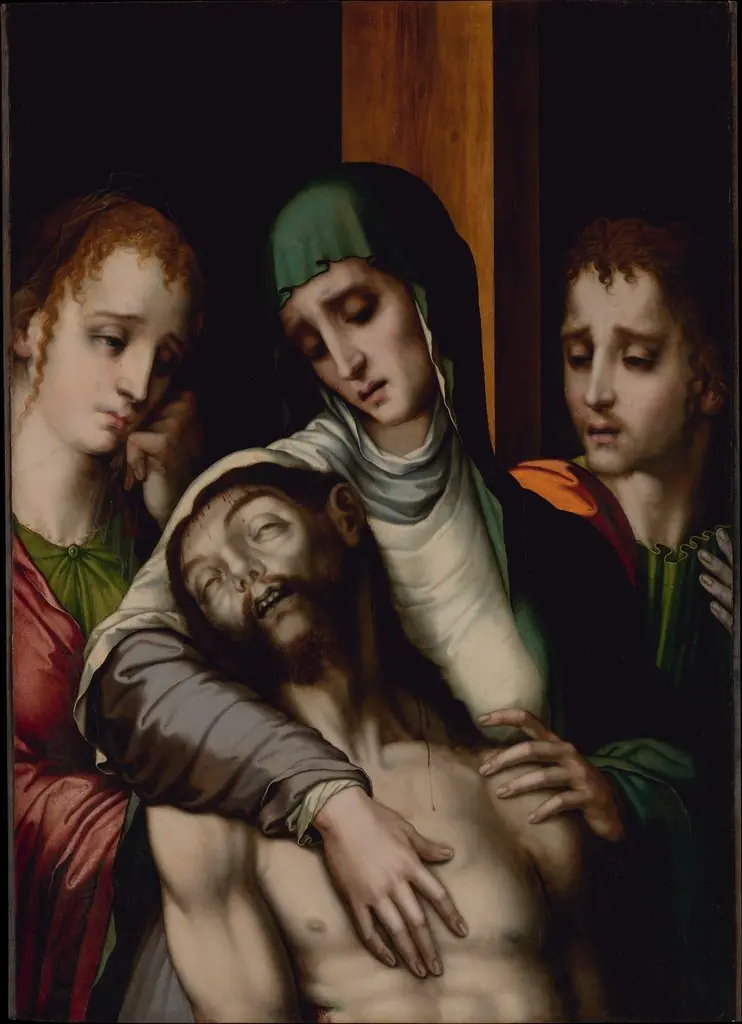
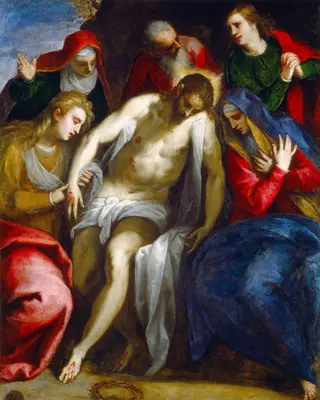
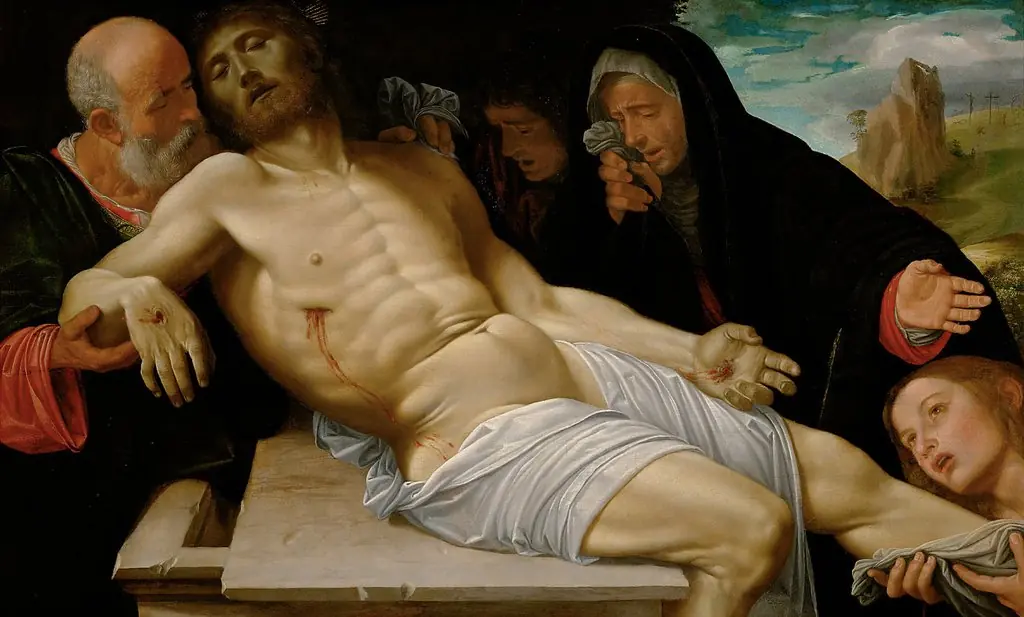
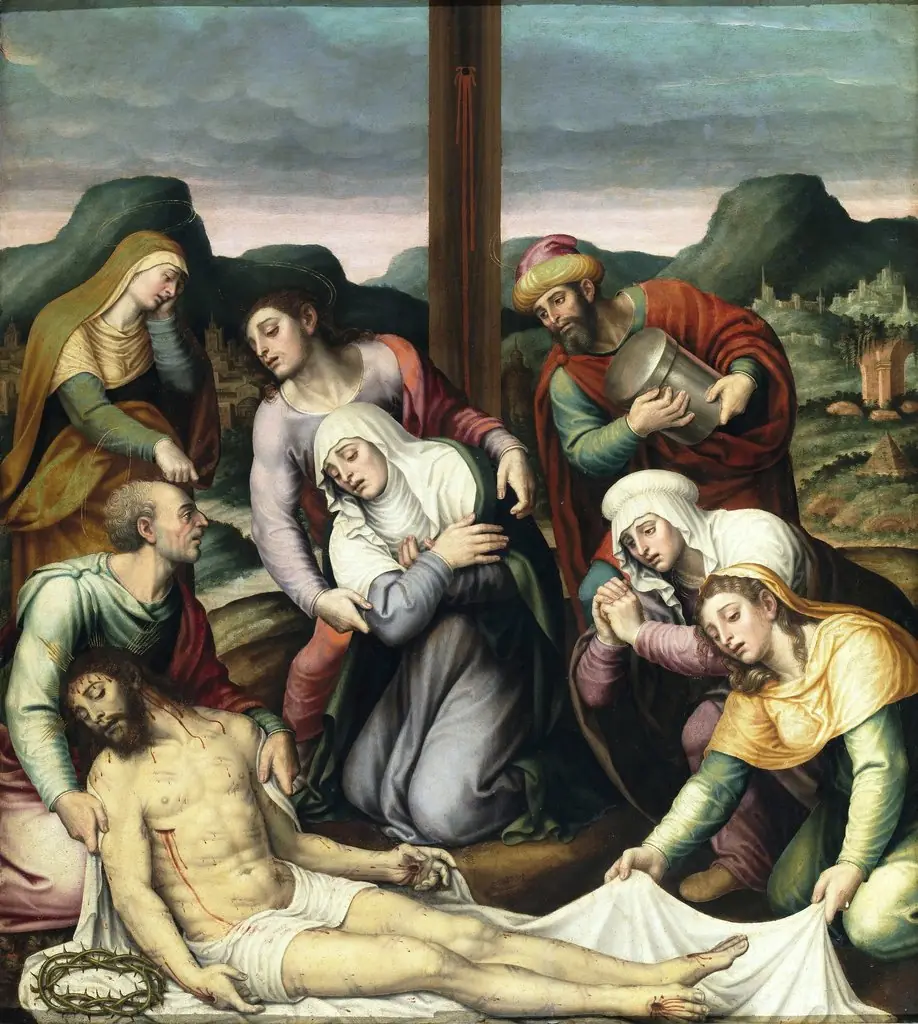
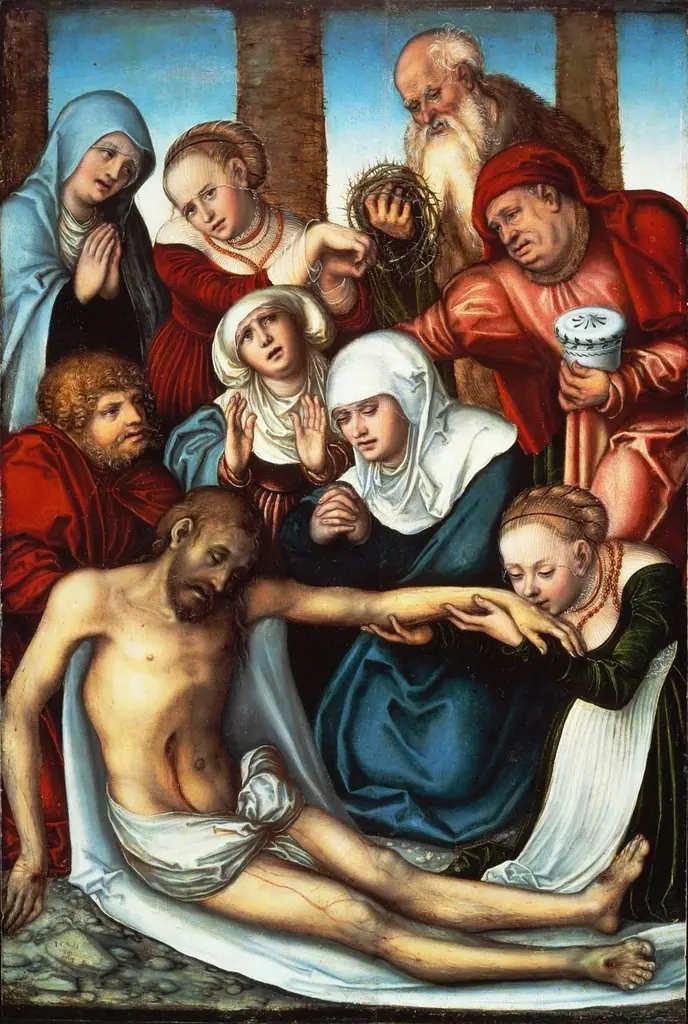
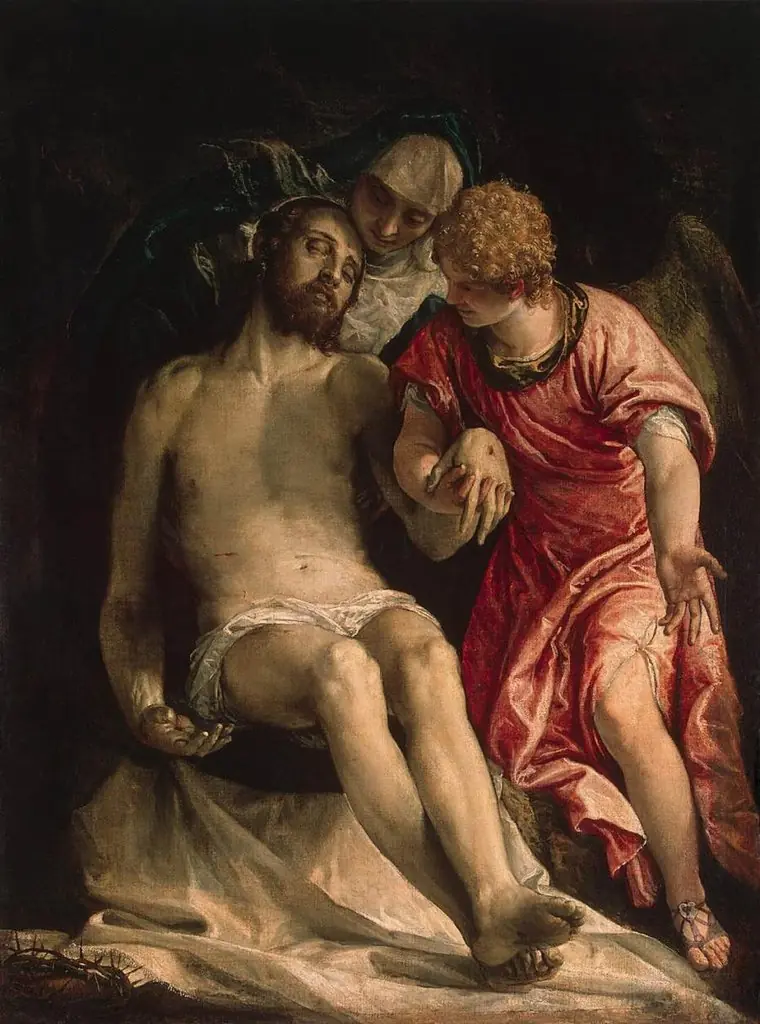
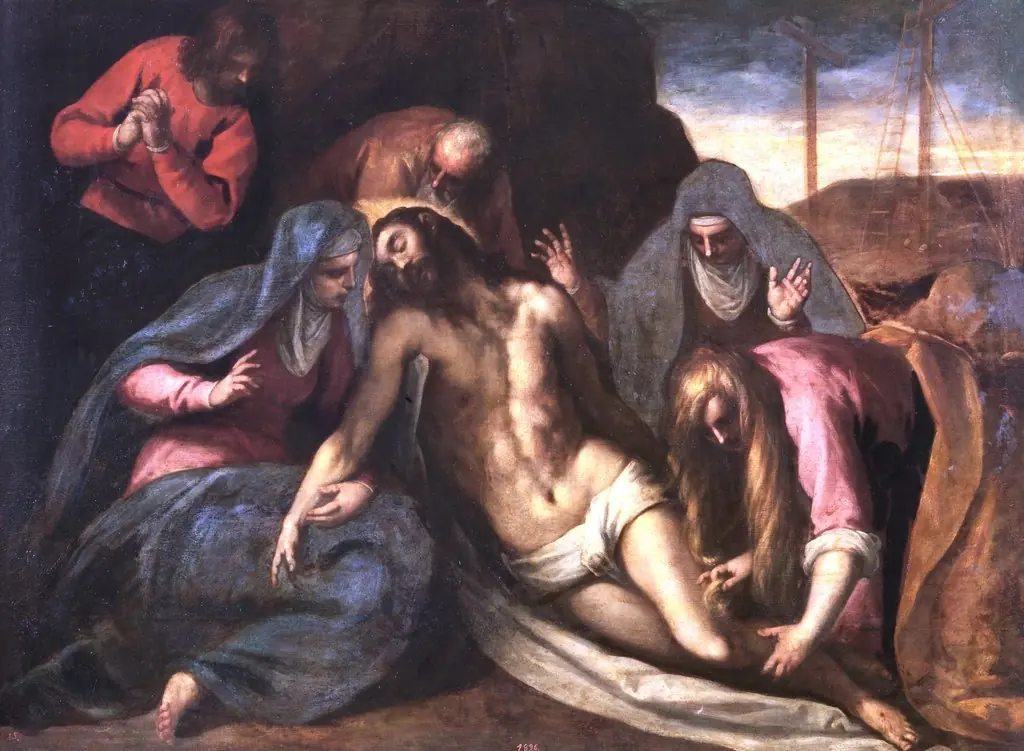
The composition centers on the deceased Christ, whose pallid form rests across the Virgin Mary's lap. Joseph of Arimathea supports him, while Saint John the Evangelist holds the crown of thorns. Mary Magdalene kneels reverently at Christ's feet.
This scene is presented without extraneous narrative details, creating a powerful and simplified image. Its purpose was to allow viewers to engage directly with the solemnity of Christ's death and sacrifice.
Technique & Style
Pulzone's artistic method in The Lamentation synthesizes a precise observation of nature with the refined aesthetics of classical art, drawing inspiration from figures like Raphael and ancient sculpture. He rendered the Virgin's tears and the lifeless pallor of Christ's skin with striking realism. The rich ultramarine blue of the mourners' garments is depicted with a smooth, almost porcelain-like finish, contributing to the painting's overall sense of solemnity and monumental presence.
History & Provenance
The altarpiece remained in the Church of the Gesù for approximately a century. In 1594, Pope Clement VIII reportedly suggested altering Mary Magdalene's depiction for a more devout expression, though this change was apparently not implemented. The painting later passed from the Mellini family to the Cardelli family through marriage, then entered the collection of Cardinal Joseph Fesch, valued at 150 scudi in his 1841 inventory.
Art historian Federico Zeri eventually identified the work on the New York art market, leading to its acquisition by the Metropolitan Museum of Art in 1984.
Artist & collection

Artist
Scipione Pulzone (1544 – February 1, 1598), also known as Il Gaetano, was a Neapolitan painter of the late Italian Renaissance.