Artwork
Pietá
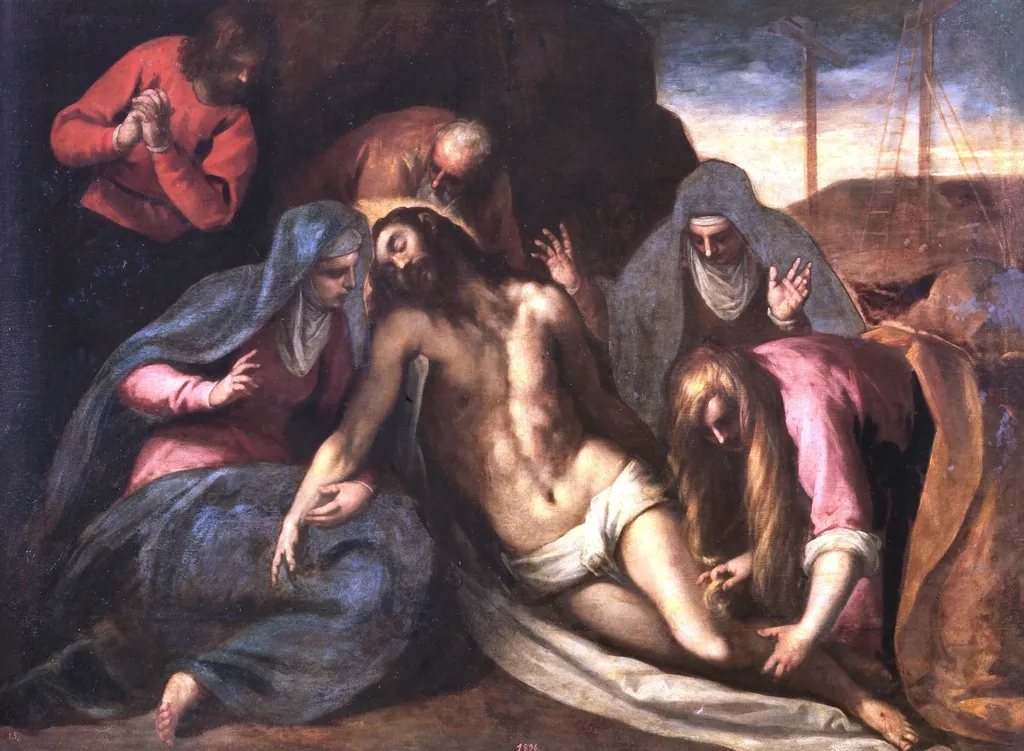
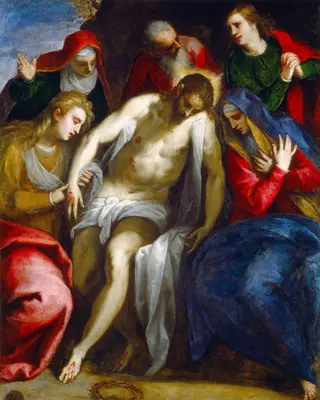
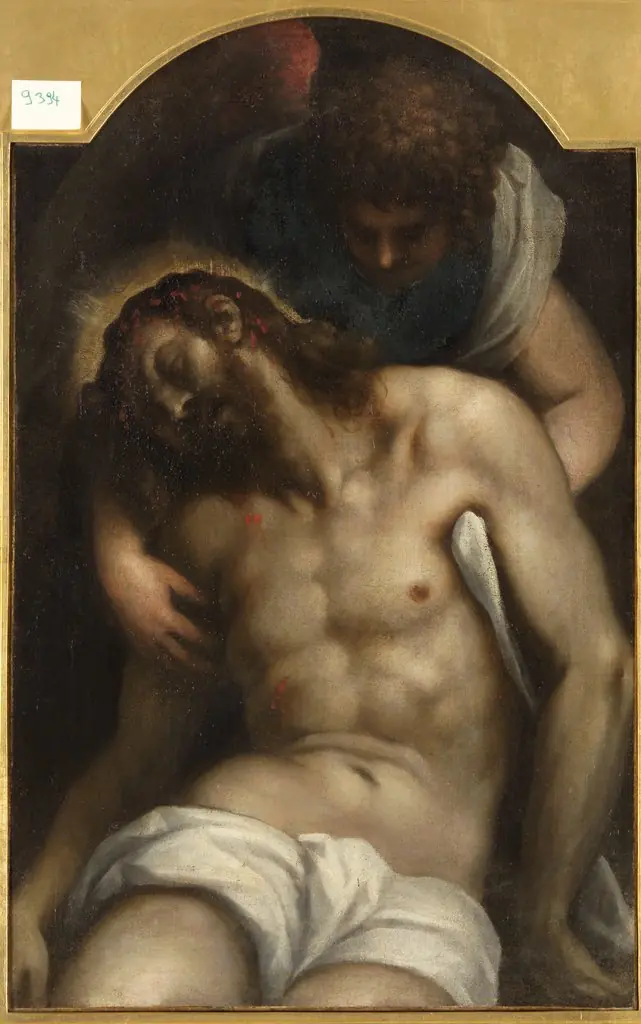
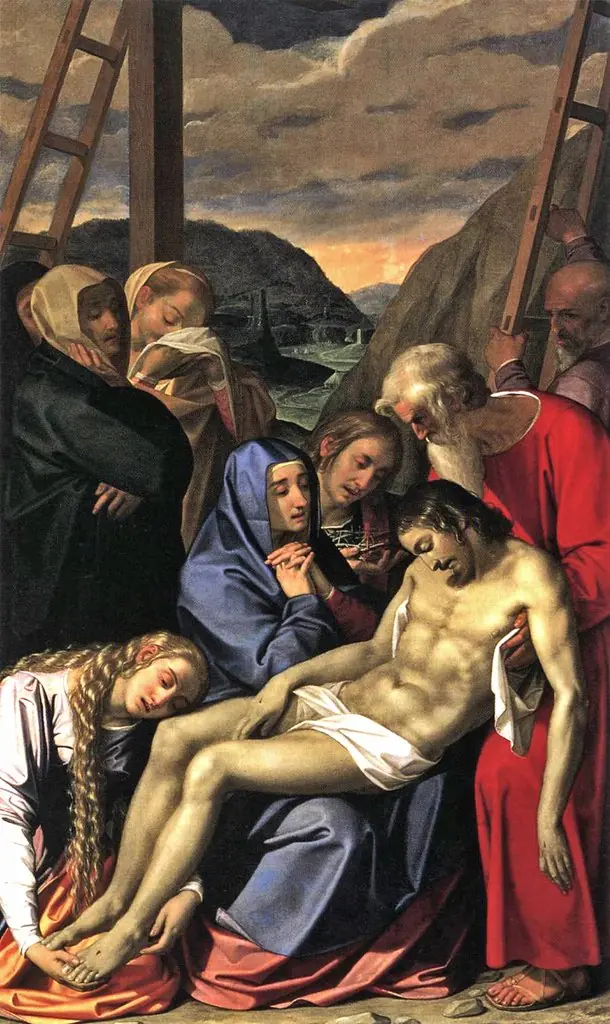
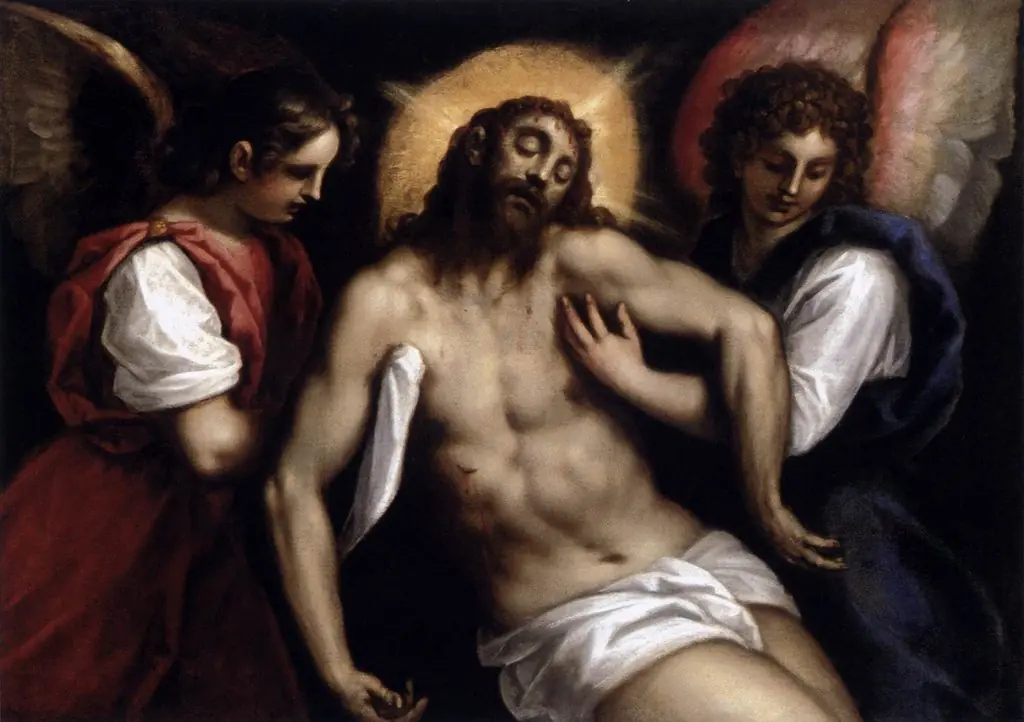
Pietá is an oil painting by the Early Baroque Italian artist Palma il Giovane. It dates from 1611 and is held in the collection of the Museo del Prado.
About this work
Subject & Meaning
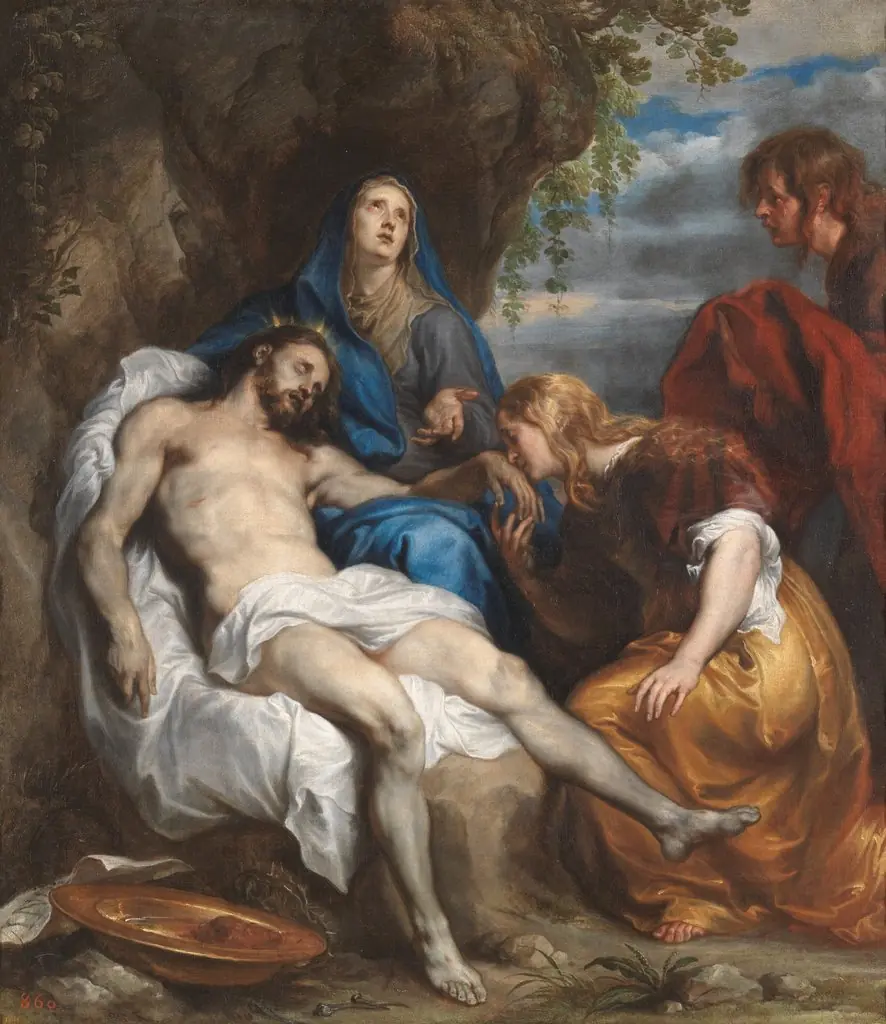
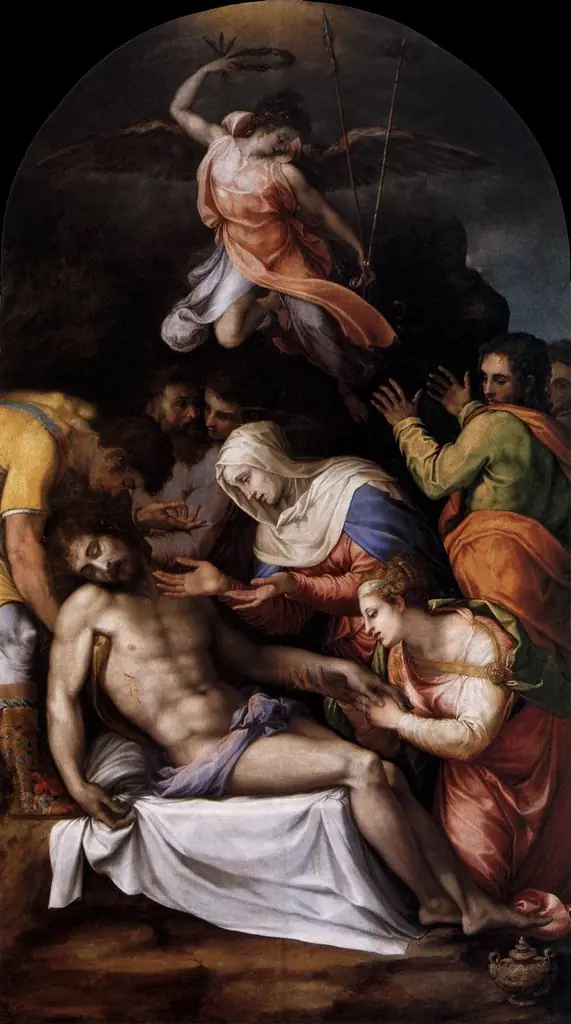
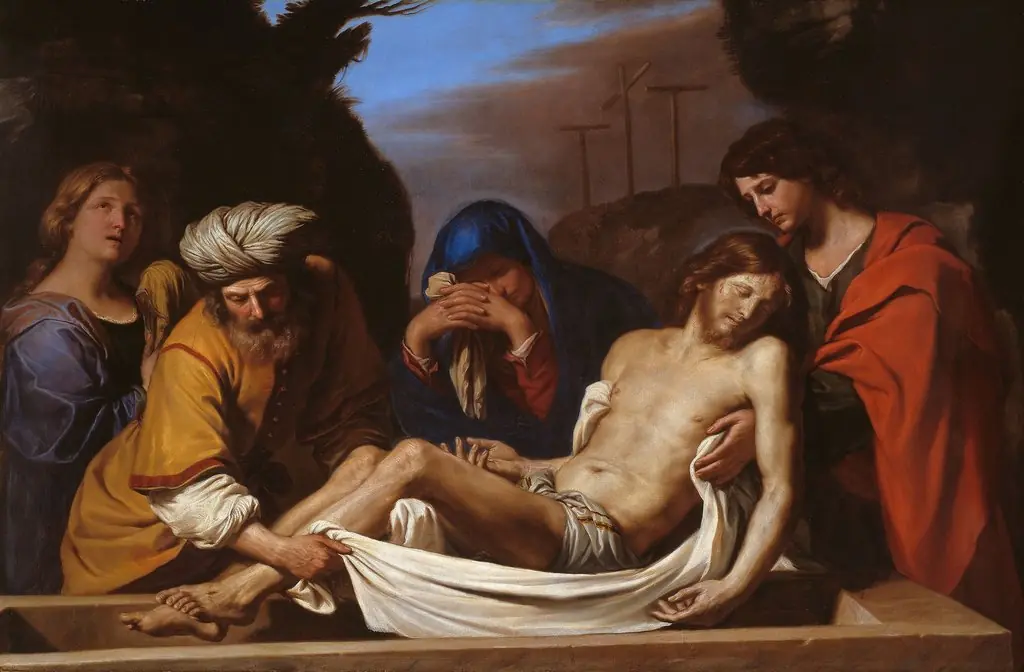
The subject of the painting is the Pietà, a traditional Christian iconography depicting the Virgin Mary cradling the dead body of Jesus after his crucifixion.
The subject of the painting is the Pietà, a traditional Christian iconography depicting the Virgin Mary cradling the dead body of Jesus after his crucifixion. The work renders the moment of sorrow and reverence central to Catholic devotional imagery, with Mary’s posture and facial expression conveying grief and maternal tenderness. The composition centers on the lifeless body of Christ, whose wounds and pallor emphasize the sacrifice of the Passion, while Mary’s presence underscores themes of compassion and intercession.
In this rendering, the iconography aligns with Counter-Reformation visual traditions that aimed to evoke emotional engagement with sacred narratives.
Technique & Style
Palma il Giovane executed the Pietà in 1611 using oil paint applied to a canvas support. The work measures 136 cm in height and 183 cm in width, presenting a religious composition centered on the figure of Jesus Christ. As a painting classified within the religious genre, the piece relies on the traditional Venetian medium of oil on canvas to achieve its formal qualities.
History & Provenance
The painting titled Pietà was created by Jacopo Palma the Younger in 1611. Executed in oil on canvas, the work measures 136 cm in height and 183 cm in width. It depicts the religious subject of the Pietà, focusing on the figure of Jesus Christ. The artwork is currently held in the collection of the Museo del Prado.
The Pietá by Palma il Giovane is held in the collection of the Museo del Prado in Madrid. The painting, executed in oil on canvas, was completed in 1611 and depicts the Pietà subject with Jesus Christ as the main figure.
Specific accession or inventory numbers for the work are not provided in the available records. Similarly, the provided sources do not contain details regarding the artwork's exhibition history or specific display dates within the museum.
Overview
Palma il Giovane’s Pietà, executed in oil in 1611, is a religious composition now in the Museo del Prado. The canvas presents a somber gathering around a lifeless, unclothed figure, illuminated against a darkened backdrop that includes a faint ship and a muted sky.
Context
The Pietà belongs to the late Renaissance‑early Baroque transition, a time when Venetian artists emphasized emotional intensity and theatrical lighting. Palma’s adherence to Tintoretto’s dramatic visual language situates the work within the broader shift toward more expressive religious imagery.
Own this work as a print
Artist & collection
Artist
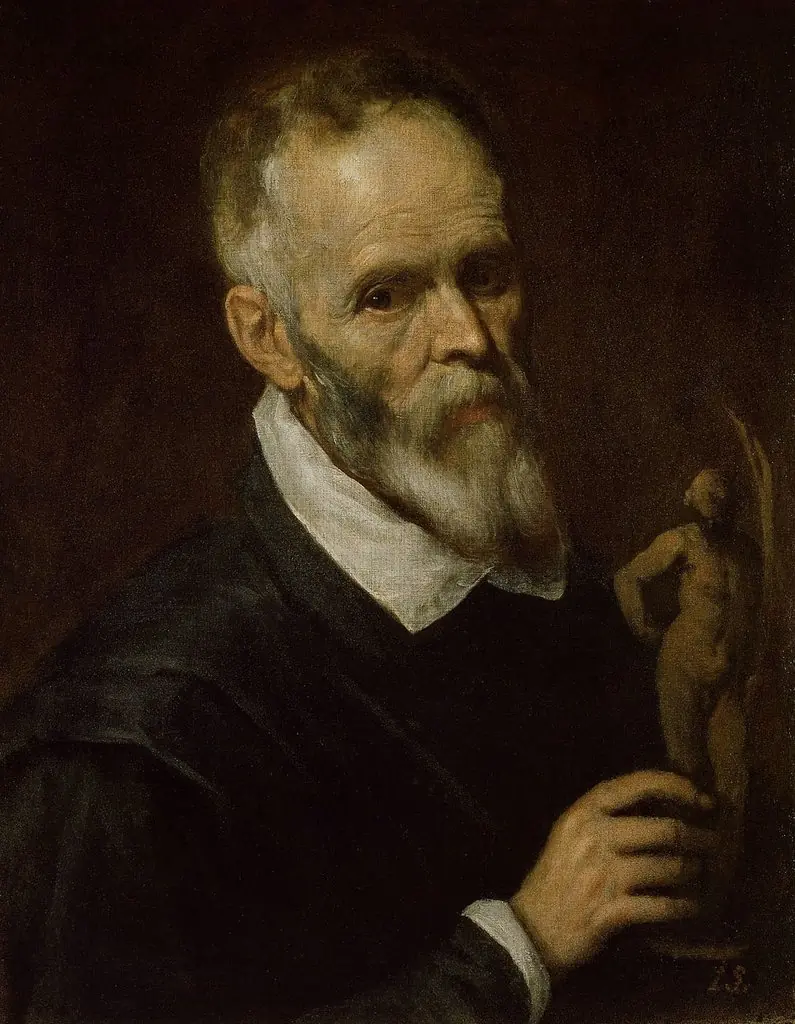
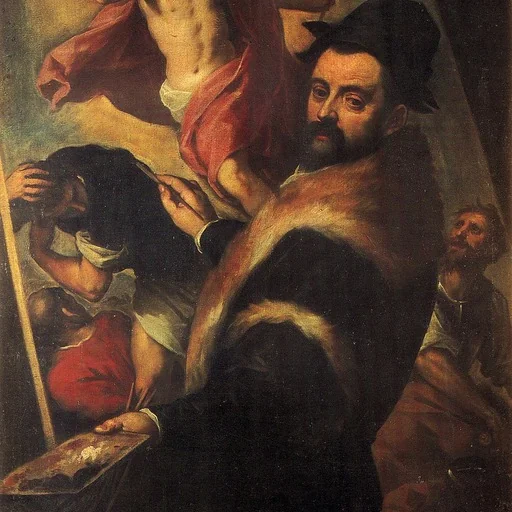
Iacopo Negretti (1548/50 – 14 October 1628), best known as Jacopo or Giacomo Palma il Giovane or simply Palma Giovane ('Young Palma'), was an Italian painter from Venice and a notable exponent of the Venetian school.