Artwork
The Lamentation
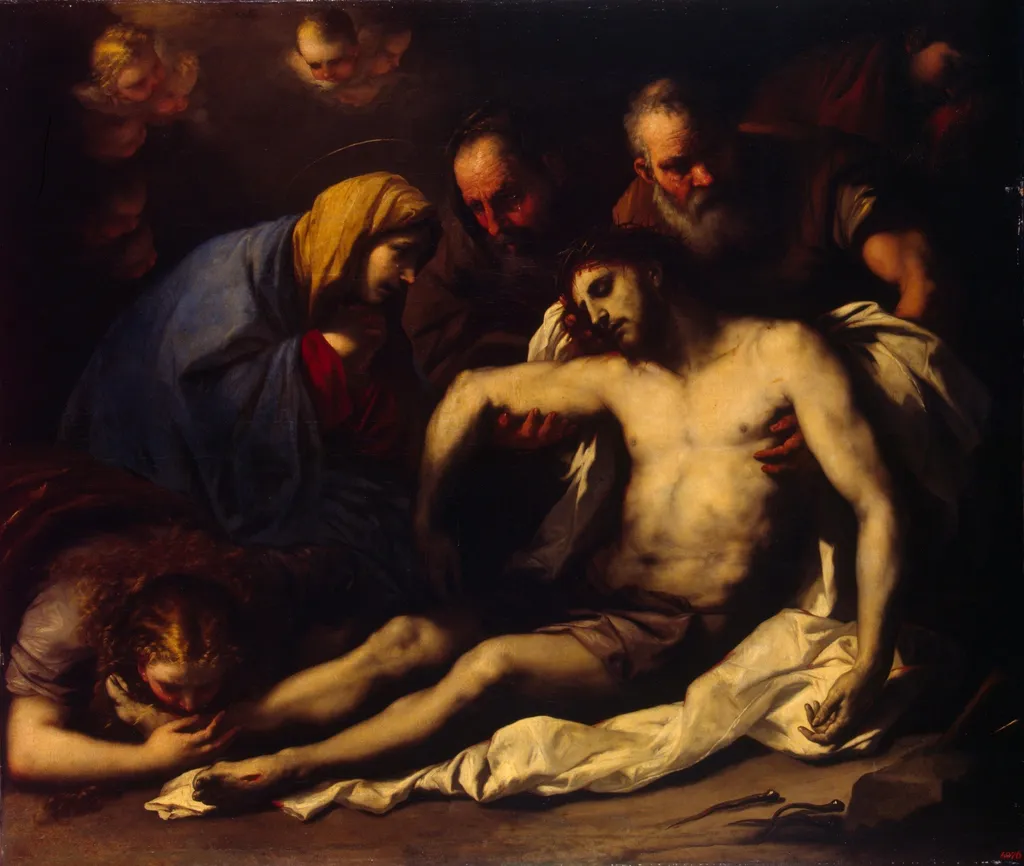
The Lamentation is an oil painting by the High Baroque Italian artist Luca Giordano. It dates from 1672 and is held in the collection of the Hermitage Museum.
About this work
Overview
The Lamentation is a religious painting by the Italian Baroque artist Luca Giordano, dated to 1672.
The Lamentation is a religious painting by the Italian Baroque artist Luca Giordano, dated to 1672. Executed in oil on canvas, the work measures 155 by 182 centimeters and was created in Italy. It is presently held in the Hermitage Museum. The painting represents a significant example of Giordano's engagement with the tenebrist style of his early training, applying dramatic chiaroscuro to a traditional biblical subject while foreshadowing the dynamic colorism that would define his later career.
Subject & Meaning
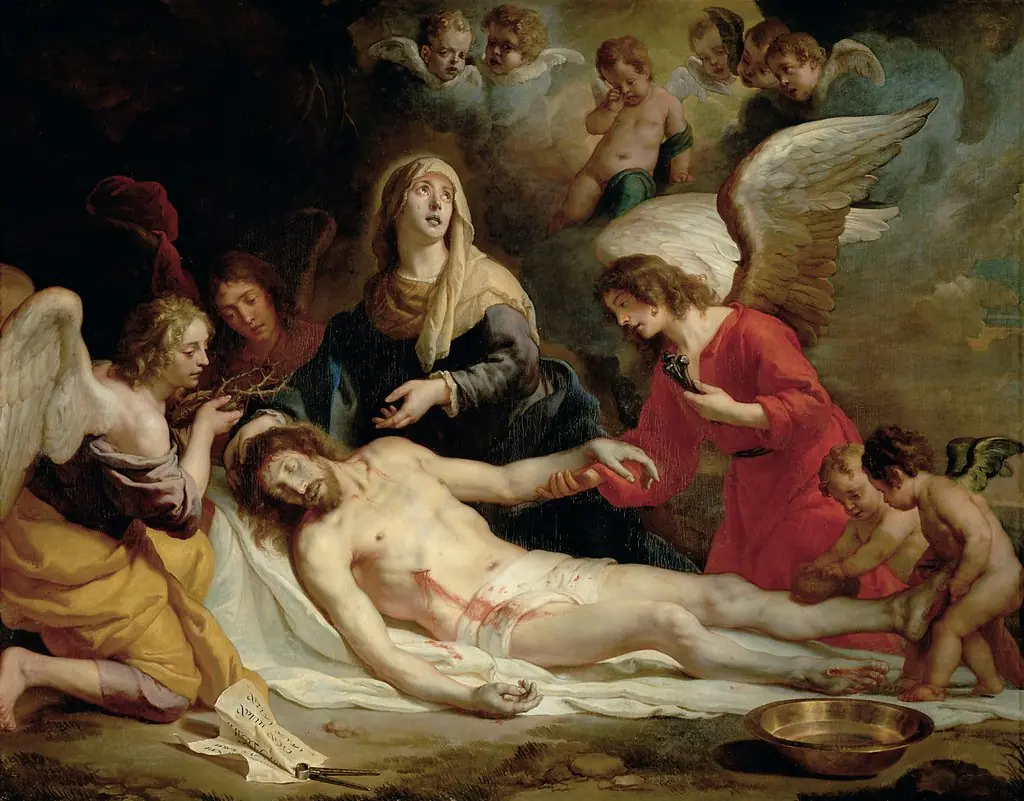
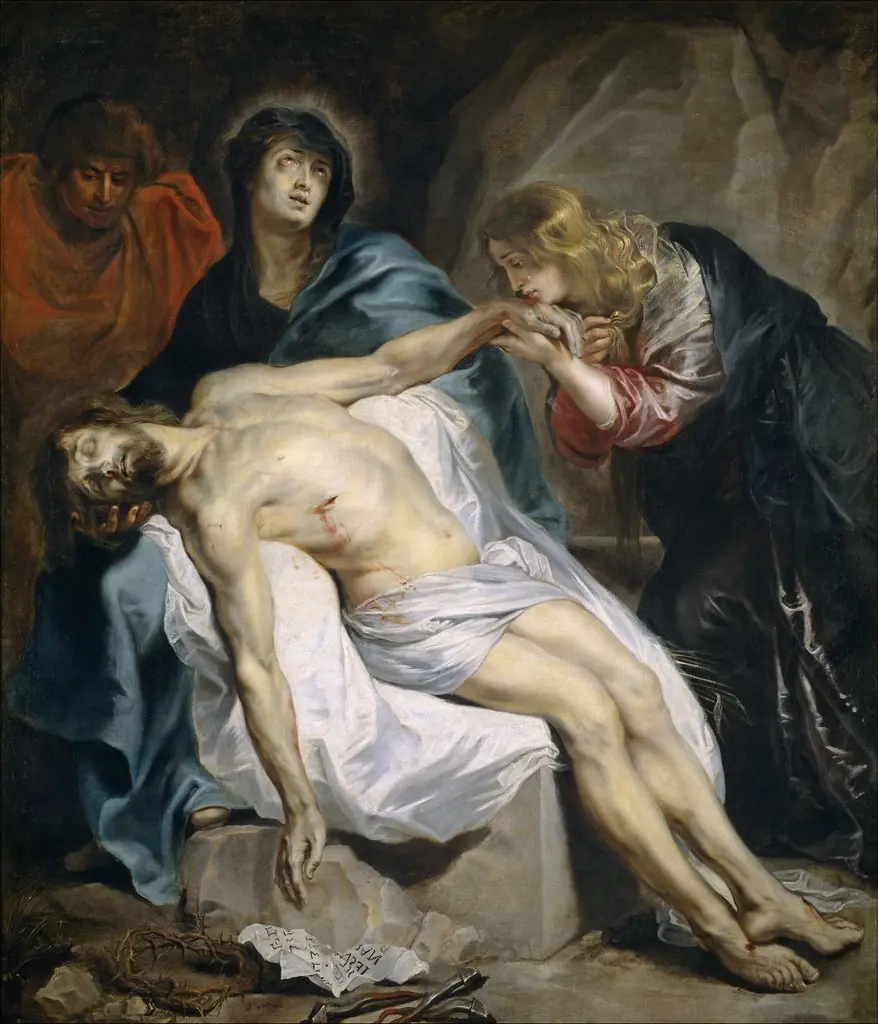
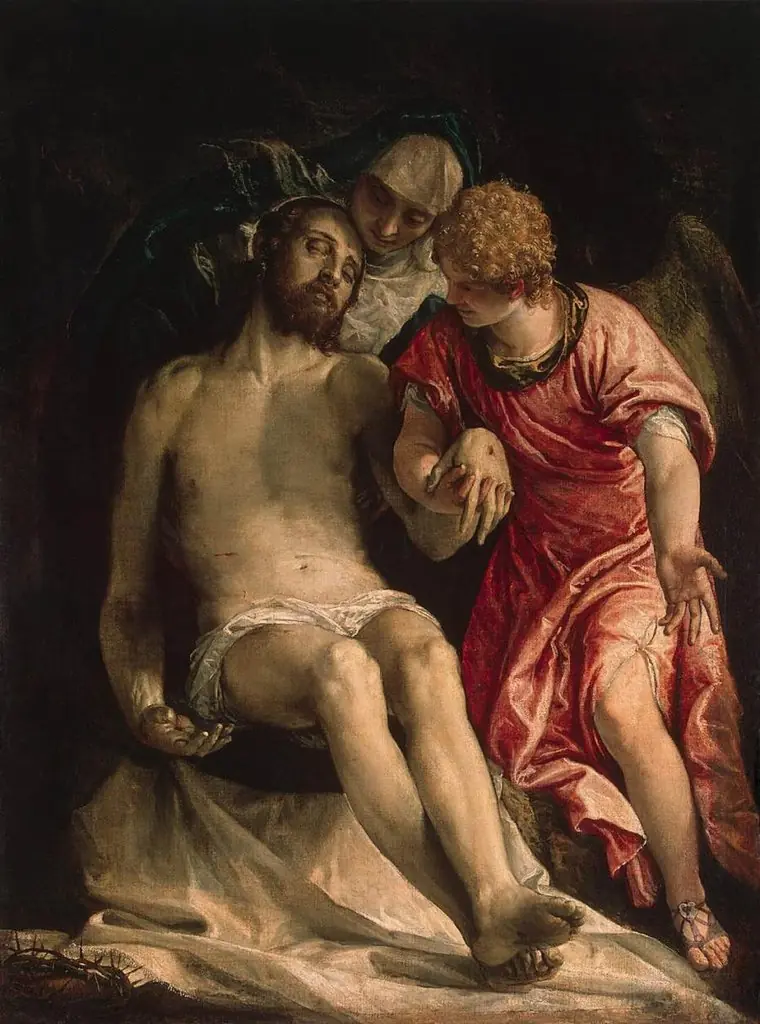
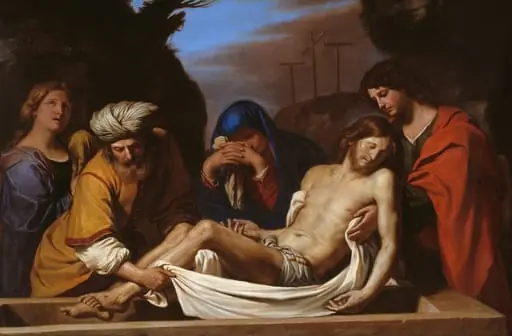
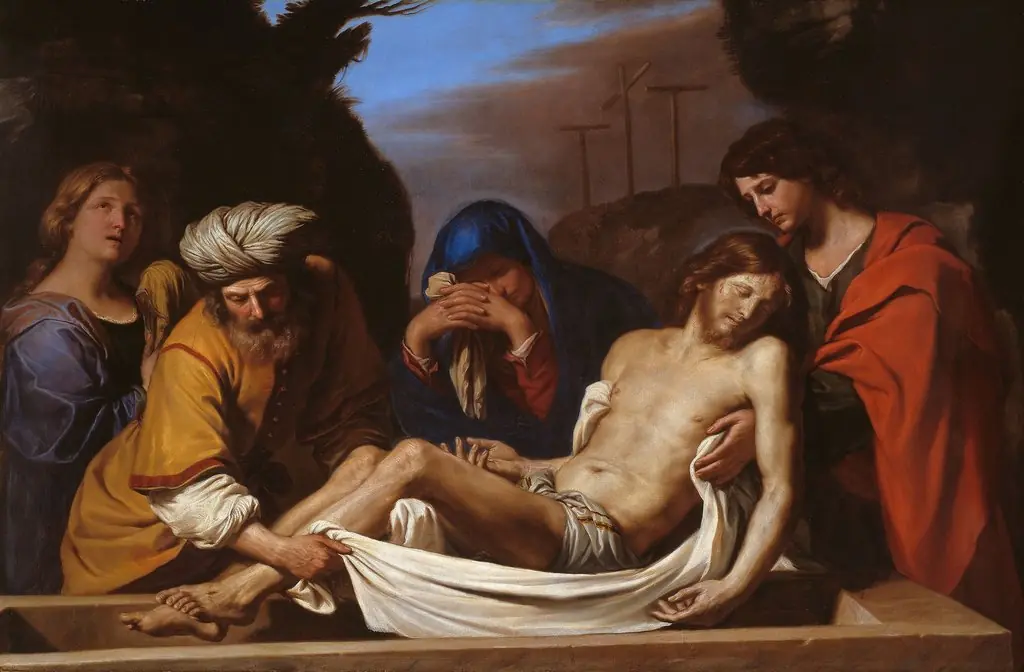
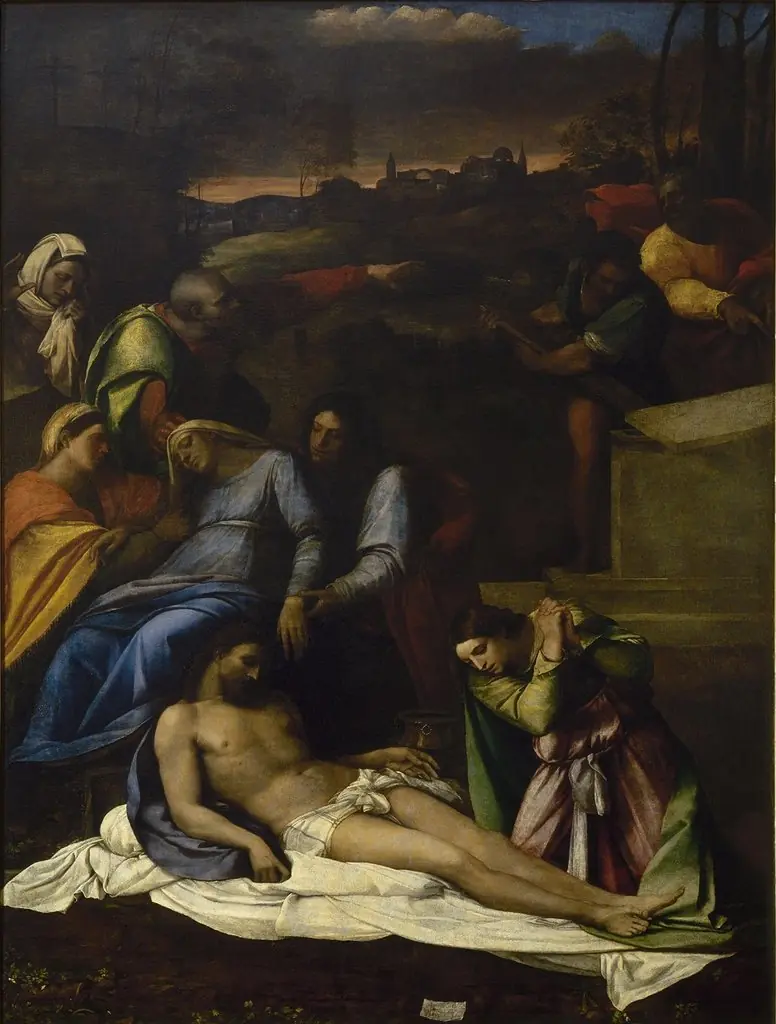
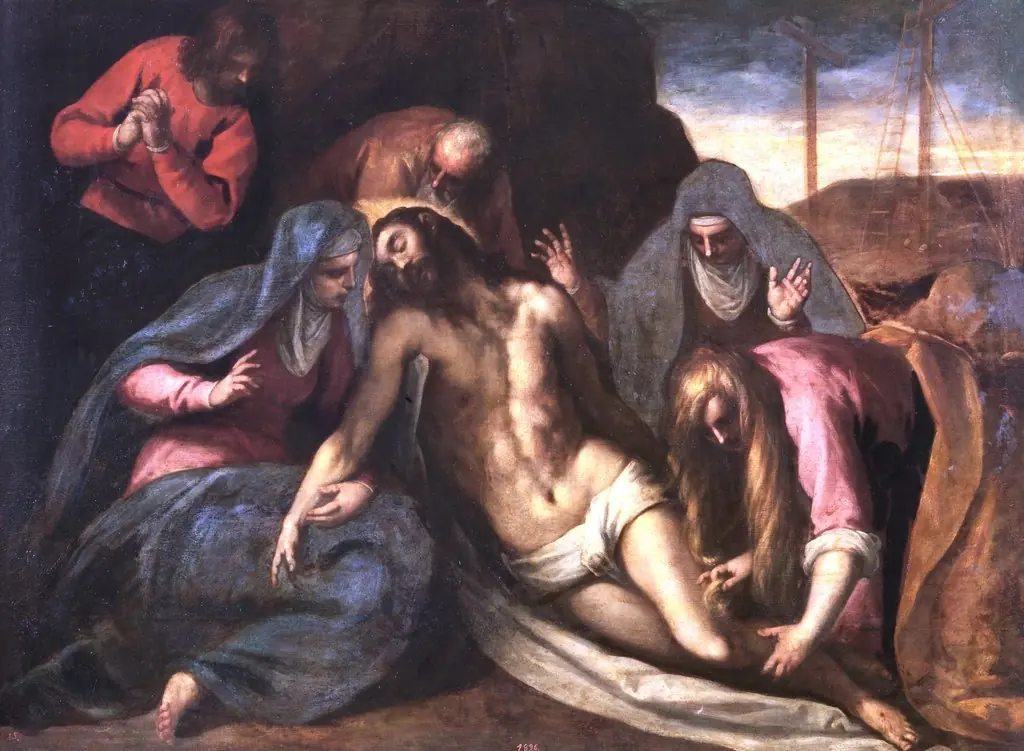
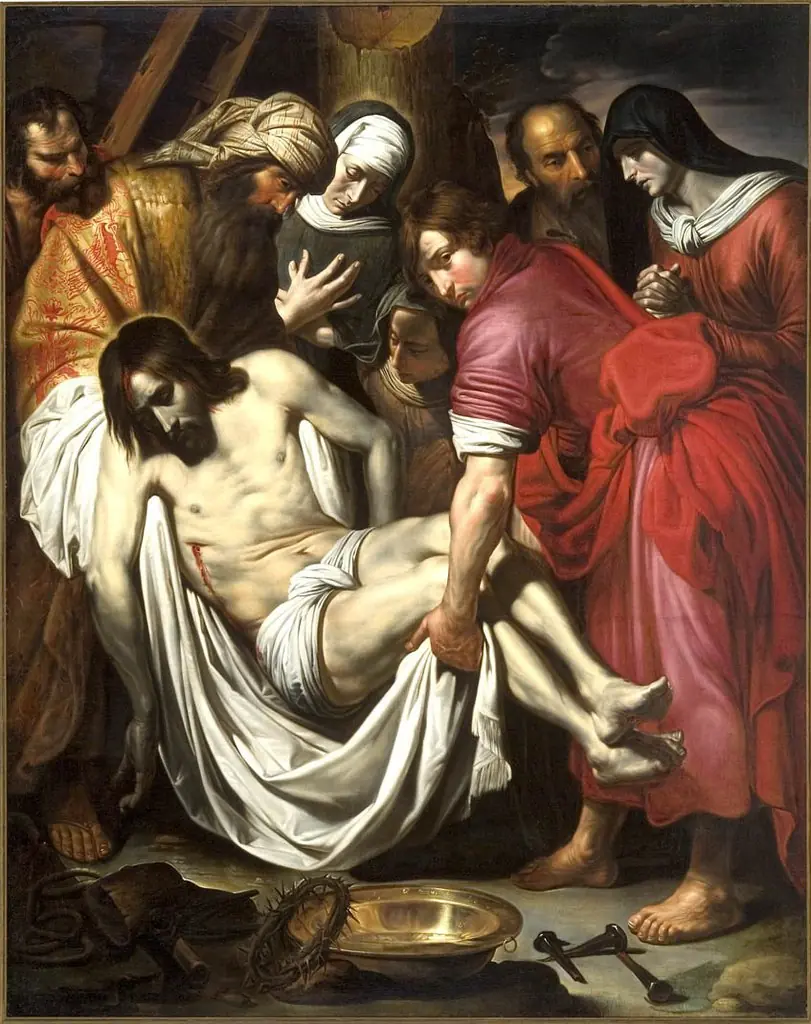
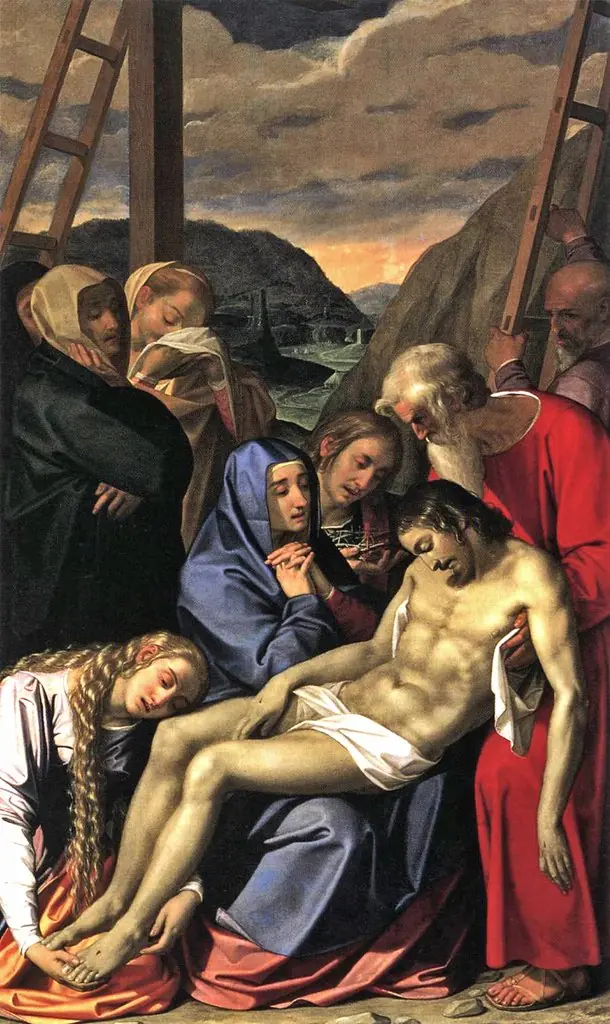
The artwork illustrates the Lamentation of Christ, depicting the mourners gathered around the dead body of Jesus after the crucifixion. The pale corpse, bearing the wounds of the nails and a crown of thorns, stretches across the lower half of the composition. Mary looks sorrowfully at her son, while Mary Magdalene grieves at his wounded feet. Nicodemus and Joseph of Arimathea support his shoulders tenderly, with one holding a cloth to the dead man's face. Two sorrowful cherubic heads emerge from the dark upper left corner, signaling a divine presence. In the foreground, three nails from the crucifixion rest on the ground, an emblem potentially included at the request of a Jesuit patron. The iconography functions not merely as a religious narrative but as a conduit for shared human mourning, employing visual symbols to collapse the distance between the biblical event and the viewer.
Technique & Style
Giordano executed the painting in oil on canvas with a polished finish, demonstrating particular attention to the modeling of musculature and the heavy folds of drapery. The palette is dominated by deep browns and blacks, punctuated by the luminous pale flesh of the corpse, the blue and yellow garments of the Virgin, and touches of red, including a draped curtain at the upper right. A single strong light source from the upper left illuminates the figures, creating dramatic shadows across the scene. This stark chiaroscuro emphasizes the emotional darkness of the event while highlighting the figure of Christ. The brushwork is smooth and blended on the flesh, contrasting with more textured handling in the fabrics and background. Giordano skillfully conveys the texture of the materials, from the silky softness of the Magdalene's golden hair to the rough, sunburned faces of Joseph and Nicodemus, which stand in sharp contrast to the pale face of Christ.
History & Provenance
Created around 1672, the painting was acquired in Paris in 1810 with the assistance of Baron Dominique Vivant Denon. It subsequently entered the collection of the Hermitage Museum, where it resides today. The specific circumstances of its original commission remain undocumented, though the inclusion of the three nails in the foreground suggests the client may have been affiliated with the Jesuit Order, as the three nails are a known emblem of the society.
Context
Giordano was a central figure of the Neapolitan Baroque, known for his vast output and the nickname Luca fa presto, reflecting his legendary speed. Around 1650, he was apprenticed to Jusepe de Ribera, whose influence is acutely felt in this work. The dark coloring, the rich interplay of light and shade, and the naturalistic, weathered faces of the male figures all derive from Ribera's tenebrist style. While Giordano later moved toward the lighter palette and dynamic compositions of Pietro da Cortona and the Venetian masters, this painting demonstrates his continued capacity to work in the dark manner of early 17th century Neapolitan art. He dialogues with a long visual lineage of Lamentation scenes, from Giotto to Caravaggio, contributing his own dialect to the established visual language while catering to the tastes of his Neapolitan patrons.
Legacy
As an important work within the Hermitage Museum's collection of Italian Baroque painting, Giordano's Lamentation stands as a testament to the enduring power of tenebrism within the artist's broader oeuvre. The painting highlights the complex stylistic trajectory of Giordano, who maintained his Ribera-esque naturalism even as he pioneered new luminous and dynamic Baroque idioms. Today, the work continues to be recognized for its calculated deployment of chiaroscuro and iconographic symbols to evoke empathy, securing its place within the scholarly discourse surrounding Neapolitan painting and the visual lineage of the Lamentation theme.
Own this work as a print
Artist & collection

Artist
Luca Giordano was an Italian late-Baroque painter and printmaker in etching. Giordano was one of the most celebrated artists of the Neapolitan Baroque, whose vast output included altarpieces, mythological paintings and…