Artwork
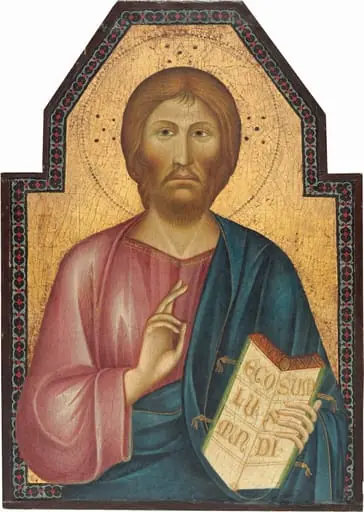
Christ Blessing
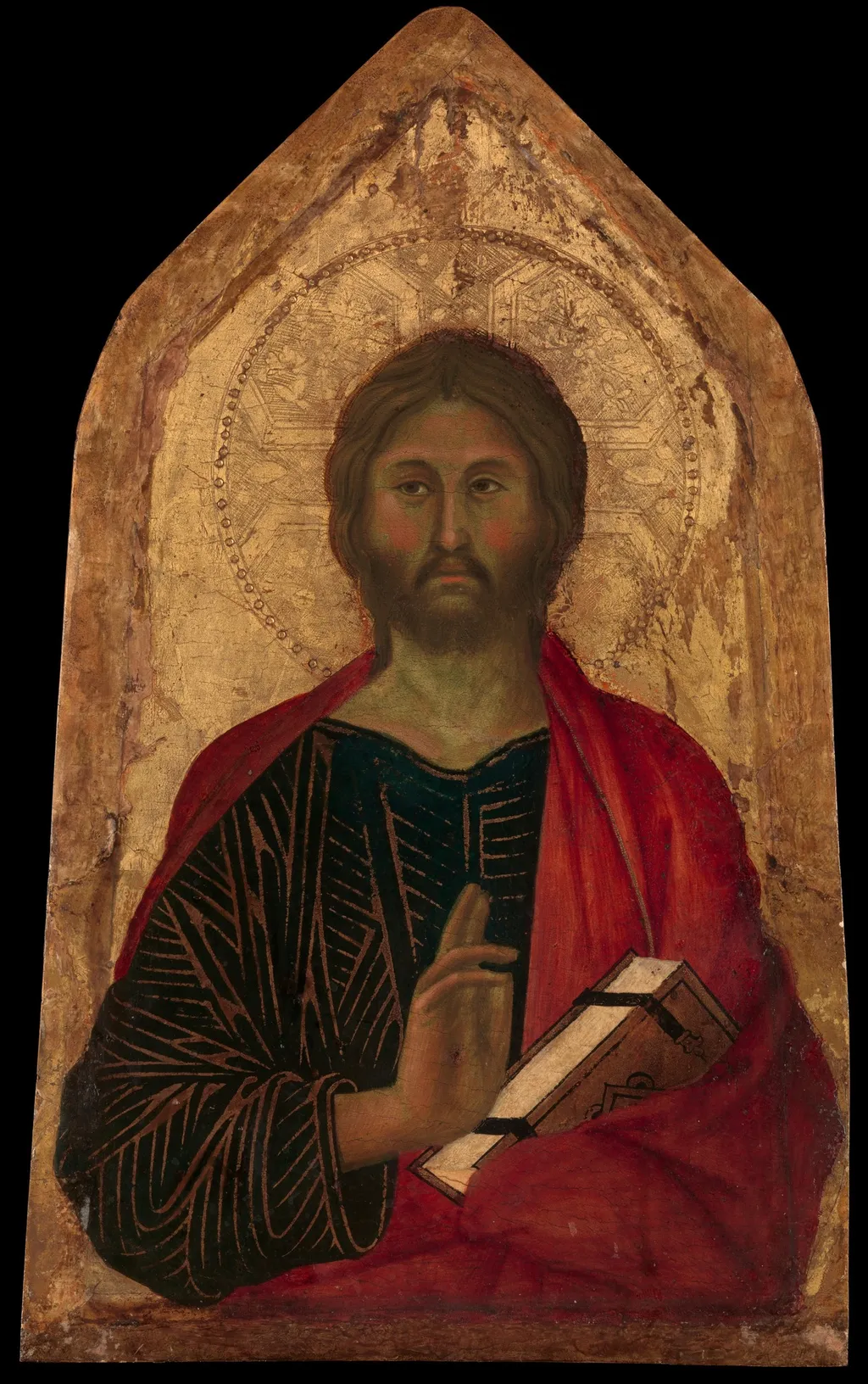
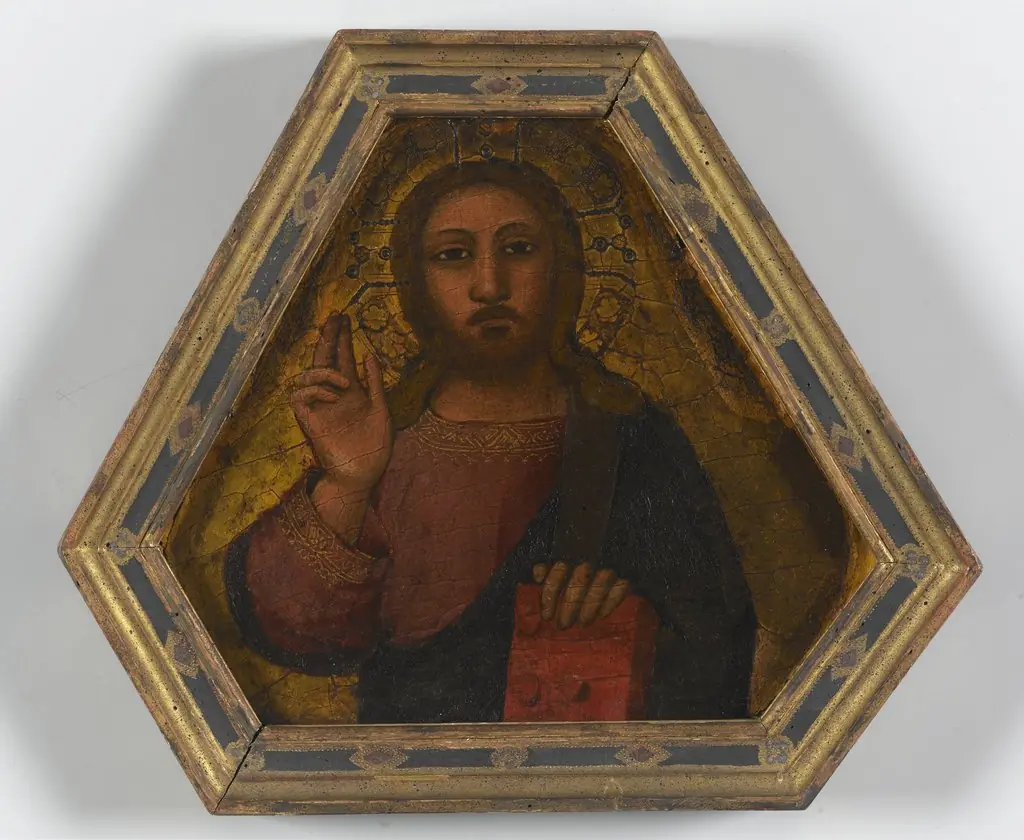
Christ Blessing is a tempera painting by the Sienese School artist Segna di Bonaventura. It dates from 1311 and is held in the collection of the Metropolitan Museum of Art.
About this work
Subject & Meaning
The work shows the figure of Christ identified as the Salvator Mundi, rendered in a conventional blessing gesture while holding an open book that signifies the Gospel. The composition follows medieval iconographic programs in which the raised right hand conveys divine benediction and the book denotes Christ as the source of scriptural authority. Segna di Bonaventura’s 1311 tempera panel, housed in the Metropolitan Museum of Art, exemplifies early Italian religious painting and reinforces the theological notion of Christ’s universal authority and intercessory role within the faithful.
Technique & Style
The composition depicts Christ in the role of Salvator Mundi, holding a book while raising his hand in a gesture of blessing.
Executed in 1311 by Segna di Bonaventura, this religious work is a tempera painting on a wooden panel. The composition depicts Christ in the role of Salvator Mundi, holding a book while raising his hand in a gesture of blessing. The piece measures 35.6 cm in height and 20.6 cm in width.
As a panel painting utilizing tempera, the work adheres to the technical conventions of early fourteenth-century Italian devotional art, characterized by the application of pigment mixed with egg yolk onto a prepared gesso ground on wood. The formal focus remains strictly on the figure of Christ and the symbolic book, reflecting the genre's emphasis on spiritual iconography over naturalistic detail.
History & Provenance
The work titled Christ Blessing was executed by Segna di Bonaventura in 1311 as a tempera painting on panel, originally intended for religious devotion. Its creation is documented by contemporary records that assign the date 1311 and identify the subject as Christ in a blessing pose, also referred to as Salvator Mundi. The painting remained in the artist’s native workshop until it entered the collection of the Metropolitan Museum of Art, where it has been displayed since its acquisition, maintaining continuous ownership by the museum.
The piece measures 35.6 cm in height and 20.6 cm in width, reflecting the typical dimensions of early‑fourteenth‑century Italian altarpieces.
The painting is held by the Metropolitan Museum of Art in New York, where it carries the accession number 47.101.1. It was first recorded in the museum’s collection in 1947, following its acquisition. The work has been exhibited on multiple occasions, including in the 1950 exhibition “The Unicorn Tapestries and Other Art Treasures of the Middle Ages” at The Cloisters, part of the Metropolitan Museum of Art, where it was displayed as a significant example of early fourteenth-century Sienese religious painting.
Overview
Segna di Bonaventura, a painter associated with the Sienese School, created Christ Blessing in 1311. This tempera panel depicts a solemn Christ, rendered with the characteristic precision of early Italian religious art. The work exemplifies the devotional imagery prevalent during the early Trecento, offering a direct portrayal of the divine figure in a moment of benediction.
Context
Segna di Bonaventura was active in Siena from approximately 1298 to 1331, a period when the Sienese School of painting was flourishing. This artistic environment fostered a distinctive style known for its elegance and spiritual intensity. Segna's artistic lineage continued through his sons, Niccolò di Segna and Francesco di Segna di Bonaventura, who also became painters within the same influential tradition.
Own this work as a print
Artist & collection
Artist
Segna di Bonaventura, also known as Segna de Bonaventura, and as Segna di Buonaventura, was an Italian painter of the Sienese School.