Artwork
Madonna and Child
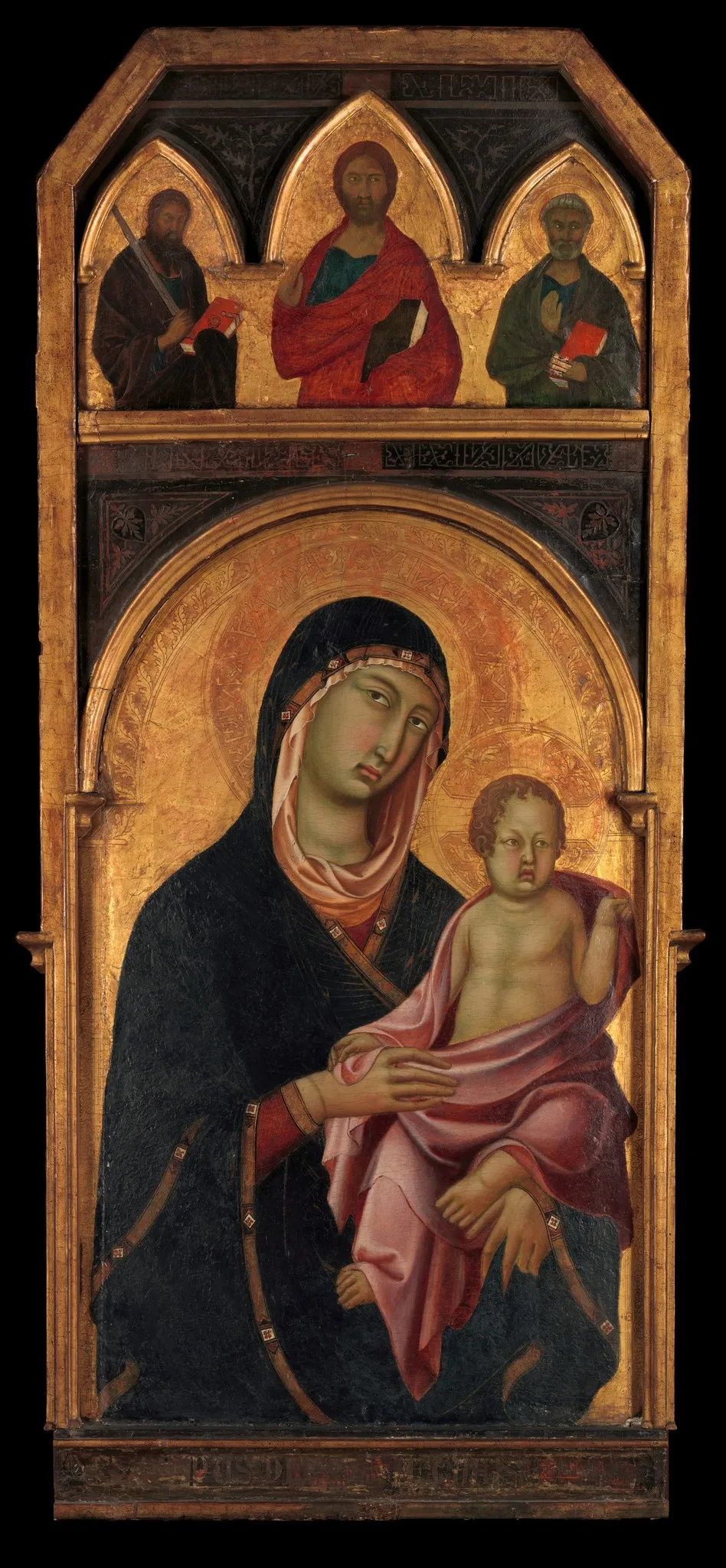
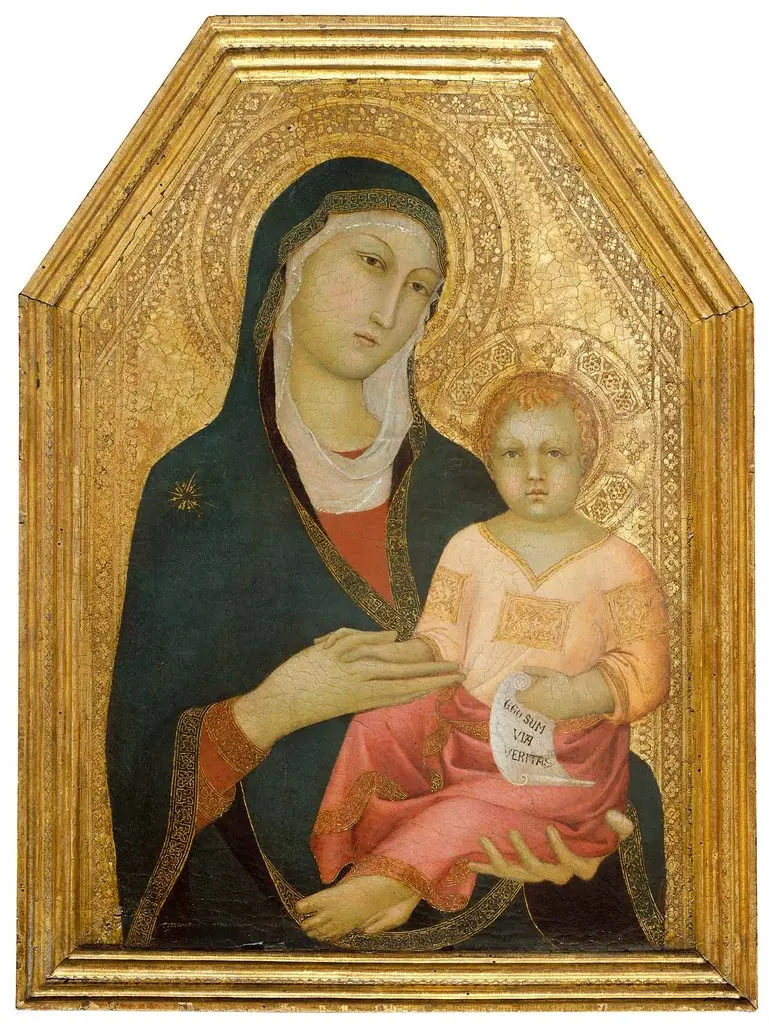
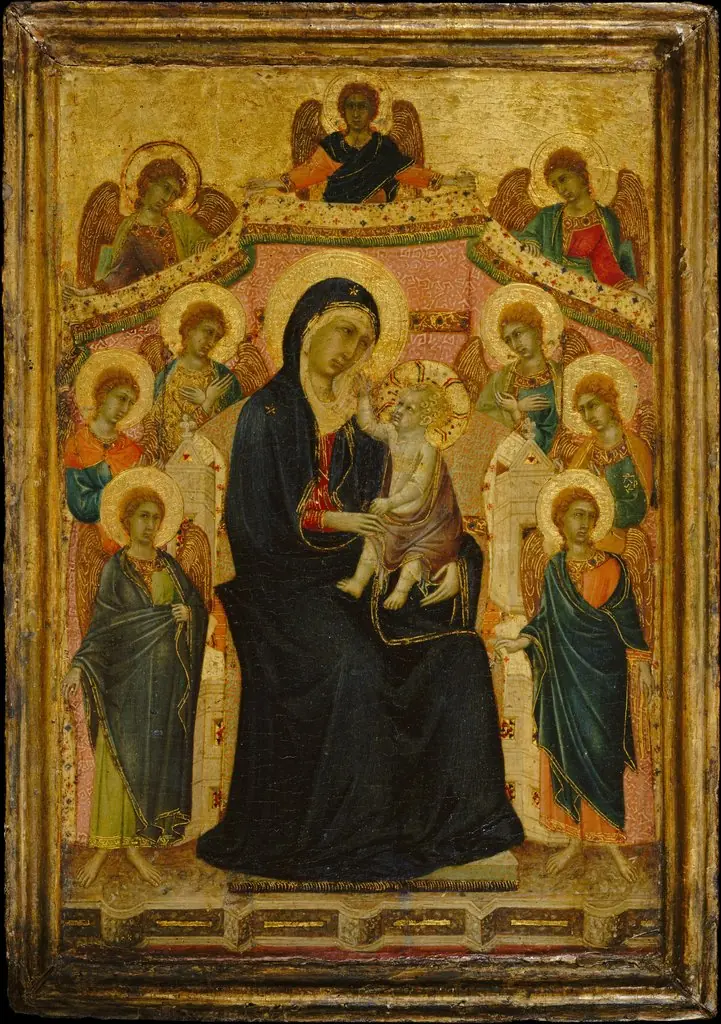
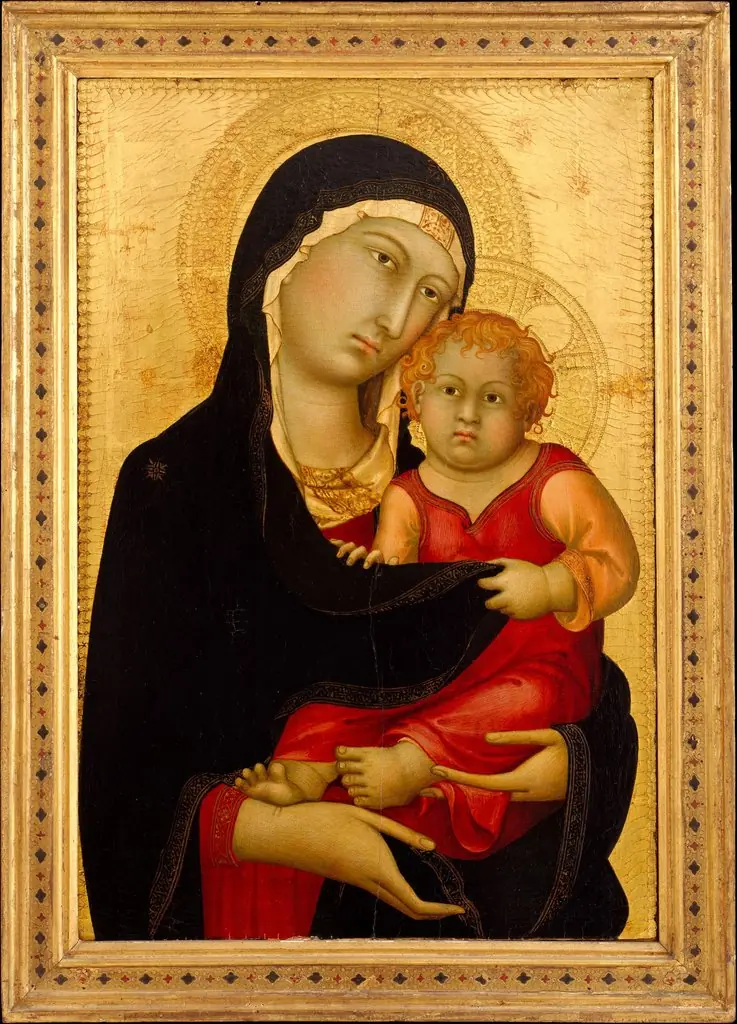
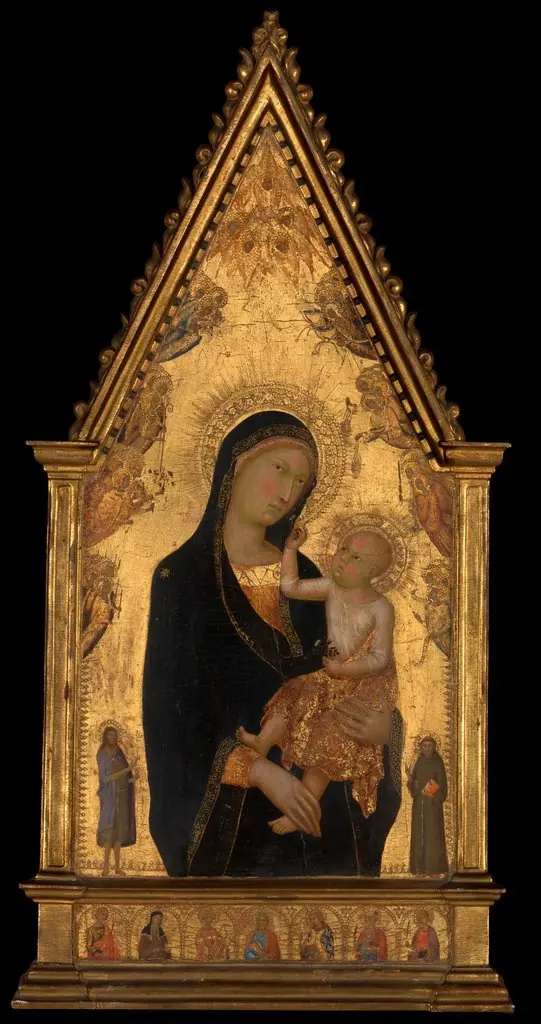
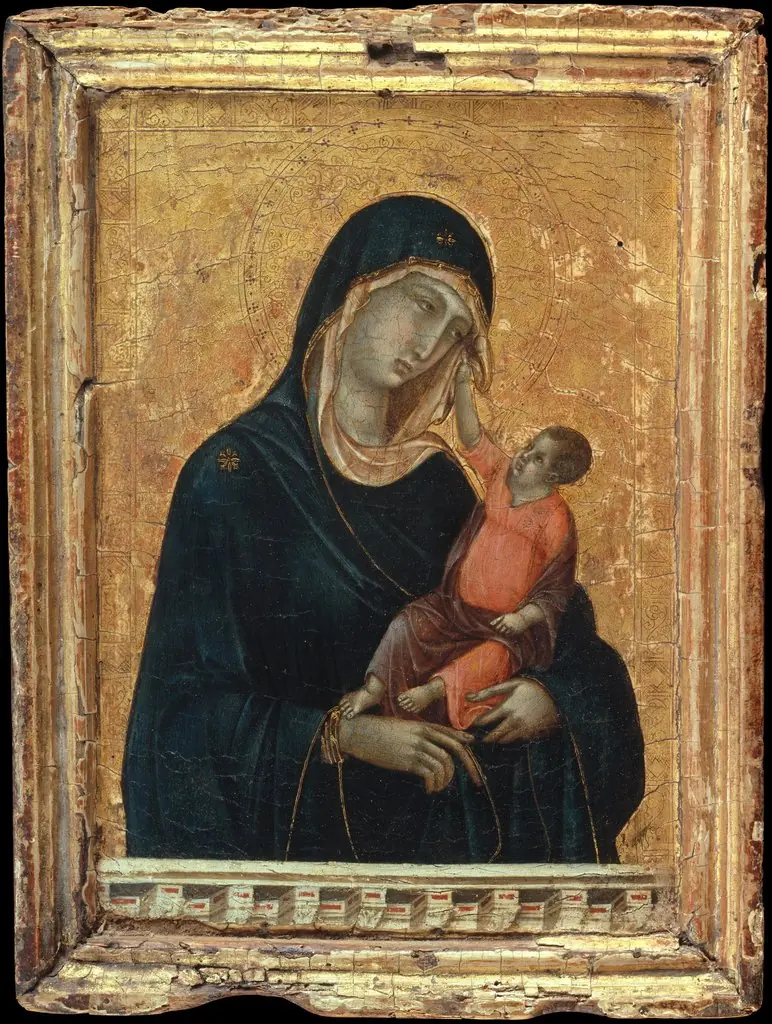
Madonna and Child is a tempera painting by the Sienese School artist Segna di Bonaventura. It dates from 1320 and is held in the collection of the Metropolitan Museum of Art.
About this work
Subject & Meaning
According to the cataloguing, the work's main subject is identified as the Madonna and Child, and the imagery specifically portrays Mary and the Christ Child.
The painting depicts the Madonna and Child, a devotional subject showing the Virgin Mary with the Christ Child. According to the cataloguing, the work's main subject is identified as the Madonna and Child, and the imagery specifically portrays Mary and the Christ Child. As a religious panel painting of the early Trecento, the composition belongs to the long tradition of Marian devotion that flourished in Italian art, where the tender pairing of mother and infant served both as an object of veneration and as a vehicle for theological reflection on the Incarnation.
The horizontal format, wider than it is tall, suggests an intimate devotional format intended for private contemplation rather than public altarpiece display, allowing the viewer to focus on the sacred exchange between mother and son.
Technique & Style
Created in 1320, this religious painting by Segna di Bonaventura is executed in tempera on a wooden panel support. The work depicts the Virgin Mary and the Christ Child, adhering to the traditional materials and methods of early 14th-century Italian panel painting. The surface retains the dimensions of 30.8 cm in height and 58.4 cm in width, characteristic of the altarpiece format of the period.
As a tempera work on panel, the medium allows for the precise, linear definition typical of the Sienese school during this era. The piece is currently held in the collection of the Metropolitan Museum of Art, where it remains a significant example of the artist's handling of religious iconography through the specific constraints and capabilities of the tempera technique.
History & Provenance
Attributed to Segna di Bonaventura, this early‑14th‑century panel painting portrays the Virgin Mary cradling the infant Christ and is classified as a religious work. Executed in tempera on wood, it measures 30.8 cm by 58.4 cm and was created around 1320, as recorded in contemporary documentation. The piece entered the collection of the Metropolitan Museum of Art, where it remains on public view, forming part of the museum’s holdings of Italian primitive art.
No detailed record of its original commission survives, but its attribution and dating are supported by stylistic analysis and archival entries.
Overview
This tempera painting, Madonna and Child, was created in 1320 by the Italian artist Segna di Bonaventura. A prominent figure of the Sienese School, Bonaventura was active during the early 14th century. The work exemplifies the religious art of its period, presenting a traditional depiction of the Virgin Mary tenderly holding the infant Christ, a central theme in Christian iconography.
Context
Segna di Bonaventura was an active participant in the Sienese artistic scene from the late 13th to early 14th century. His work, including this Madonna and Child, is representative of the Sienese School's devotional painting, which often featured spiritual intensity and refined draftsmanship. The artistic legacy continued through his sons, Niccolò and Francesco di Segna di Bonaventura, who also became painters, further contributing to the enduring traditions of the Sienese School.
Artist & collection
Artist
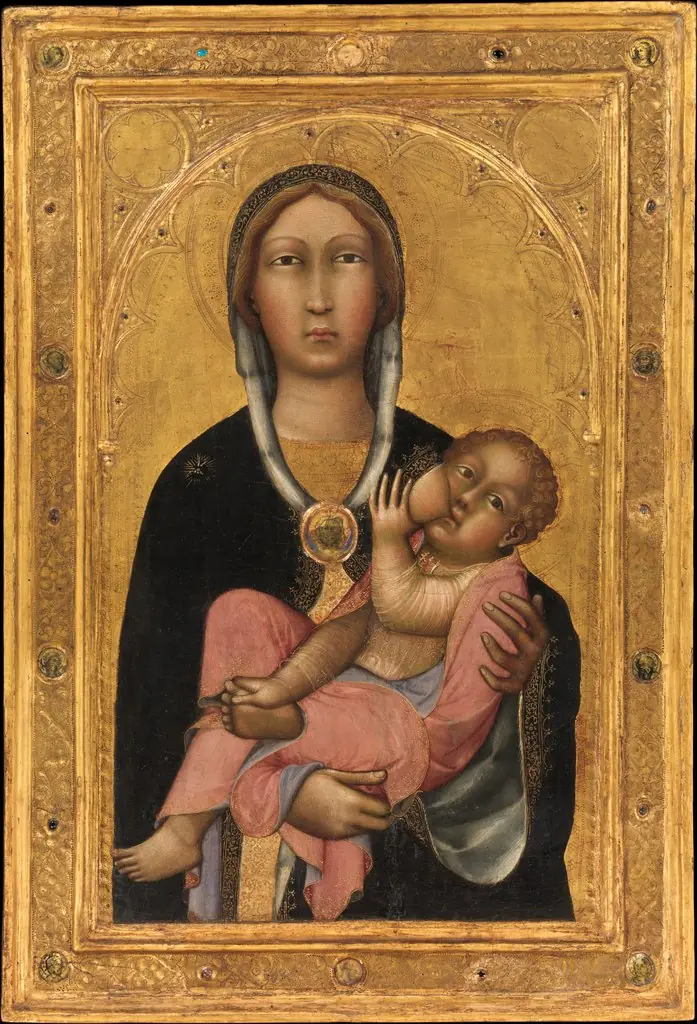
Segna di Bonaventura, also known as Segna de Bonaventura, and as Segna di Buonaventura, was an Italian painter of the Sienese School.

![Madonna and Child, with the Blessing Christ [middle panel], by Pietro Lorenzetti](https://artifactworldgallery.com/img/pietro-lorenzetti--madonna-and-child-with-the-blessing-christ-middle-panel--02357aa6ff04175b-w320.webp)