Artwork
Saint John the Evangelist
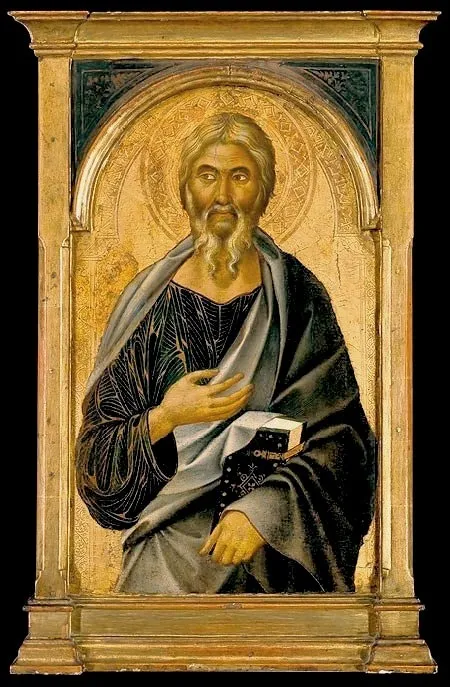
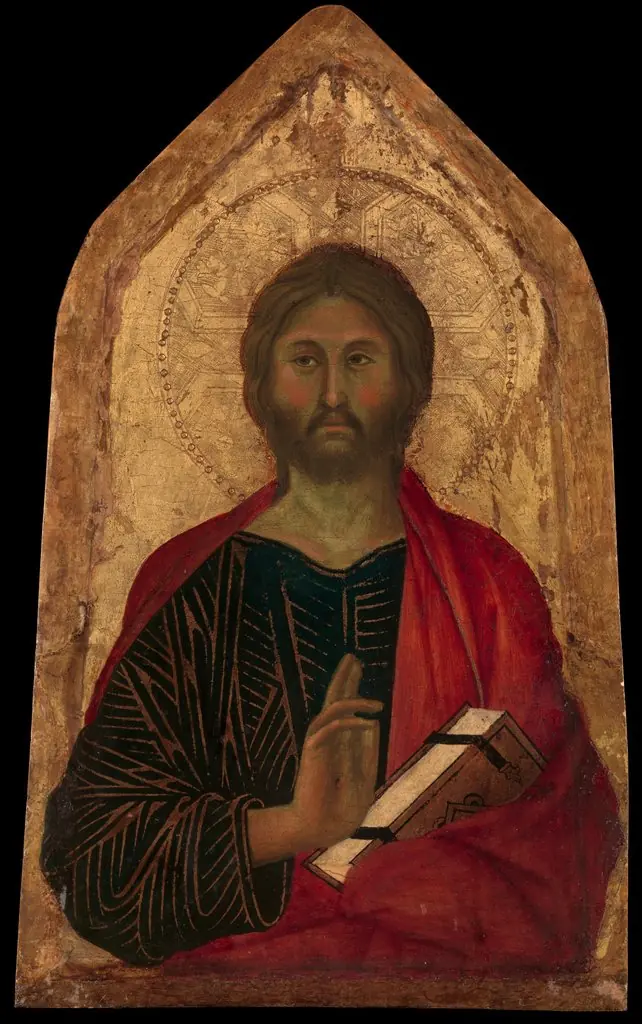
Saint John the Evangelist is a tempera painting by the Sienese School artist Segna di Bonaventura. It dates from 1320 and is held in the collection of the Metropolitan Museum of Art.
About this work
Subject & Meaning
As a standalone panel, it likely served as part of a larger altarpiece or as an object for private meditation on the life and teachings of the Evangelist.
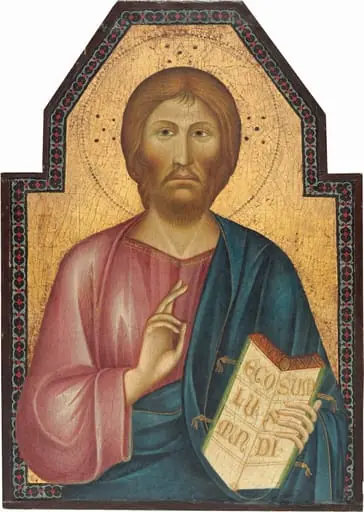
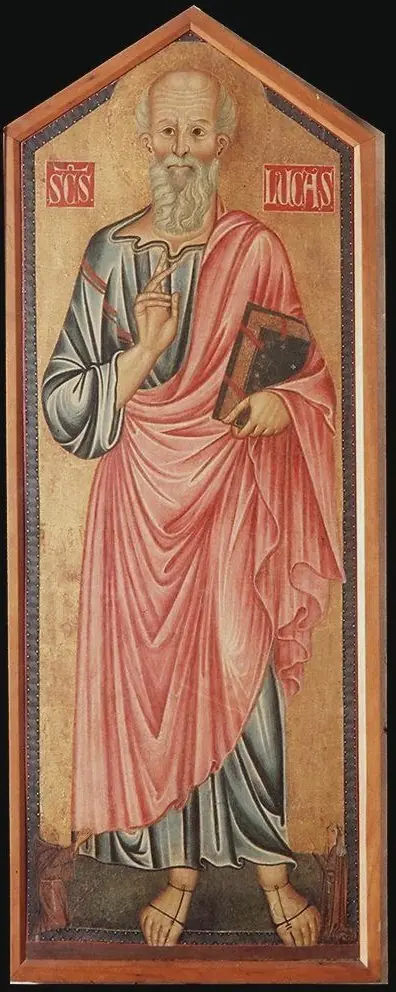
This tempera panel painting depicts John the Evangelist as its sole main subject. Created in 1320 by Segna di Bonaventura, the work functions as a piece of religious art intended for devotional purposes. The image represents the biblical figure directly, adhering to the iconographic traditions of early fourteenth-century Sienese painting where saints are portrayed with solemnity to inspire reverence.
As a standalone panel, it likely served as part of a larger altarpiece or as an object for private meditation on the life and teachings of the Evangelist.
Technique & Style
Saint John the Evangelist by Segna di Bonaventura is executed in tempera on panel, a standard technique for early fourteenth-century Italian devotional painting. The work measures 69.2 cm in height by 41.9 cm in width, a vertical format consistent with a single standing figure of a saint. Its classification as a religious painting and its subject of John the Evangelist indicate a devotional function typical of Sienese panel production of the period.
The handling reflects the tempera technique's characteristic precision, with the medium applied to a wooden support in thin, controlled layers that allow for fine linear definition and saturated color. The narrow, elongated proportions of the panel emphasize the verticality of the standing figure, a stylistic choice aligned with the Italo-Byzantine tradition still influential in Sienese workshops in 1320.
History & Provenance
The panel Saint John the Evangelist was painted by Segna di Bonaventura around 1320, as indicated by the artist’s documented working period and the work’s stylistic placement within early fourteenth-century Sienese painting.
The painting entered the collection of the Metropolitan Museum of Art, New York, where it remains held. Its provenance prior to the twentieth century is not specified in the sources, and the museum records list Segna di Bonaventura as the creator with a tempera medium on panel measuring 69.2 cm in height and 41.9 cm in width.
The painting Saint John the Evangelist by Segna di Bonaventura is held in the collection of the Metropolitan Museum of Art. Created in 1320, the work is executed in tempera on panel and measures 69.2 cm in height by 41.9 cm in width. The provided sources do not list a specific inventory or accession number for the piece, nor do they document any exhibition history.
Overview
Segna di Bonaventura, an Italian painter of the Sienese School, created Saint John the Evangelist in 1320. This tempera painting depicts the biblical figure and exemplifies the Sienese artistic tradition. Active from approximately 1298 to 1331, the artist contributed to a significant period of Italian art. The work is currently held in the collection of The Metropolitan Museum of Art.
Context
Segna di Bonaventura was an active member of the Sienese School from approximately 1298 to 1331, a period known for its distinctive approach to religious art. His artistic lineage extended through his sons, Niccolò di Segna and Francesco di Segna di Bonaventura, who continued to work within the same established Sienese painting tradition, reinforcing the school's enduring influence and stylistic continuity.
Artist & collection
Artist
Segna di Bonaventura, also known as Segna de Bonaventura, and as Segna di Buonaventura, was an Italian painter of the Sienese School.





![Saint James Major [right panel], by Grifo di Tancredi](https://artifactworldgallery.com/img/grifo-di-tancredi--saint-james-major-right-panel--dc190378c0cddc8f-w320.webp)