Artwork
Untitled
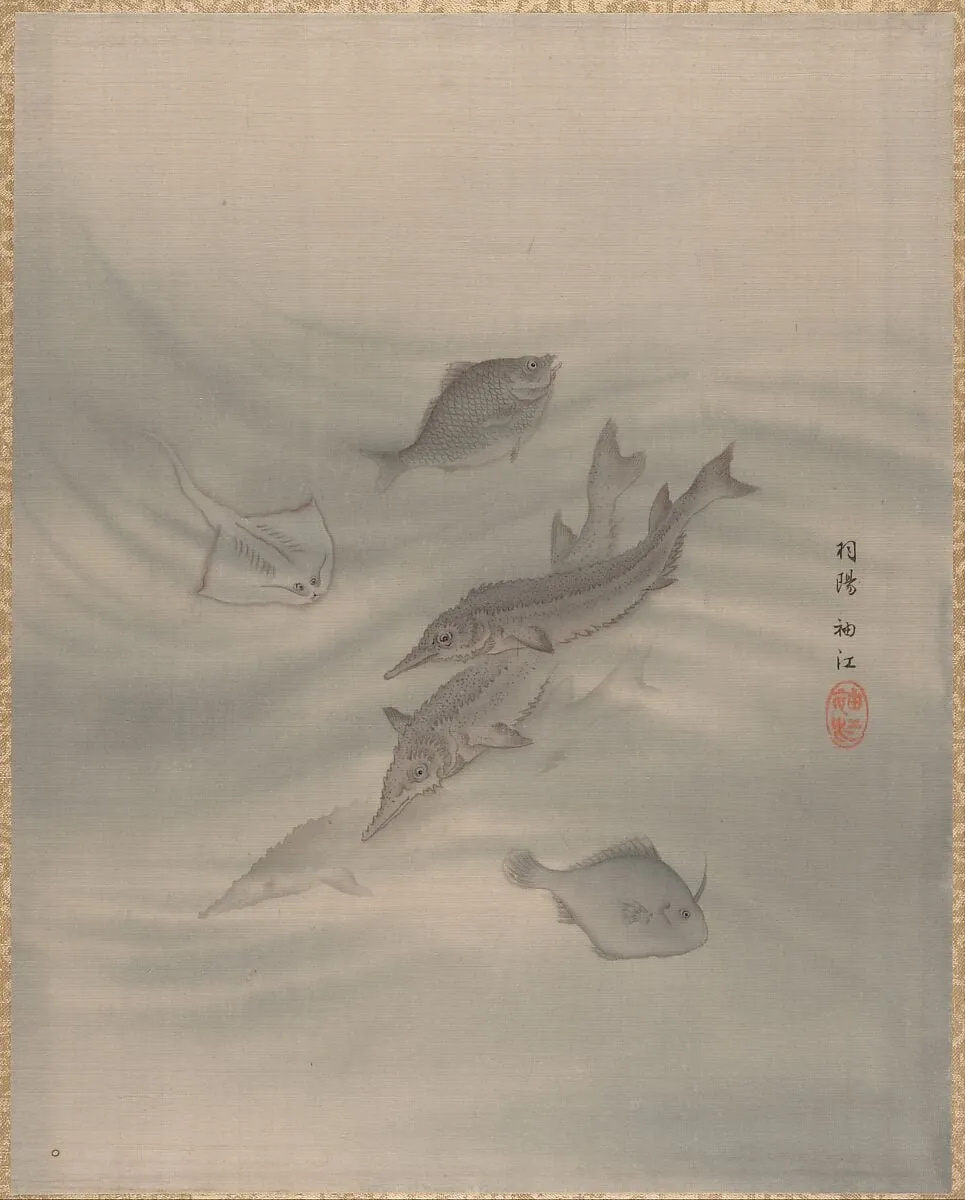
Untitled is an unspecified painting by the Impressionist artist Seki Shūkō. It dates from 1891 and is held in the collection of the Metropolitan Museum of Art.
About this work
Subject & Meaning
In this context, the fish likely represent abundance, prosperity, or seasonal renewal, themes commonly explored in East Asian art.
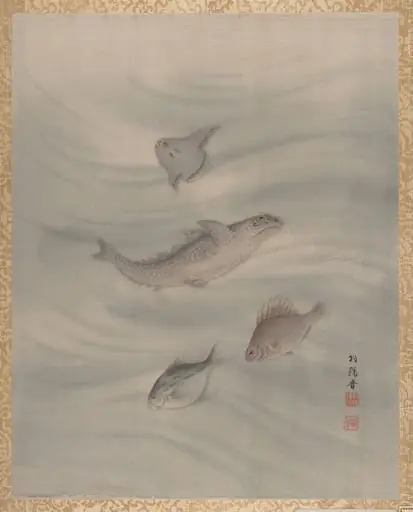
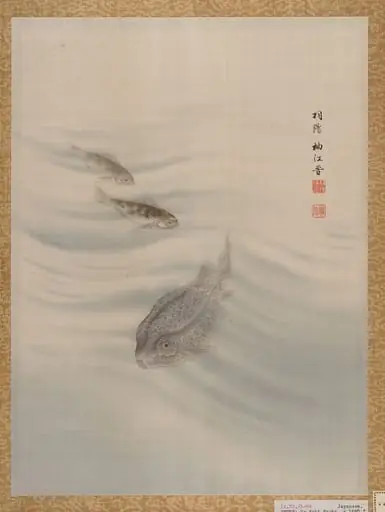
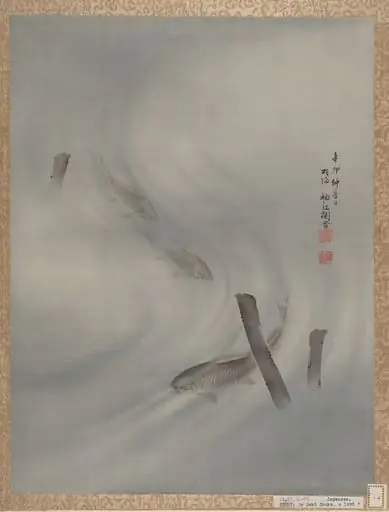
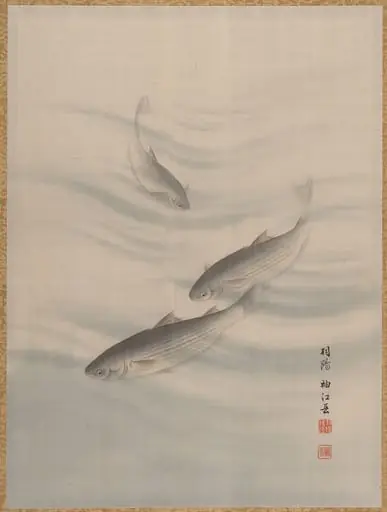
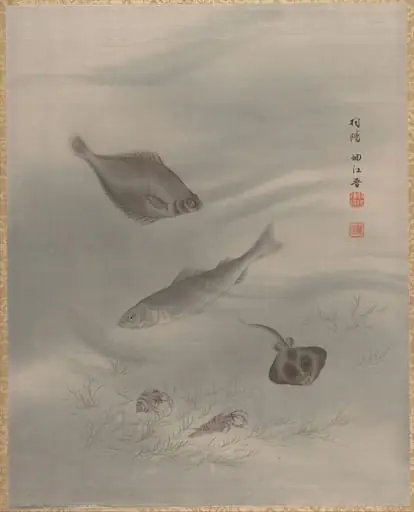
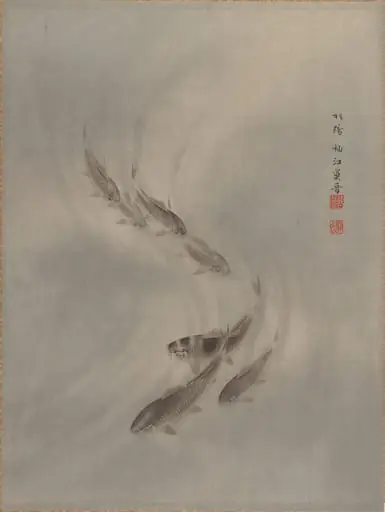
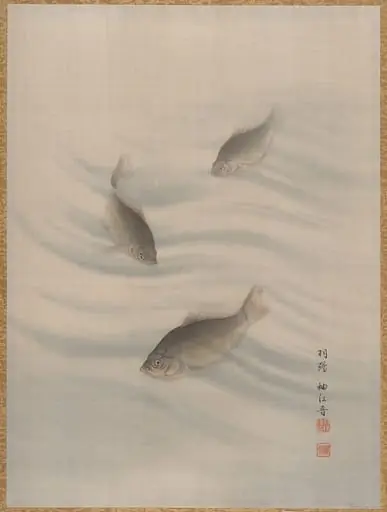
The work depicts a still-life composition featuring fish, rendered on an album leaf of silk. The subject aligns with the kachō genre, a Japanese tradition emphasizing the beauty of nature, particularly birds and flowers, often imbued with symbolic meaning.
In this context, the fish likely represent abundance, prosperity, or seasonal renewal, themes commonly explored in East Asian art. The choice of silk as a support underscores the work’s connection to refined artistic practices, while the delicate rendering reflects the artist’s engagement with naturalistic yet evocative imagery.
Technique & Style
Created in 1891, this work is an album leaf executed on silk by the Japanese artist Seki Shūkō. The piece functions as a still-life painting that depicts fish, adhering to traditional East Asian scroll and album formats. Physically, the artwork measures 34.3 cm in height and 27.6 cm in width.
The medium combines ink and color on the silk support, a common technique for Japanese painting of this period that allows for delicate rendering of the aquatic subjects.
History & Provenance
The work Untitled, an album leaf on silk portraying a fish, was produced in 1891 in Japan by Seki Shōkō; it is categorized as a painting within the still-life genre. Its creation history is documented by the Metropolitan Museum of Art, which records an inception date of 1891-01-01 and specifies the dimensions of 34.3 cm by 27.6 cm. Following its execution, the piece was acquired by the museum and has remained in its collection, establishing a clear provenance from the artist’s studio to institutional ownership.
Context
Seki Shūkō’s Untitled (1891) exemplifies the still‑life genre within Meiji‑era Japanese painting, combining traditional silk album leaf techniques with a naturalistic rendering of fish that reflects the period’s synthesis of Western observational methods and indigenous aesthetics. The work’s inclusion in the Metropolitan Museum of Art’s collection highlights its recognition by scholars as a representative example of late‑19th‑century Japanese artistic exchange, and it continues to be cited in studies of the artist’s development and the broader discourse on Japanese painting’s adaptation to modernity.
Legacy
Seki Shōkō’s 1891 Untitled, an album leaf painted in silk and depicting a fish, entered the collection of the Metropolitan Museum of Art, where it is catalogued under accession number 14.76.61.95. The work’s presence in a major Western museum has allowed scholars to examine Meiji-era Japanese still-life painting within a comparative framework, highlighting the artist’s role in bridging traditional Japanese aesthetics with modernist sensibilities. Its inclusion in museum exhibitions and catalogues has contributed to renewed interest in the genre of fish imagery in Japanese art.
Overview
Created around 1891, this untitled work by Seki Shūkō presents a solitary fish rendered on a silk album leaf. The composition is minimal, featuring the fish against a muted gray field that emphasizes its silvery form. The piece functions as a quiet still‑life, inviting contemplation of the subject’s simple presence.
Artist & collection