Artwork
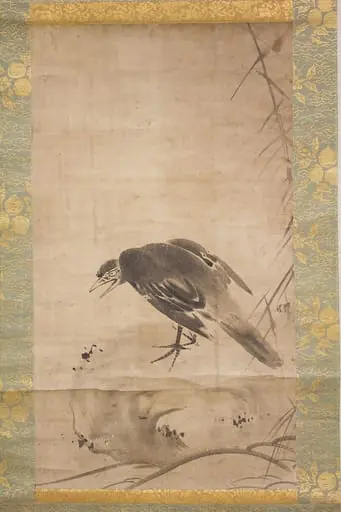
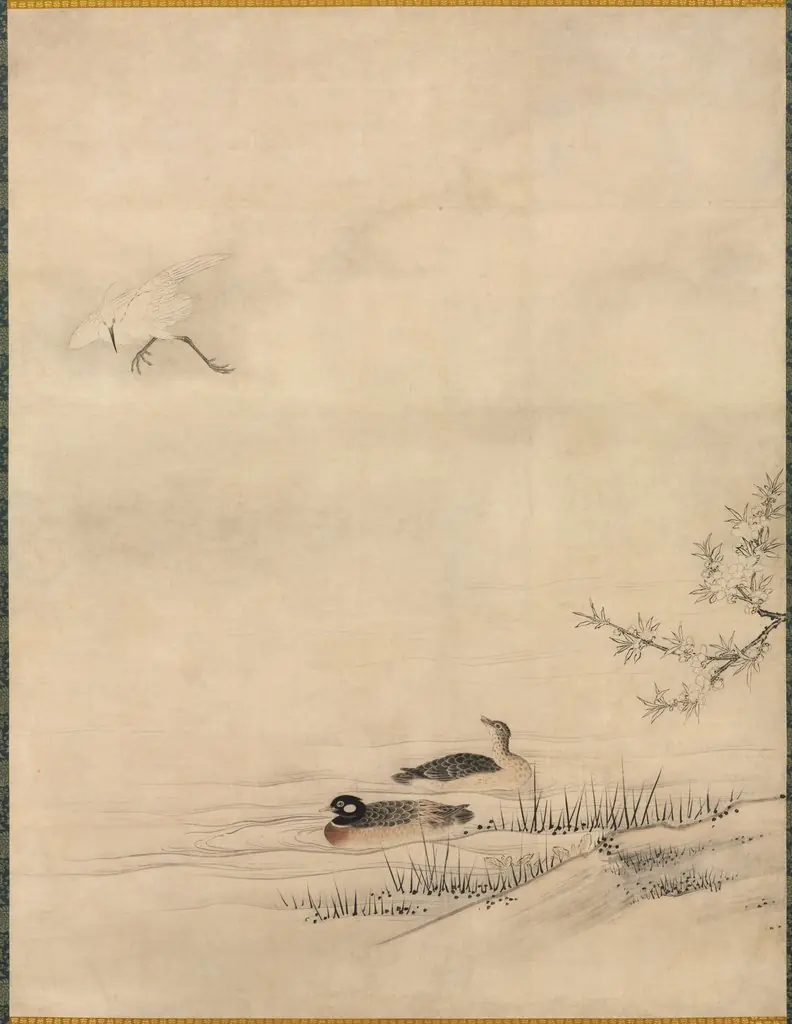
Mandarin Duck
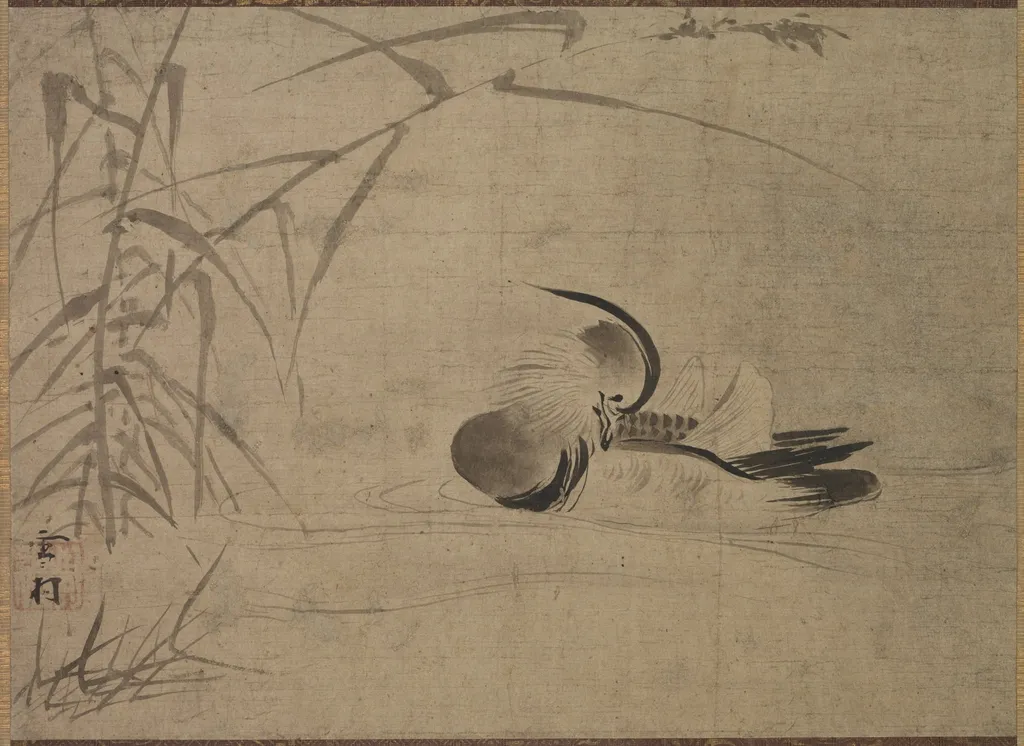
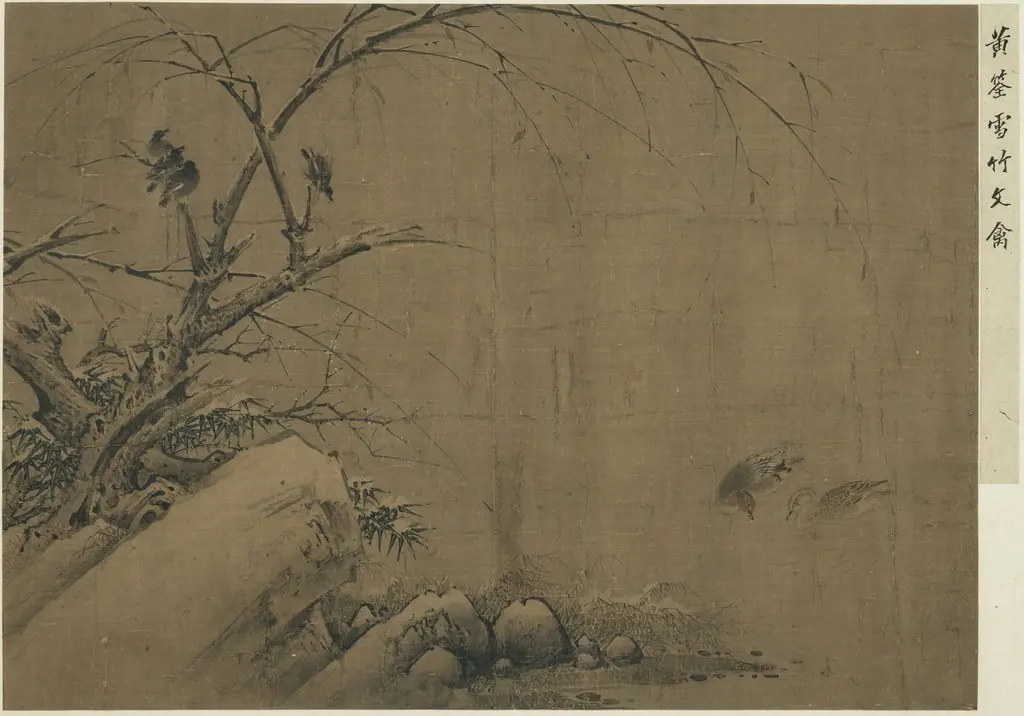
Mandarin Duck is an unspecified painting by the Renaissance artist Sesson Shūkei. It dates from 1504 and is held in the collection of the Cleveland Museum of Art.
- Accession no.
- 1985.246
- Credit line
- The Kelvin Smith Collection, given by Mrs. Kelvin Smith
About this work
Overview
This ink painting presents a solitary Mandarin duck adrift among reeds, rendered with minimal brushwork and restrained composition. The scene avoids narrative detail, focusing instead on the quiet presence of the bird within a natural setting. The artist employs subtle shifts in ink density to suggest space and stillness, inviting contemplation rather than storytelling.
Subject & Meaning
The Mandarin duck, often associated with fidelity in East Asian symbolism, appears alone here, distancing the work from conventional moral allegory. Its isolation emphasizes solitude and quiet endurance rather than paired harmony. The reeds, neither lush nor withered, frame the duck without intrusion, reinforcing an atmosphere of unembellished serenity.
Technique & Style
The artist uses controlled variations of ink wash, dry brush for texture, wet wash for soft edges, to model form without outline. Light and dark tones interact subtly, creating depth through tonal gradation rather than sharp contrast. This approach aligns with literati traditions, where restraint and spontaneity coexist, prioritizing mood over precision.
History & Provenance
The painting’s origins are undocumented in public records, but its style suggests late Ming or early Qing provenance, consistent with scholar-artist practices of the period. It likely passed through private collections before entering institutional care, its attribution remaining tentative due to the absence of seals or inscriptions.
Context
Emerging from a tradition where nature served as a mirror for inner states, this work reflects the literati ideal of withdrawing from worldly noise. Similar compositions by contemporaries used sparse elements to evoke emotional resonance, aligning with Daoist and Chan Buddhist values of simplicity and impermanence.
Legacy
Though not widely reproduced, the painting exemplifies a quiet strand of ink painting that influenced later generations seeking emotional depth through economy. Its understated aesthetic continues to inform contemporary interpretations of naturalism in East Asian art, valued for its restraint rather than its spectacle.
Own this work as a print
Artist & collection