Artwork
雪村周継筆 竹林七聖図|Seven Sages of the Bamboo Grove
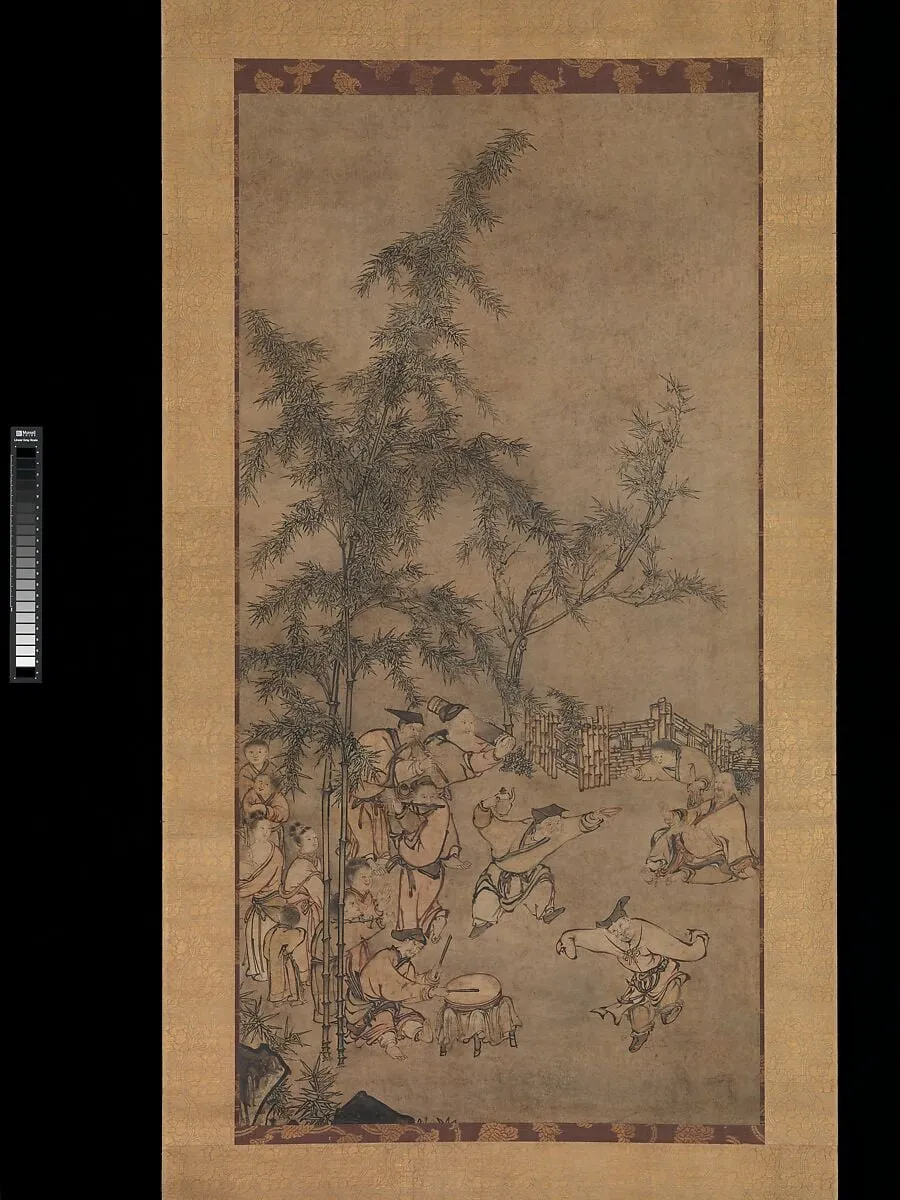
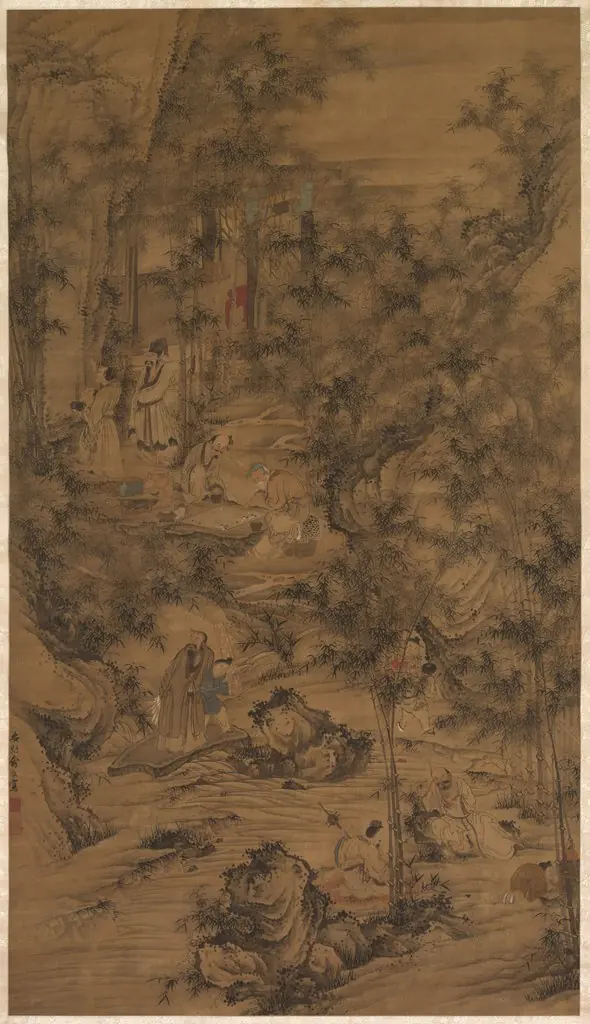
雪村周継筆 竹林七聖図|Seven Sages of the Bamboo Grove is an ink painting by the Nanga artist Sesson Shūkei. It dates from 1554 and is held in the collection of the Metropolitan Museum of Art.
About this work
Subject & Meaning
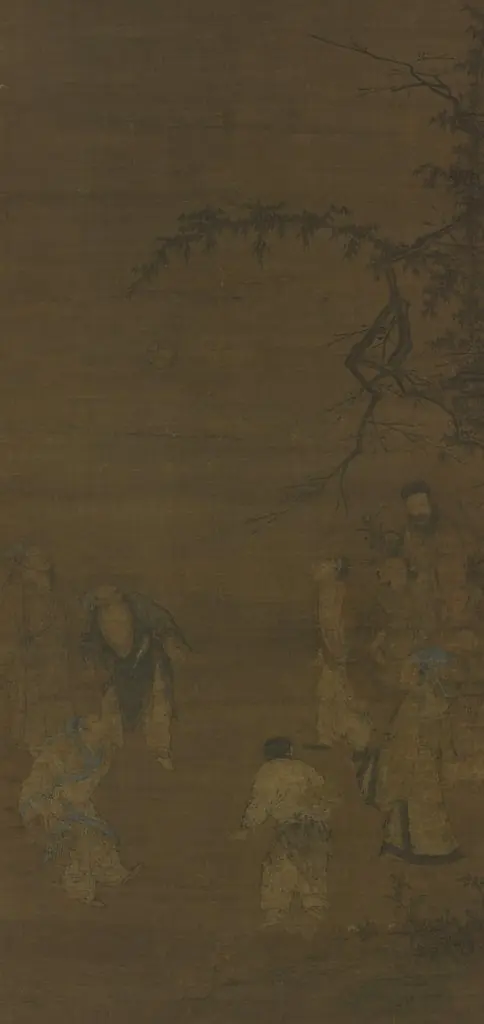
The scene includes specific details such as a dancer and a drum, suggesting moments of leisure, music, and spirited interaction among the sages.
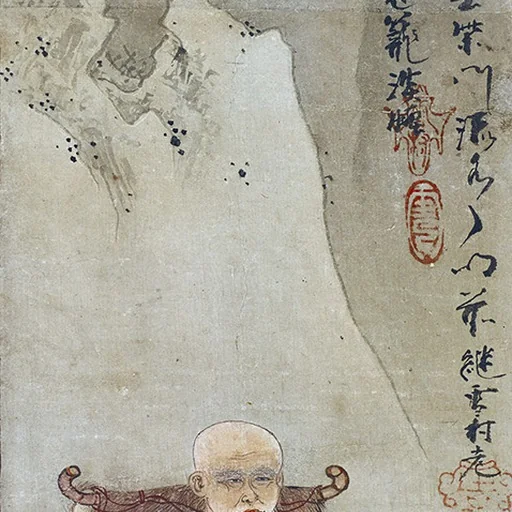
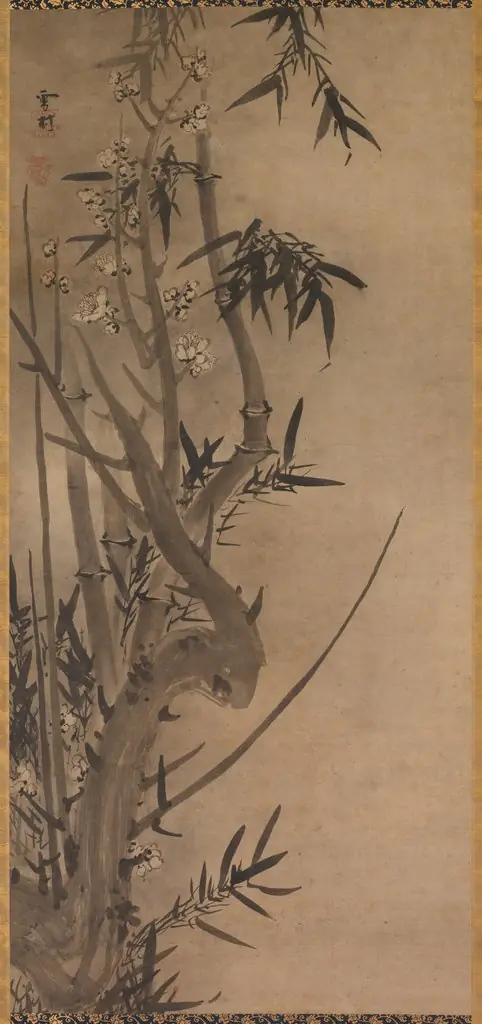
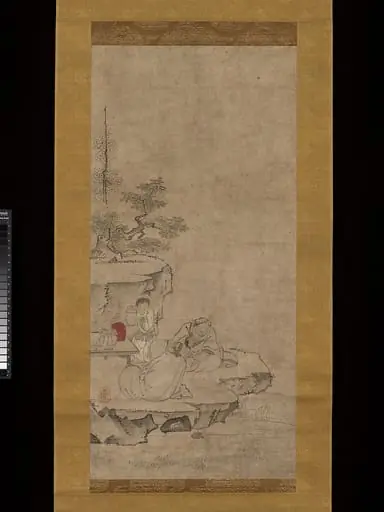
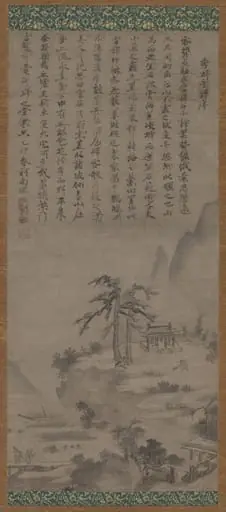
Created in 1550 by Sesson Shūkei, this hanging scroll illustrates the legendary 'Seven Sages of the Bamboo Grove,' a group of reclusive scholars from ancient China known for their pursuit of wisdom and rejection of courtly life. The composition depicts seven male figures situated within a natural setting dominated by bamboo shoots and trees, which serve as the primary iconographic markers of the title. The scene includes specific details such as a dancer and a drum, suggesting moments of leisure, music, and spirited interaction among the sages.
By portraying these individuals amidst nature rather than in a formal court setting, the work symbolizes the ideal of hermitic freedom and the cultivation of spiritual integrity away from political corruption. The inclusion of musical elements and dance further emphasizes the group's shared devotion to art and philosophical discourse as a means of transcending worldly constraints.
Technique & Style
Executed in 1550, the hanging scroll employs ink and color on paper, a standard combination for sixteenth-century Japanese figure painting. Sesson Shūkei renders the Seven Sages through fluid, abbreviated ink lines that define facial features, drapery, and bamboo stalks, while light washes of mineral pigments model volume in garments and foliage. The composition balances dense ink passages with reserved paper ground, guiding the eye through the rhythmic arrangement of sages and bamboo groves.
Formal qualities emphasize expressive gesture and abbreviated form, aligning with Sesson’s lineage from Sesshū Tōyō and the Muromachi-period yamatotype tradition.
History & Provenance
Created in 1550 by the Japanese artist Sesson Shūkei, this hanging scroll depicts the Seven Sages of the Bamboo Grove. The work was executed using ink and color on paper within Japan. While specific details regarding its original commission or early ownership chain are not provided in the available records, the artwork is currently held in the collection of the Metropolitan Museum of Art.
The piece measures approximately 102.4 cm in height and 51.7 cm in width, serving as a significant example of sixteenth-century Japanese painting focused on mythological subjects.
Overview
Painted in 1554 by Sesson Shūkei, Seven Sages of the Bamboo Grove depicts the legendary group of Chinese scholars who retreated to nature to escape political turmoil during the Wei-Jin period. Rendered as a hanging scroll in ink and color on paper, the work portrays the seven figures in a relaxed, informal gathering beneath towering bamboo stalks. Unlike traditional, solemn depictions of these sages, Shūkei presents them engaging in leisurely activities: drinking wine, playing flutes, and dancing barefoot.
This playful and humanized interpretation reflects the artist's distinctive style, which often blended rigorous ink techniques with a sense of spontaneity and humor. The composition balances the verticality of the bamboo with the horizontal arrangement of the figures, creating a dynamic yet harmonious scene. Executed during the mid-16th century, a period of significant cultural exchange between China and Japan, the painting illustrates how Japanese artists adapted Chinese literary themes to express local aesthetic sensibilities.
It stands as a notable example of Sesson Shūkei's ability to infuse mythological subjects with vitality and character, marking a departure from the more rigid formalism of earlier ink painting traditions.
Artist & collection