Artwork
The Crossing Sweeper
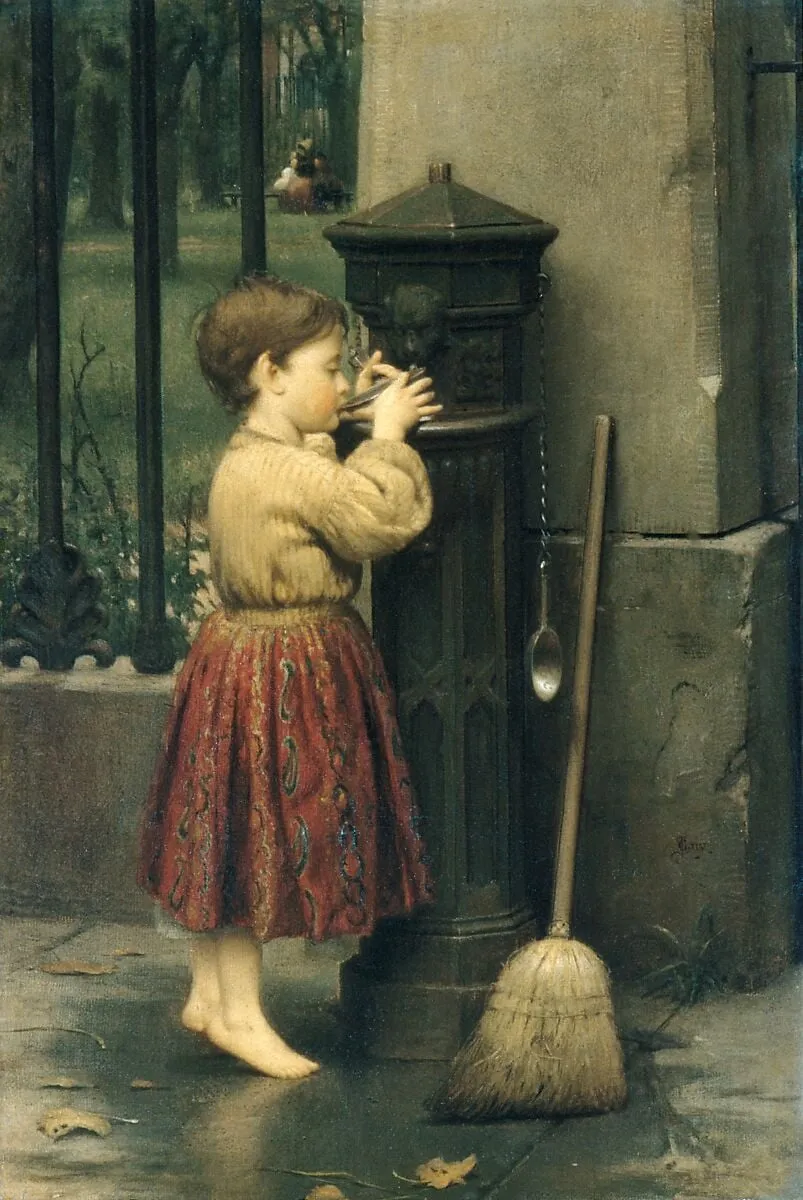
The Crossing Sweeper is an oil painting by the Hudson River School artist Seymour Joseph Guy. It dates from 1864 and is held in the collection of the Metropolitan Museum of Art.
About this work
Subject & Meaning
As a work classified within the genre scene tradition, the composition focuses on this specific moment of daily life rather than allegorical narrative.
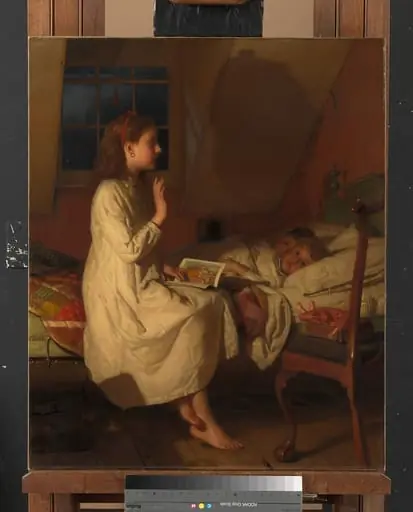
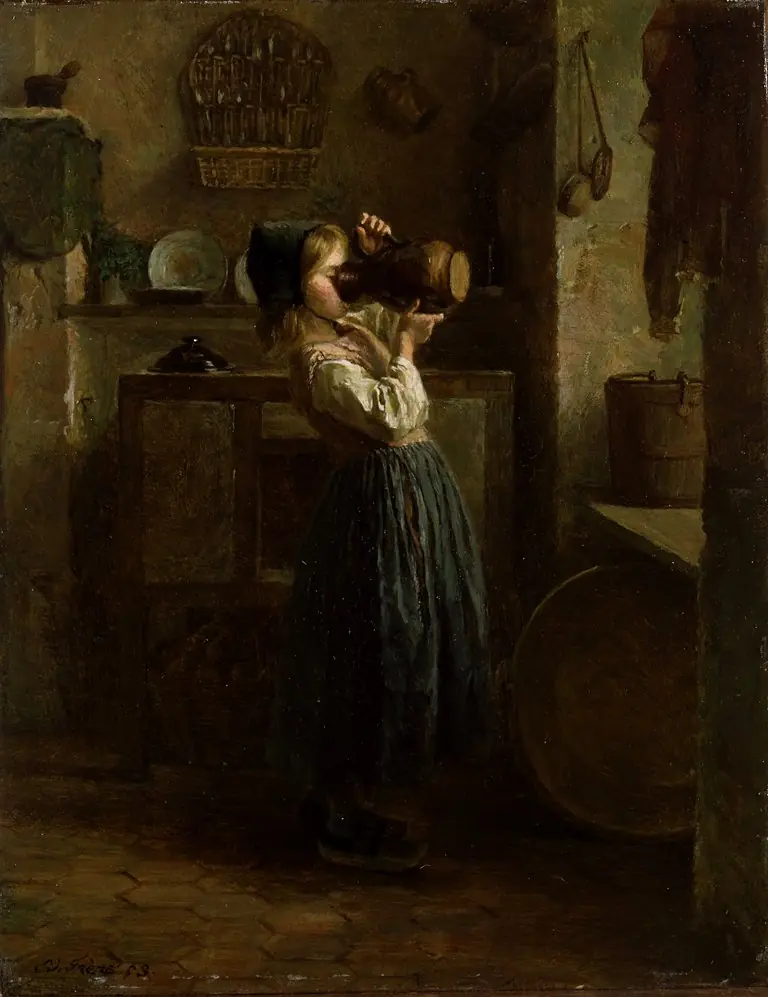
Seymour Joseph Guy's 1864 oil painting, The Crossing Sweeper, depicts a young girl engaged in the act of drinking from a fountain. As a work classified within the genre scene tradition, the composition focuses on this specific moment of daily life rather than allegorical narrative. The subject matter centers on the figure of the girl and her interaction with the fountain, capturing a candid instance of urban existence.
While the title references the historical trade of a crossing sweeper, the visual evidence provided by the sources identifies the primary iconography as the girl and the fountain. The work represents a slice of ordinary reality, documenting the presence of children in public spaces and their engagement with civic infrastructure like drinking fountains during the mid-nineteenth century.
Technique & Style
Executed in 1864, this work is an oil painting on canvas by Seymour Joseph Guy. The composition measures approximately 30.8 by 21.6 centimeters and depicts a genre scene featuring a young girl, a fountain, and the act of drinking. As a piece held within the American Wing of the Metropolitan Museum of Art, the artwork utilizes traditional materials characteristic of mid-19th-century American painting.
The specific handling of the oil medium allows for the detailed rendering of the figures and setting, though specific details regarding the current physical condition or conservation history are not provided in the available records. The formal qualities focus on a narrative moment, capturing everyday life through a realistic lens typical of the artist's approach to genre subjects during this period.
History & Provenance
Seymour Joseph Guy's The Crossing Sweeper was created in 1864, as indicated by the work's classification in The American Wing. The painting entered the collection of the Metropolitan Museum of Art, where it remains held. Its provenance prior to the museum's acquisition is not documented in the provided sources, which do not identify an original commission or subsequent owners before its institutional custody.
The Crossing Sweeper (1864) by Seymour Joseph Guy is held by the Metropolitan Museum of Art, where it belongs to the institution's American Wing collection. The work is catalogued as an oil on canvas measuring 30.8 by 21.6 centimeters. Beyond its identification within the museum's holdings, the available records do not document a specific accession number or a detailed exhibition history for the painting.
Legacy
The Crossing Sweeper, painted by Seymour Joseph Guy in 1864, entered the Metropolitan Museum of Art's American Wing, where its inclusion signals sustained scholarly recognition of the canvas as a representative example of mid-century genre scenes. Critics and historians cite the work's detailed portrayal of a street-level encounter, girl, fountain, and drinking, as an early exploration of urban realism that prefigured later narrative paintings of city life. Its presence in a major institutional collection has reinforced the painting's reputation as a benchmark for American academic art, informing subsequent studies of everyday moments in 19th-century American art.
Overview
The Crossing Sweeper is an oil on canvas genre painting created by Seymour Joseph Guy around 1864. This work captures a poignant moment, depicting a young girl pausing to drink from a stone fountain. It offers a glimpse into the daily life of children in rapidly expanding urban centers during the mid-19th century, reflecting the social realities of the era through a focused, intimate scene.
Context
Created in the 1860s, "The Crossing Sweeper" reflects a period of significant urban growth in America. As cities expanded, child labor became a common sight, with many young individuals undertaking various menial tasks to earn a living. Guy's painting serves as a visual document of these social conditions, offering insight into the lives of working-class children amidst the changing landscape of the era.
Artist & collection