Artwork
A Syce
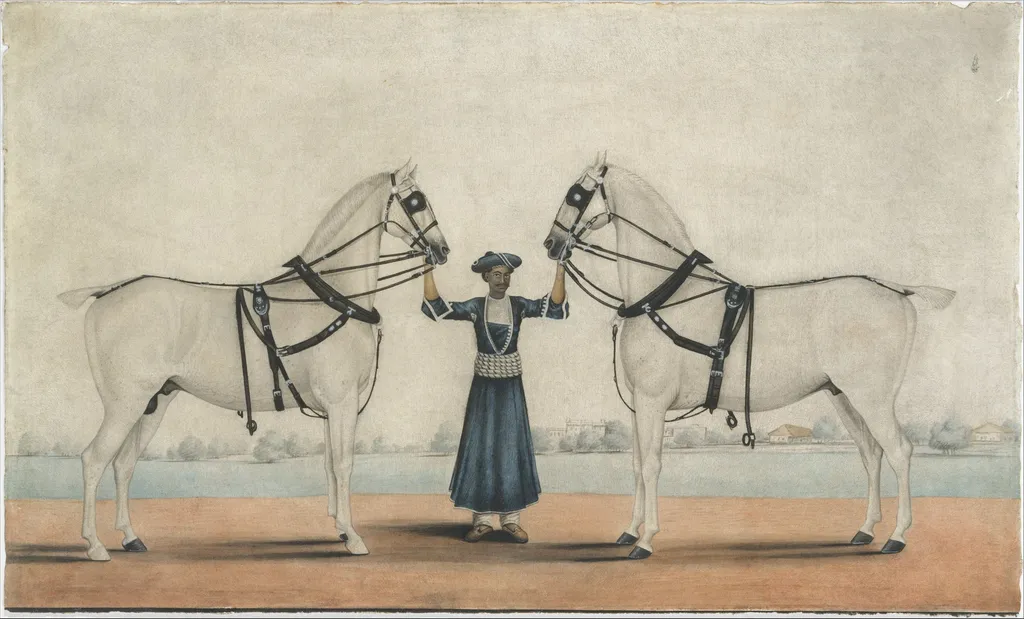
A Syce is an unspecified painting by the Patna School of Painting artist Shaikh Muhammad Amir. It dates from 1845 and is held in the collection of the Metropolitan Museum of Art.
About this work
Subject & Meaning
This subject matter reflects the daily duties of stable attendants serving the British colonial presence in Calcutta during the mid-nineteenth century.
The painting depicts a syce, or groom, standing with two carriage horses. This subject matter reflects the daily duties of stable attendants serving the British colonial presence in Calcutta during the mid-nineteenth century. As an example of Company painting, the work documents the intersection of Indian labor and British colonial lifestyle through a realistic portrayal of equestrian service.
The composition focuses on the man and his animals, capturing a specific moment of preparation or rest associated with carriage transport.
History & Provenance
A Syce is dated to 1845, the year recorded by the artist Shaikh Muhammad Amir of Karraya in his internal documentation of the work.
The painting entered the collection of the Metropolitan Museum of Art in New York, as noted in the museum’s records and in the Wikidata entry for the piece. Its presence in the museum’s Gallery 464 is confirmed by the institution’s public display listings.
A Syce is held by the Metropolitan Museum of Art in New York, as recorded in the museum's collection records.
The watercolor is on view in the Metropolitan Museum's Gallery 464. No accession number is provided in the available sources, and no prior exhibition history beyond its current display at the Met is documented.
Context
Created circa 1845 in Calcutta, A Syce by Shaikh Muhammad Amir of Karraya stands as a significant example of Company painting, a genre produced by Indian artists specifically for British patrons during the colonial era. The work depicts a groom holding two carriage horses, illustrating the cross-cultural interactions and artistic exchanges characteristic of the period in India. Currently held in the collection of the Metropolitan Museum of Art in New York, the painting is displayed in Gallery 464, where it serves as a historical document of 19th-century life and artistic production in colonial Bengal.
Legacy
A Syce, painted circa 1845 by Shaikh Muhammad Amir of Karraya, is regarded as a representative work of the Company school of Indian art produced for European patrons. Its inclusion in the Metropolitan Museum of Art’s collection and its display in Gallery 464 have made it a reference point for studies of colonial‑era artistic exchange. Scholars cite the painting when discussing how Indian artists adapted European compositional conventions while maintaining indigenous techniques, underscoring its role in shaping narratives about cross‑cultural patronage in the 19th century.
Overview
This watercolor, titled A Syce (Groom) Holding Two Carriage Horses, was created around 1845 by Shaikh Muhammad Amir of Karraya in Calcutta, India. It represents a notable example of Company painting, a style developed by Indian artists to cater to the tastes of British patrons during colonial rule. The work is currently housed in the Metropolitan Museum of Art in New York.
Technique & Style
Executed in watercolor, the painting demonstrates a precise yet understated approach. The artist focuses on rendering the primary subjects, the groom and the horses, with clarity and detail, particularly in their forms and the man's attire. The background elements are depicted with a softer, more diffused quality, ensuring the central figures remain the focal point without distraction. This style reflects the genre's emphasis on clear representation.
Own this work as a print
Artist & collection
Artist
Shaikh Muhammad Amir of Karraya (Bengali: শেখ মুহম্মদ আমির; fl. 1830s-40s) was a Bengali Muslim painter in the British Raj period from Karraya in Ballygunge, a suburb in Calcutta.

- A groom with a horse and carriage
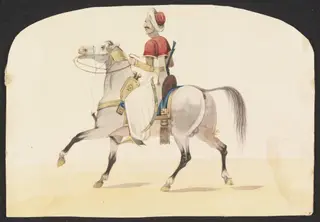 Mounted Arab horseman
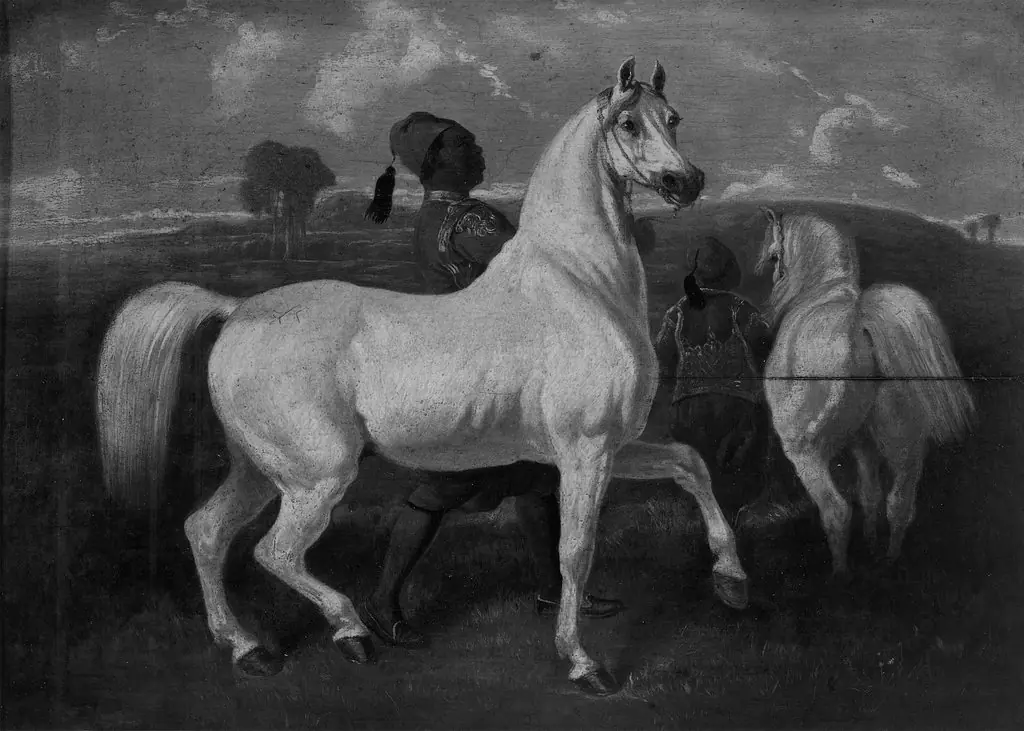 Arabian Horses
 Giafar
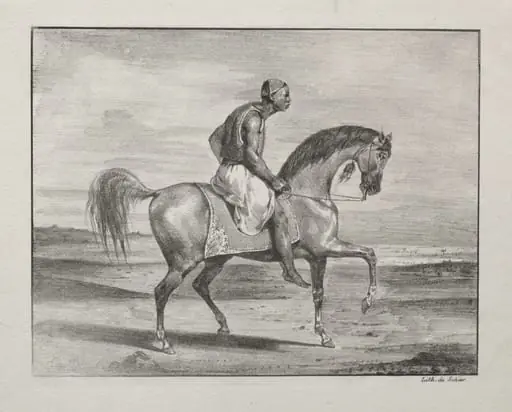 African on Horseback
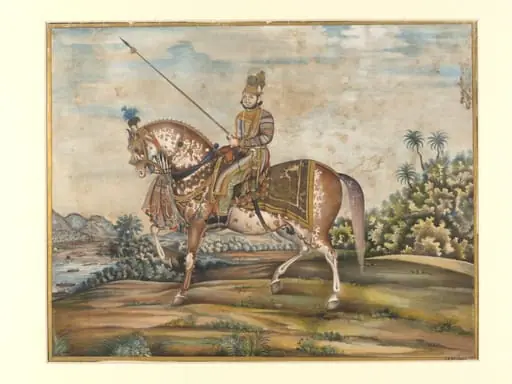 One of four drawings of inhabition of Delhi.
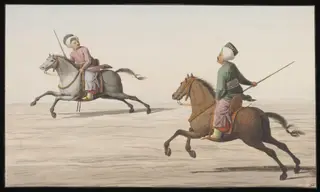 Two men playing the game of Cirid
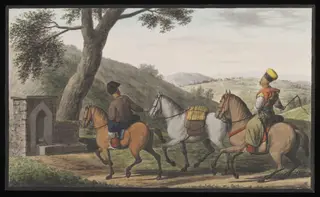 Sürücüler, or men in charge of post horses
![A Mounted Mamluk with his Sais [Groom], by S. Bossi](https://artifactworldgallery.com/img/s-bossi--a-mounted-mamluk-with-his-sais-groom--93e3f53d48765120-w320.webp) A Mounted Mamluk with his Sais [Groom]
A Mounted Mamluk with his Sais [Groom]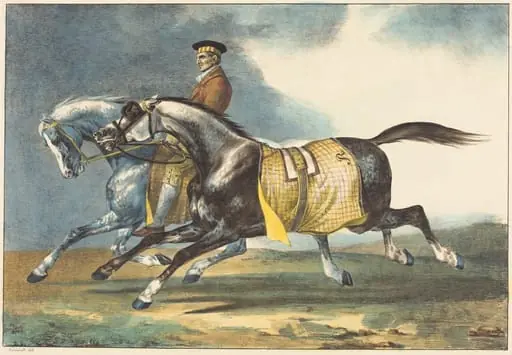 Two Dapple-Gray Horses Exercising (Deux chevaux gris pommele que l'on promene)
 The Course
 A closed carriage drawn by bullocks