Artwork
Jatayu hinders Ravana’s chariot trying to prevent Sita’s abduction (recto), from a Kalighat album
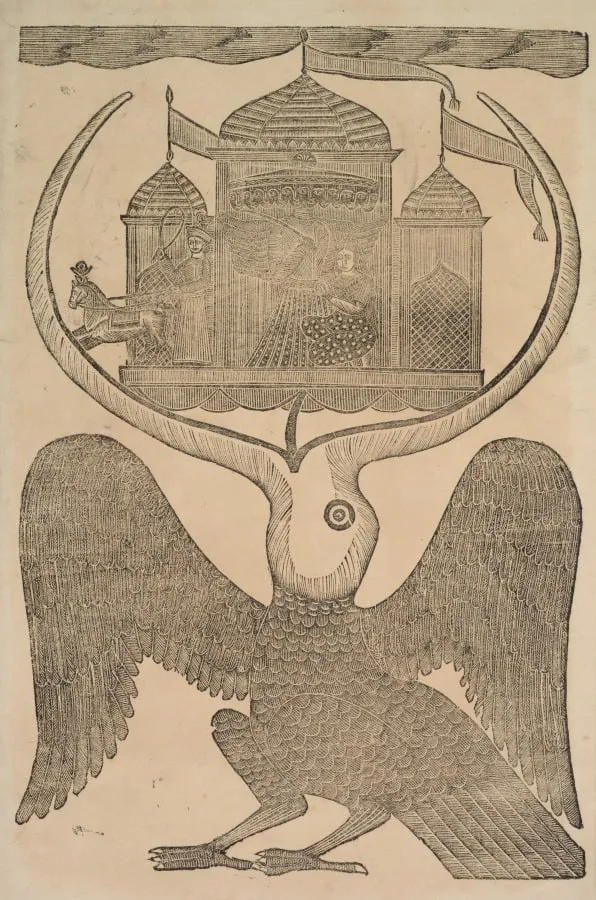
Jatayu hinders Ravana’s chariot trying to prevent Sita’s abduction (recto), from a Kalighat album is a print by the Impressionist artist Shri Gobinda Chandra Roy. It dates from 1890 and is held in the collection of the Cleveland Museum of Art.
- Accession no.
- 2003.111.a
About this work
Overview
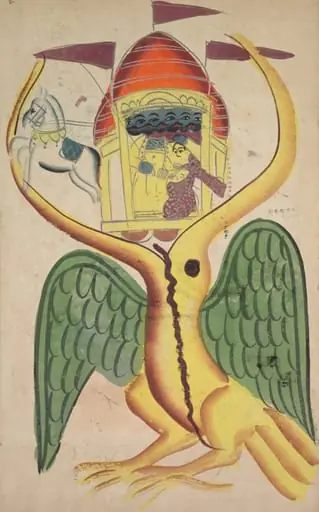
This print depicts a scene from Hindu mythology, showing the demon king Ravana abducting Princess Sita while being attacked by the vulture Jatayu. It is a woodcut print from a Kalighat album, characteristic of the affordable and widely available art produced in 19th-century Kolkata.
Subject & Meaning
The scene illustrates a pivotal moment in the Ramayana, where Jatayu attempts to thwart Ravana's abduction of Sita. The image conveys the dramatic confrontation between the demon king and the vulture, an ally of Sita's husband Rama.
Technique & Style
The print features bold, flat forms and bright colors, achieved through the woodcut technique. The simplicity of the composition and the use of vibrant hues make the scene easily recognizable.
History & Provenance
The print was produced on paper originally intended for Bible production by Christian missionaries, but was repurposed by local artists for Hindu imagery. This woodcut was part of a mass-produced series, making it accessible to a wide audience in Kolkata.
Artist & collection

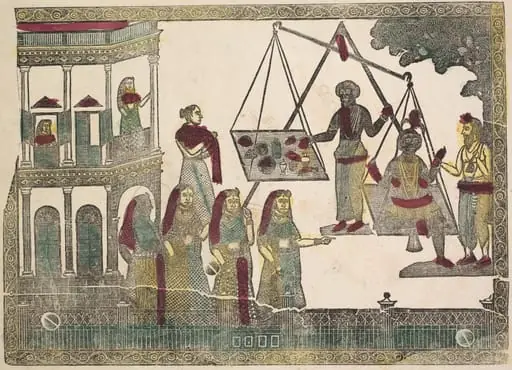 Krishna weighed against precious objects(?) (verso), from a Kalighat album
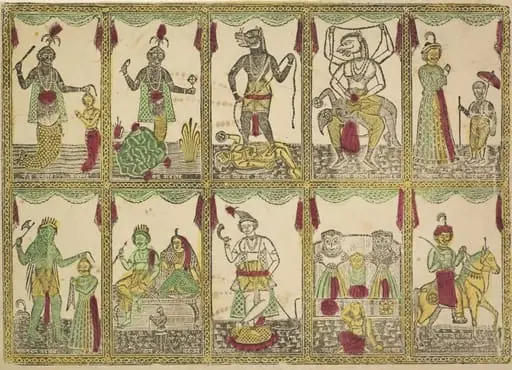 Das Avataras, Ten Incarnations of Vishnu (verso), from a Kalighat album
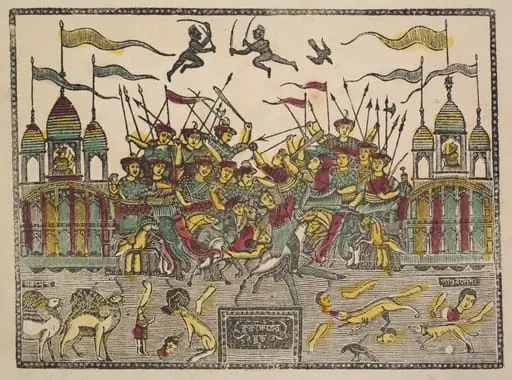 Battle Scene at Kurukshetra from the Mahabharata War (verso), from a Kalighat album
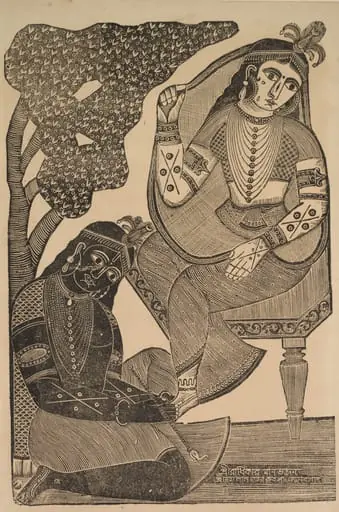 Krishna Stroking Radha's Feet
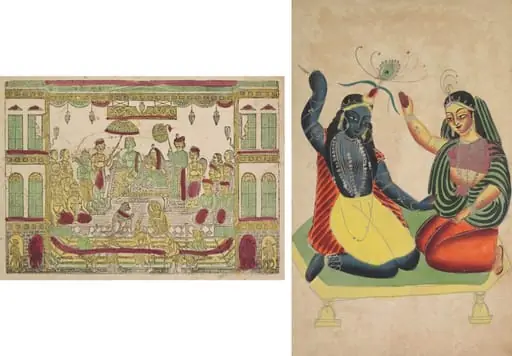 Leaf from a Kalighat album: Rama and Sita in the Royal Palace (recto); Radha and Krishna (verso)
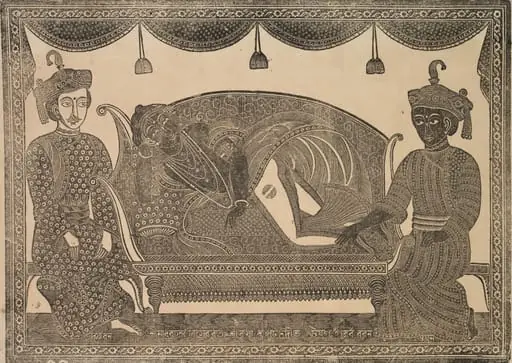 Kalighat Painting
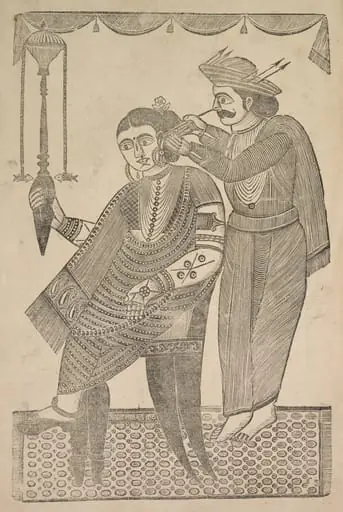 A Barber Cleaning the Ear of a Courtesan
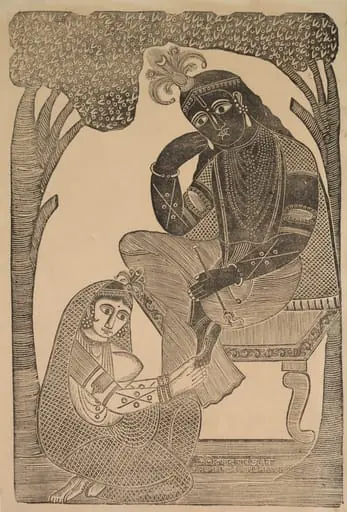 Radha Stroking Krishna's Feet
- Jatayu hinders Ravana’s chariot, trying to prevent the abduction of Sita (recto), from a Kalighat album
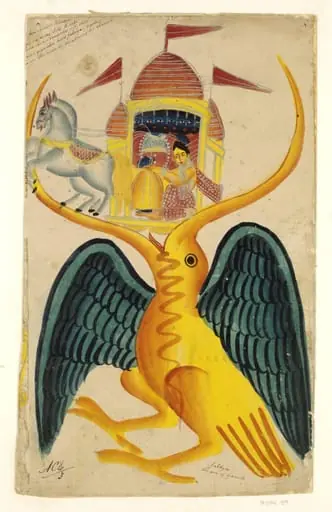 Ravana, Sita and Jatayu
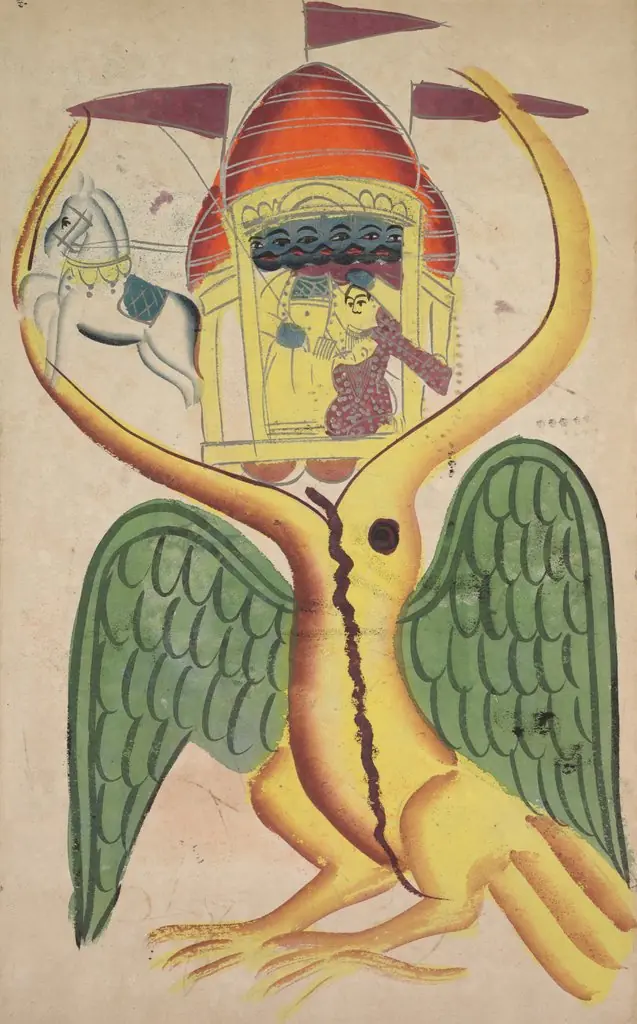 Jatayu hinders Ravana’s chariot, trying to prevent the abduction of Sita (recto), from a Kalighat album
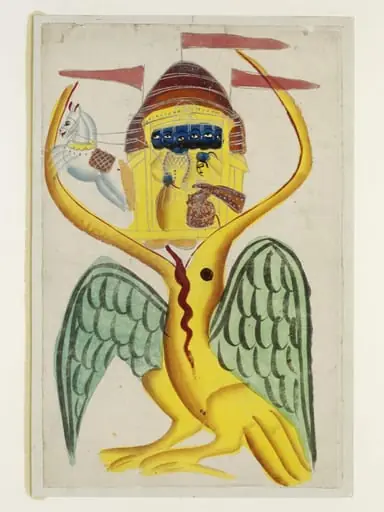 Ravana, Sita and Jatayu
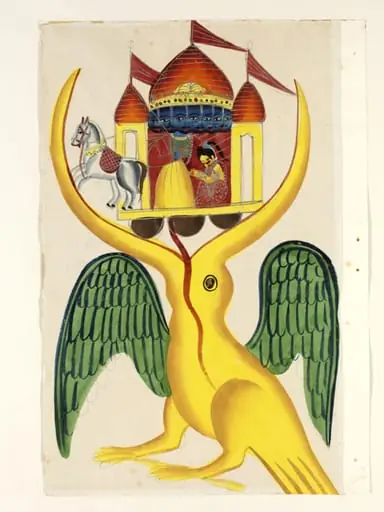 Jatayu, Sita and Ravana
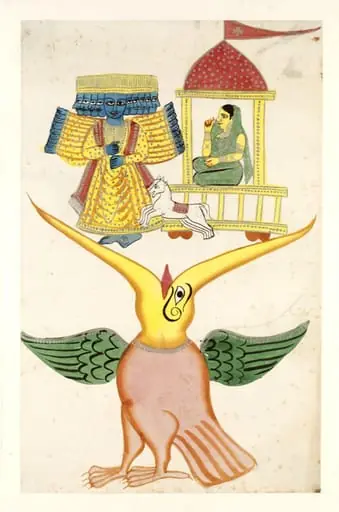 Jatayu, Ravana and Sita
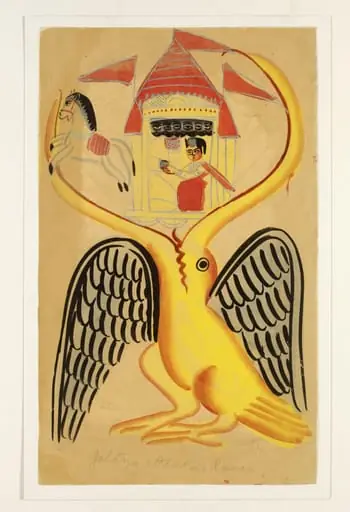 Jatayu, Ravana and Sita
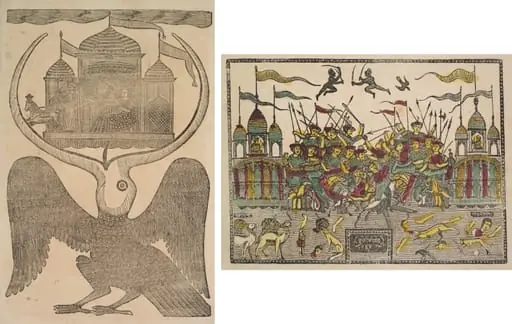 Leaf from a Kalighat album: Jatayu hinders Ravana’s chariot trying to prevent Sita’s abduction (recto); Battle Scene at Kurukshetra from the Mahabharata War (verso)