Artwork
Krishna weighed against precious objects(?) (verso), from a Kalighat album
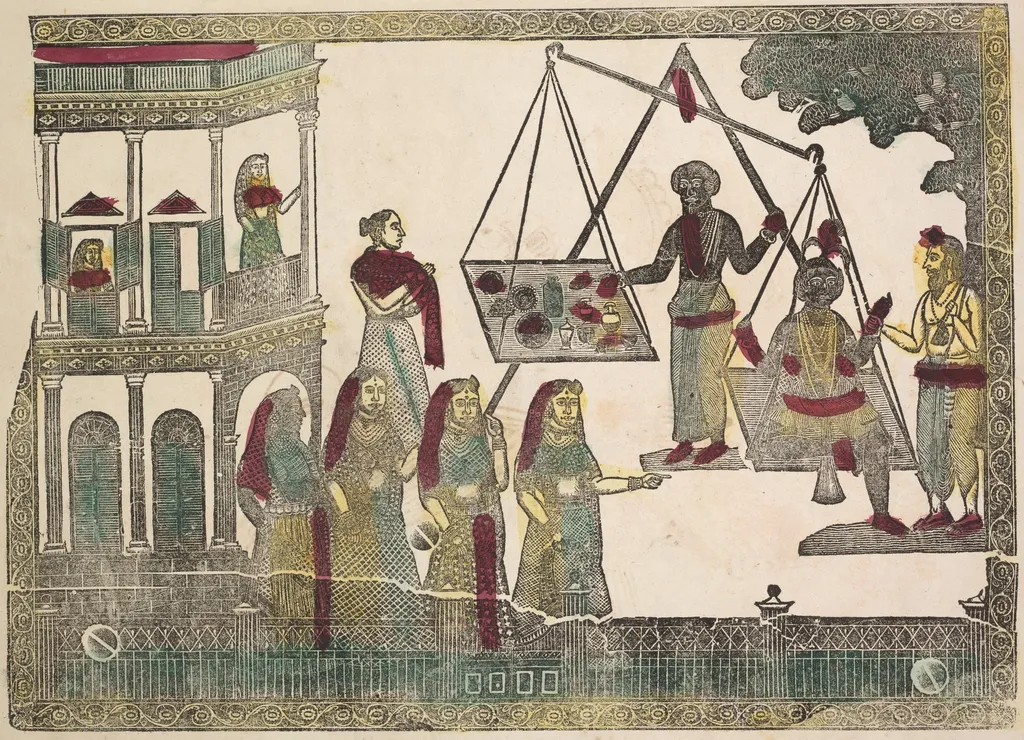
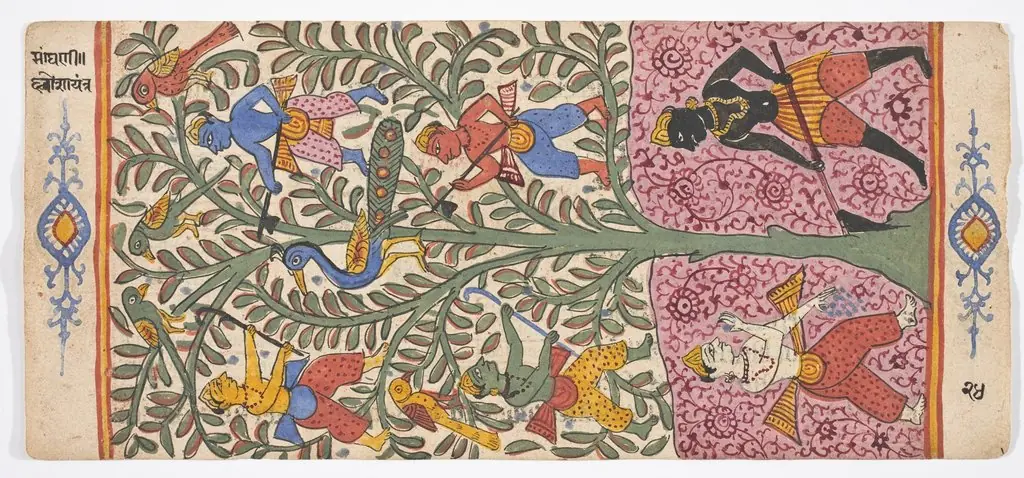
Krishna weighed against precious objects(?) (verso), from a Kalighat album is an unspecified painting by the Bengal School artist Shri Gobinda Chandra Roy. It dates from 1890 and is held in the collection of the Cleveland Museum of Art.
- Accession no.
- 2003.107.b
About this work
The background of the painting is not clearly visible, but it appears to be a simple, muted color.
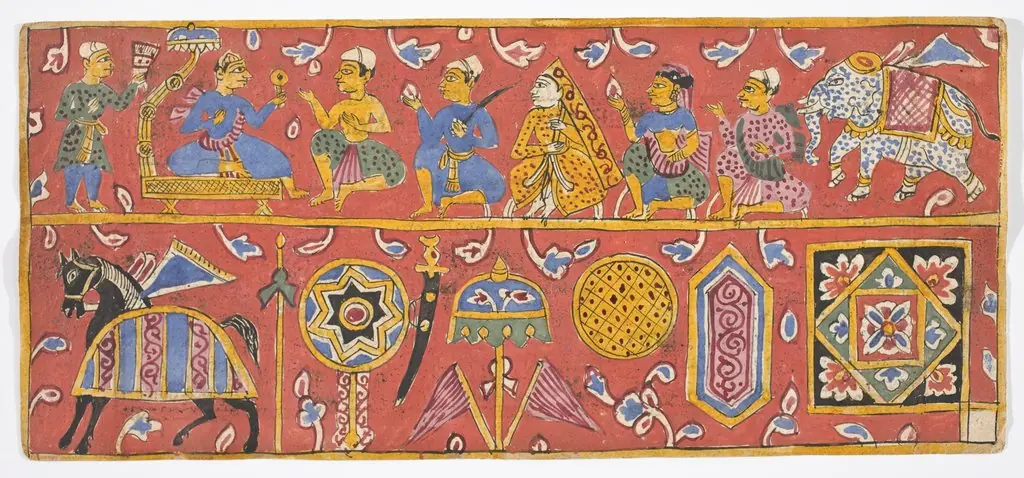
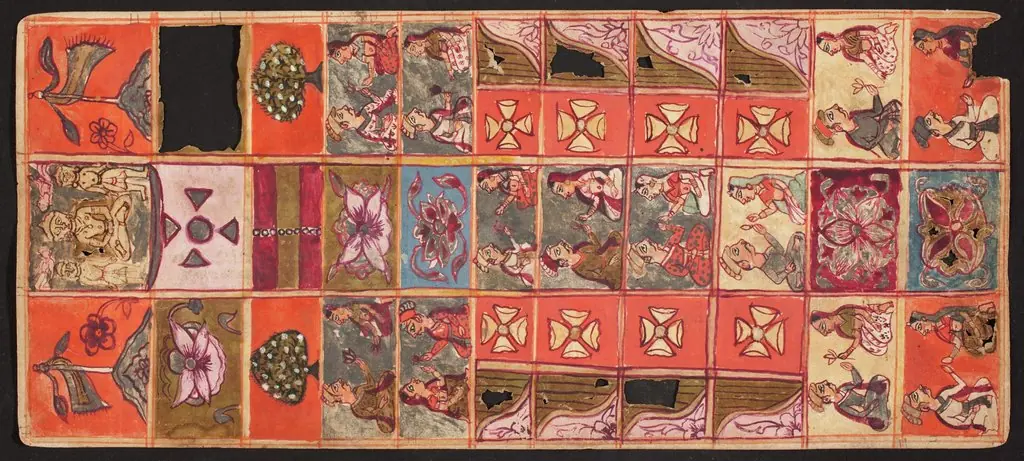
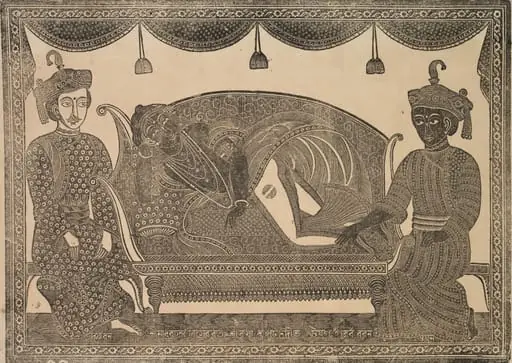
The painting depicts a scene with a figure on a scale, surrounded by other figures. The scale is filled with various objects, and the figure is being weighed against them. The background of the painting is not clearly visible, but it appears to be a simple, muted color.
The painting is done in a style that blends elements of Impressionism and Realism, with loose brushstrokes and a focus on capturing the play of light and shadow. The artist's use of color is muted, with a focus on earth tones and soft pastels.
The painting is a unique example of Indian art from the late 19th century, and it provides a fascinating glimpse into the cultural and artistic traditions of the time. To learn more about the artist and his work, explore the art of Shri Gobinda Chandra Roy.
Overview
This painting, created around 1890 by Shri Gobinda Chandra Roy, is one panel from a Kalighat album, a series of works produced by artists near the Kalighat temple in Kolkata. It is executed in watercolor and ink on paper, typical of the Kalighat style. The verso side of the sheet features this scene, suggesting it was part of a bound collection, possibly intended for private or devotional use rather than public display.
Subject & Meaning
The image illustrates a Hindu legend in which the infant Krishna is weighed against gold, jewels, and other valuables to determine his divine worth. The central figure, likely Krishna, is shown on a balance scale, surrounded by onlookers including priests and attendants. The scene reflects a devotional narrative from the Bhagavata Purana, emphasizing spiritual value over material wealth through ritual symbolism.
Technique & Style
The work employs bold outlines and flat areas of color, characteristic of Kalighat painting, with minimal shading and no attempt at illusionistic depth. Figures are rendered with expressive, slightly caricatured features, and the palette is restrained, dominated by ochres, indigo, and muted reds. Brushwork is confident and economical, prioritizing clarity and narrative immediacy over atmospheric effects or impressionistic light.
History & Provenance
The painting originated in the Kalighat neighborhood of Kolkata during a period when artists adapted traditional iconography for a growing urban clientele. It entered the collection of The Cleveland Museum of Art through documented acquisition, likely in the 20th century, as part of broader efforts to preserve South Asian folk and religious art. Its survival as a single leaf from an album highlights its status as a fragment of a larger cultural practice.
Context
Kalighat paintings emerged in the early 19th century as affordable devotional art for pilgrims and middle-class buyers. They blended religious themes with contemporary social commentary, often reflecting urban life and colonial influence. This piece, made near the end of the century, shows the tradition’s persistence despite changing tastes and the rise of print media, serving as both spiritual artifact and commercial product.
Legacy
Though Kalighat art declined in the early 20th century due to industrialization and shifting aesthetics, these works remain vital for understanding the evolution of Indian visual culture. This painting contributes to scholarly recognition of regional artists as active participants in religious storytelling, bridging folk traditions with emerging modern sensibilities in colonial India.
Own this work as a print
Artist & collection

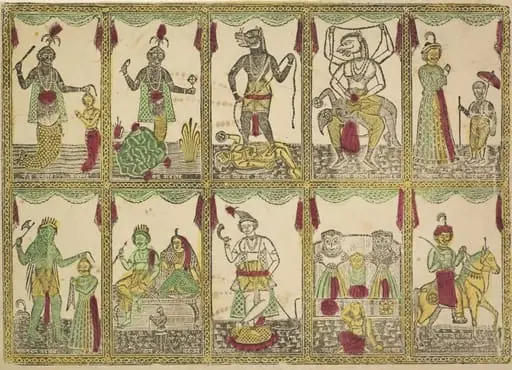 Das Avataras, Ten Incarnations of Vishnu (verso), from a Kalighat album
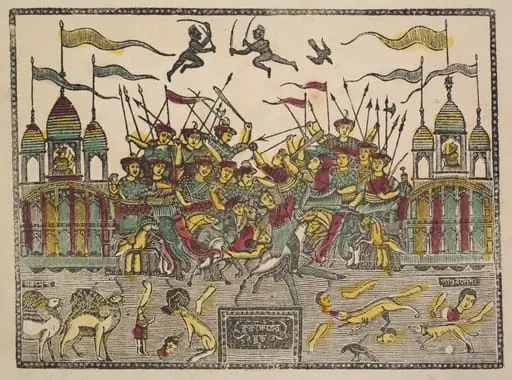 Battle Scene at Kurukshetra from the Mahabharata War (verso), from a Kalighat album
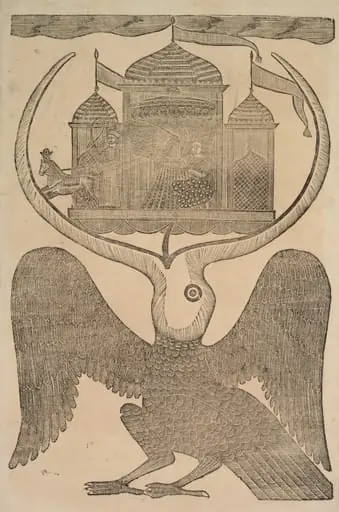 Jatayu hinders Ravana’s chariot trying to prevent Sita’s abduction (recto), from a Kalighat album
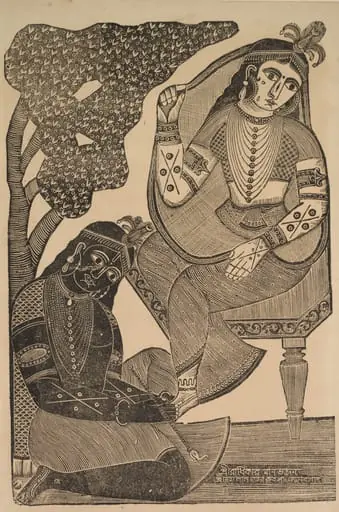 Krishna Stroking Radha's Feet
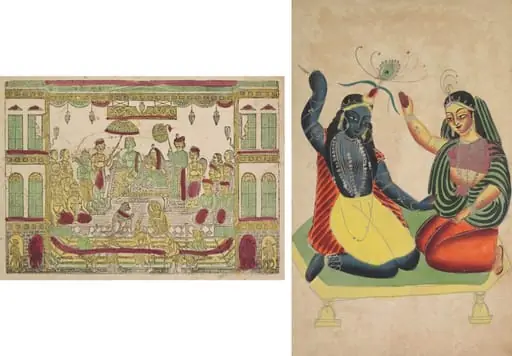 Leaf from a Kalighat album: Rama and Sita in the Royal Palace (recto); Radha and Krishna (verso)
 Kalighat Painting
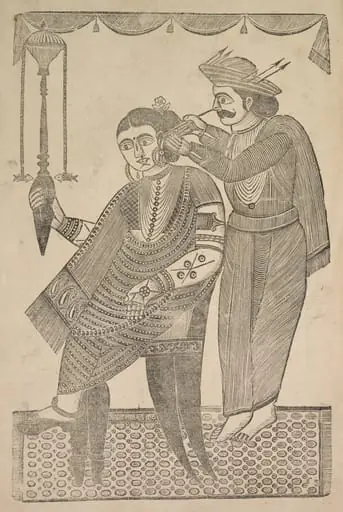 A Barber Cleaning the Ear of a Courtesan
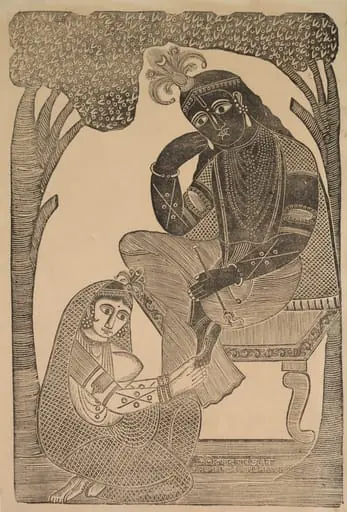 Radha Stroking Krishna's Feet