Artwork
Jatayu hinders Ravana’s chariot, trying to prevent the abduction of Sita (recto), from a Kalighat album
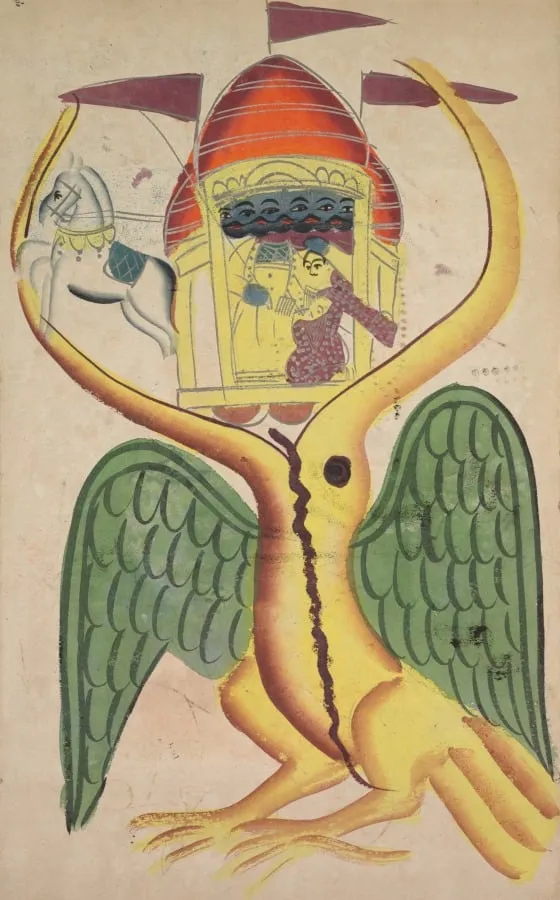
Jatayu hinders Ravana’s chariot, trying to prevent the abduction of Sita (recto), from a Kalighat album is an unspecified painting by the Bengal School artist Unknown. It dates from 1890 and is held in the collection of the Cleveland Museum of Art.
- Accession no.
- 2003.109.a
About this work
Overview
The work depicts a dramatic episode from the Ramayana in which the giant bird Jatayu confronts the demon king Ravana as he attempts to abduct Sita.
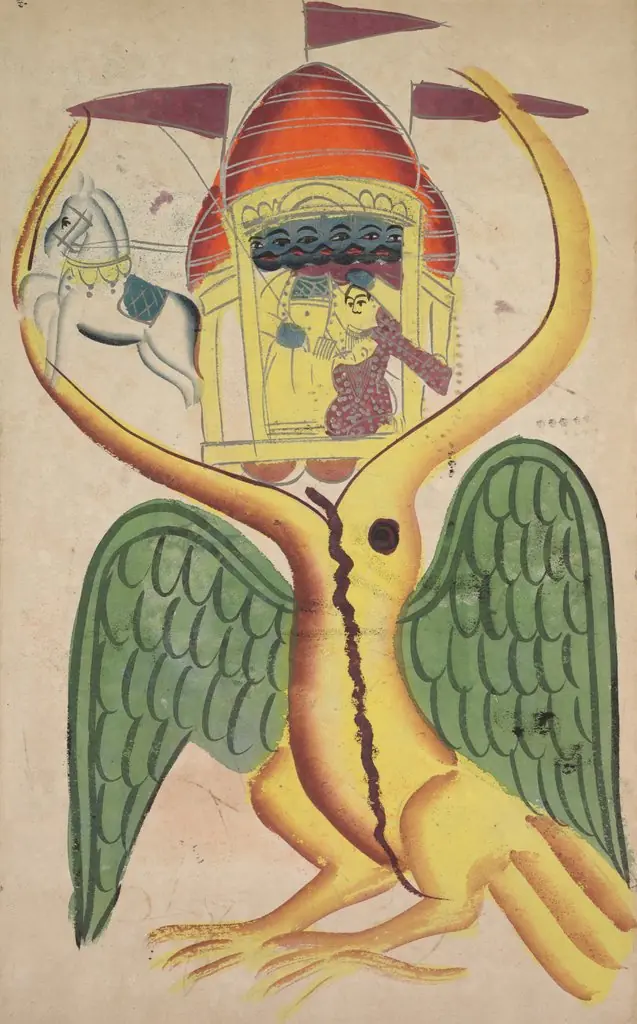
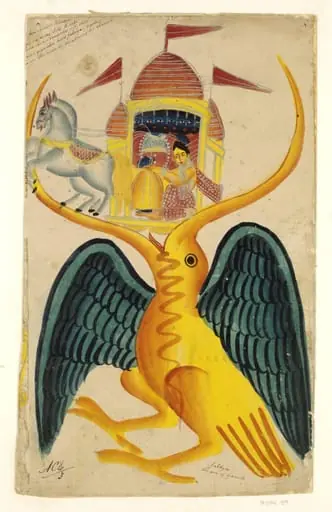
The work depicts a dramatic episode from the Ramayana in which the giant bird Jatayu confronts the demon king Ravana as he attempts to abduct Sita. The composition shows Jatayu’s curved beak striking Ravana’s airborne chariot, which is drawn by donkeys and carries the ten‑headed villain alongside a woman in a red sari. Bright greens, reds and yellows dominate the scene, characteristic of the Kalighat school’s vivid palette.
Subject & Meaning
In this narrative, Jatayu, the ruler of the vultures, intervenes to protect Sita, the wife of Rama, from Ravana’s seizure. The episode underscores themes of loyalty and sacrifice: Jatayu’s heroic effort ultimately fails, leading to his mortal wound and setting the stage for Rama’s later confrontation with Ravana, which culminates in the demon’s defeat.
Technique & Style
Executed in the Kalighat tradition of early nineteenth‑century Kolkata, the painting employs bold outlines and flat areas of saturated color, typical of the inexpensive prints made for a popular audience. The figures are rendered with stylized exaggeration, Jatayu’s massive U‑shaped beak and the multi‑headed Ravana, while the background remains minimal, focusing attention on the narrative action.
History & Provenance
Originating from the Kalighat district, a hub for itinerant artists who produced affordable devotional and mythological images, the piece reflects the commercial art market that catered to everyday patrons. Such works were often sold as single sheets or bound in albums, circulating widely among the urban populace of Kolkata.
Context
The episode illustrated here is a variant found in Bengali retellings of the Ramayana, where Jatayu initially swallows Ravana’s chariot before expelling the demon upon realizing Sita’s presence. This localized version informs the visual emphasis on the bird’s aggressive posture and the dramatic clash between celestial and infernal forces.
Artist & collection









- Jatayu hinders Ravana’s chariot, trying to prevent the abduction of Sita (recto), from a Kalighat album
 Ravana, Sita and Jatayu
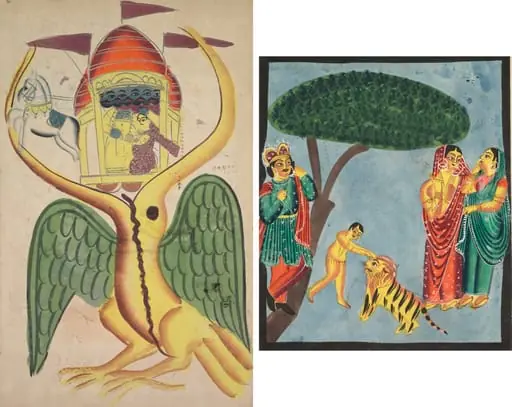 Leaf from a Kalighat album: Jatayu hinders Ravana’s chariot, trying to prevent the abduction of Sita (recto); Dushyanta watching his son Bharat playing with the tiger at the end of the Abhijnanashakuntalam (verso)
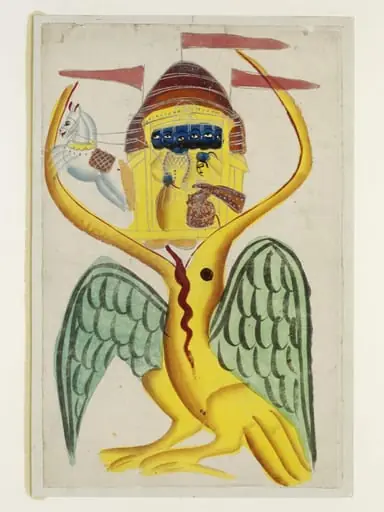 Ravana, Sita and Jatayu
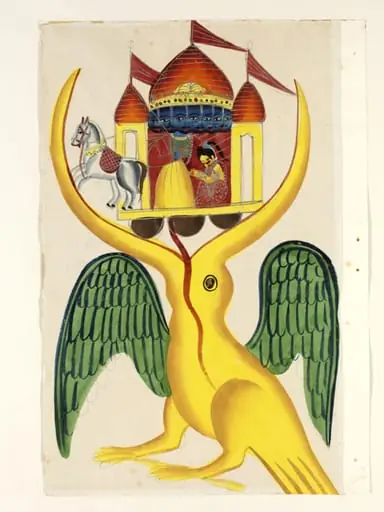 Jatayu, Sita and Ravana
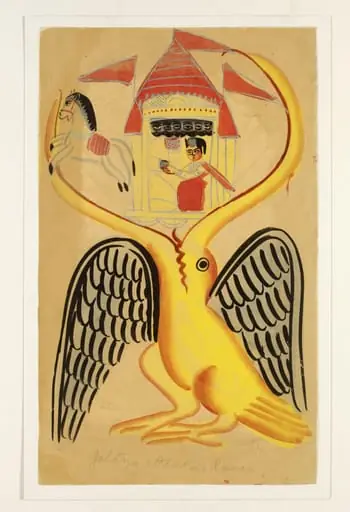 Jatayu, Ravana and Sita
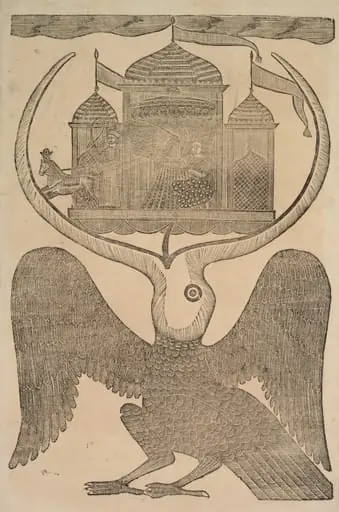 Jatayu hinders Ravana’s chariot trying to prevent Sita’s abduction (recto), from a Kalighat album
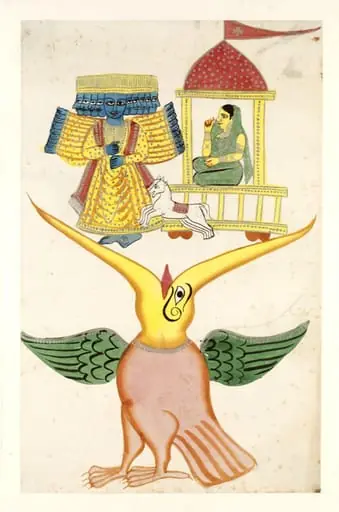 Jatayu, Ravana and Sita
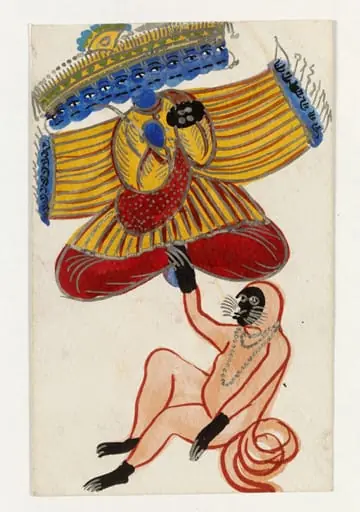 Hanuman and Ravana
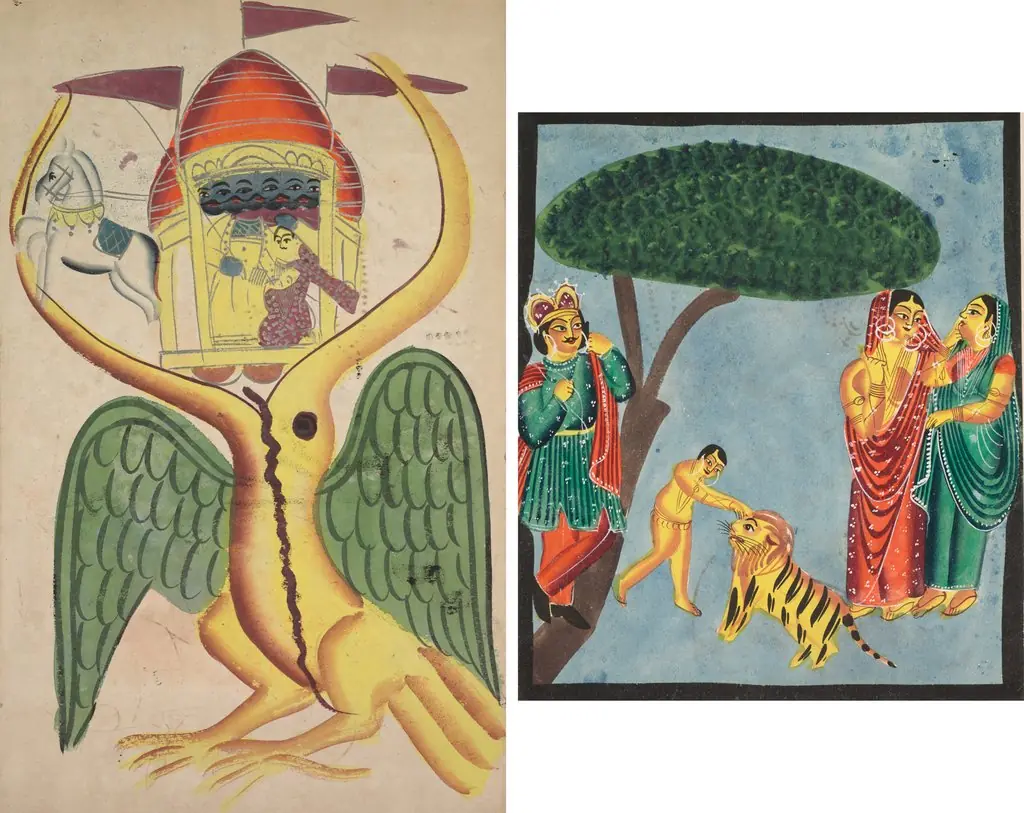 Leaf from a Kalighat album: Jatayu hinders Ravana’s chariot, trying to prevent the abduction of Sita (recto); Dushyanta watching his son Bharat playing with the tiger at the end of the Abhijnanashakuntalam (verso)