Artwork
Das Avataras, Ten Incarnations of Vishnu (verso), from a Kalighat album
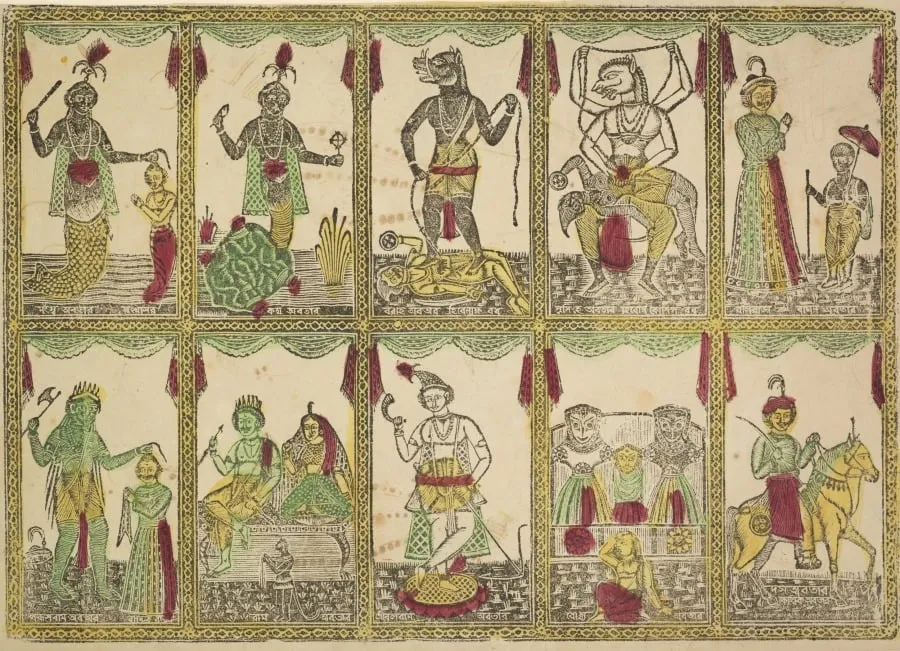
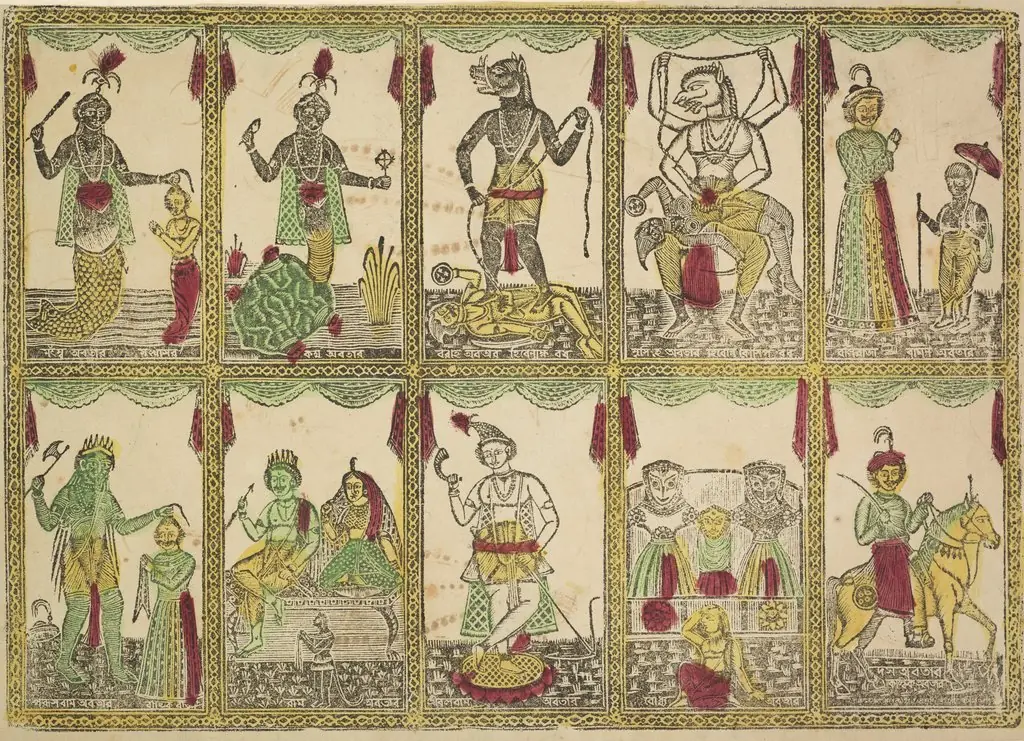
Das Avataras, Ten Incarnations of Vishnu (verso), from a Kalighat album is an unspecified painting by the Bengal School artist Shri Gobinda Chandra Roy. It dates from 1890 and is held in the collection of the Cleveland Museum of Art. The work is a small, hand‑colored woodcut that presents ten distinct forms of the Hindu deity Vishnu, arranged in two horizontal rows.
- Accession no.
- 2003.114.b
About this work
Overview
The work is a small, hand‑colored woodcut that presents ten distinct forms of the Hindu deity Vishnu, arranged in two horizontal rows. The upper row contains five figures, fish, tortoise, boar, man‑lion, and a Brahmin, while the lower row shows a warrior, a prince, a cowherd, a wooden idol, and a rider on a white horse. Each image is rendered in bright, flat color applied quickly with brush.
Subject & Meaning
The ten figures correspond to the traditional list of Vishnu’s avatars recognized in nineteenth‑century Bengal, each incarnation representing a divine intervention to re‑establish cosmic order. The composition includes the early animal forms (fish, tortoise, boar, man‑lion), the sage‑like Brahmin, the heroic Parashurama, the ideal king Rama with his consort Sita and devotee Hanuman, the pastoral Krishna, the regional deity Jagannath, and the future avatar Kalki on a white horse.
Technique & Style
Executed as a woodcut, the image was printed in black ink and then hand‑colored with inexpensive pigments. The brushwork is brisk and the palette saturated, emphasizing visual impact over subtle modeling. The flatness of the figures and the lack of perspective are typical of popular devotional prints intended for rapid production and mass consumption.
History & Provenance
Printed in the vicinity of the Kalighat temple in Kolkata, the sheet was sold by street vendors to pilgrims as a portable reminder of the deity’s many forms. Such prints were inexpensive souvenirs rather than objects for elite collections, reflecting the commercial religious culture surrounding one of Bengal’s most frequented shrines.
Context
Kalighat’s surrounding market catered to a diverse flow of worshippers, and the production of affordable devotional imagery was a common practice in nineteenth‑century eastern India. The iconography follows the regional canon of Vishnu’s avatars, which was widely known among lay devotees and used to educate and inspire pilgrims.
Legacy
While not created as high art, the print exemplifies the visual language of popular religious printmaking in colonial Bengal. It offers insight into the ways devotional narratives were disseminated among the masses and continues to serve as a reference point for scholars studying vernacular religious art of the period.
Artist & collection

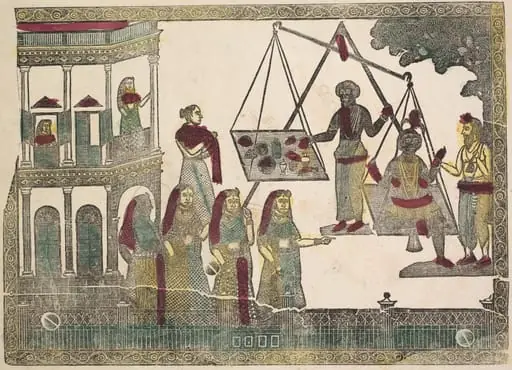 Krishna weighed against precious objects(?) (verso), from a Kalighat album
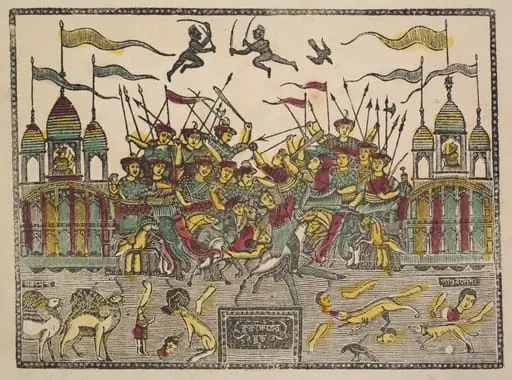 Battle Scene at Kurukshetra from the Mahabharata War (verso), from a Kalighat album
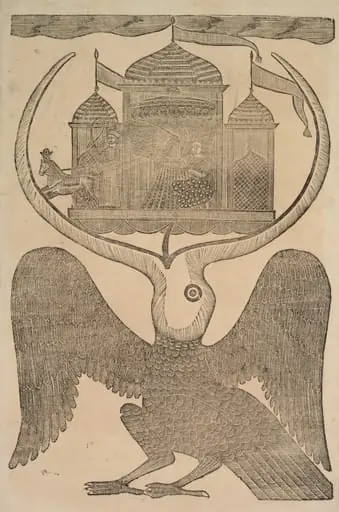 Jatayu hinders Ravana’s chariot trying to prevent Sita’s abduction (recto), from a Kalighat album
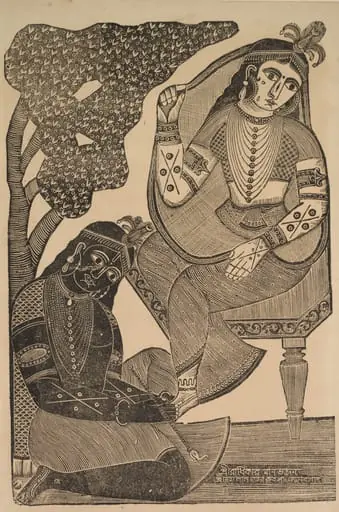 Krishna Stroking Radha's Feet
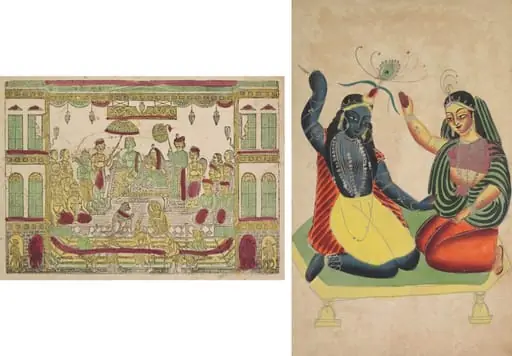 Leaf from a Kalighat album: Rama and Sita in the Royal Palace (recto); Radha and Krishna (verso)
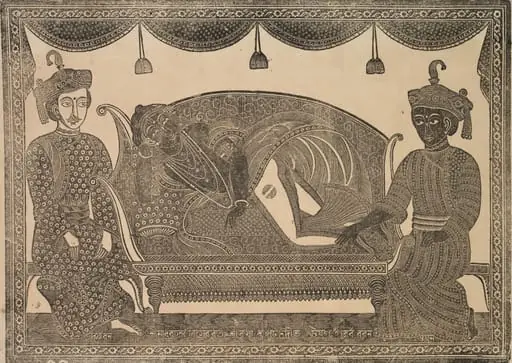 Kalighat Painting
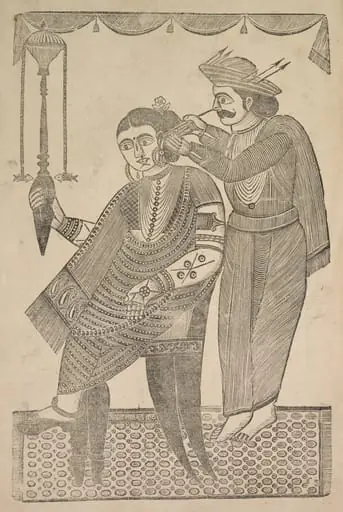 A Barber Cleaning the Ear of a Courtesan
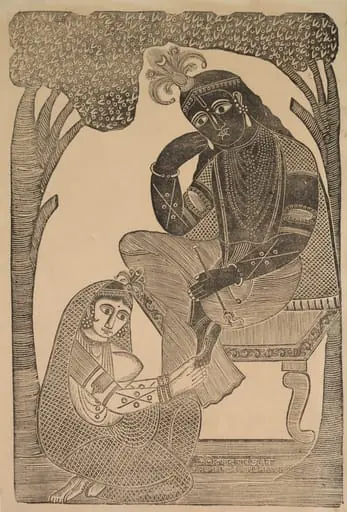 Radha Stroking Krishna's Feet
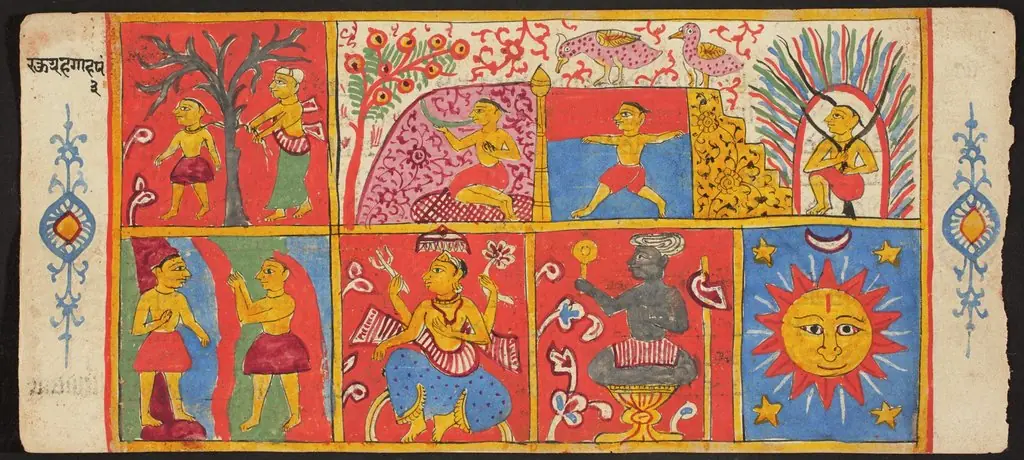 Tantric Manuscript "Sangrahani Sutra"
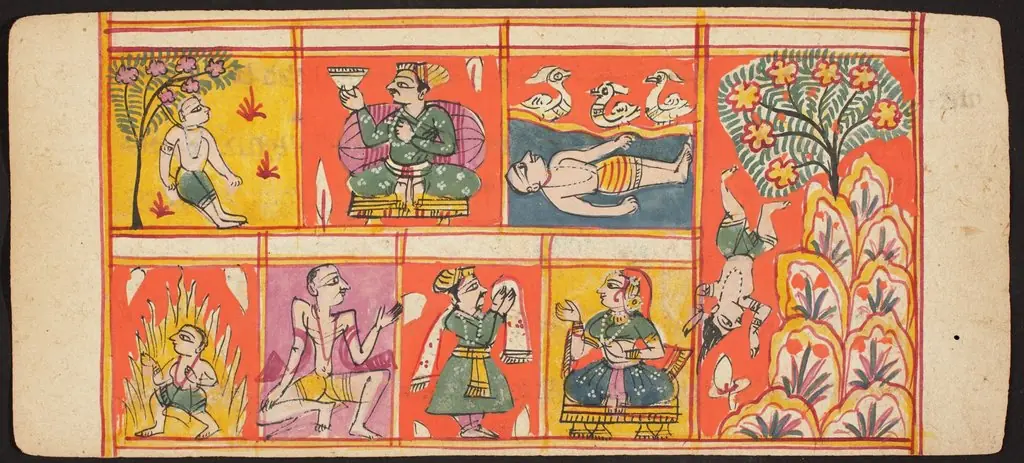 Tantric Manuscript "Sangrahani Sutra"
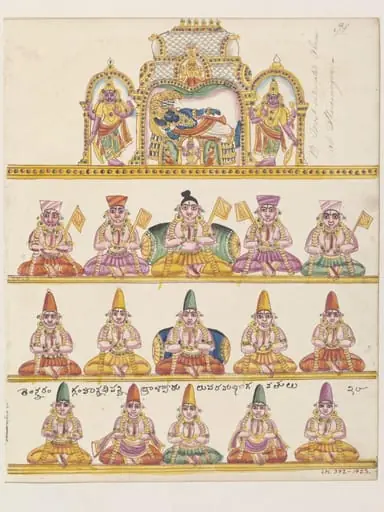 The shrine of Vishnu and the fifteen alvars and bhaktas of the Vaishnava cult.
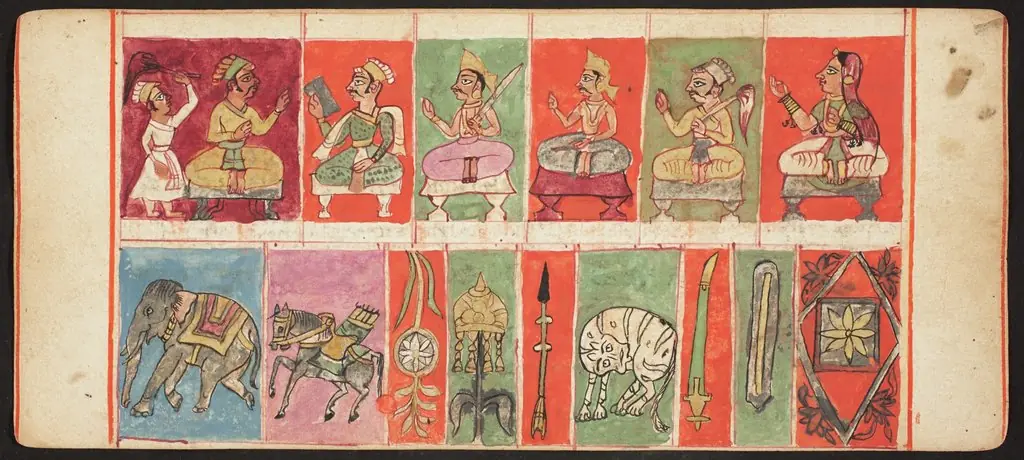 Tantric Manuscript, "Sangrahani Sutra"
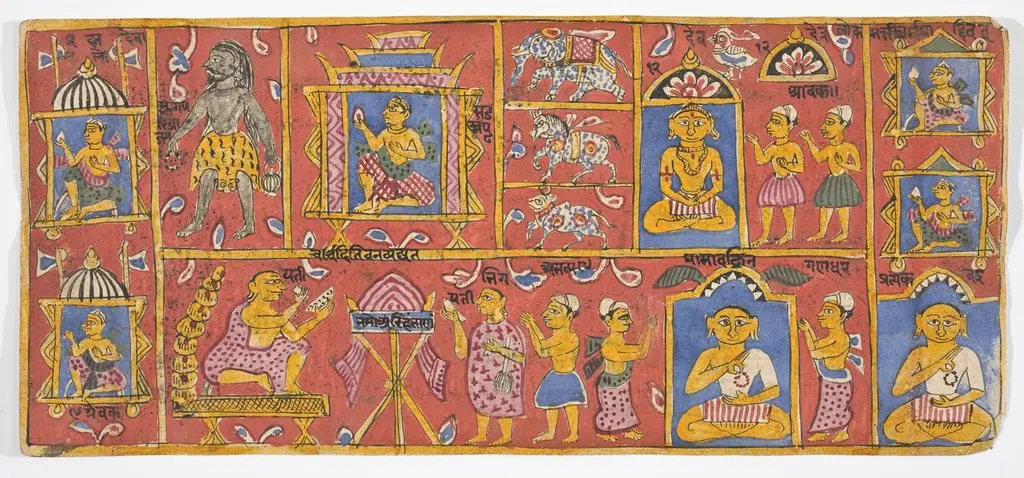 Tantric Manuscript "Sangrahani Sutra"
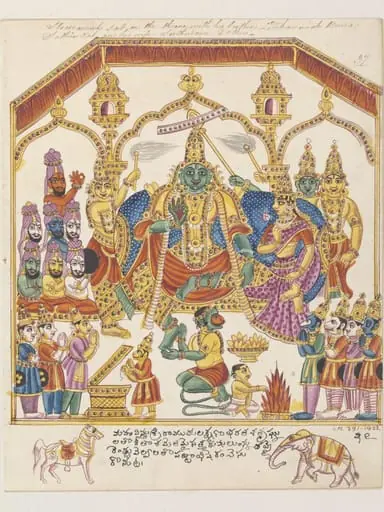 Coronation of Rama and Sita.
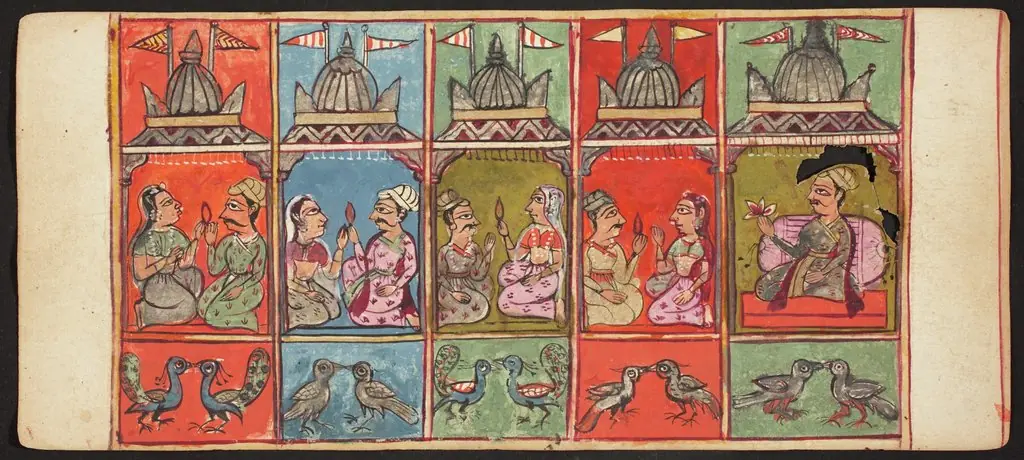 Tantric Manuscript, "Sangrahani Sutra"
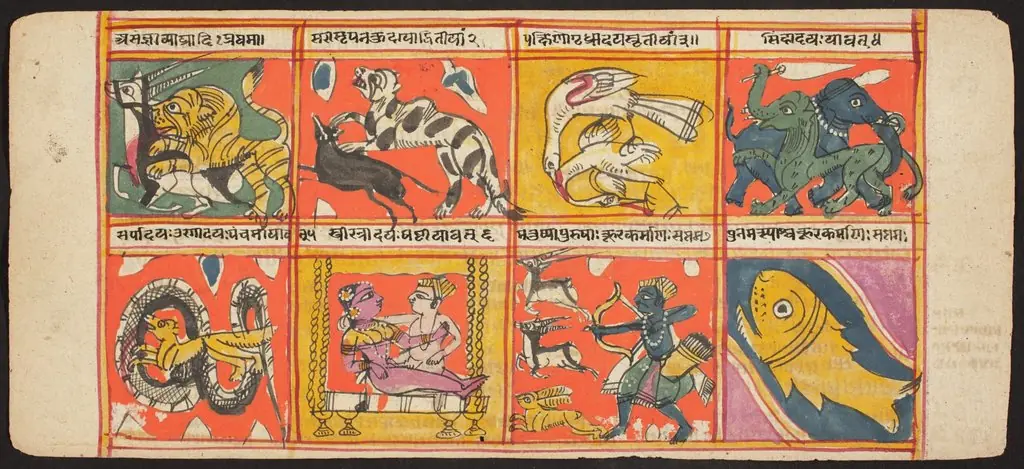 Tantric Manuscript "Sangrahani Sutra"