Artwork
「大判事清澄 坂東三津五郎」(三代)・「久我之助 嵐小六」(四代)|Bandō Mitsugorō III as Daihanji Kiyozumi and Arashi Koroku IV as Koganosuke
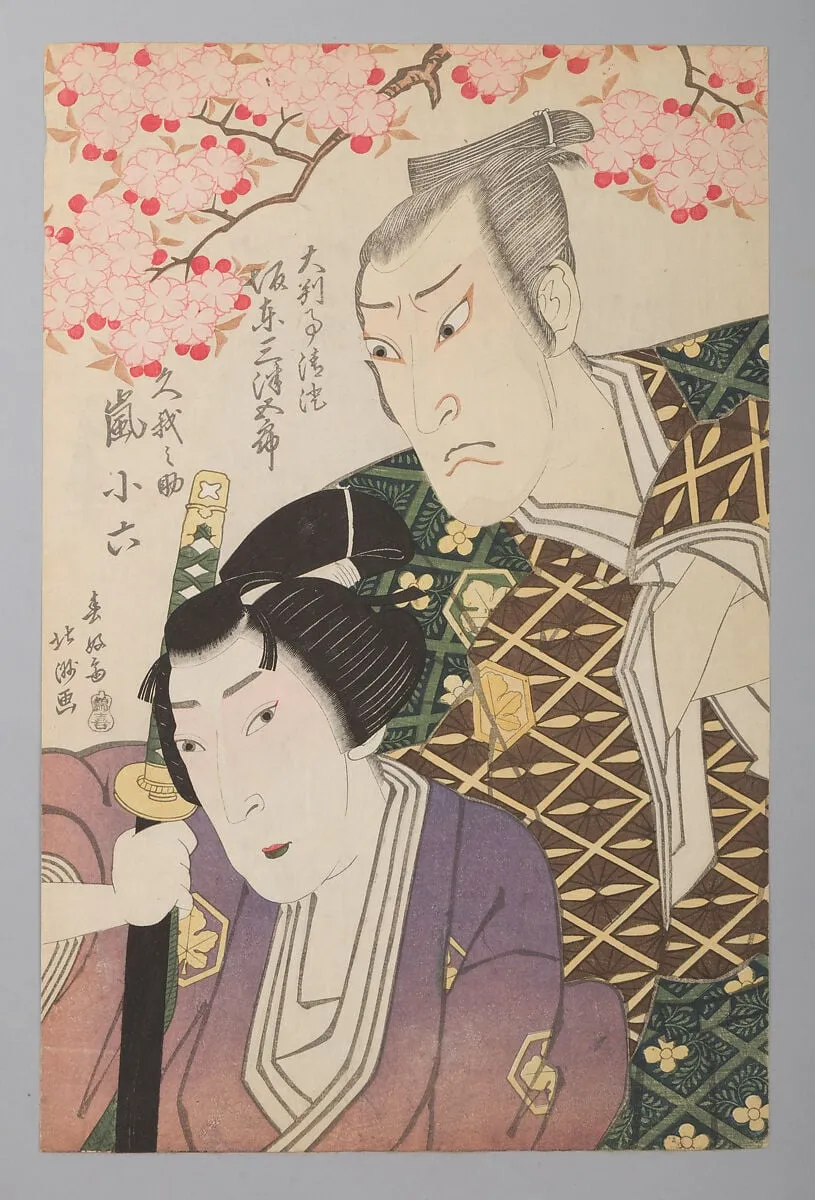
「大判事清澄 坂東三津五郎」(三代)・「久我之助 嵐小六」(四代)|Bandō Mitsugorō III as Daihanji Kiyozumi and Arashi Koroku IV as Koganosuke is an ink print by the Romanticist artist Shunkōsai Hokushū. It dates from 1821 and is held in the collection of the Metropolitan Museum of Art.
About this work
Subject & Meaning
The print portrays the kabuki actors Bandō Mitsugorō III as the role Daihanji Kiyozumi and Arashi Koroku IV as Koganosuke, characters drawn from the drama Imoseyama Onna Teikin. Their costumes and gestures reference a dramatic scene of mistaken identity and romantic entanglement set on Mount Imose, a narrative that underscores themes of love, duty, and the blurred boundaries between illusion and reality in the theatrical world. The work thus functions as a visual study of the archetypal hero and lover within Edo‑period stagecraft, using recognizable stage roles to convey deeper emotional and moral contrasts.
Technique & Style
The work is a right‑sheet ōban woodblock print (nishiki-e) from a diptych, executed in ink and multiple color blocks on paper.
The work is a right‑sheet ōban woodblock print (nishiki-e) from a diptych, executed in ink and multiple color blocks on paper. As a yakusha-e portrait by Shunkōsai Hokushū, it employs the characteristic ukiyo-e technique of bold, black outlines defining the actors’ faces and costumes, with flat, saturated areas of pigment applied via separate blocks for each hue. The vertical format emphasizes the standing figures, while the delicate gradation of color and fine linework reflect the refined printing standards of early‑19th‑century Edo. The piece exemplifies the stylized yet dynamic representation of kabuki performers typical of the period.
History & Provenance
Created in 1821 by the artist Shunkōsai Hokushū, this work is the right sheet of a vertical ōban diptych executed in ink and color on paper. The print depicts the actors Bandō Mitsugorō III and Arashi Koroku IV in roles from the play Imoseyama Onna Teikin. While specific details regarding its original commission or early ownership chain are not provided in the available records, the piece is currently held in the collection of the Metropolitan Museum of Art. It is classified as a nishiki-e within the yakusha-e genre of ukiyo-e.
This woodblock print by Shunkōsai Hokushū is held in the collection of the Metropolitan Museum of Art. Created in 1821, the work serves as the right sheet of a diptych depicting actors Bandō Mitsugorō III and Arashi Koroku IV. The provided sources confirm the artwork's institutional location but do not contain specific inventory or accession numbers, nor do they list any past or current exhibition history for this piece.
Overview
Created in 1821 by the Edo‑period printmaker Shunkōsai Hokushū, this vertical ōban diptych presents a pair of kabuki actors in the midst of a dramatic tableau. Executed as a nishiki-e woodblock print, the work measures a single sheet and combines ink with vivid pigments on paper, capturing a moment of theatrical action in a format that was widely collected by contemporary audiences.
Context
The work reflects the symbiotic relationship between kabuki theatre and ukiyo‑e publishing, where actors’ fame boosted print sales and prints, in turn, promoted performances. By documenting specific roles and stage costumes, such prints serve as visual records of Edo‑era theatrical conventions, informing modern scholarship on costume design, performance practice, and the commercial culture surrounding the arts.
Artist & collection

Artist
Shunkōsai Hokushū spent his life in Osaka, where the city’s lively theater scene shaped his work.

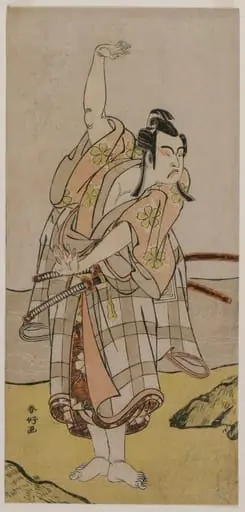 Actor Ichikawa Yaozō II as Sakuramaru
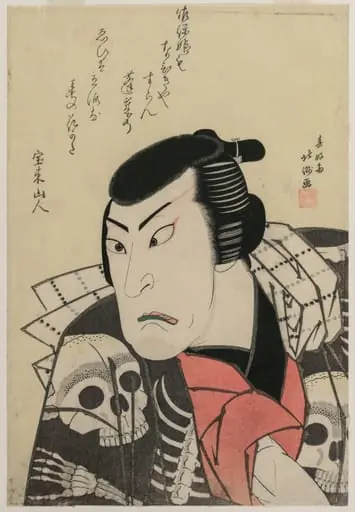 Actor Ichikawa Ebijūrō I as Tōken (China Dog) Jūbei, in the play Red and Purple, Rich Dyes of Osaka (Benimurasaki ai de someage)
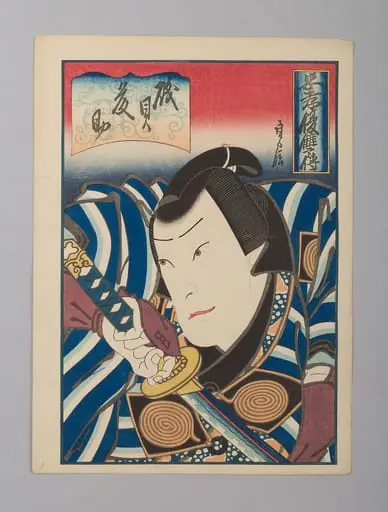 「忠孝復讐傳 磯貝藤助」二代目嵐璃珏|The Actor Arashi Rikaku II as Isogai Tōsuke, from the series Lives of Men who Carried Out Revenge for Loyalty or Filial Piety
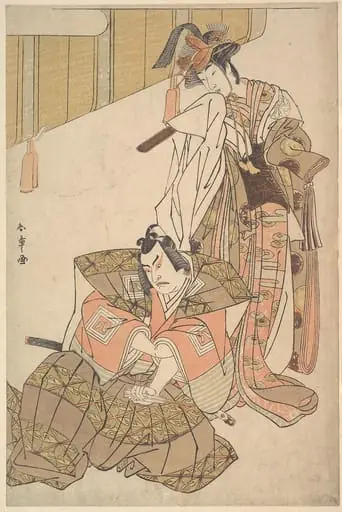 Untitled
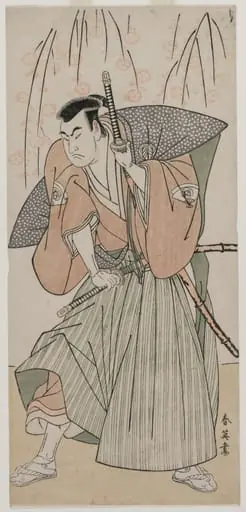 Onoe Matsusuke I as a Samurai Standing Beneath a Cherry Tree
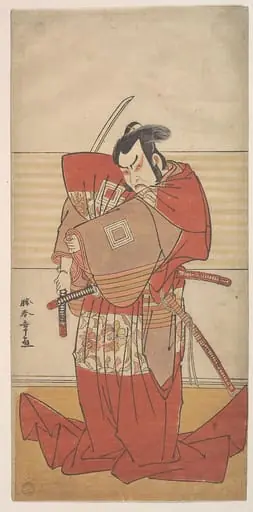 Untitled
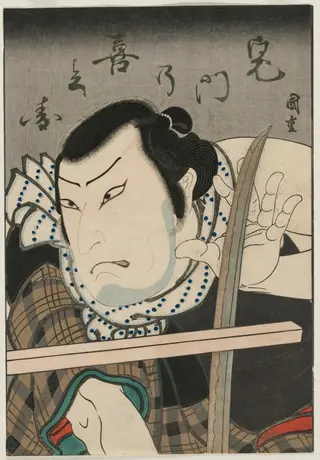 Actor as Kimon no Kihei
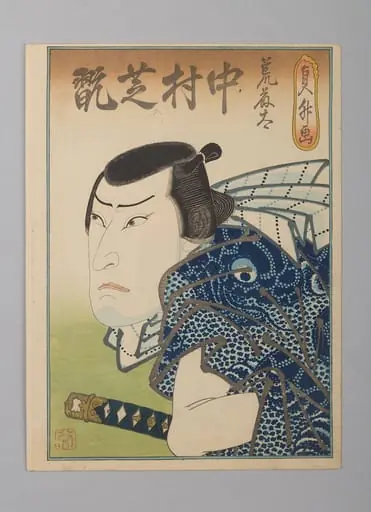
- 「荒藤太 中村芝翫」(四代)|Nakamura Shikan IV as the Fishmonger Aratota
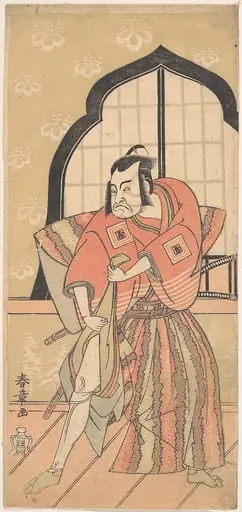 勝川春章画 三代目市川団蔵|Kabuki Actor Ichikawa Danzō III
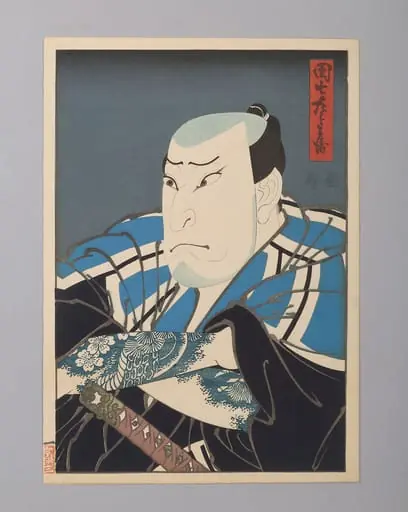 「団七九郎兵衛」|Nakamura Utaemon IV as Danshichi Kurobei
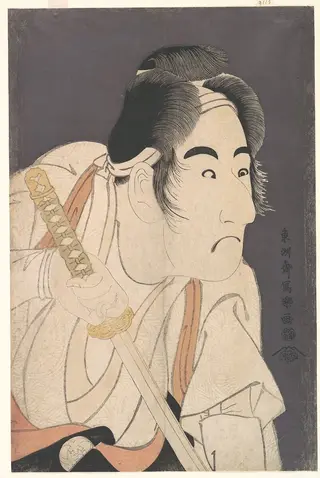 東洲斎写楽画 二世坂東三津五郎の石井源蔵 『花菖蒲文禄曽我』|Bandō Mitsugorō II as Ishii Genzō in the Play "Hana-ayame Bunroku Soga"
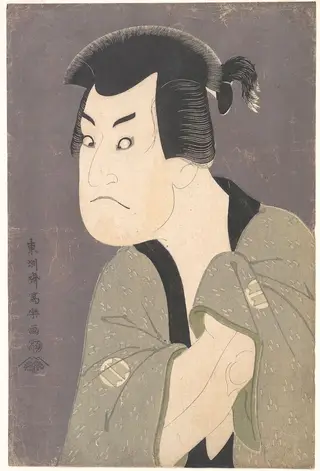 東洲斎写楽画 三世坂田半五郎の藤川水右衛門 『花菖蒲文禄曽我』|Sakata Hangorō III as Fujikawa Mizuemon in the Play "Hana Ayame Bunroku Soga"