Artwork
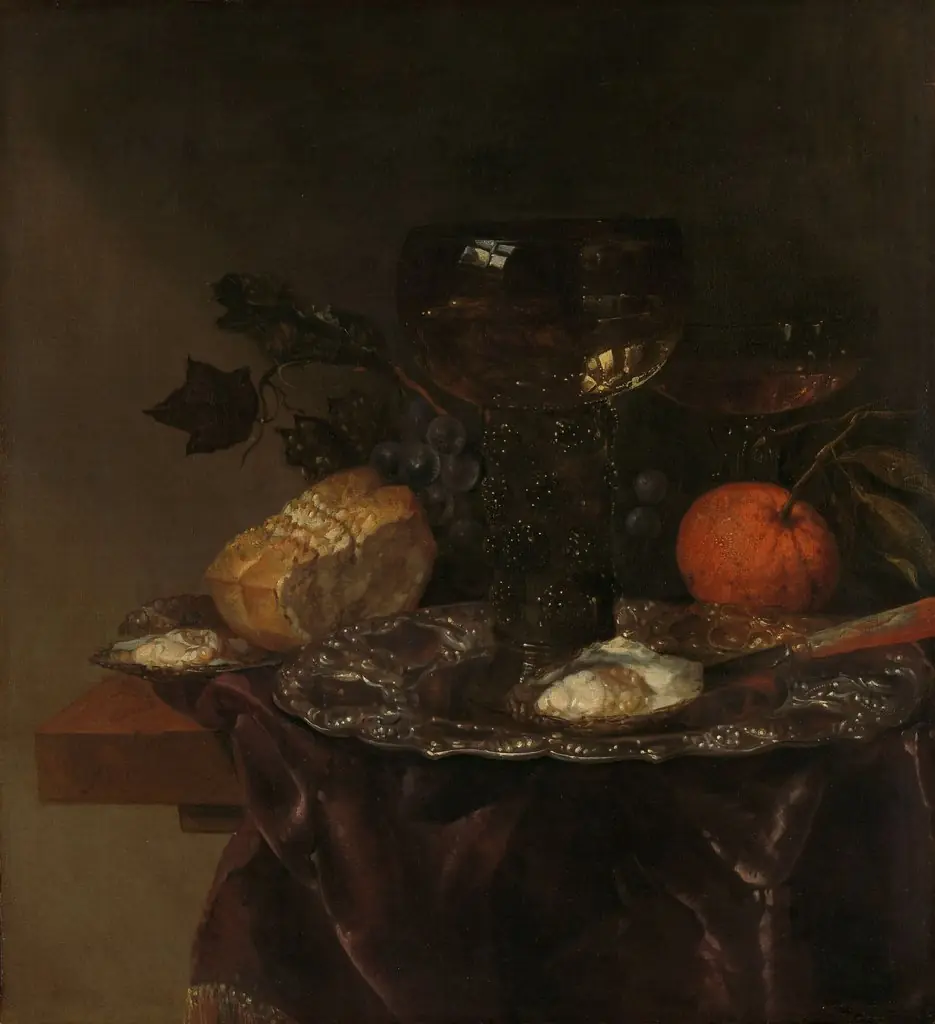
Still Life with Silver-gilt Bekerschroef with Roemer
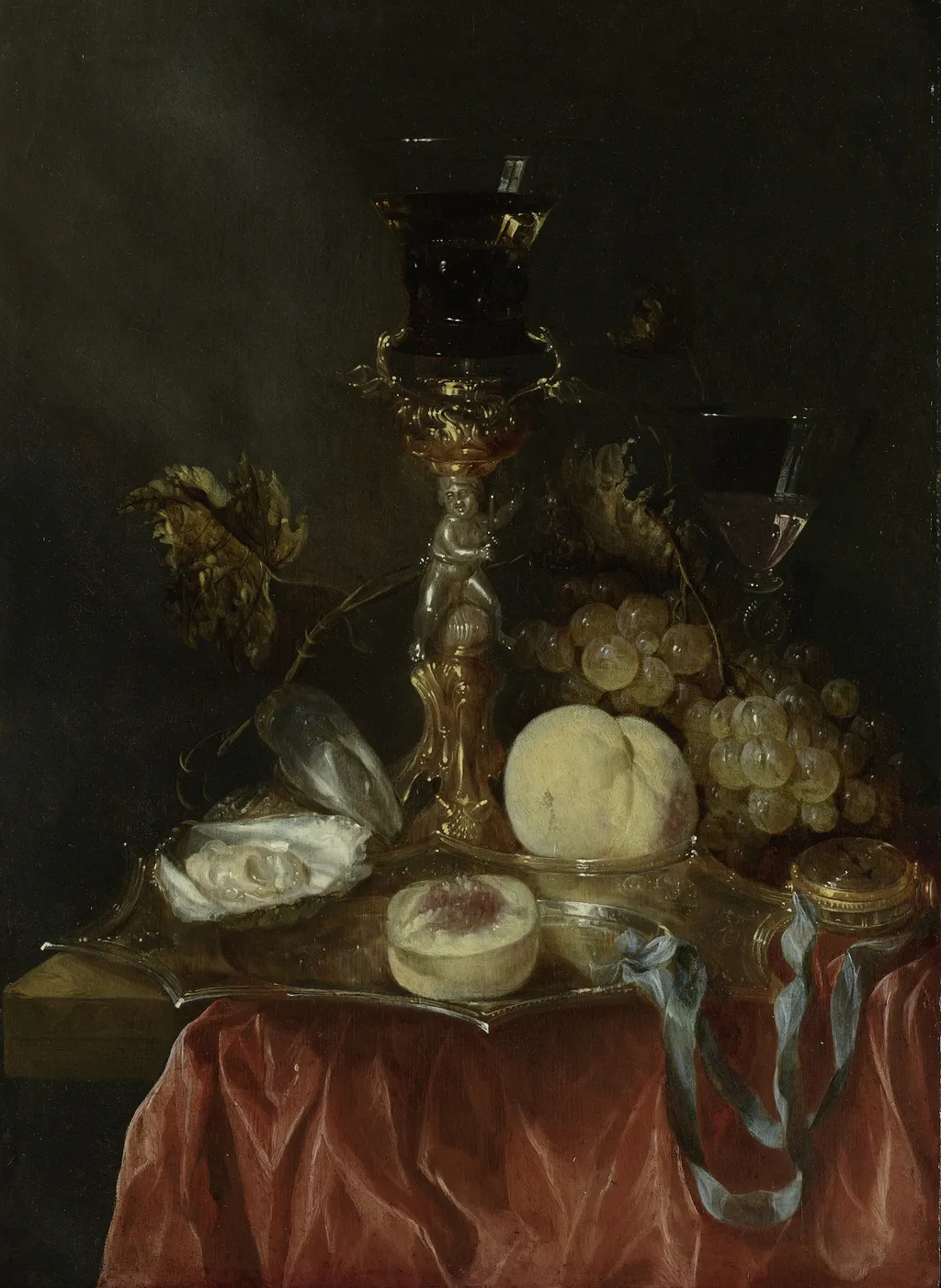
Still Life with Silver-gilt Bekerschroef with Roemer is an oil painting by the Dutch Golden Age artist Abraham van Beijeren. It dates from 1650 and is held in the collection of the Rijksmuseum.
About this work
Subject & Meaning
The depicted objects symbolize abundance and the fleeting nature of material wealth, reflecting themes of transience common in 17th‑century Dutch art.
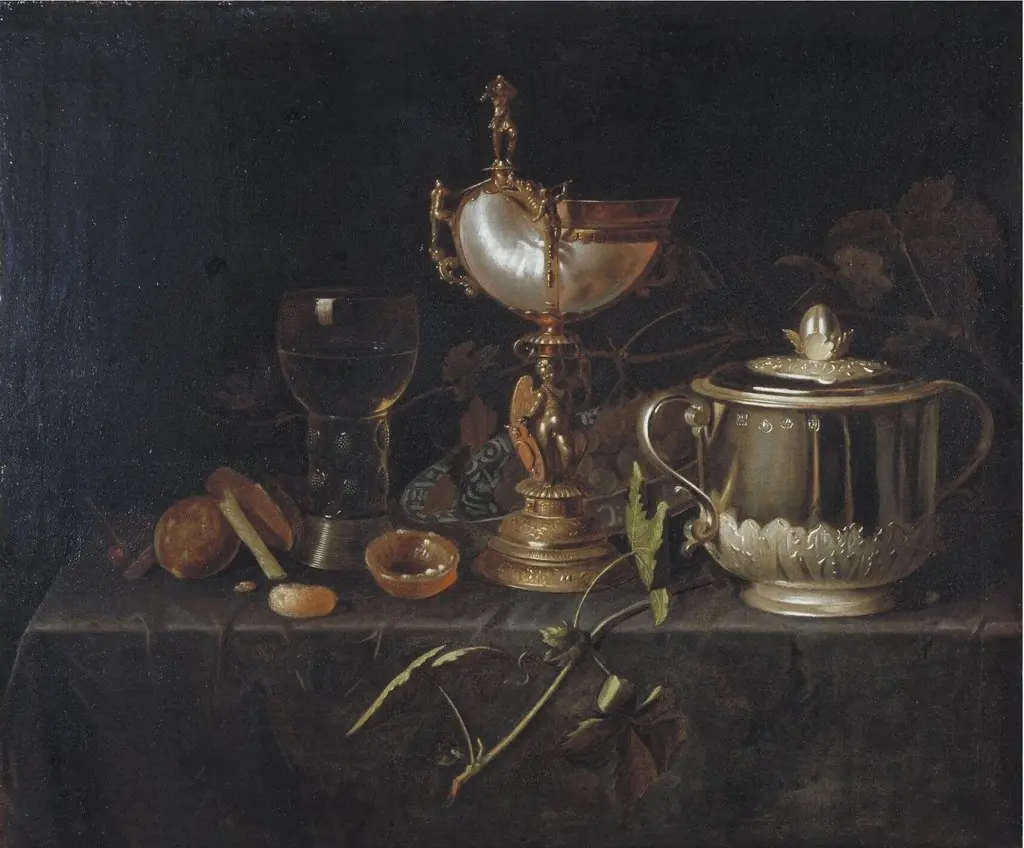
The painting shows a silver-gilt goblet holder holding a stemmed glass, known as a roemer, alongside a silver beaker. This arrangement is typical of Dutch Golden Age still lifes that celebrate luxury tableware and the pleasures of convivial drinking. The depicted objects symbolize abundance and the fleeting nature of material wealth, reflecting themes of transience common in 17th‑century Dutch art.
The composition emphasizes the tactile qualities of metal and glass, inviting viewers to contemplate the interplay of light and texture. By including these refined vessels, the work alludes to social gatherings and the cultural appreciation of fine craftsmanship in the Netherlands during the mid‑1600s.
Technique & Style
Abraham van Beijeren executed this 1650 still life using oil paint on a wooden panel. The work measures 50.2 cm in height and 36.3 cm in width. As a representation of the still life genre, the composition prominently features a silver-gilt goblet holder, known as a bekerschroef, paired with a roemer glass.
The choice of oil on panel allows for the rich, reflective textures characteristic of van Beijeren's approach to depicting precious metalwork and glassware.
History & Provenance
The painting Still Life with Silver-gilt Bekerschroef with Roemer was created by Abraham van Beijeren in 1650. Executed in oil paint on a panel, the work measures 50.2 cm in height and 36.3 cm in width. It currently belongs to the collection of the Rijksmuseum in Amsterdam.
The artwork depicts a goblet holder among other still life elements characteristic of the artist's genre work from this period.
Legacy
The painting's composition of a silver-gilt beaker and roemer has informed later still-life arrangements emphasizing reflective metal surfaces and chiaroscuro effects. Artists of the 18th century referenced its complex lighting when exploring domestic abundance in Dutch decorative works. Its presence in the Rijksmuseum collection has reinforced scholarly attention to van Beijeren's role in advancing genre painting during the Dutch Golden Age.
Overview
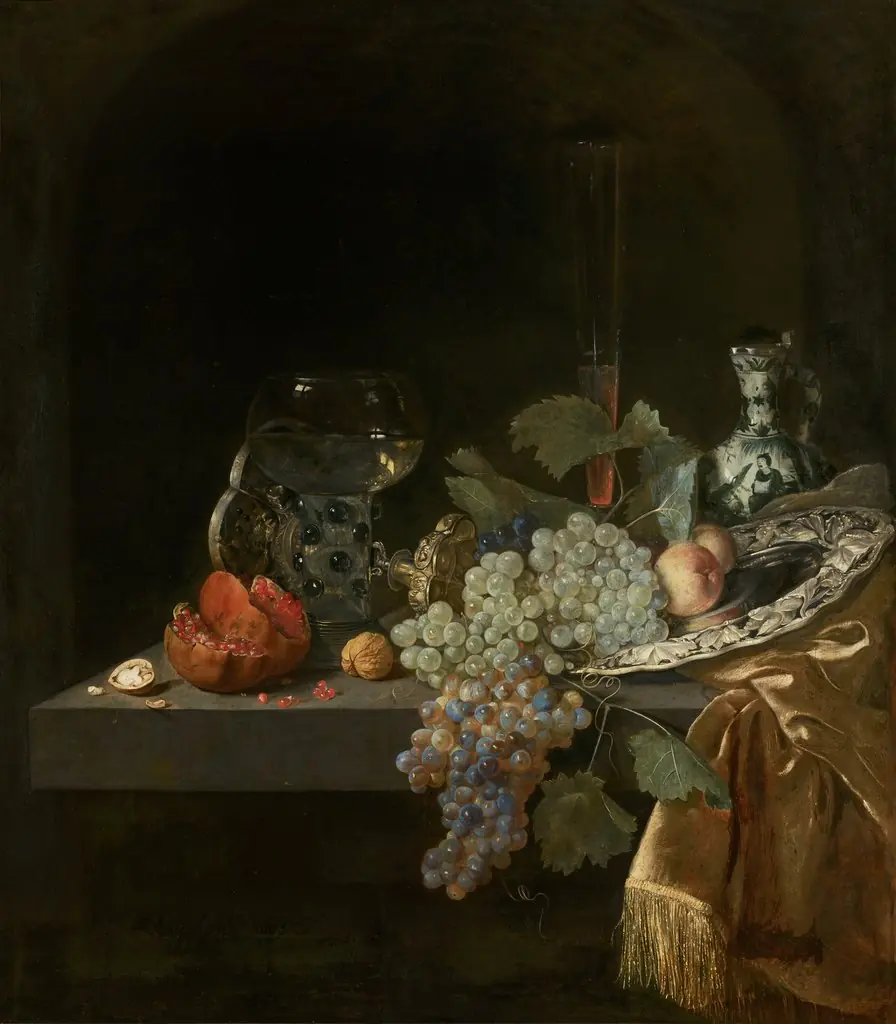
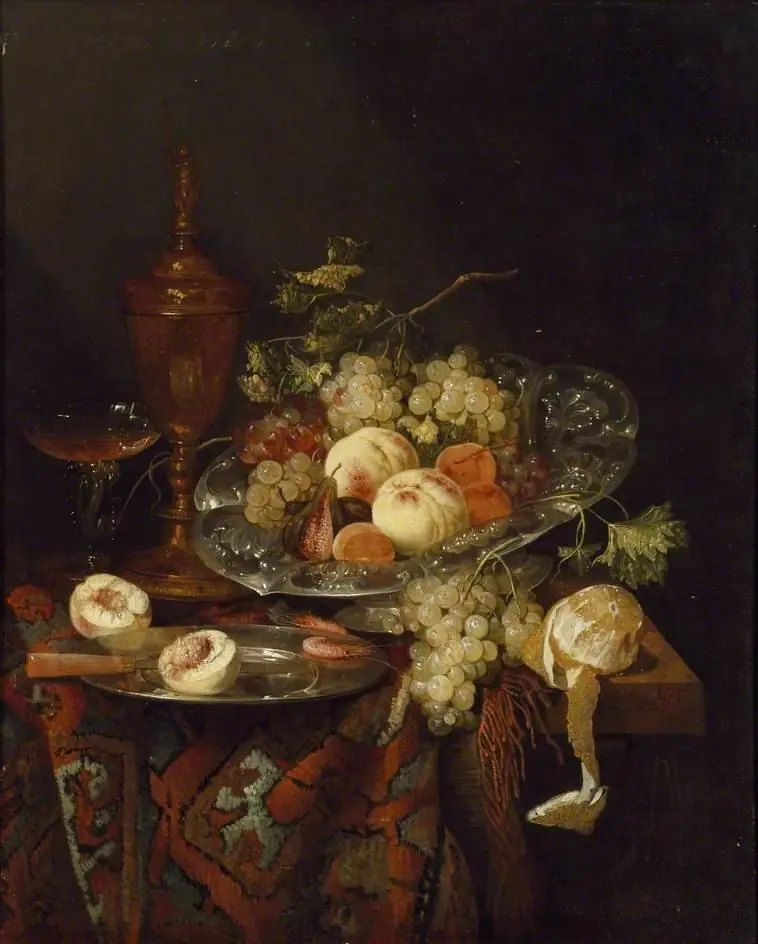
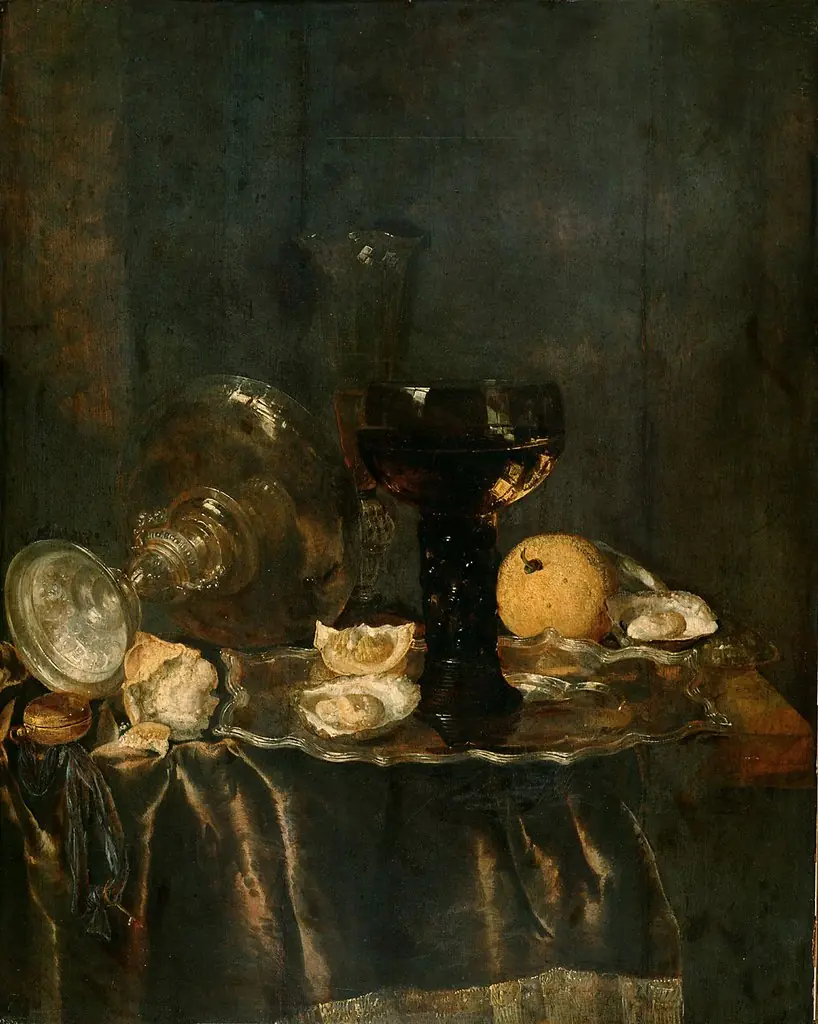
Created around 1650, this oil painting by Abraham van Beijeren presents a meticulously arranged still life. A darkened table draped in a deep red cloth supports a gleaming silver‑gilt bekerschroef holding a glass goblet, accompanied by grapes, a sliced peach, an opened oyster, and a round cheese. The nearly black background isolates the objects, emphasizing their texture and material richness.
Context
Abraham van Beijeren began his career as a marine artist before turning to still life, a genre that flourished in the Netherlands during the mid‑1600s. His works frequently showcase rare objects such as silver‑gilt bekerschroefs, reflecting the period’s fascination with exotic goods and the growing affluence of the merchant class.
Own this work as a print
Artist & collection
Artist
Abraham Hendriksz van Beijeren or Abraham van Beyeren (c. 1620, The Hague – March 1690, Overschie (Rotterdam)) was a Dutch Baroque painter of still lifes. Little recognized in his day and initially active as a marine…

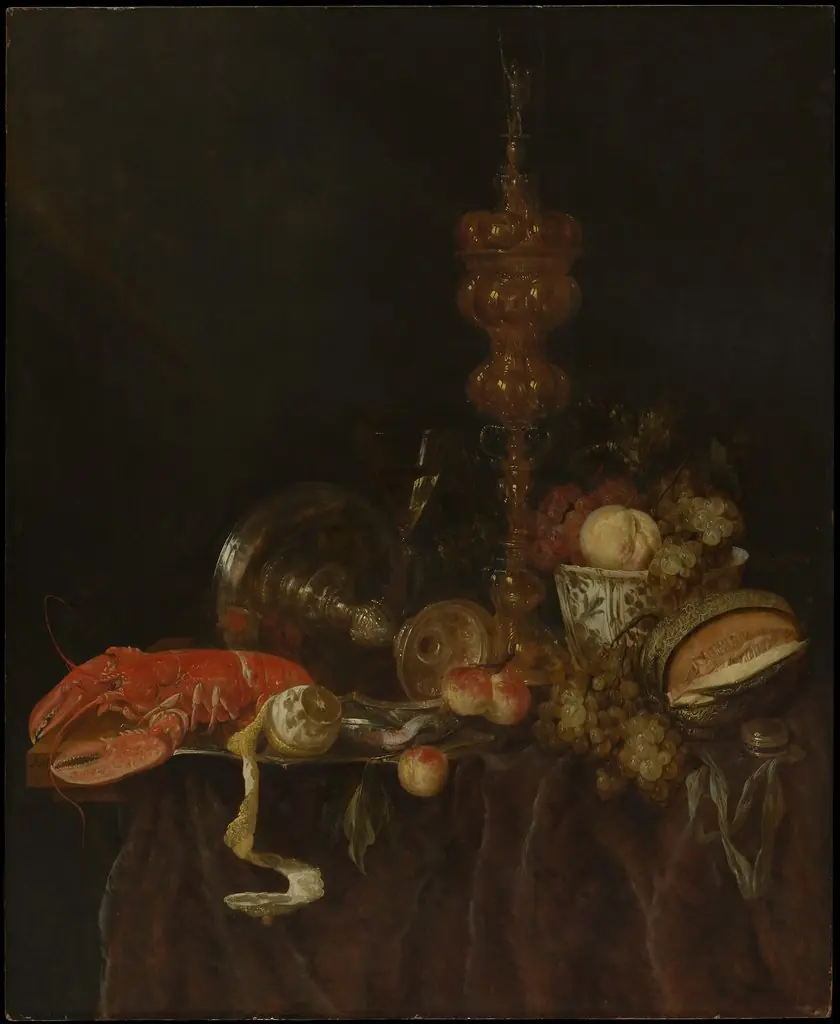 Still Life with Lobster and Fruit
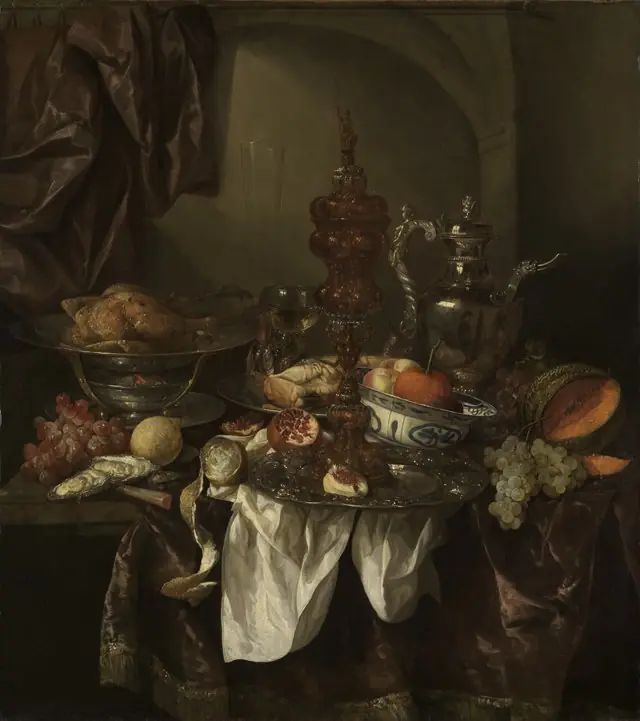 Still life with fruit, roast, silver- and glassware, porcelain and columbine cup on a dark tablecloth with white serviette
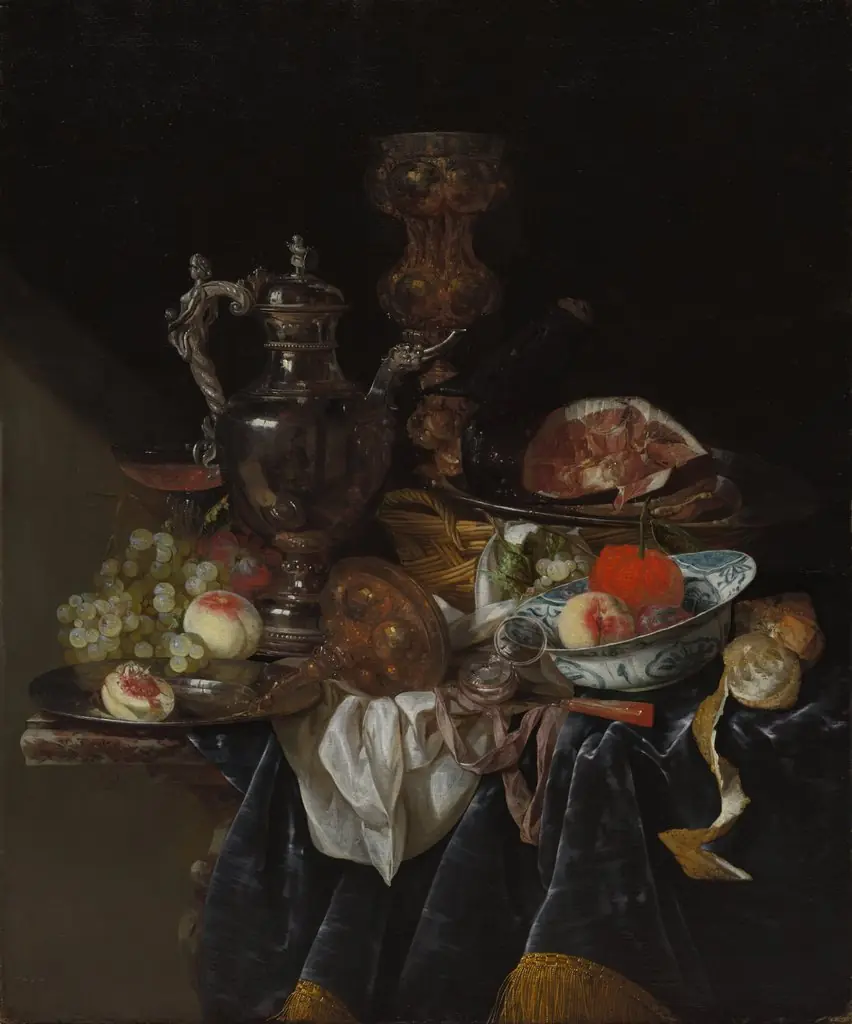 Silver Wine Jug, Ham, and Fruit
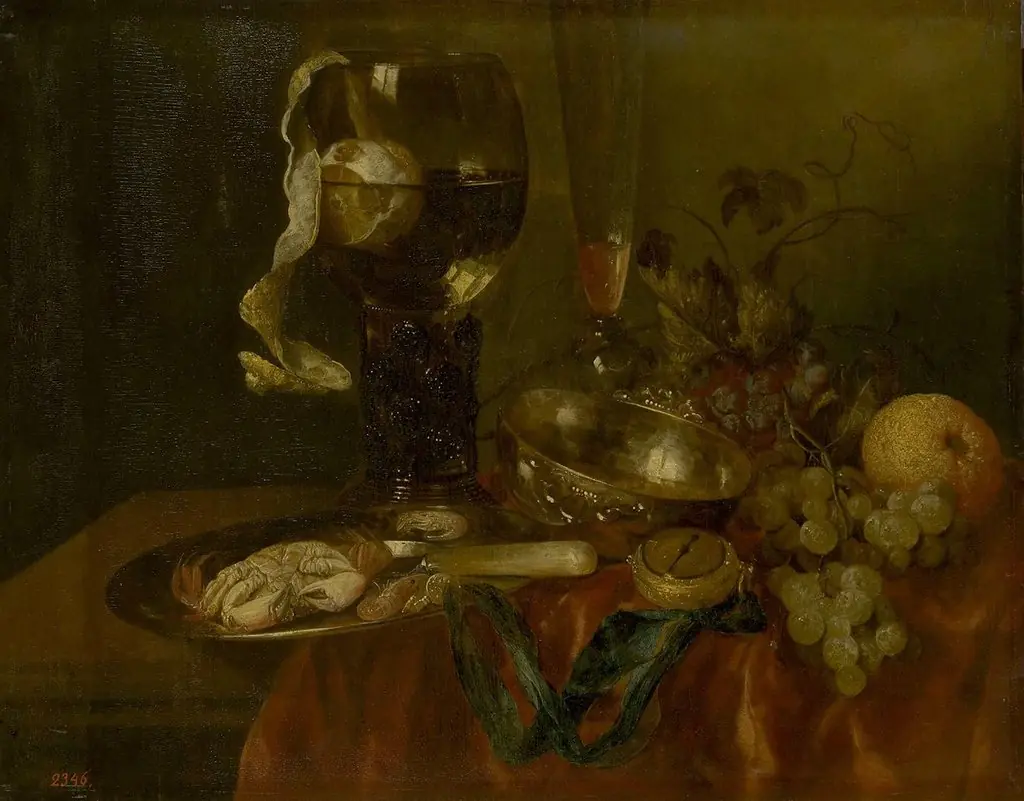 Snack (Still Life with Crab, Fruit and Clock)
 Still life with flowers
 Still life on a draped table with a sculpture of Venus in a niche behind a curtain
 still-life
 Stille life