Artwork
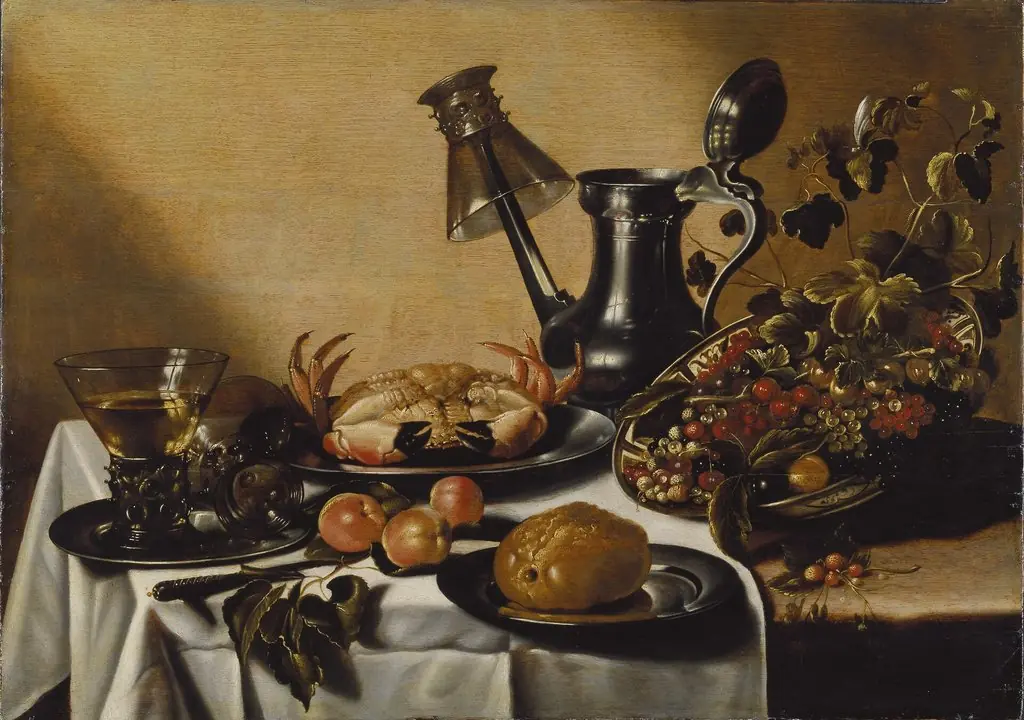
Still life with a "roemer", a fallen jug and a lobster
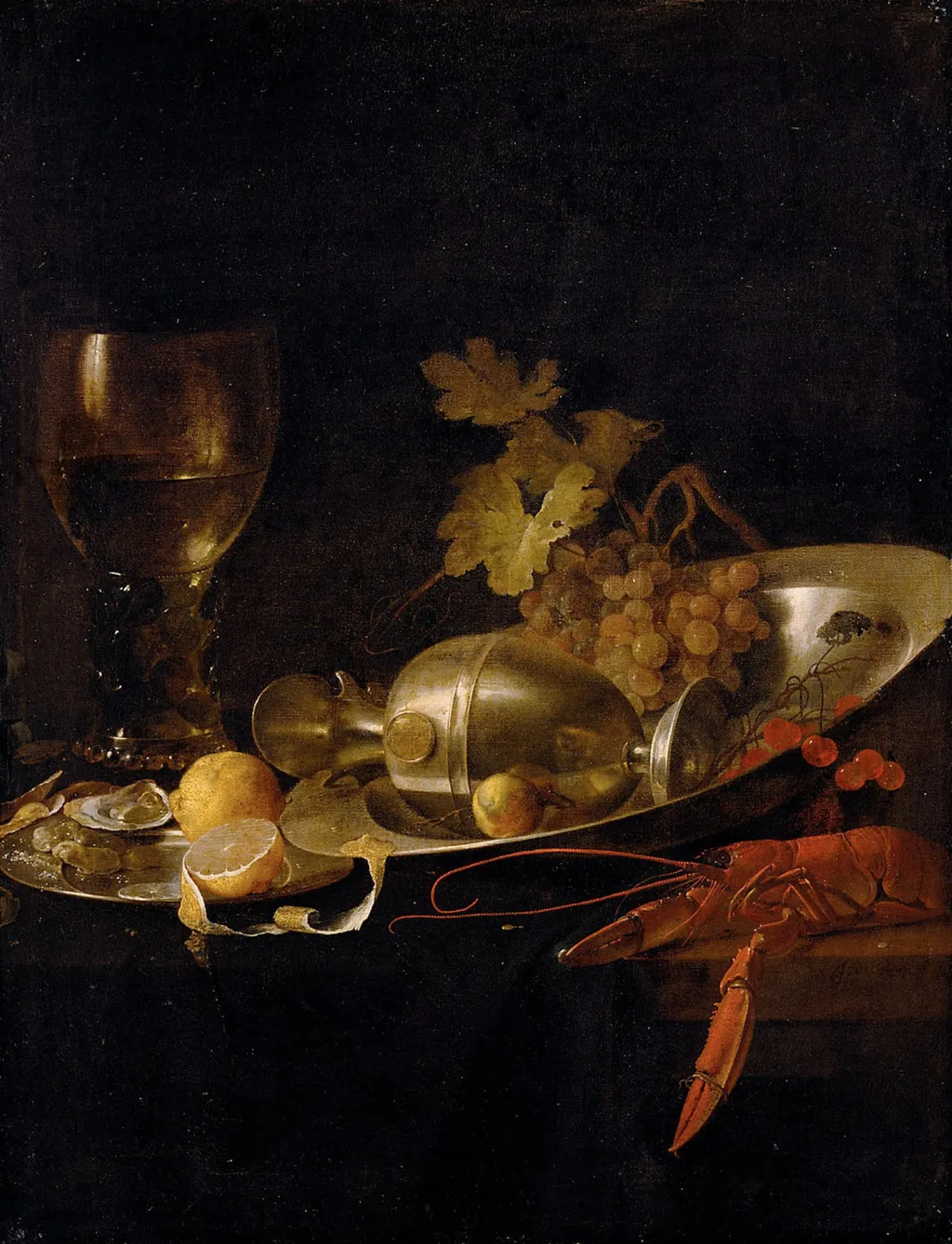
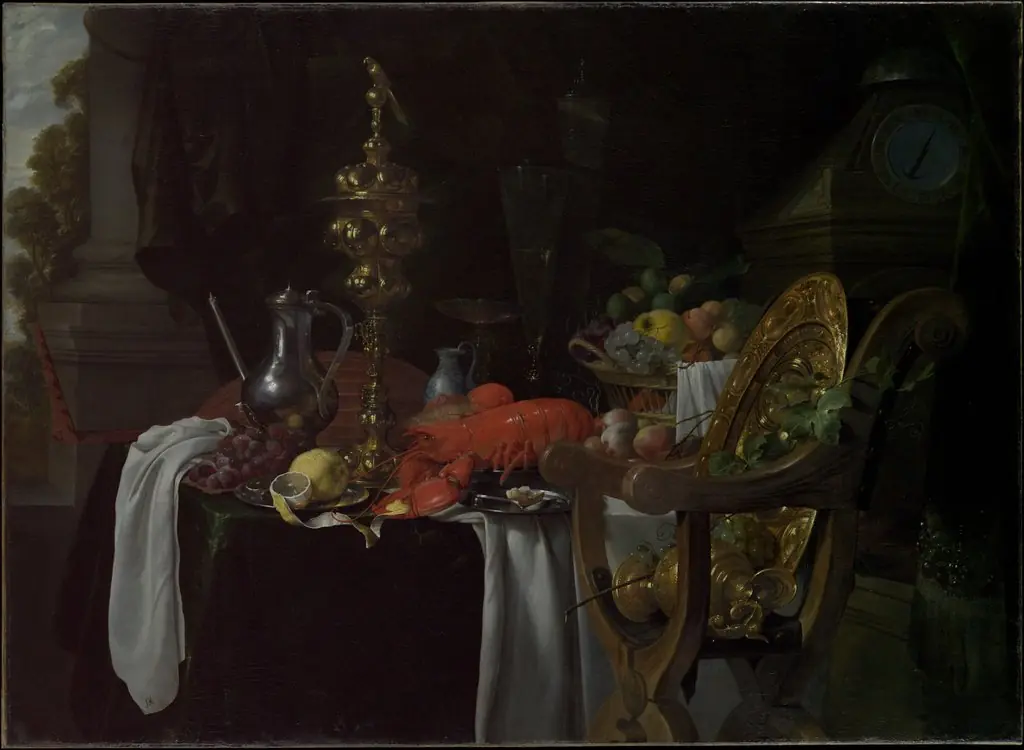
Still life with a "roemer", a fallen jug and a lobster is an oil painting by the Dutch Golden Age artist Jan Davidsz. de Heem. It dates from 1635 and is held in the collection of the Kunsthistorisches Museum. Jan Davidsz.
About this work
Subject & Meaning
Through the inclusion of a lemon, plate, and ewer, the work employs typical pronk still‑life symbols that warn of excess and celebrate transience.
The painting presents a sumptuous banquet of decay and luxury, combining a cracked roemer, an overturned jug, and a lobster to embody the fleeting nature of abundance and the certainty of mortality. Through the inclusion of a lemon, plate, and ewer, the work employs typical pronk still‑life symbols that warn of excess and celebrate transience. The composition reflects the artist’s fascination with texture and light while referencing the wealth of patrons such as Archduke Leopold Wilhelm and the Dutch‑English merchant James Hamilton, linking personal opulence to broader moral commentary.
The still‑life genre, popular in 17th‑century Holland, served both as a showcase of technical virtuosity and a vehicle for moral instruction, using everyday objects to convey deeper philosophical messages.
The work is housed in the Kunsthistorisches Museum, where it remains part of the collection of paintings acquired from notable early collectors.
Technique & Style
The work is executed in oil paint on canvas, a support measuring 78 cm in height by 60 cm in width. De Heem's handling reflects the conventions of the pronk still life genre, in which sumptuous objects such as a roemer (rummer), an ewer, a plate and a lemon are arranged to display painterly virtuosity and the rendering of varied textures and reflective surfaces. The medium of oil on canvas permitted the layered glazing and meticulous finish associated with this type of still life, allowing for the detailed depiction of glassware and the inclusion of a lobster as part of the composition.
No specific condition report is documented in the available sources.
History & Provenance
Jan Davidsz. de Heem executed this pronk still life in 1635, creating the oil painting on canvas during his early career. The work depicts a lavish arrangement featuring a roemer, a fallen ewer, a plate, and a lemon alongside a lobster.
The painting's ownership history includes possession by James Hamilton, the 1st Duke of Hamilton, before entering the collection of Archduke Leopold Wilhelm of Austria. It is currently held in the Kunsthistorisches Museum, where it remains part of the institution's permanent holdings.
Overview
Jan Davidsz. de Heem’s 1635 oil on canvas presents a meticulously arranged still‑life composition typical of the Dutch Golden Age. Central elements include a large, decorated roemer glass, a tipped ewer with its contents spilling, a vivid red lobster, and assorted fruit and tableware. The objects rest against a deep, muted backdrop that heightens their color and texture, inviting close observation.
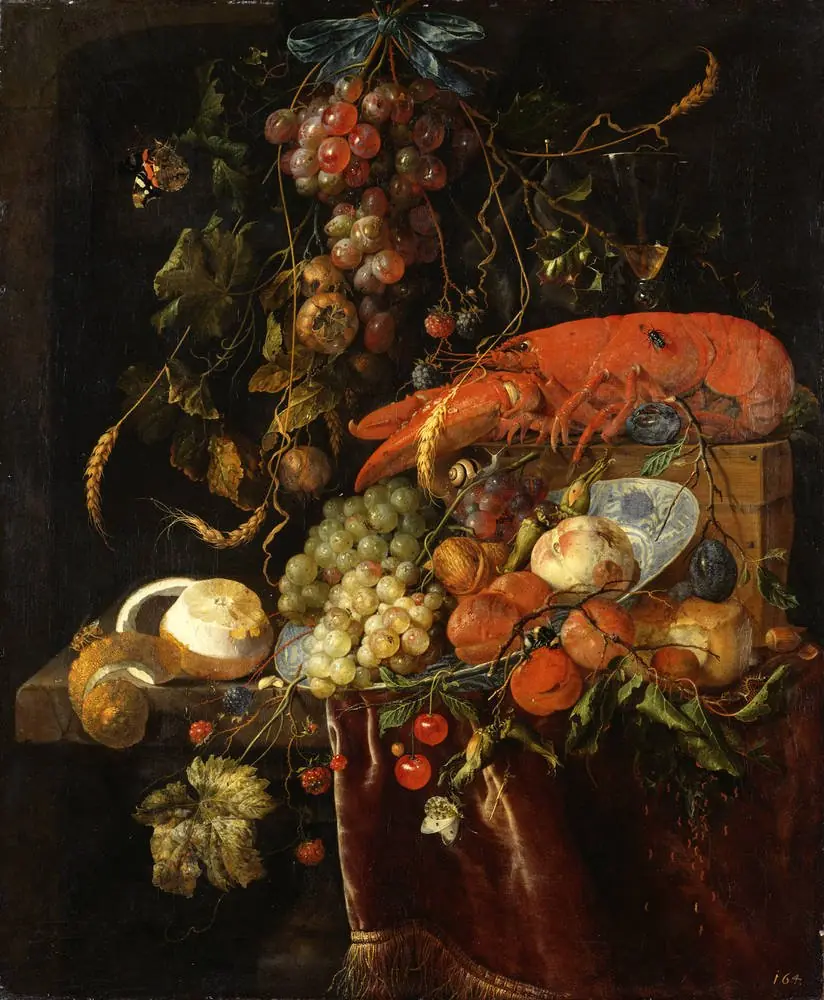
Own this work as a print
Artist & collection
Artist
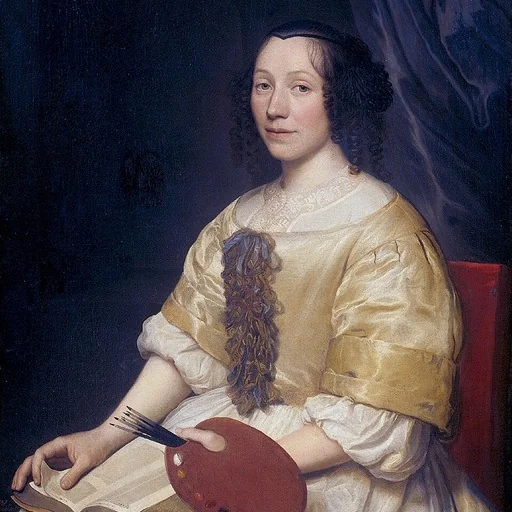
Maria van Oosterwijck (1630–1693), also spelled Oosterwyck, was a Dutch Golden Age painter, specialising in richly detailed flower paintings and other still lifes.

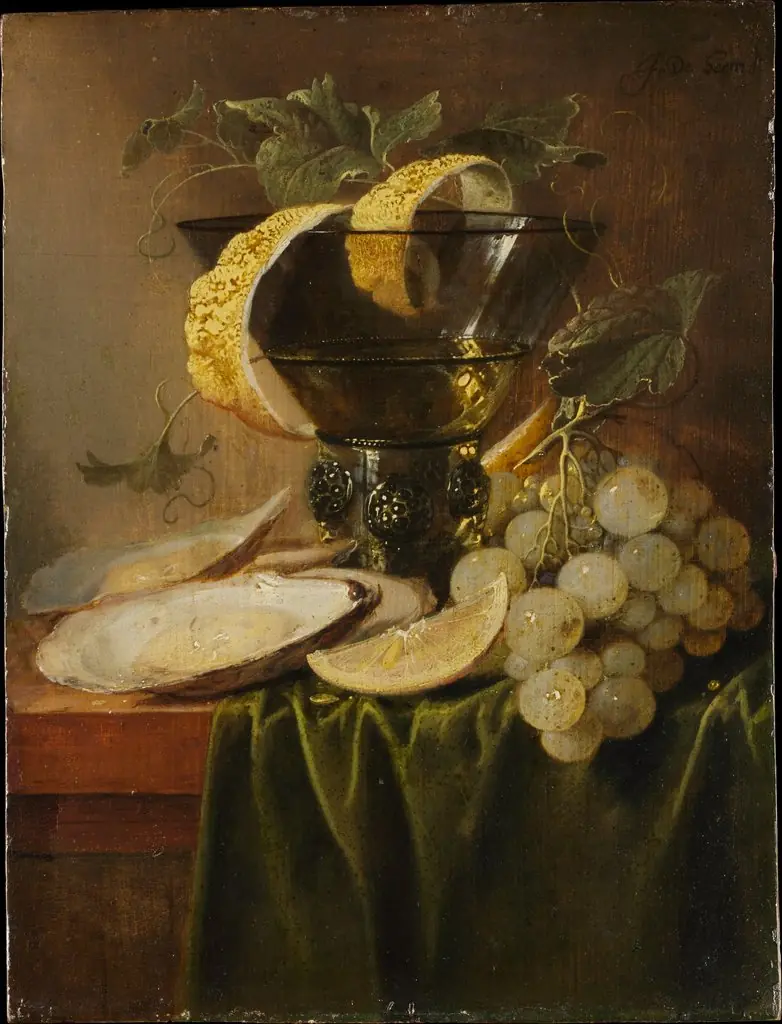
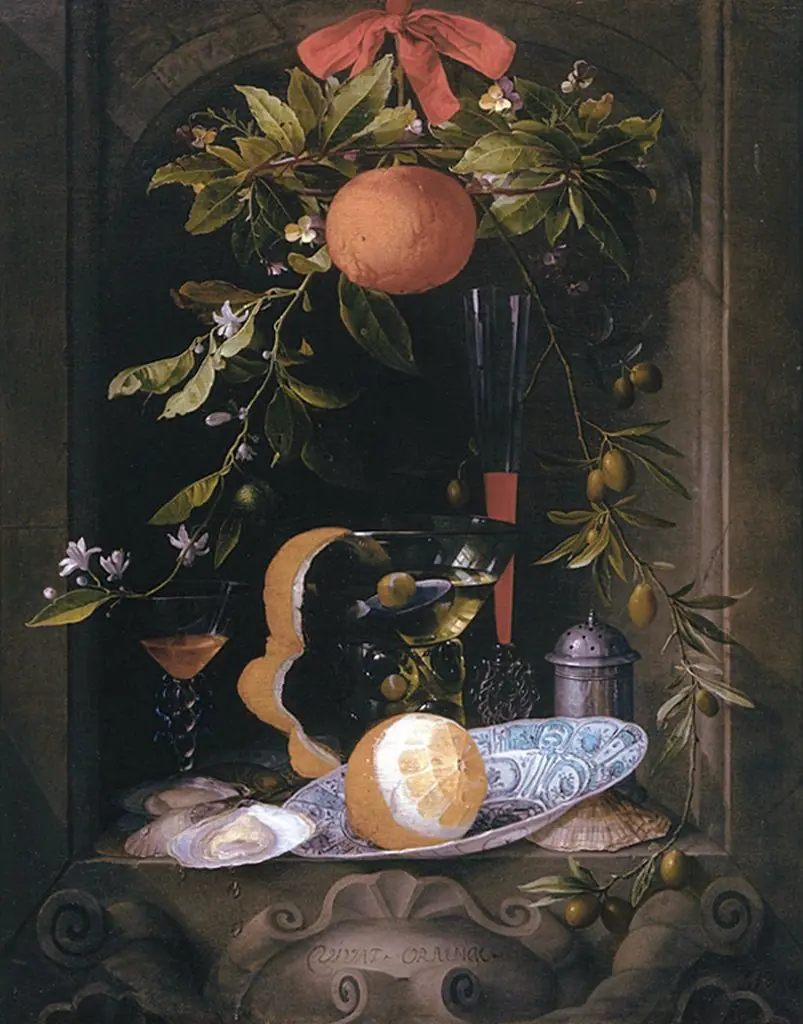
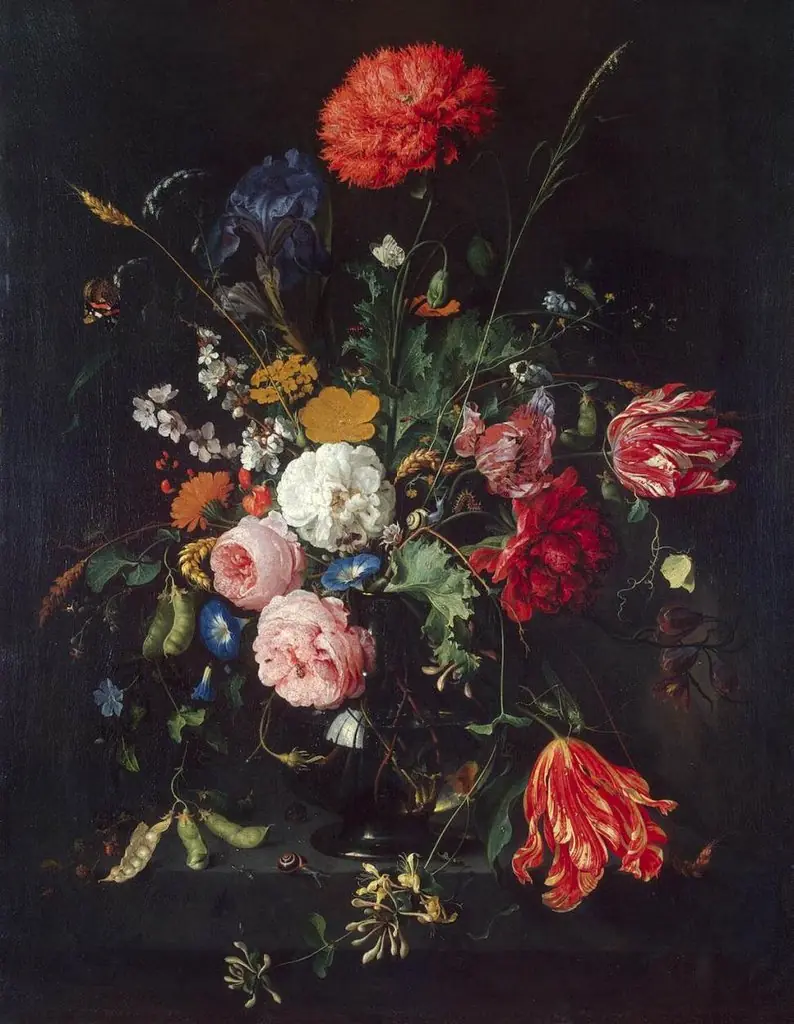
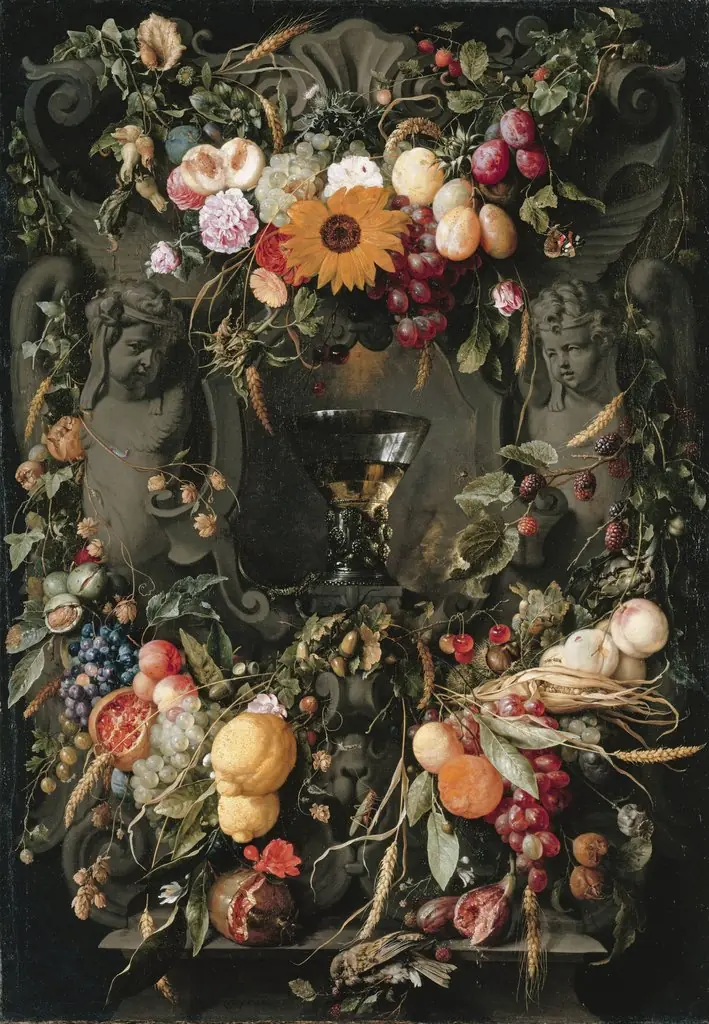
- Still Life with a Lobster
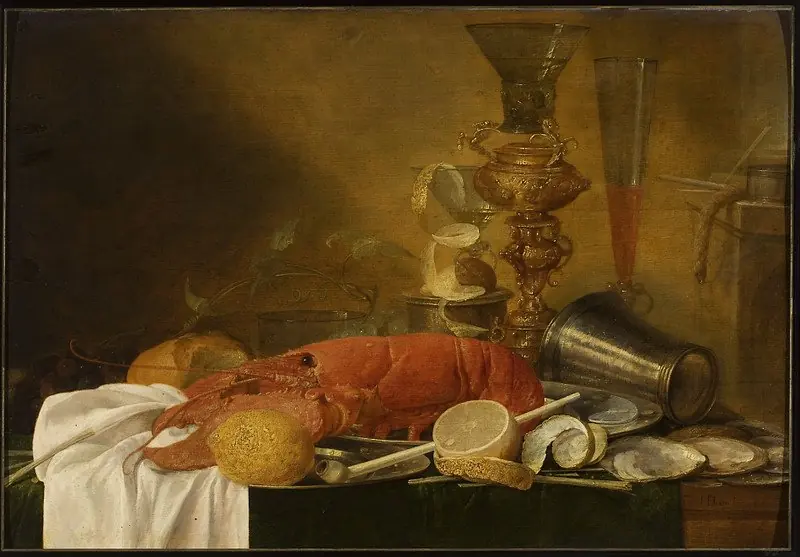 Still life with a lobster
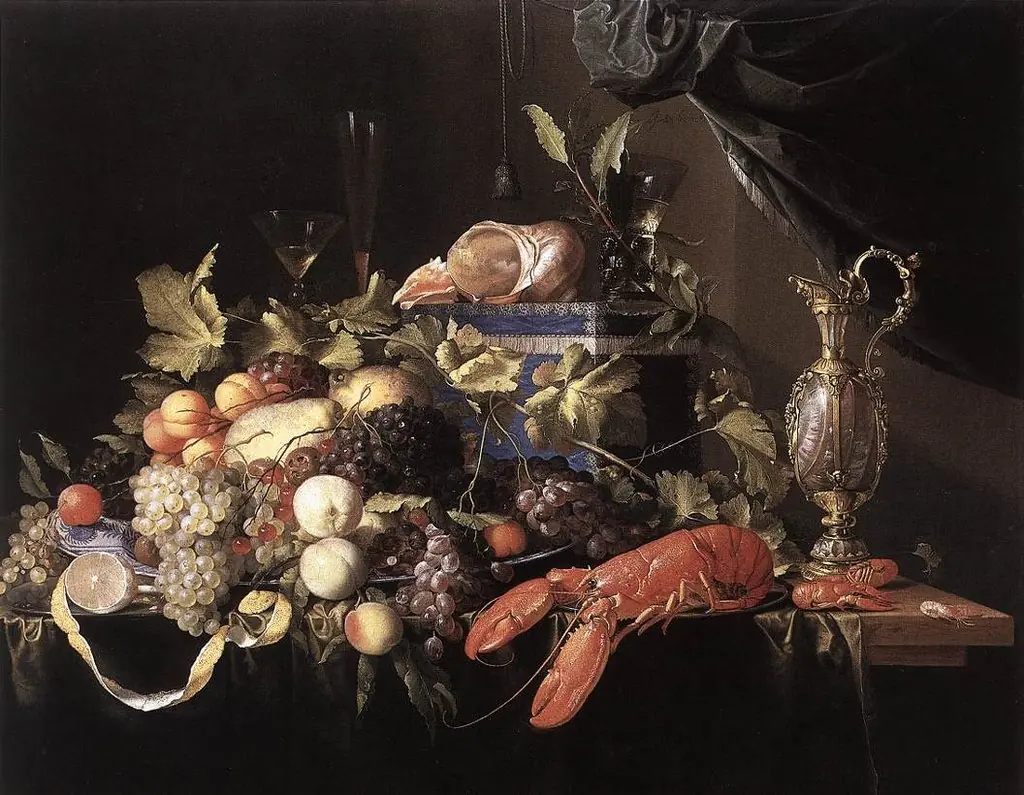 Still Life with Fruit and Lobster
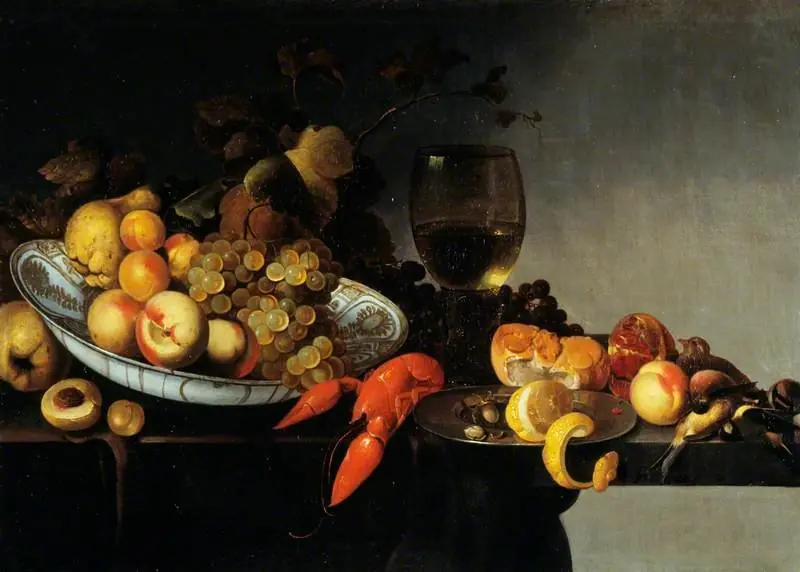 Still Life with Fruit, a Lobster and Dead Game
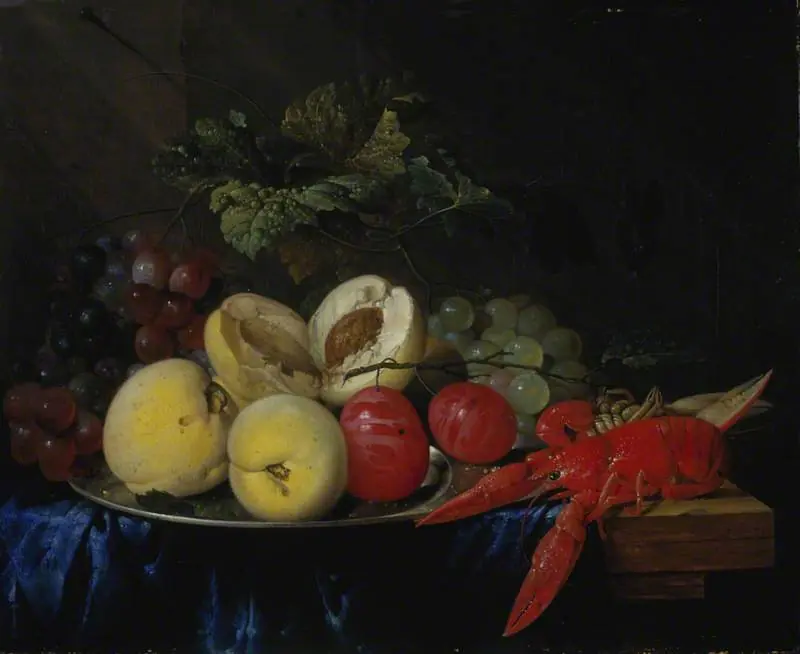 A Still-life with Fruit and Lobster
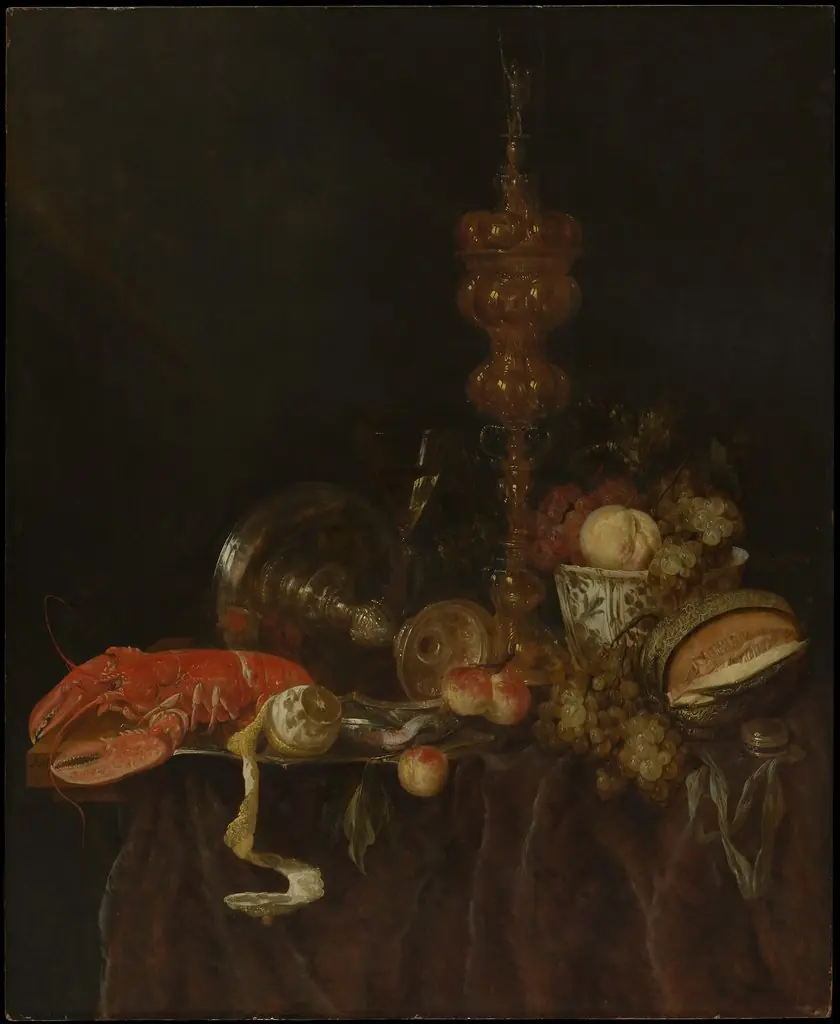 Still Life with Lobster and Fruit
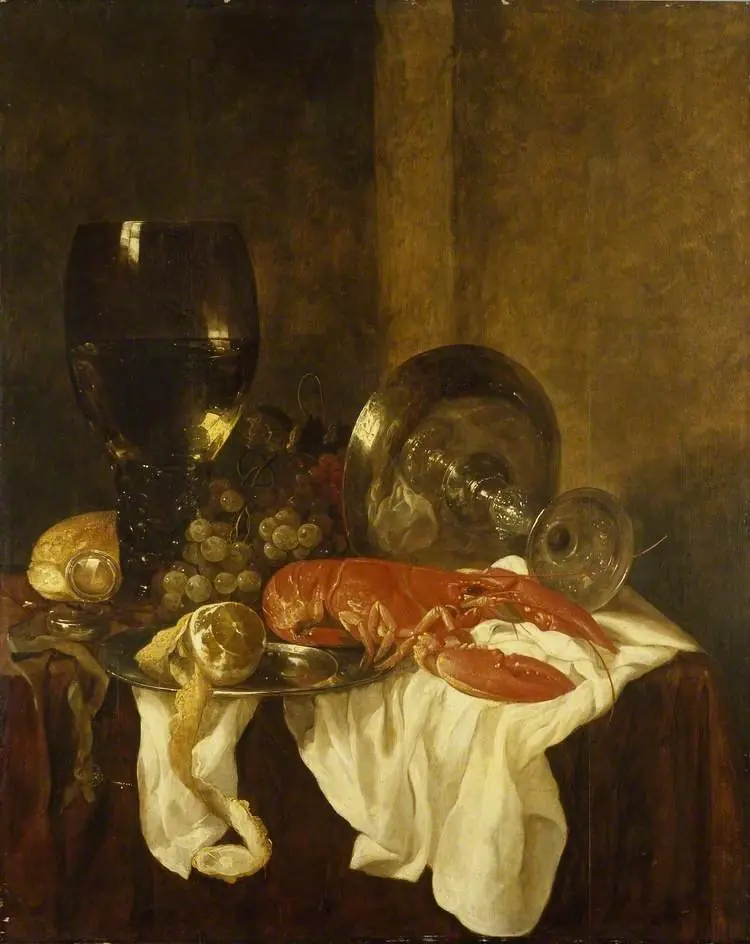 Still Life with a Lobster
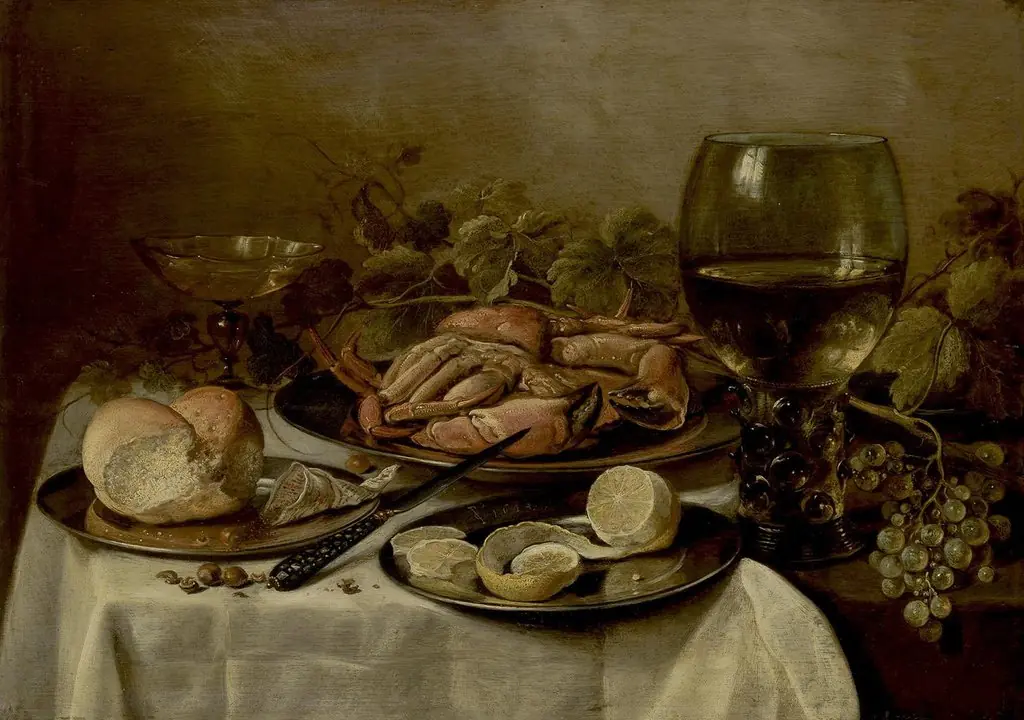 Still Life with Crab, Rummer and Grape
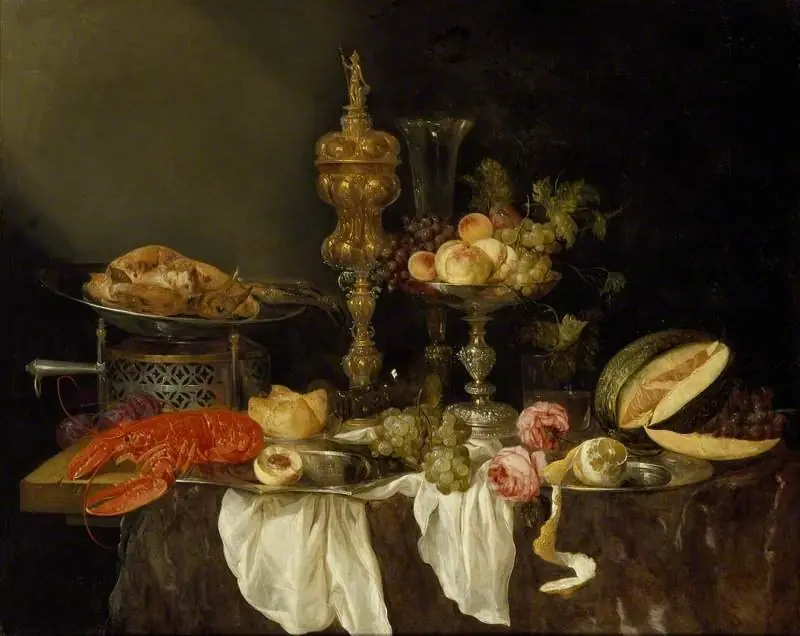 Still Life with a Lobster and Turkey
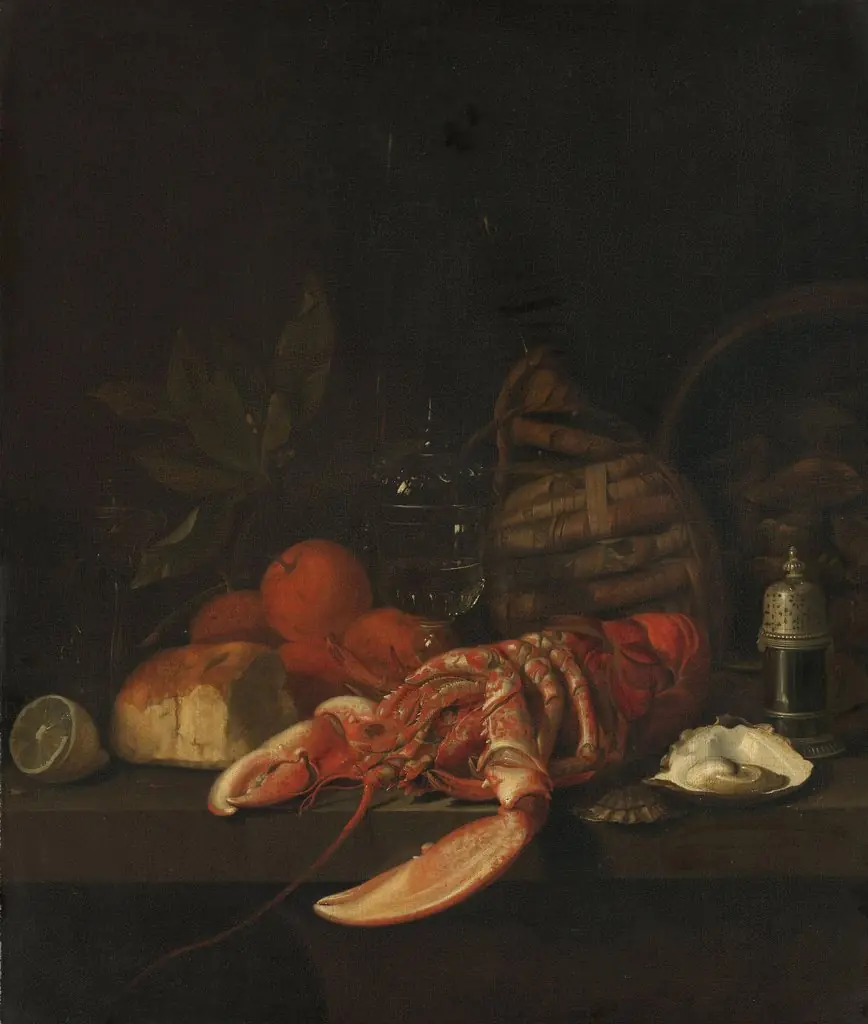 Still life with a lobster. oysters, bread, oranges, a lemon, a glass, a pepper shaker and a wine casket
 Still Life with Crab and Fruit