Artwork
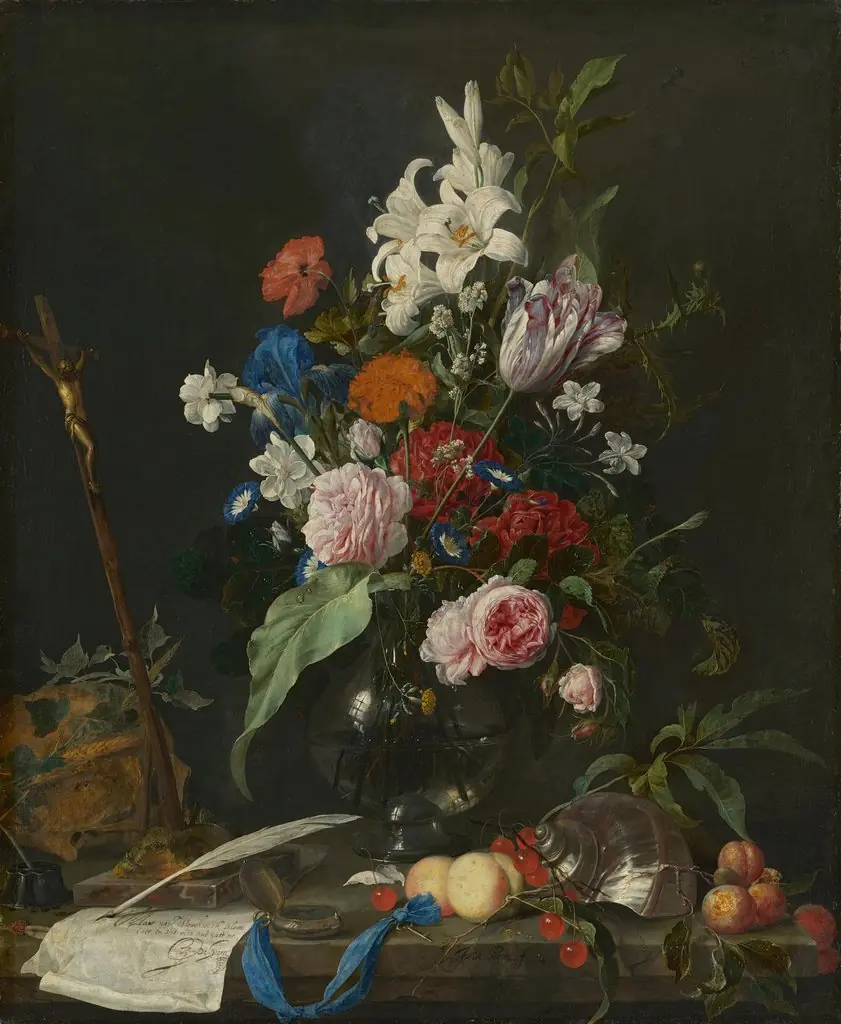
Flowers in a Vase
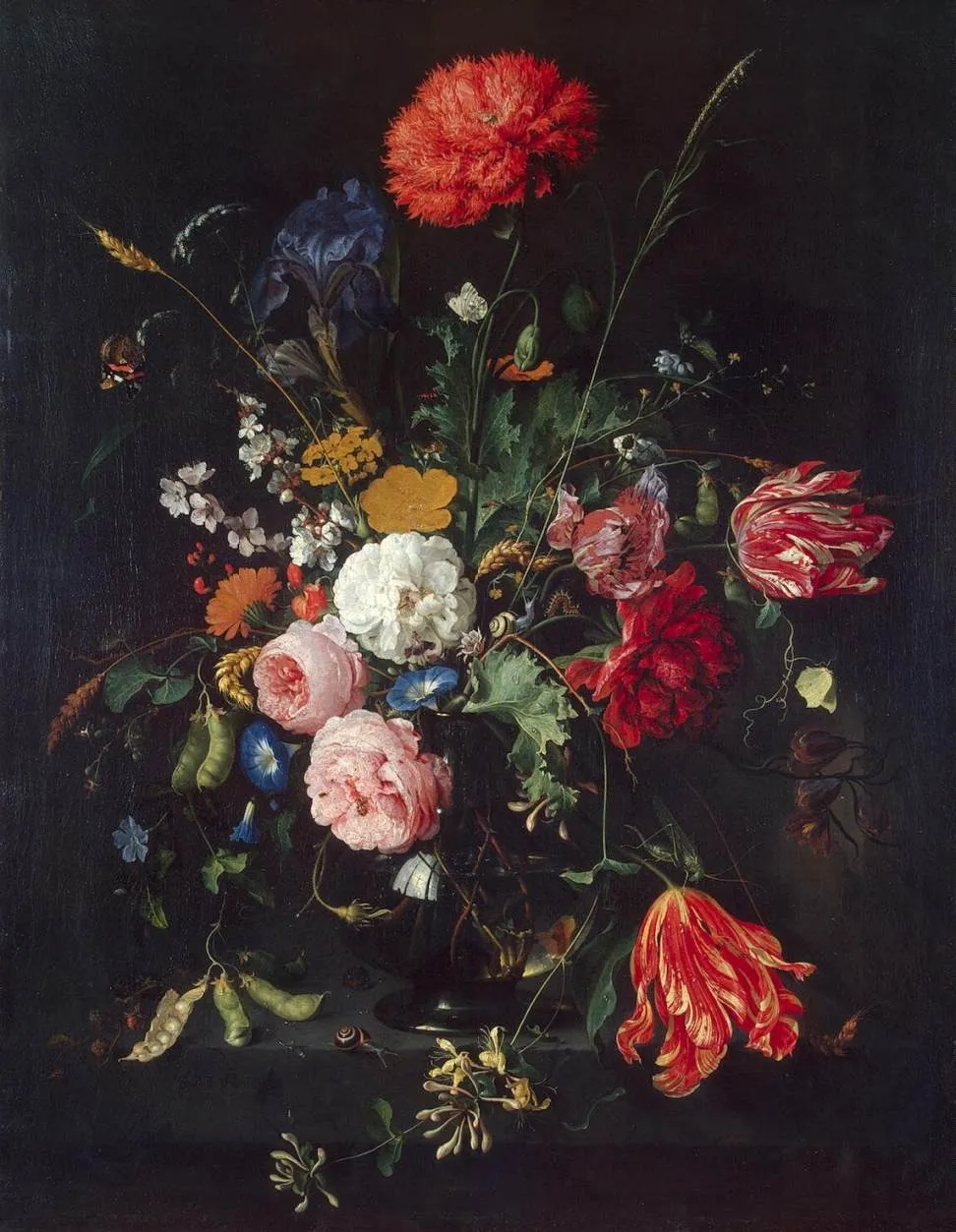
Flowers in a Vase is an oil painting by the Dutch Golden Age artist Jan Davidsz. de Heem. It dates from 1670 and is held in the collection of the Hermitage Museum. Jan Davidsz.
About this work
Subject & Meaning
Within Dutch still-life traditions of the late 17th century, such arrangements often carried symbolic meanings tied to transience and abundance.
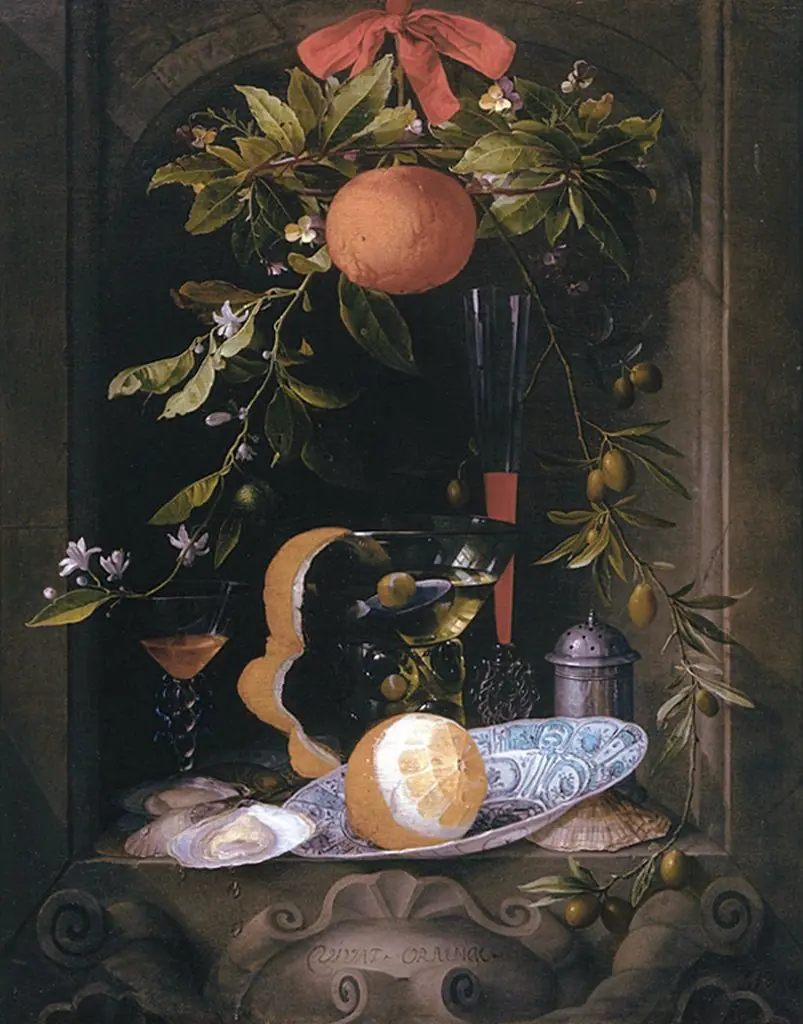
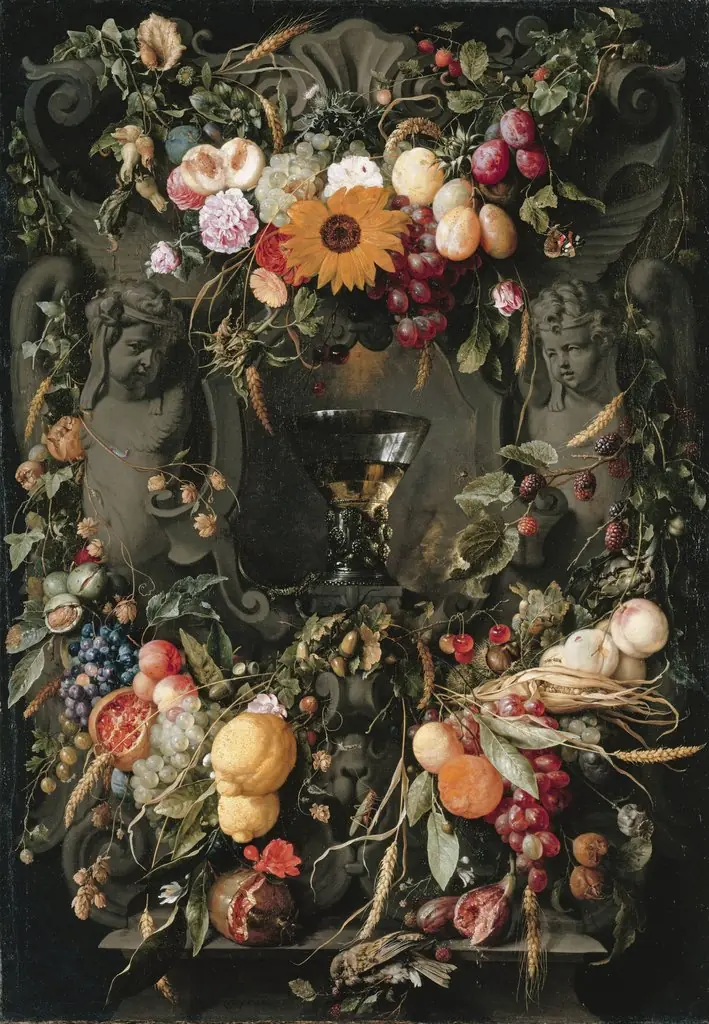
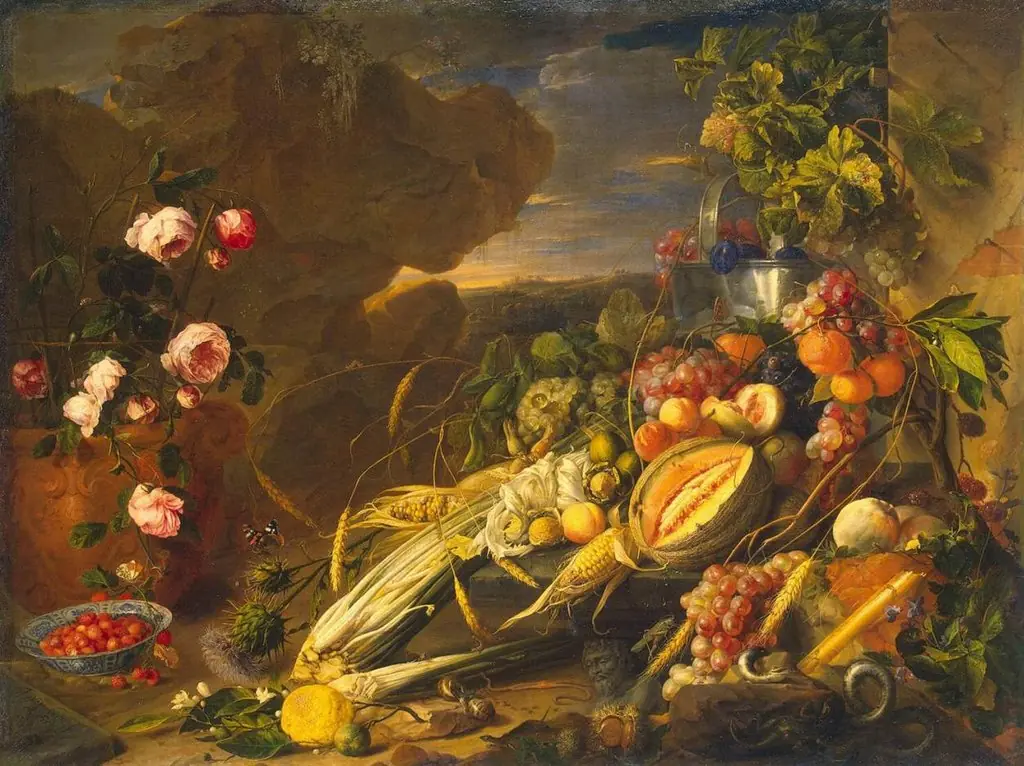
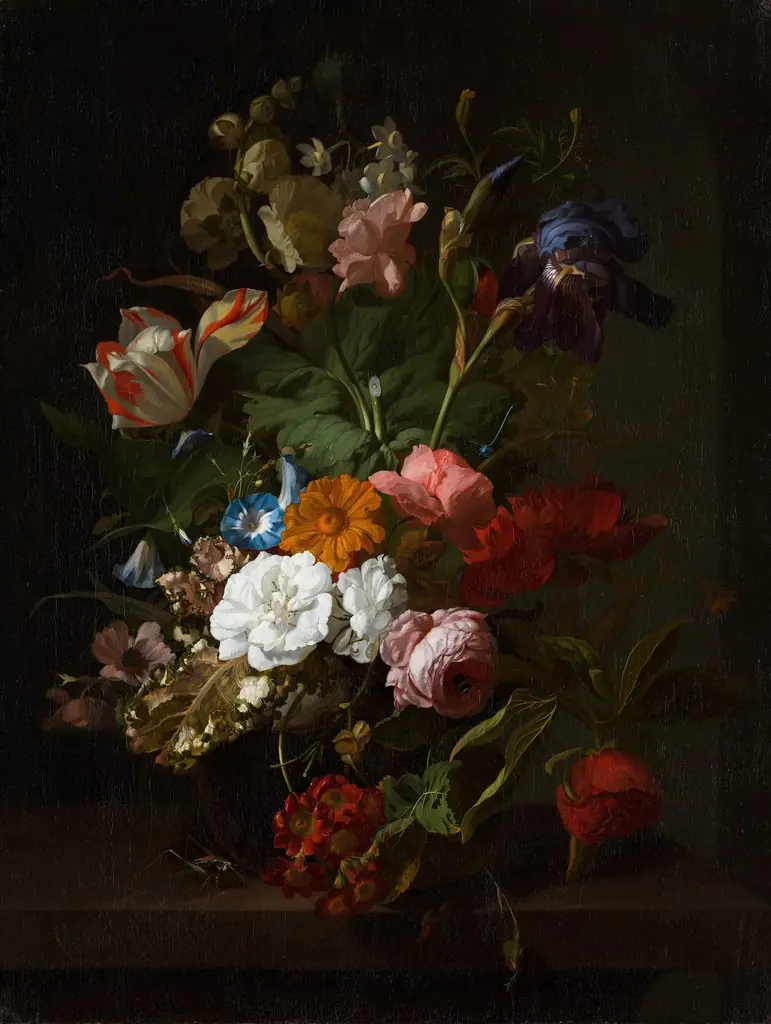
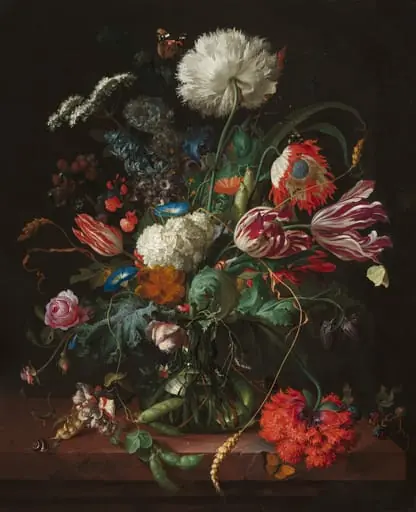
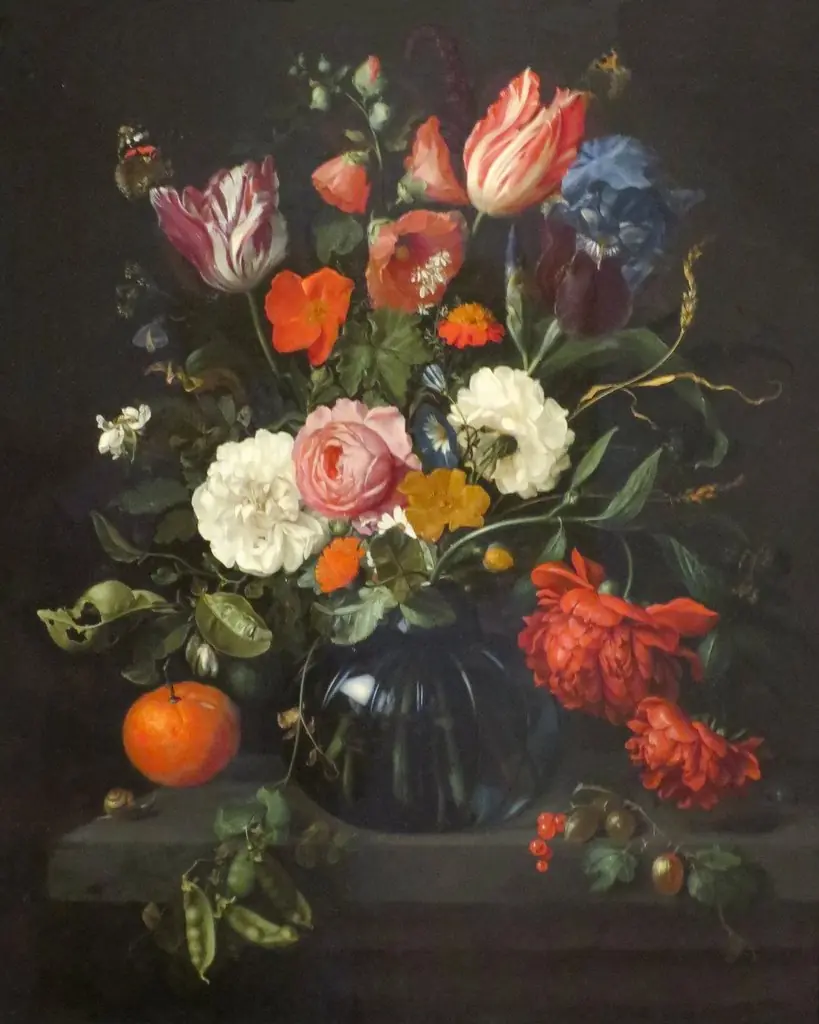
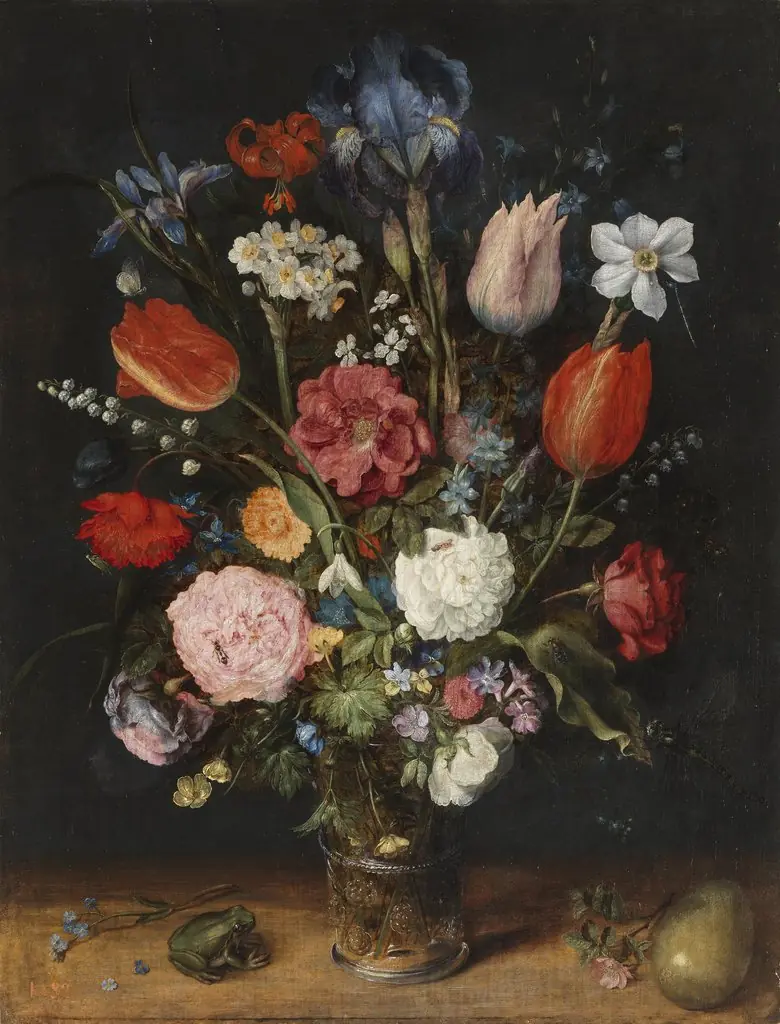
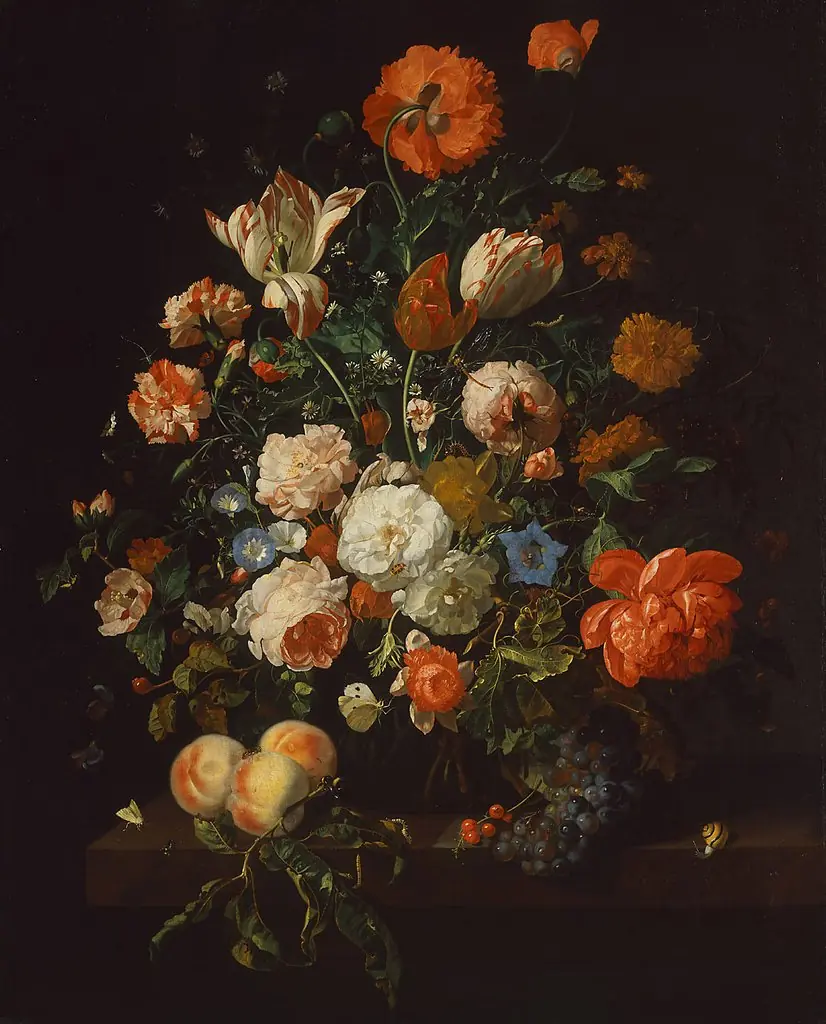
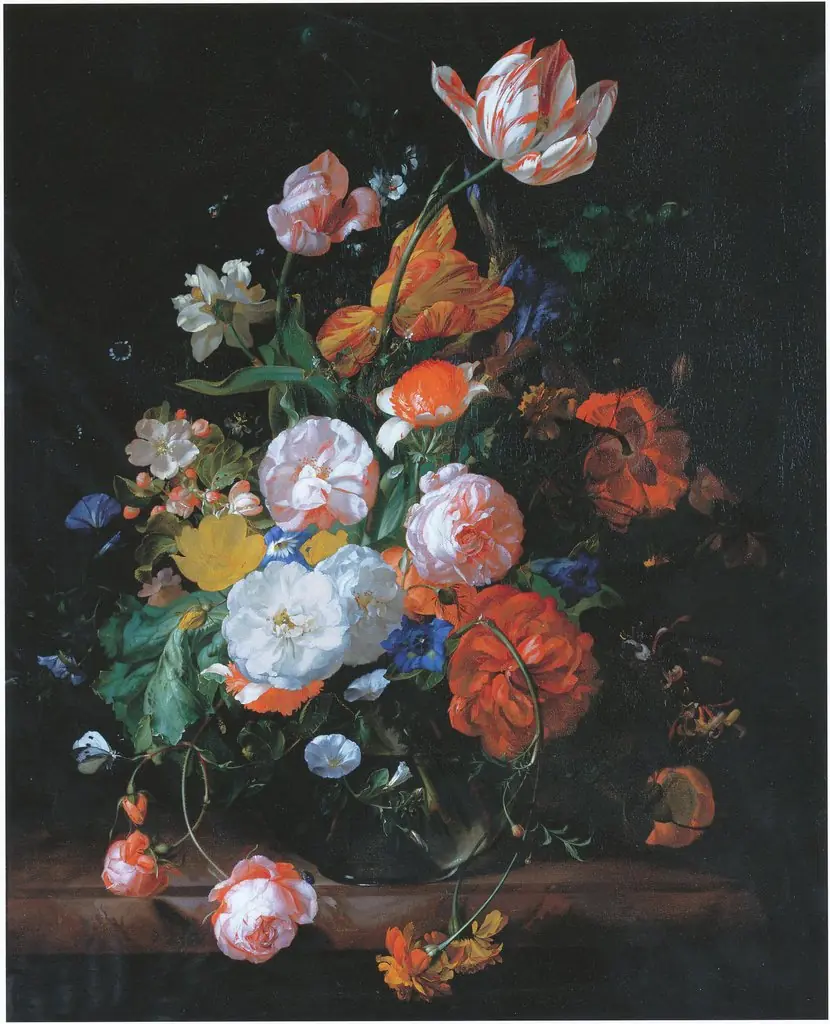
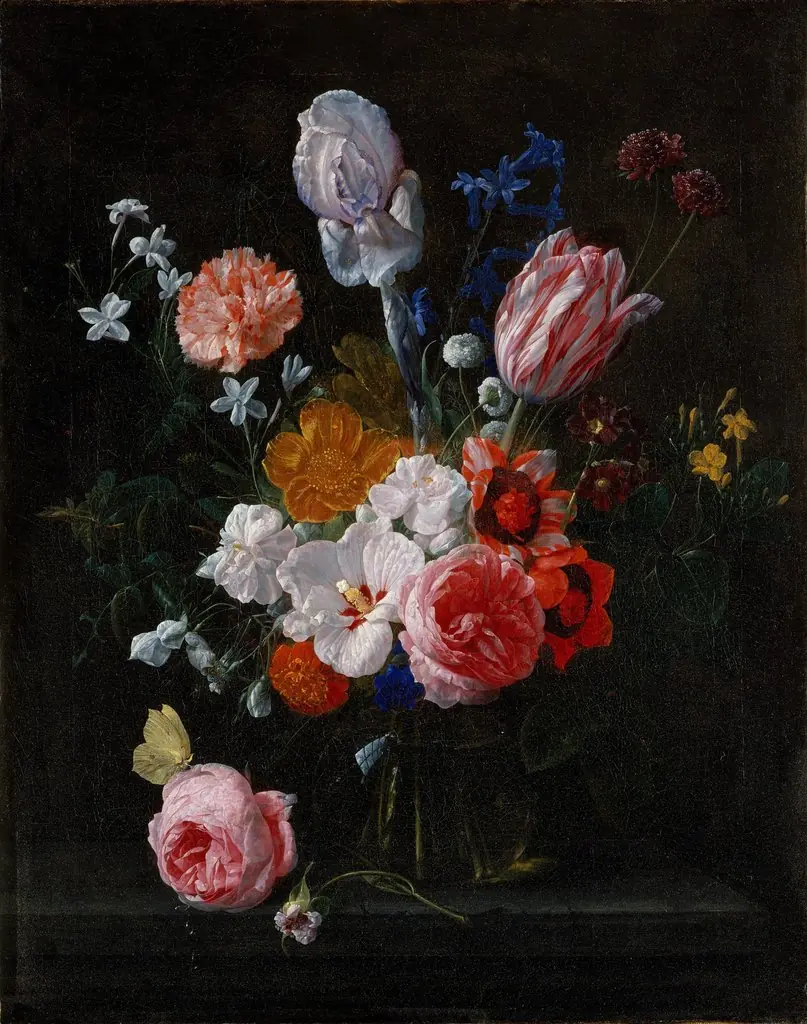
The painting depicts a lush bouquet of flowers in a glass vase, including roses, tulips, Calendula (marigolds), peonies, and wheat, arranged in a still-life composition. A snail crawls on the table surface and a butterfly hovers near the flowers, adding naturalistic detail. Within Dutch still-life traditions of the late 17th century, such arrangements often carried symbolic meanings tied to transience and abundance.
The inclusion of wheat and blooming flowers suggests themes of fertility and the fleeting nature of life, while the snail and butterfly may evoke ideas of slow decay and ephemeral beauty. These motifs reflect the broader vanitas tradition, where beauty and life are contrasted with mortality.
Technique & Style
Flowers in a Vase is an oil painting executed on canvas in 1670. The work belongs to the Dutch Golden Age still-life tradition and is classified as a floral painting. It portrays a richly varied bouquet that includes rose, tulip, calendula, paeonia, wheat, a vase, a snail and a butterfly, demonstrating a meticulous naturalistic rendering typical of the genre.
The composition balances centralized arrangement with subtle chiaroscuro, creating depth through layered brushwork on the canvas support. The painting is part of the Hermitage Museum collection.
History & Provenance
Jan Davidsz. de Heem painted Flowers in a Vase in 1670 in the Netherlands. The work was executed in oil on canvas, measuring 87.5 × 67.5 cm, and has been consistently dated to this year without subsequent revision.
The painting has been part of the Hermitage Museum's collection in Saint Petersburg, with no documented changes in ownership or commission details preceding its acquisition by the institution. No evidence of a private patron or prior collection has been sourced, leaving its early provenance unrecorded.
Context
The 1670 oil on canvas still-life by Jan Davidsz. de Heem exemplifies the Dutch Golden Age fascination with botanical precision, featuring a carefully arranged bouquet of rose, tulip, Calendula, Paeonia, wheat, a snail, and a butterfly. The work is part of the Hermitage Museum's collection, underscoring the artist's role in elevating still-life to a subject of artistic ambition. Its dimensions of 87.5 cm by 67.5 cm and the meticulous rendering of natural forms reflect the era's scientific curiosity and the painter's influence on later Dutch still-life practitioners.
Legacy
Flowers in a Vase, painted by Jan Davidsz. de Heem in 1670, exemplifies the elaborate floral still-life genre of the Dutch Golden Age. The canvas, measuring 87.5 cm by 67.5 cm, portrays a bouquet of roses, tulips, calendula, paeonia, wheat, a vase, a snail and a butterfly. Since its creation the work has been part of the Hermitage Museum's collection, underscoring its enduring relevance and scholarly attention as a benchmark of the genre. Its compositional sophistication and meticulous detail have informed later interpretations of floral subjects in European art.
Overview
Jan Davidsz. de Heem's Flowers in a Vase, painted in oil in 1670, exemplifies the Dutch Golden Age tradition of still life. This intricate composition showcases a rich floral arrangement, characteristic of de Heem's detailed and vibrant works. The painting reflects the period's appreciation for natural forms and meticulous artistic execution, presenting a lavish bouquet that draws the viewer's eye.
Artist & collection
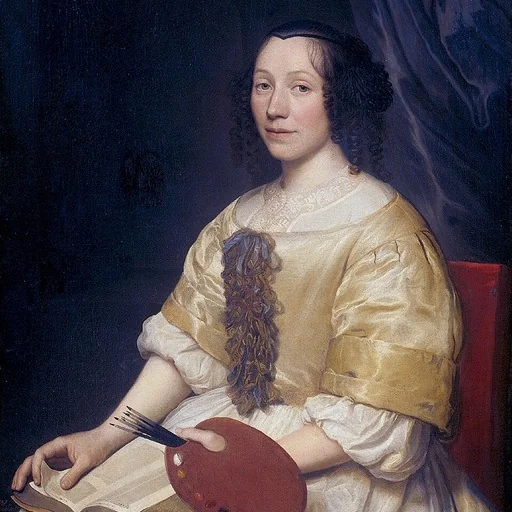
Artist
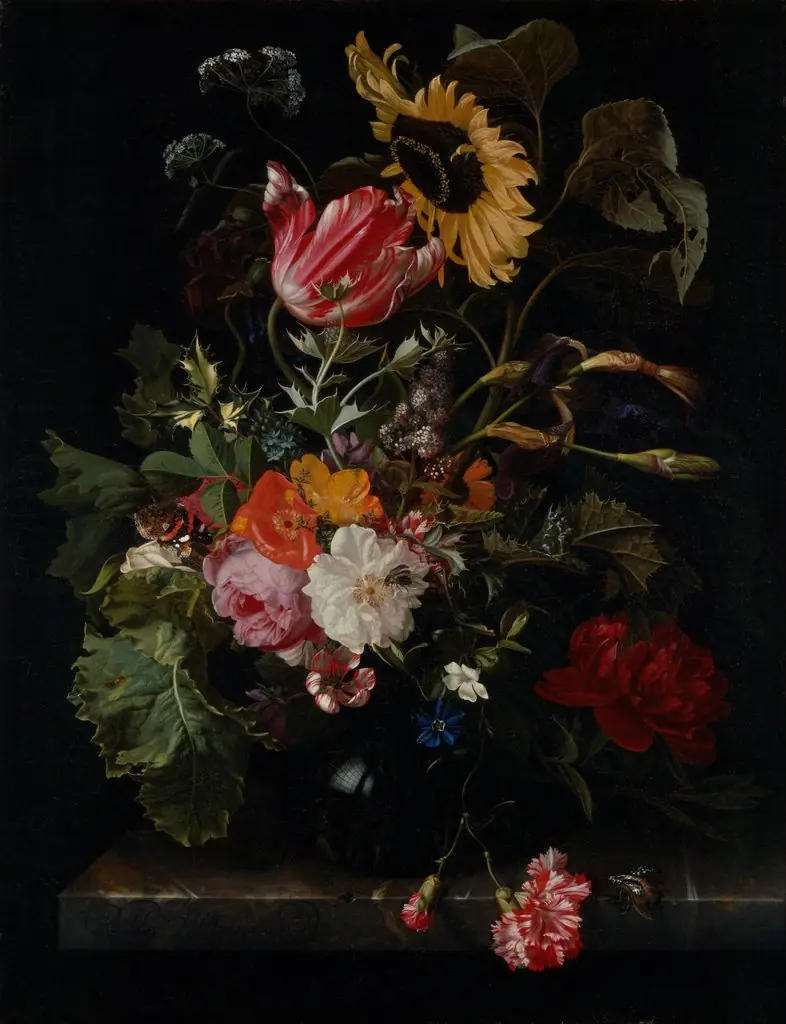
Maria van Oosterwijck (1630–1693), also spelled Oosterwyck, was a Dutch Golden Age painter, specialising in richly detailed flower paintings and other still lifes.