Artwork
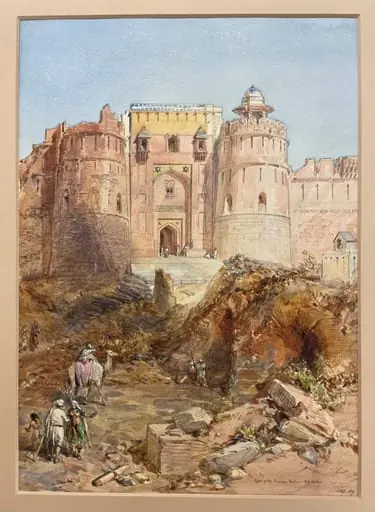
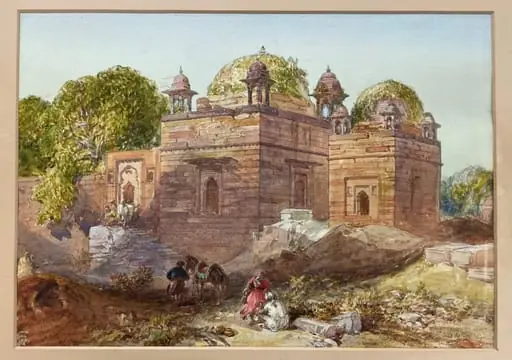
Ferosze Shah's Laht, Old Delhi
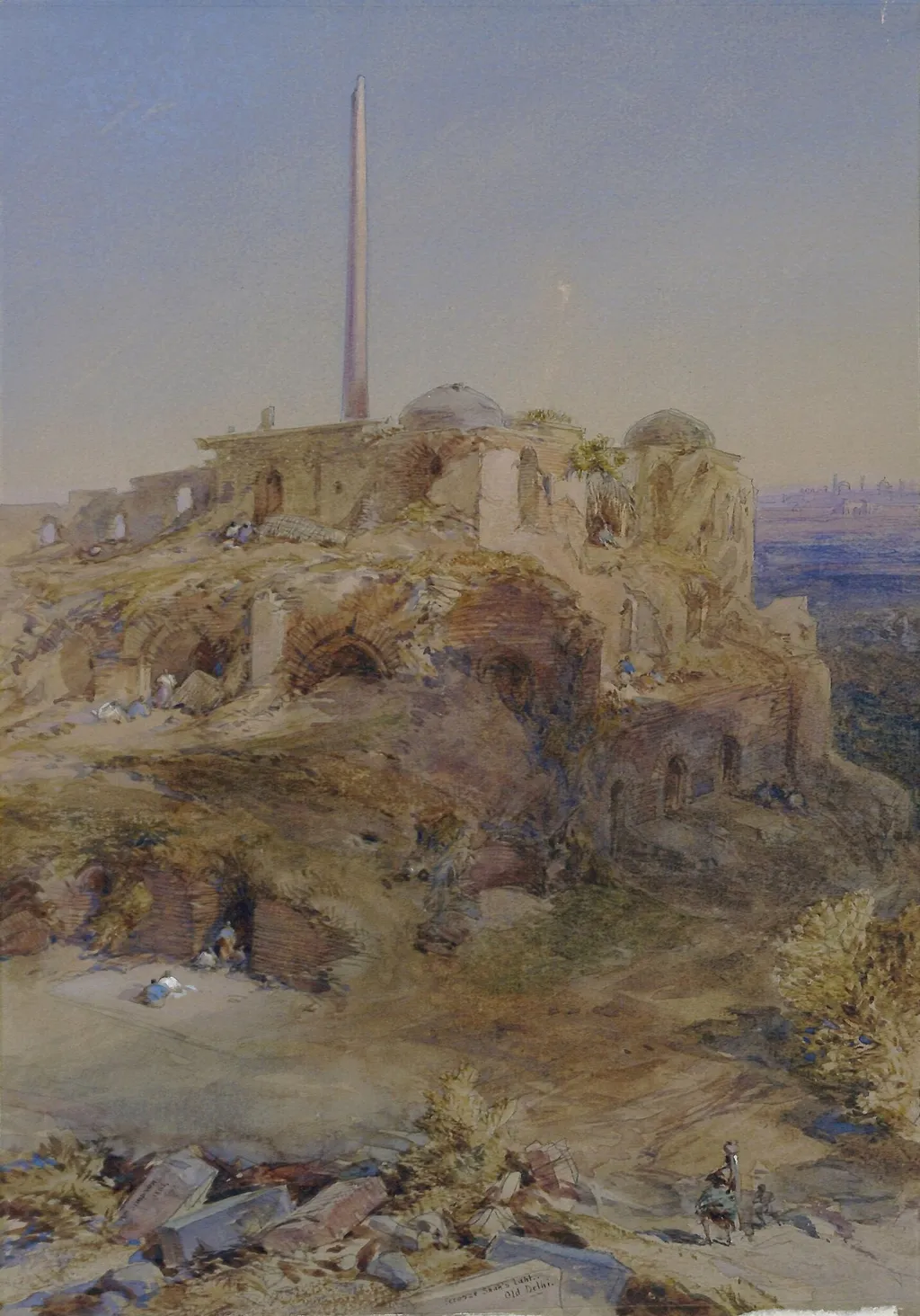
Ferosze Shah's Laht, Old Delhi is a watercolor work on paper by the British Romanticist artist William Simpson. It dates from 1861 and is held in the collection of the Victoria and Albert Museum.
About this work
Overview
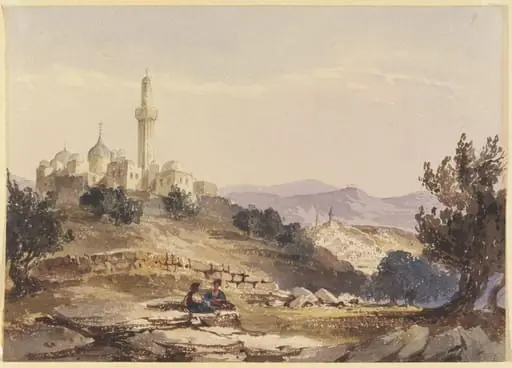
This watercolour by William Simpson captures the ruins of Ferosze Shah's Laht in Old Delhi, rendered with quiet precision. Executed in the mid-19th century, the work belongs to a tradition of topographical sketches made by British artists documenting India’s architectural remnants. The composition emphasizes decay and stillness, avoiding dramatic flair in favor of observational detail.
Subject & Meaning
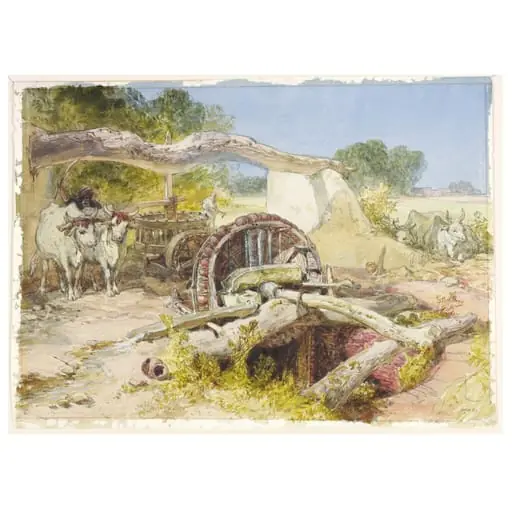
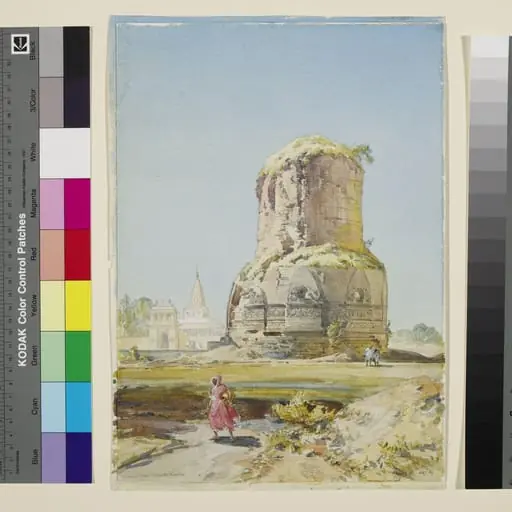
The painting portrays the fragmented remains of a medieval structure, likely a tomb or palace complex, perched on a rugged slope. Crumbling walls, domes, and a slender minaret suggest a once-grand edifice now reclaimed by time. Figures and animals along the paths hint at ongoing local use, grounding the ruins in lived reality rather than pure antiquarian interest.
Technique & Style
Simpson employed soft washes of muted browns, grays, and pale blues to convey the weathered stone and arid landscape. Subtle shifts in tone define form without sharp outlines, while faint green accents suggest sparse vegetation. The handling of light, gentle, diffused shadows, reflects the influence of European watercolour traditions adapted to Indian light and terrain.
History & Provenance
Created during Simpson’s travels across India in the 1850s and 1860s, the work was part of a broader project to record historical sites for British audiences. It entered the Victoria and Albert Museum’s collection as part of a larger archive of colonial-era visual documentation, valued for its ethnographic and architectural record rather than artistic innovation.
Context
Simpson’s work emerged amid growing British interest in India’s pre-colonial heritage, often framed as a civilization in decline. His sketches served both as personal records and as materials for published illustrations, contributing to a visual narrative that positioned Indian ruins as relics of a distant past, separate from contemporary life.
Legacy
Though not widely exhibited today, Simpson’s watercolours remain important as primary sources for studying 19th-century perceptions of Indian architecture. They reflect the intersection of art, exploration, and colonial documentation, offering insight into how ruins were visually interpreted and preserved in the public imagination of the era.
Own this work as a print
Artist & collection

![Arabs and camels beside a Tomb, Algeria[?], by Victor-Pierre Huguet](https://artifactworldgallery.com/img/victor-pierre-huguet--arabs-and-camels-beside-a-tomb-algeria--d8831a130920c80b-w320.webp)