Artwork
Tumulus of Ujek Tepeh in the Troad
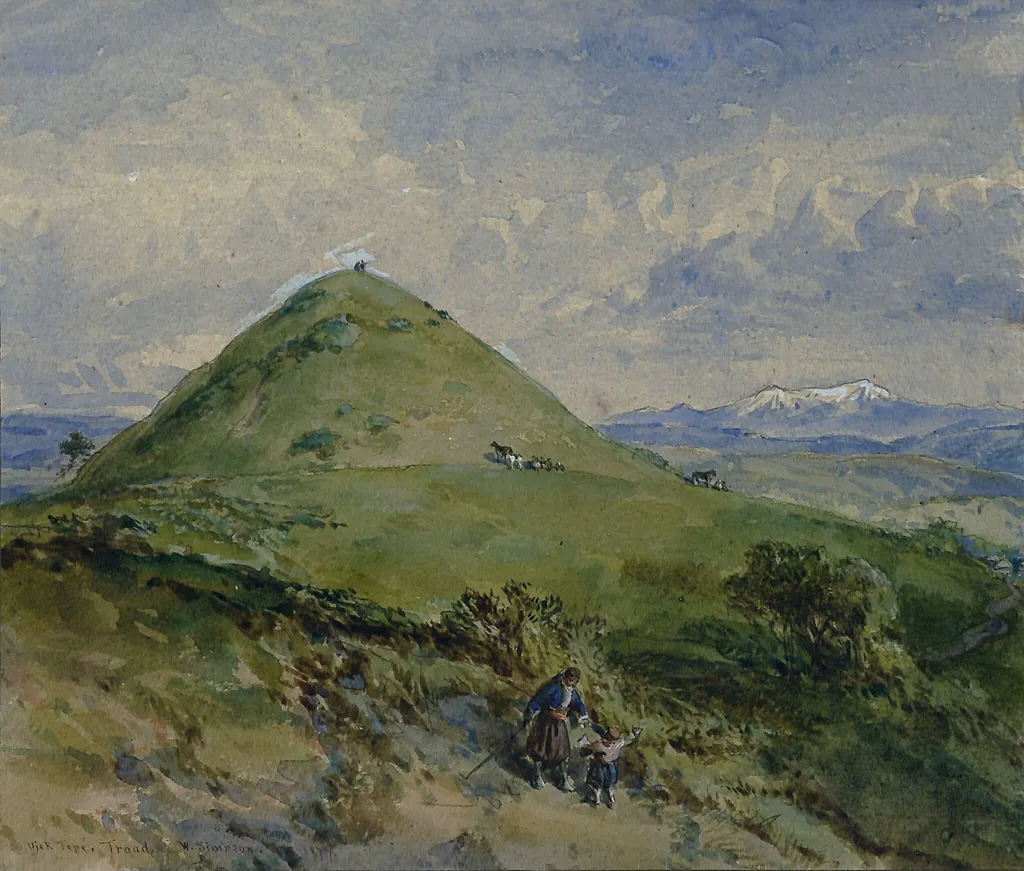
Tumulus of Ujek Tepeh in the Troad is a watercolor work on paper by the Impressionist artist William Simpson. It dates from 1877 and is held in the collection of the Victoria and Albert Museum.
About this work
Overview
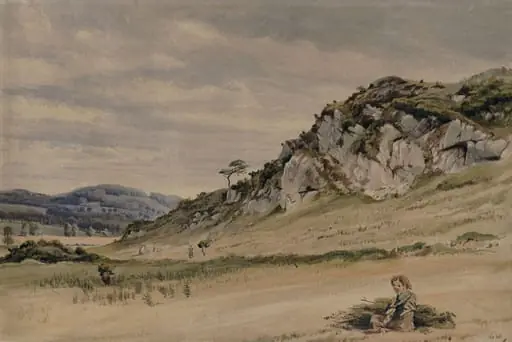
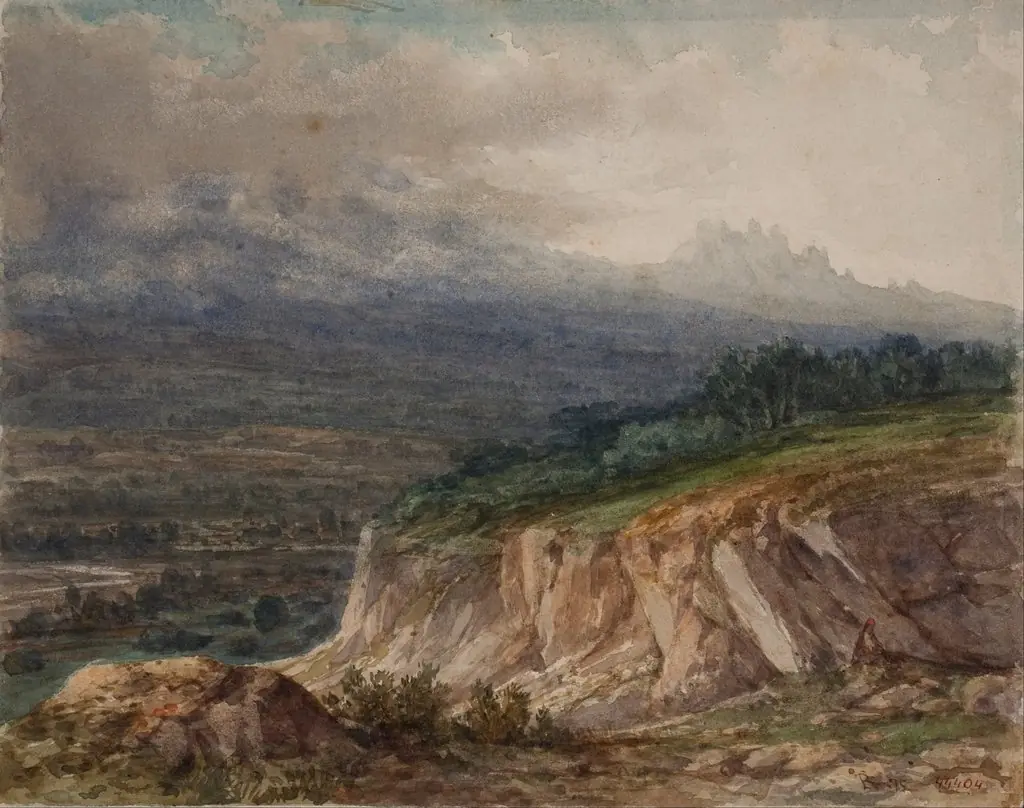
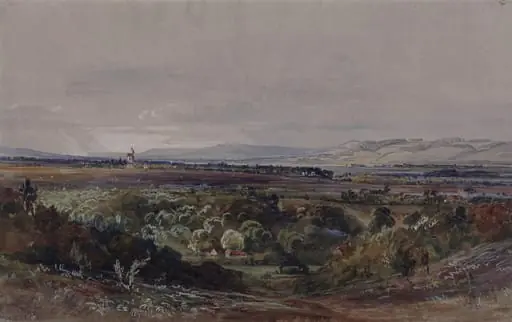
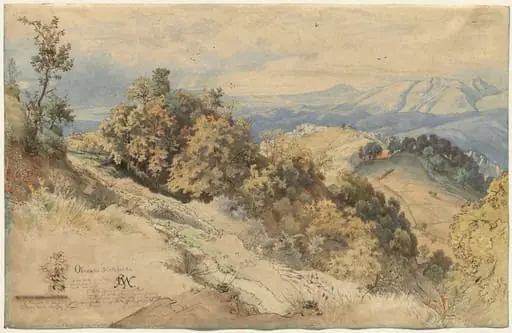
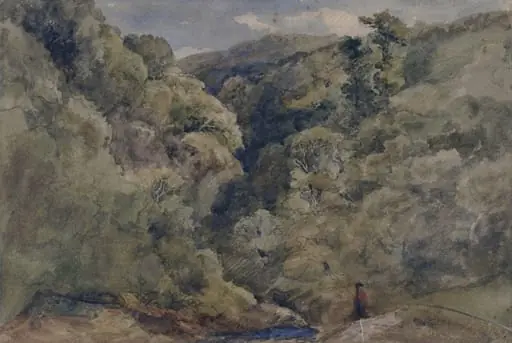
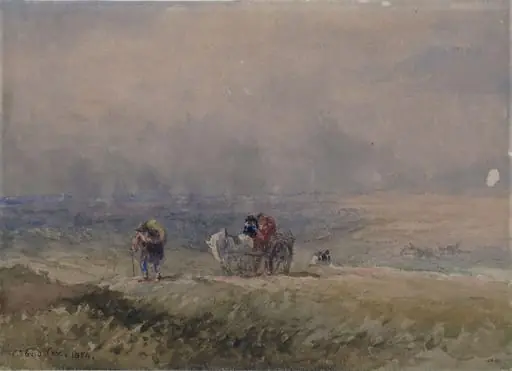
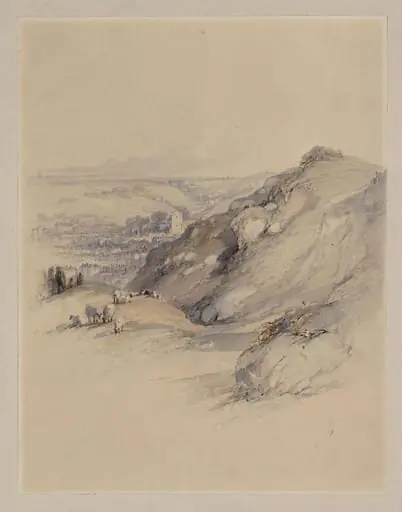
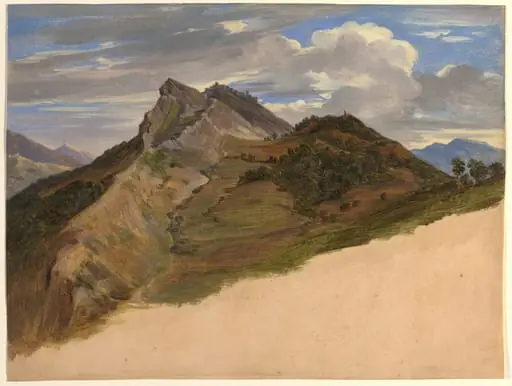
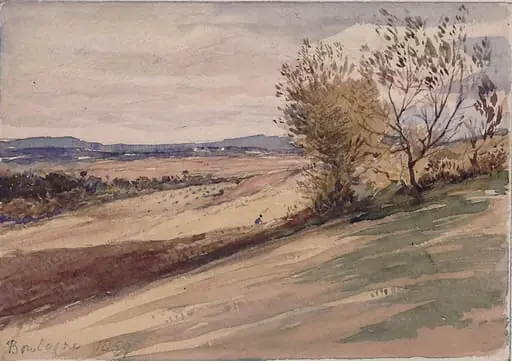
William Simpson’s watercolour portrays a solitary figure traversing a pastoral hillside in the Troad, with the ancient tumulus of Ujek Tepeh suggested in the background. The composition balances a modest human activity, a woman guiding a sheep, with the expansive, verdant slope of a steep mountain, under a bright, loosely rendered sky.
Subject & Meaning
The central figure, a woman in a dark dress, embodies everyday rural labor, her presence linking the cultivated foreground to the ancient landscape behind her. The inclusion of distant people and animals hints at a lived-in environment, while the tumulus alludes to the region’s layered history, merging contemporary life with archaeological memory.
Technique & Style
Simpson employs a fluid, sketch‑like brushstroke typical of watercolour, allowing colors to remain vivid and spontaneous. The sky is suggested with quick, textured strokes that convey light without detail, and the foliage is rendered in broad, green washes. This loose handling creates a sense of immediacy and breathes life into the scene.
Context
Created during a period when artists increasingly documented ordinary scenes, the work reflects a shift from grand historical narratives to the observation of daily life. Though not overtly Impressionist, its emphasis on light, color, and fleeting atmosphere aligns with broader 19th‑century trends that valued personal perception of the landscape.
Own this work as a print
Artist & collection