Artwork
The Entrance to the Temple of Kiyomizu-Dera, Kyoto, with Pilgrims Ascending
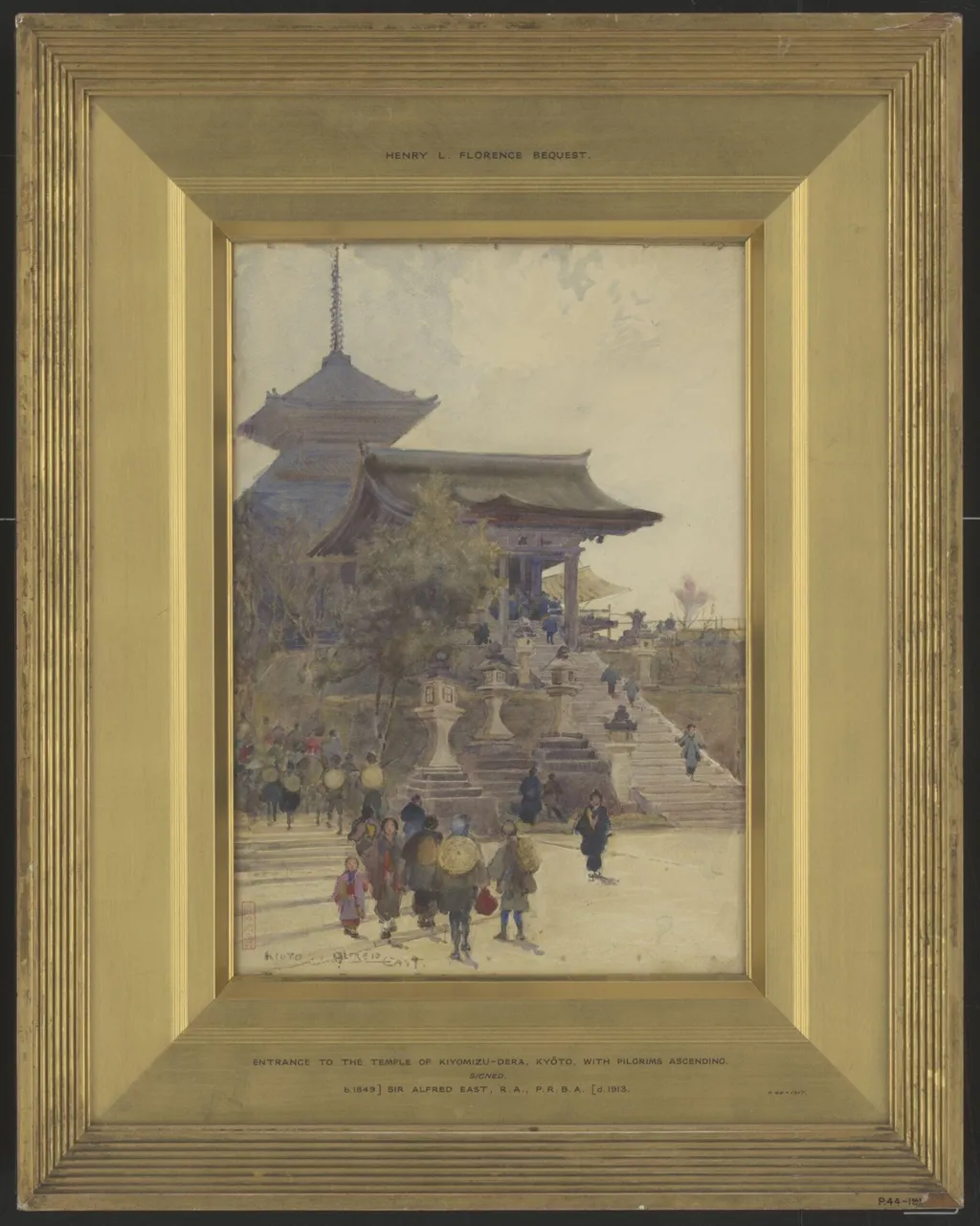
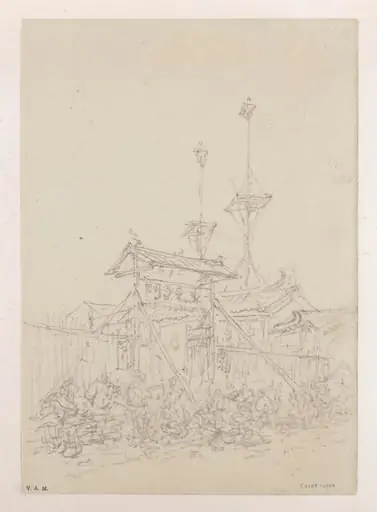
The Entrance to the Temple of Kiyomizu-Dera, Kyoto, with Pilgrims Ascending is a watercolor work on paper by the Aestheticist artist Sir Alfred East. It dates from 1889 and is held in the collection of the Victoria and Albert Museum.
About this work
Overview
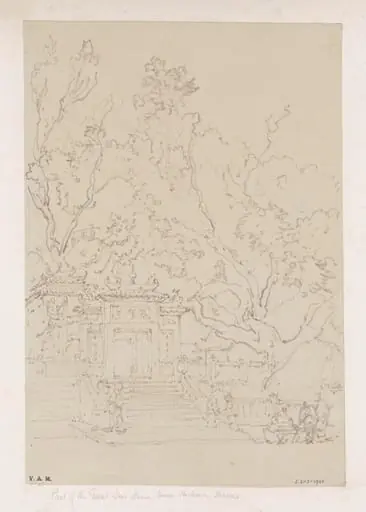
The composition leads the eye upward along stone steps crowded with figures, while a towering wooden pavilion with sweeping eaves rises in the distance.
Sir Alfred East’s 1889 watercolour captures the main stairway of Kyoto’s Kiyomizu‑dera temple, a focal point for pilgrims. The composition leads the eye upward along stone steps crowded with figures, while a towering wooden pavilion with sweeping eaves rises in the distance. The scene is rendered in a restrained palette, the ground lightly dusted with snow, conveying both the bustle of the site and the quiet of winter.
Subject & Meaning
The work portrays the ritual ascent of worshippers toward the sacred precincts of Kiyomizu‑dera, a major destination on Japan’s pilgrimage routes. By emphasizing the flow of people and the architectural backdrop, East highlights the communal aspect of religious practice and the integration of built environment with seasonal atmosphere.
Technique & Style
Executed in transparent watercolour, the painting relies on delicate washes to suggest atmospheric depth and the soft illumination of a winter day. Fine brushwork delineates lanterns, roof tiles, and the folds of traditional garments, while broader strokes convey the mass of stone steps and the muted sky, creating a balance between detail and overall mood.
History & Provenance
Signed by East, the piece dates to 1889, a period when Western artists were increasingly drawn to Japanese subjects following the Meiji Restoration. The watercolour entered the museum’s collection through a 20th‑century acquisition of East’s works, reflecting the era’s fascination with East Asian cultural motifs.
Own this work as a print
Artist & collection

Artist
Alfred East kept a pocket-sized sketchbook wherever he went, scribbling quick watercolours so he could capture the light before it shifted.