Artwork
Lake Biwa, Japan
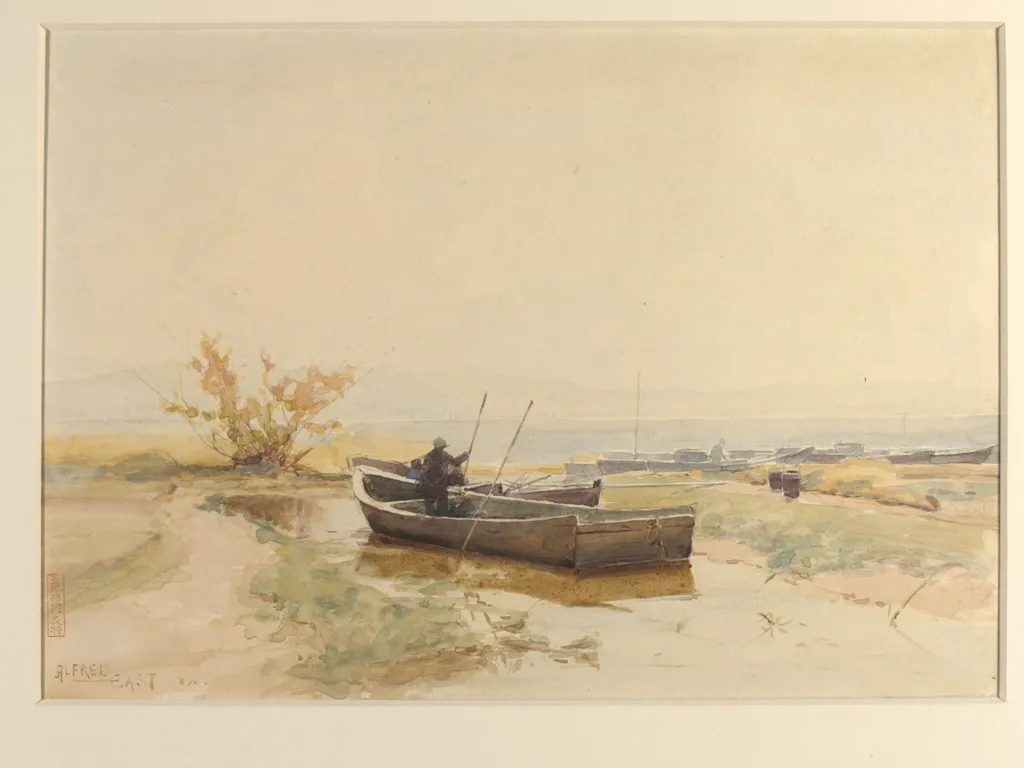
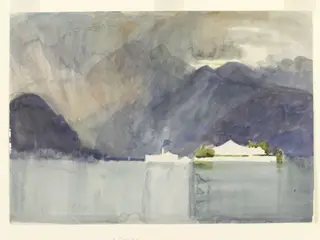
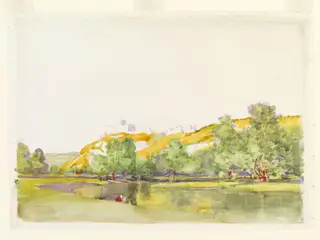
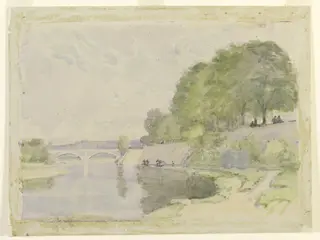
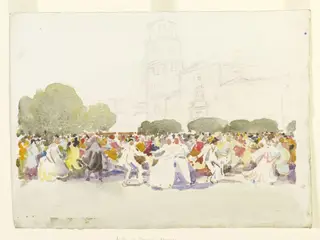
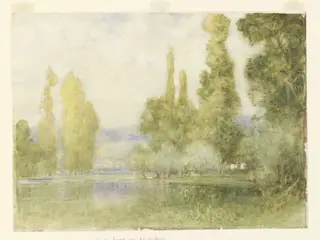
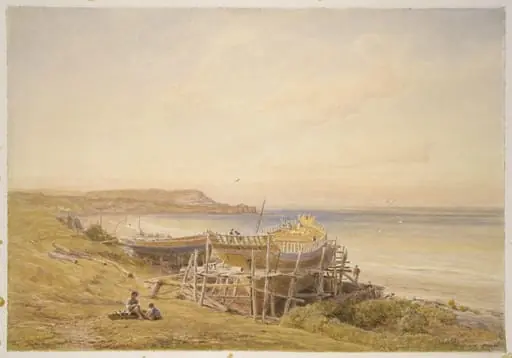
Lake Biwa, Japan is a watercolor work on paper by the Aestheticist artist Sir Alfred East. It dates from 1889 and is held in the collection of the Victoria and Albert Museum.
About this work
Overview
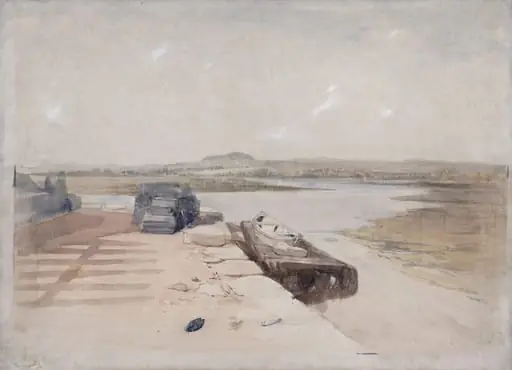
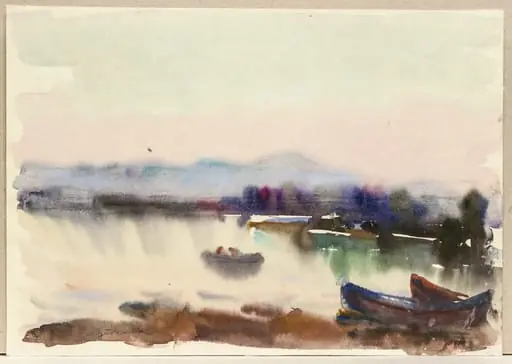
Painted in 1889, Lake Biwa, Japan is a watercolour by British artist Alfred East, capturing a quiet moment on Japan’s largest freshwater lake.
Painted in 1889, Lake Biwa, Japan is a watercolour by British artist Alfred East, capturing a quiet moment on Japan’s largest freshwater lake. The composition is minimal, featuring a single moored boat and a solitary figure, set against a hazy expanse of water and distant hills. Executed in pale, restrained tones, the work reflects East’s interest in Japanese landscapes during his travels in the region.
Subject & Meaning
The scene depicts a tranquil, unpopulated moment on Lake Biwa, with a lone figure in a boat suggesting quiet preparation for departure rather than activity. The absence of crowds or dramatic elements emphasizes stillness and solitude. The painting conveys contemplation, aligning with East’s broader fascination with the serenity of Japanese rural life and its harmonious relationship with nature.
Technique & Style
East employed delicate watercolour washes to render the lake’s surface and surrounding hills, using subtle gradations of pale blue, grey, and green. Brushwork is light and fluid, capturing the reflection of light without sharp definition. The lack of strong outlines and the soft blending of tones create an atmospheric effect, prioritizing mood over detail, a quality shared with certain aspects of Japanese ink painting and Western Impressionist approaches.
History & Provenance
Alfred East painted this work during a trip to Japan in the late 1880s, part of a broader European interest in Japanese aesthetics following the country’s opening to the West. Signed by the artist, the piece likely originated as a personal study or travel sketch, later retained in his private collection. Its provenance remains largely undocumented beyond East’s own records and later institutional acquisitions.
Context
East’s watercolour reflects the 19th-century European fascination with Japan, known as Japonisme, which influenced artists to adopt flattened perspectives and muted palettes. While not a direct imitation of ukiyo-e, the work shares an emphasis on quiet observation and natural harmony. His approach diverged from overt exoticism, favoring understated realism shaped by direct experience rather than romanticized stereotypes.
Legacy
Though not widely exhibited during East’s lifetime, Lake Biwa, Japan contributes to a body of work that documents Western artists’ engagement with Japanese landscapes. It stands as a quiet example of cross-cultural observation, illustrating how European painters absorbed elements of Japanese visual culture without overt stylization. The piece remains a modest but thoughtful record of 19th-century artistic exchange.
Own this work as a print
Artist & collection

Artist
Alfred East kept a pocket-sized sketchbook wherever he went, scribbling quick watercolours so he could capture the light before it shifted.