Artwork
Hawks (Taka zu)
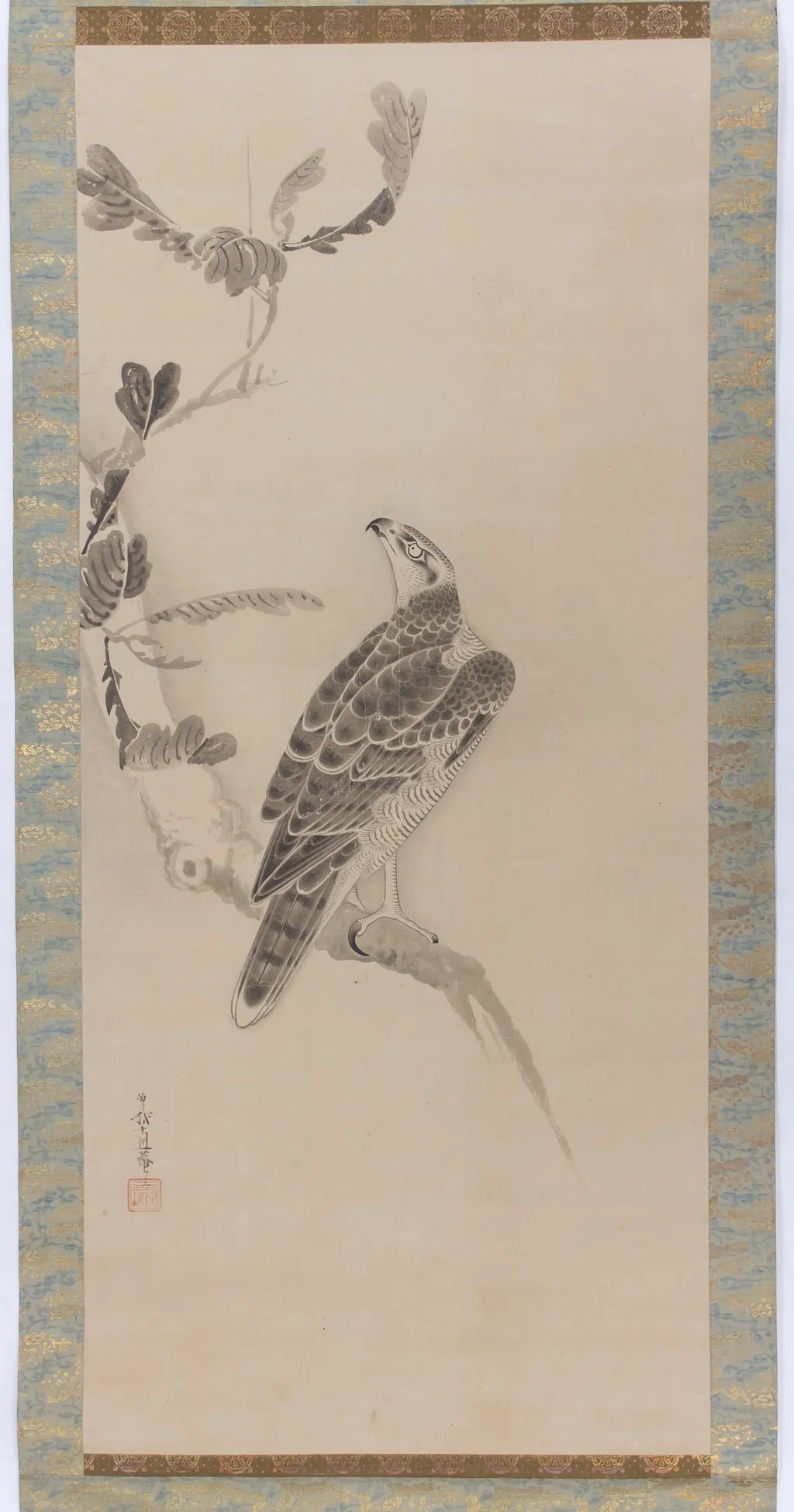
Hawks (Taka zu) is an unspecified painting by the Joseon dynasty painting artist Soga Nichokuan. It dates from 1650 and is held in the collection of the Metropolitan Museum of Art.
About this work
Subject & Meaning
The title itself, "Taka zu," translates to "image of a hawk," confirming the single avian subject of the work.
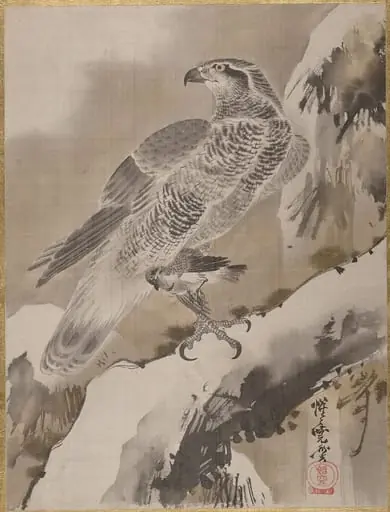
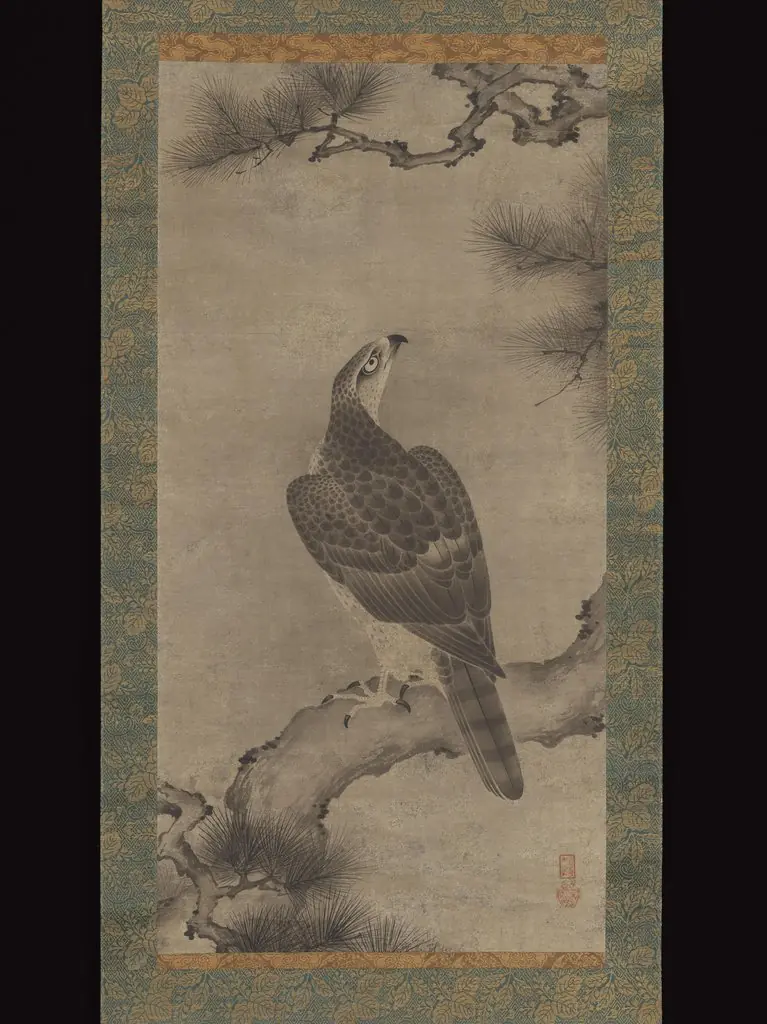
Hawks (Taka zu) is a Japanese painting by Soga Nichokuan that depicts a hawk. The title itself, "Taka zu," translates to "image of a hawk," confirming the single avian subject of the work.
In East Asian artistic traditions, hawks carry strong symbolic associations with martial valor, nobility, and authority, qualities that made them favored subjects for painters working in the seventeenth century. By isolating the bird as the sole focus of the composition, Nichokuan emphasizes these emblematic qualities, presenting the hawk as a dignified and powerful presence rather than as part of a broader narrative scene.
The work, dated to 1650 and produced in Japan, thus functions both as a study of the animal itself and as a vehicle for the symbolic resonance the hawk held in Japanese visual culture.
History & Provenance
Hawks (Taka zu) was created by Soga Nichokuan in 1650 in Japan, according to the painting's cataloguing record. The work is held in the collection of the Metropolitan Museum of Art, where it is currently located. No further details regarding its commission, earlier ownership, or chain of custody prior to its accession by the museum are documented in the available sources.
Context
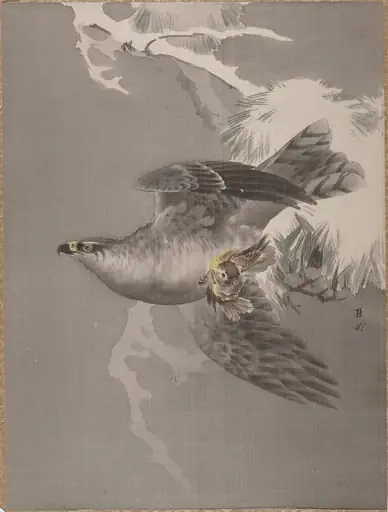
Soga Nichokuan's painting Hawks (Taka zu), created in 1650, depicts a hawk in flight and is housed in the Metropolitan Museum of Art. The work is recognized as a significant example of early Edo-period Japanese painting, reflecting the naturalistic detail and compositional restraint characteristic of the Soga school's approach to avian subjects.
Scholarly attention to Hawks (Taka zu) emphasizes its technical mastery and its role within the broader context of seventeenth-century Japanese bird-and-flower painting, a genre that balanced scientific observation with poetic sensibility. Its inclusion in major museum collections and sustained presence in art historical literature underscores its importance as both a cultural artifact and a study in the evolution of Japanese ink painting techniques.
Overview
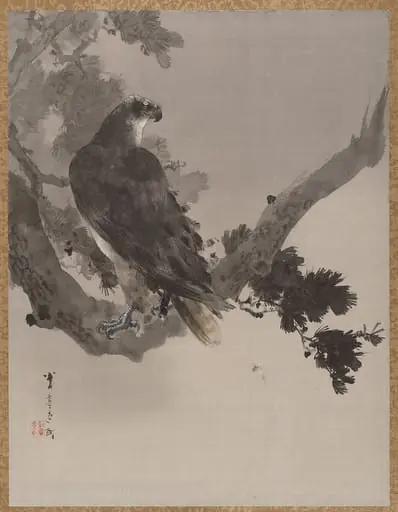
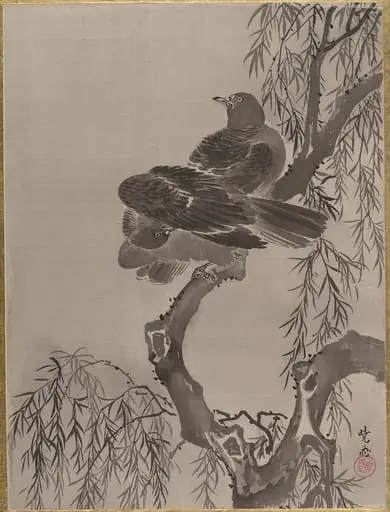
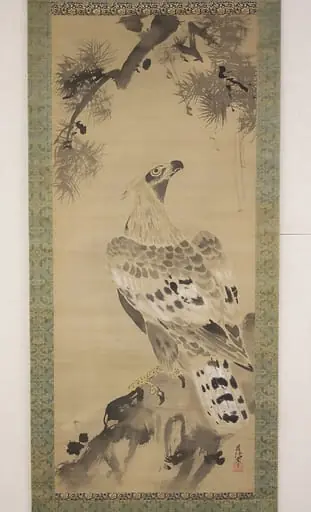
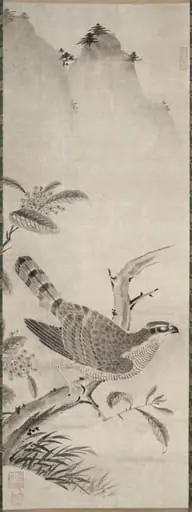
Created around 1650, this ink painting by Soga Nichokuan portrays a solitary hawk perched upon a slender branch. The composition is minimal, set against a largely empty background that emphasizes the bird’s form. The work is part of the collection at the Metropolitan Museum of Art, where it is displayed as an example of Japanese bird-and-flower painting.
Technique & Style
Nichokuan employs dark ink to delineate the hawk’s feathers with crisp, controlled strokes, allowing subtle variations in line density to suggest texture and volume. The wings are slightly unfurled, and the bird’s posture is conveyed through precise line work rather than extensive shading, reflecting a disciplined, monochrome aesthetic typical of mid‑17th‑century Japanese brush painting.
Artist & collection