Artwork
The Duke of Wellington
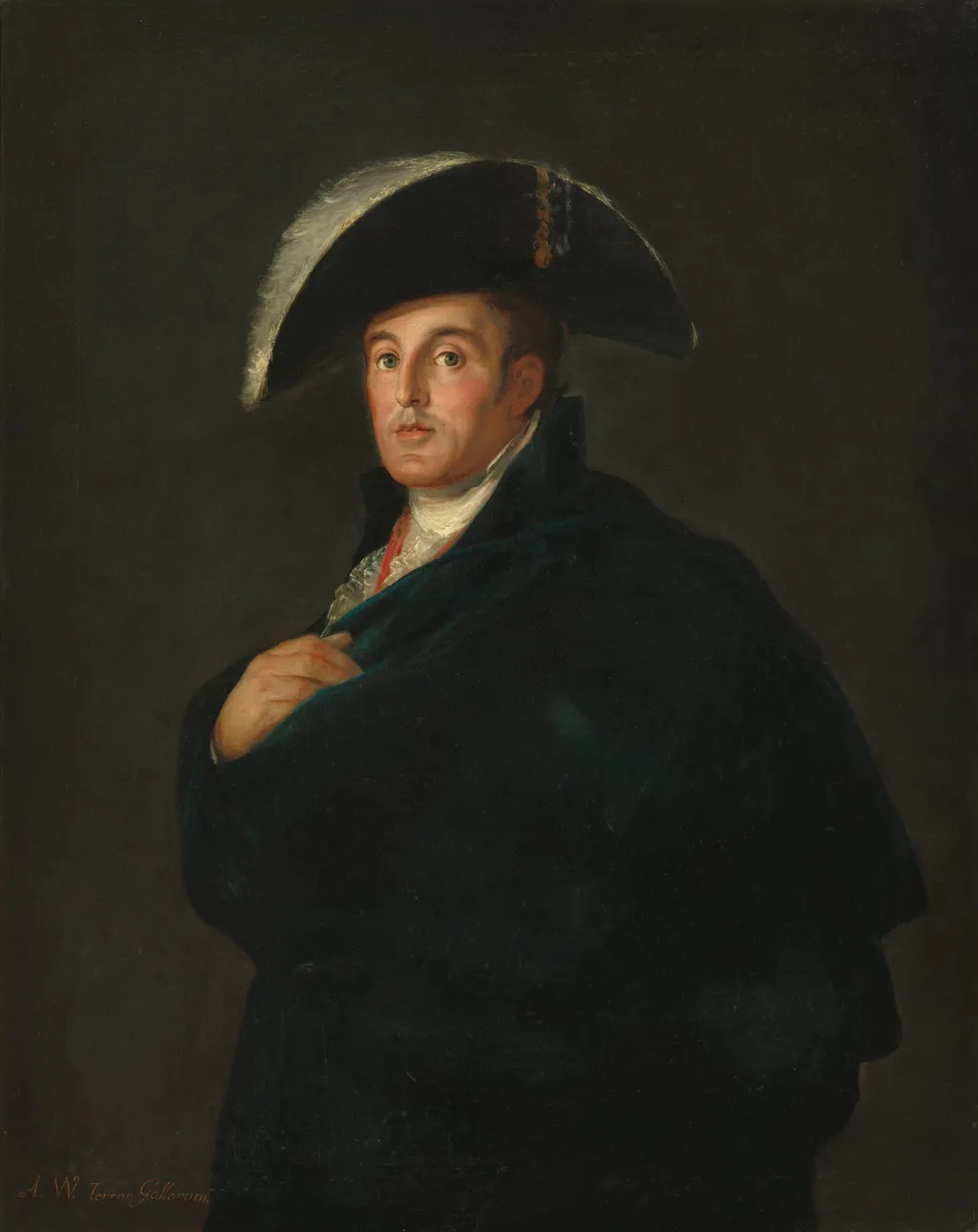
The Duke of Wellington is an oil painting. It dates from 1812 and is held in the collection of the National Gallery of Art.
- Inscription
- Inscribed:in another hand, lower left: A. W. Terror Gallorum (A[rthur] W[ellesley] Terror of the French)
About this work
A man sits astride a horse in old-fashioned dress and a broad hat, the saddle and bridle worked in fine detail. The Duke of Wellington was a famous military leader, and his serious expression suits a portrait made in 1812, during a time of war.
Subject & Meaning
Created in 1812, the work captures the general-in-chief at a pivotal moment, likely intended to honor his leadership against French forces.
The painting depicts Arthur Wellesley, the 1st Duke of Wellington, portrayed as a military commander during the Napoleonic Wars. Created in 1812, the work captures the general-in-chief at a pivotal moment, likely intended to honor his leadership against French forces. Iconographically, the portrait emphasizes his status as a commander, potentially serving as a commemorative gift to his companion at arms, General Miguel de Alava, or as a commission by Spanish soldiers wishing to preserve the image of their leader.
The subject's representation functions as a symbol of Allied victory and military authority during the Peninsular War. While the specific symbolic attributes of his uniform or pose are not detailed in the provided records, the work's primary meaning lies in its function as a tribute to Wellington's role in defeating Napoleon's armies, solidifying his reputation as a key historical figure of the era.
Technique & Style
The portrait is executed in oil on canvas, a standard medium for formal portraiture of the period, with measured dimensions of 105.5 by 83.7 cm. Attributed to the workshop of Francisco de Goya and dated 1812, the work is classified as a portrait painting, consistent with Goya's broader practice of producing likenesses of prominent military and political figures during the Peninsular War era. The painting is held in the collection of the National Gallery of Art in Washington, D.C., where it has been preserved since its 1963 gift. No further details regarding specific handling, brushwork, surface condition, or stylistic analysis are documented in the available sources.
History & Provenance
The portrait of Arthur Wellesley, 1st Duke of Wellington, was likely commissioned by Spanish officers who fought alongside the duke, a hypothesis drawn from contemporary accounts of the painting's earlier ownership in the family of General Miguel de Alava. Records indicate the work remained in the Alava lineage until circa 1902, when it passed to Madrid dealer Joseph Wicht and subsequently to American collector Henry Osborne Havemeyer via the agency of Mary Cassatt; Havemeyer's widow then bequeathed it to their daughter, who gifted the canvas to the National Gallery of Art in 1963. Stylistic and documentary evidence places its execution in 1812 within Francisco de Goya's workshop, as documented in the National Gallery's catalog and corroborated by scholarly sources.
The painting is currently held in the collection of the National Gallery of Art in Washington, D.C. It entered the institution in 1963 as a gift from Mrs. P.H.B. Frelinghuysen (née Adaline Havemeyer), having previously belonged to her parents, Henry Osborne and Louisine W. Havemeyer of New York. The work's earlier provenance includes ownership by the Alava family in Spain before being sold around 1902 to Joseph Wicht in Madrid. Wicht subsequently sold the portrait that same year through the agent Mary Cassatt to Henry Osborne Havemeyer.
Overview
This oil on canvas painting, titled The Duke of Wellington, presents an equestrian portrait of a prominent military figure. The artwork captures a man mounted on a horse, dressed in period attire, suggesting it was created during a significant historical era. The detailed rendering of both the rider and his steed indicates a deliberate artistic approach to portray this notable individual, likely reflecting the gravity of his public role.
Context
The artwork likely originated during a period of military conflict, given the Duke of Wellington's renown as a leading military commander. The solemn expression on the Duke's face may serve as an artistic reflection of the prevailing mood or the weighty responsibilities associated with his position during such turbulent times. The portrait thus offers insight into both the individual and the historical circumstances he inhabited.
Artist & collection

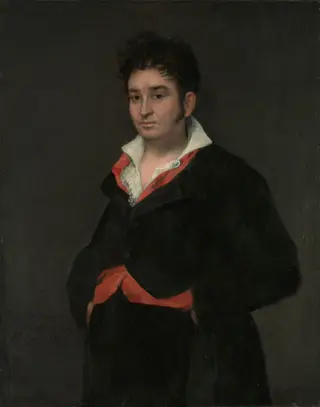 Portrait of Don Ramón Satué
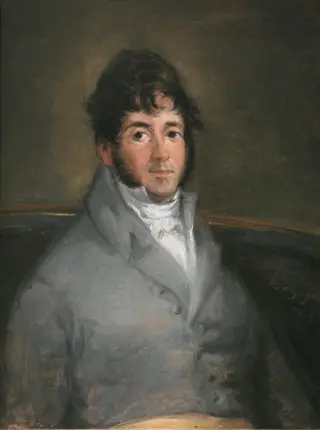 The Actor Isidoro Máiquez
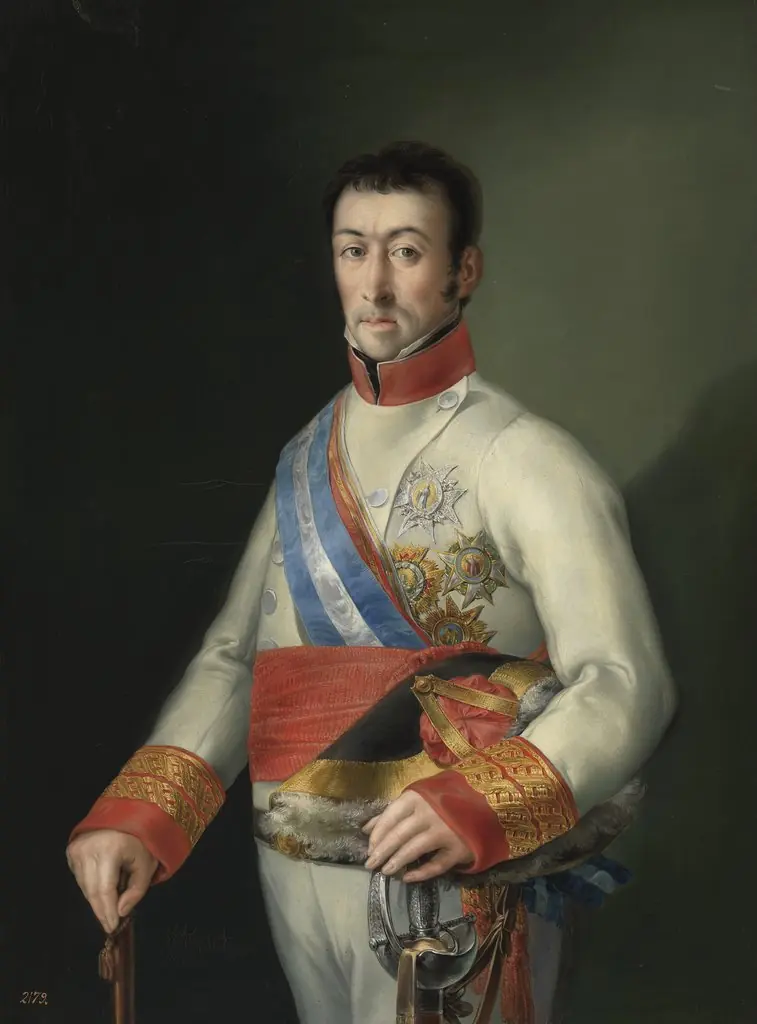 Francisco Javier Elío capitán general de Valencia
 Portrait of Ferdinand VII of Spain
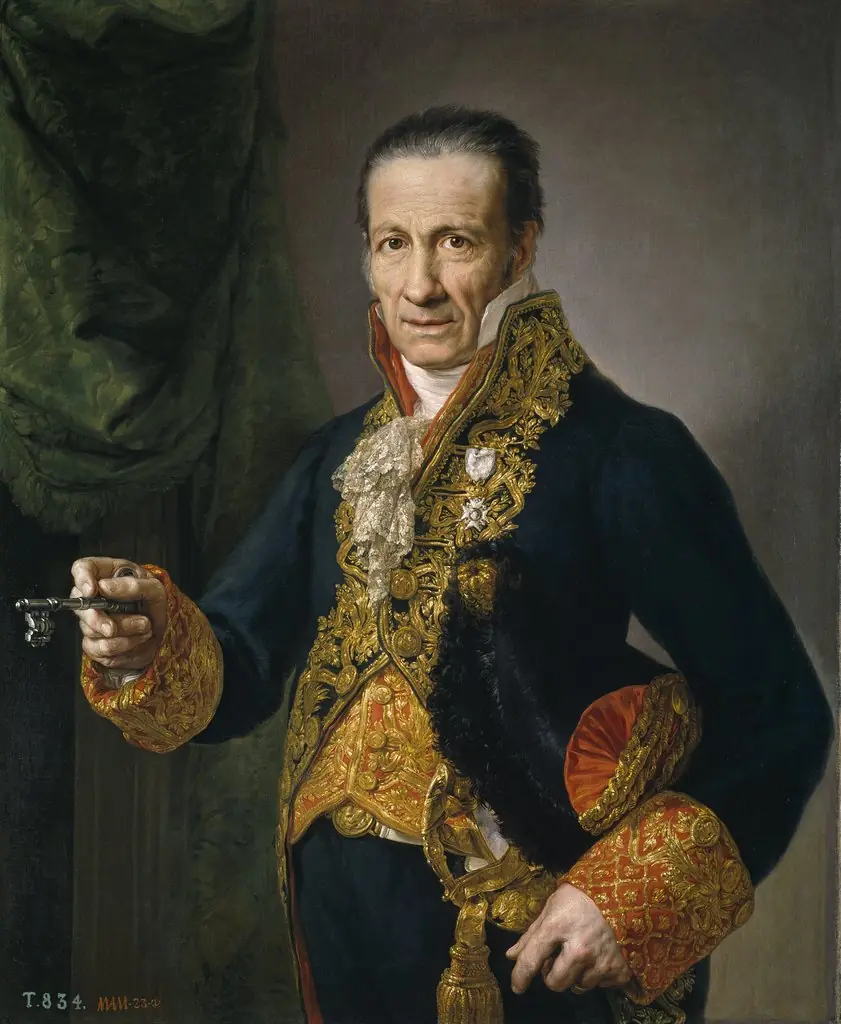 Luis Veldrof, grand lodging master and concierge of the Royal Palace
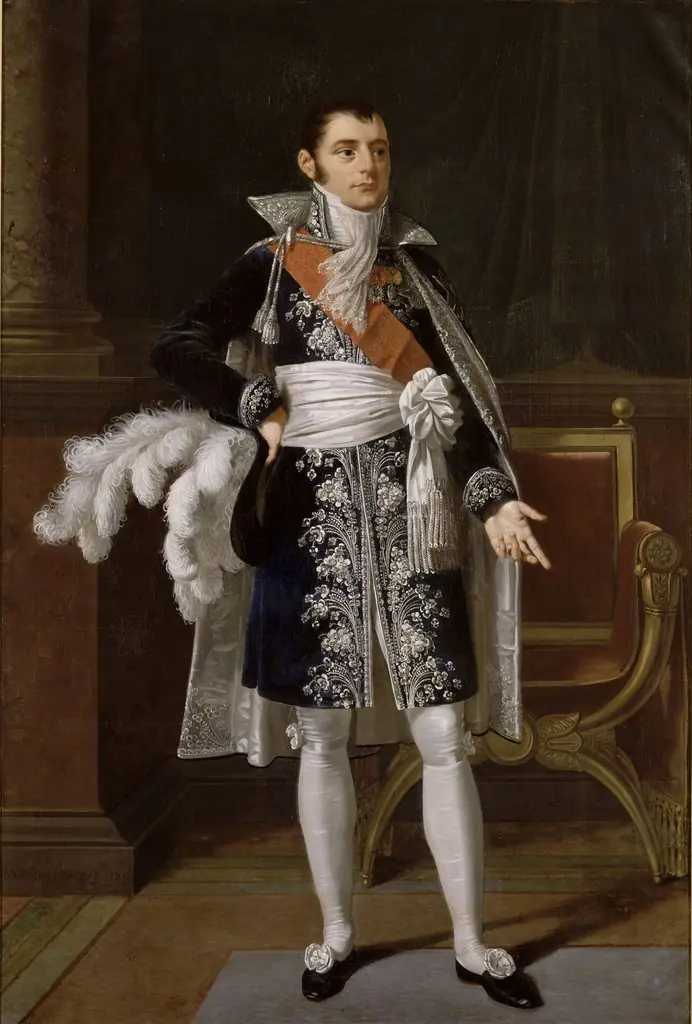 Portrait of Anne-Jean-Marie-René Savary, Duke of Rovigo (1774-1833)
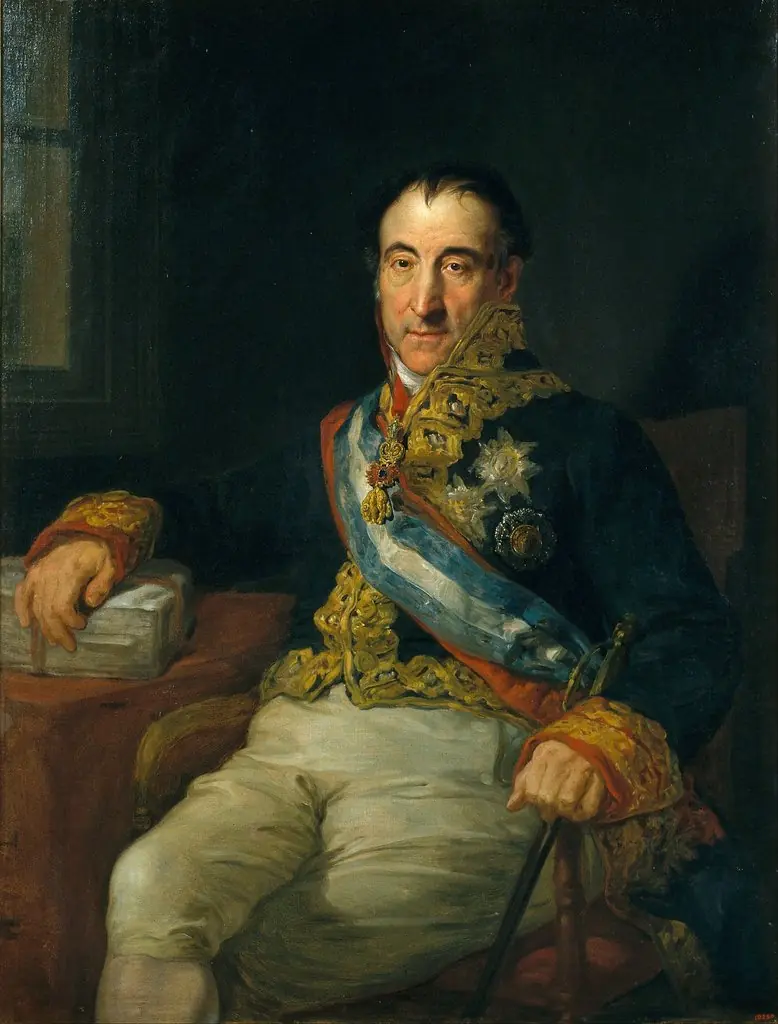 Portrait of the Marquis of Labrador, Spanish Ambassador to the Congress of Vienna of 1915
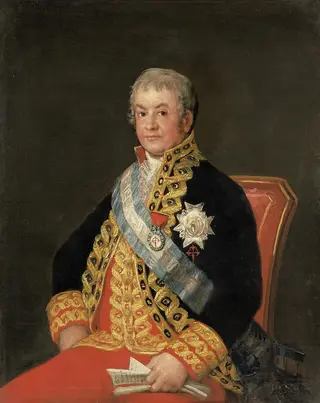 Portrait of José Antonio Marqués de Caballero
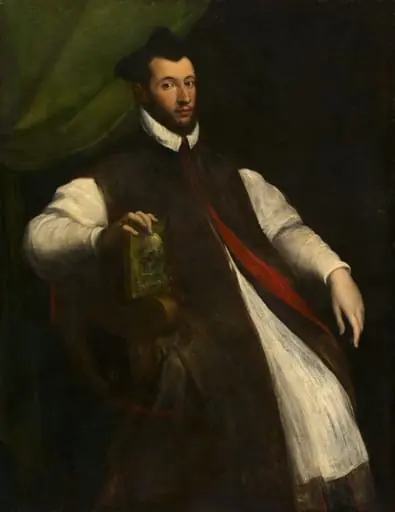 Portrait of a Prelate
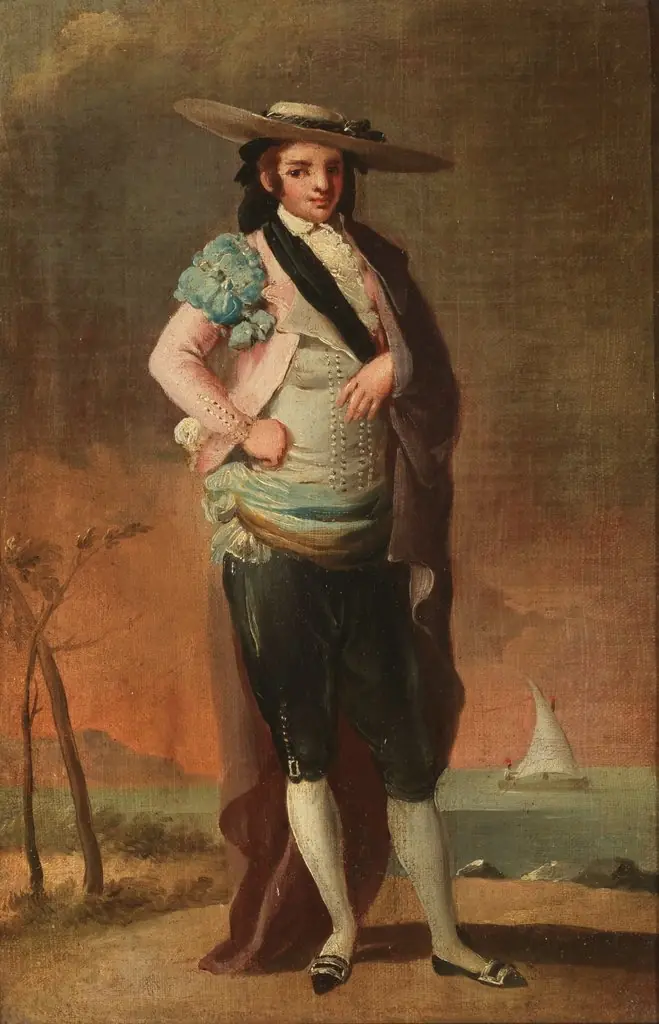 Bullfighter. Maja in Finery
 Don Mariano Camprubi (Le Bailarin)
- Victor Guye