Artwork
Portrait of Don Ramón Satué
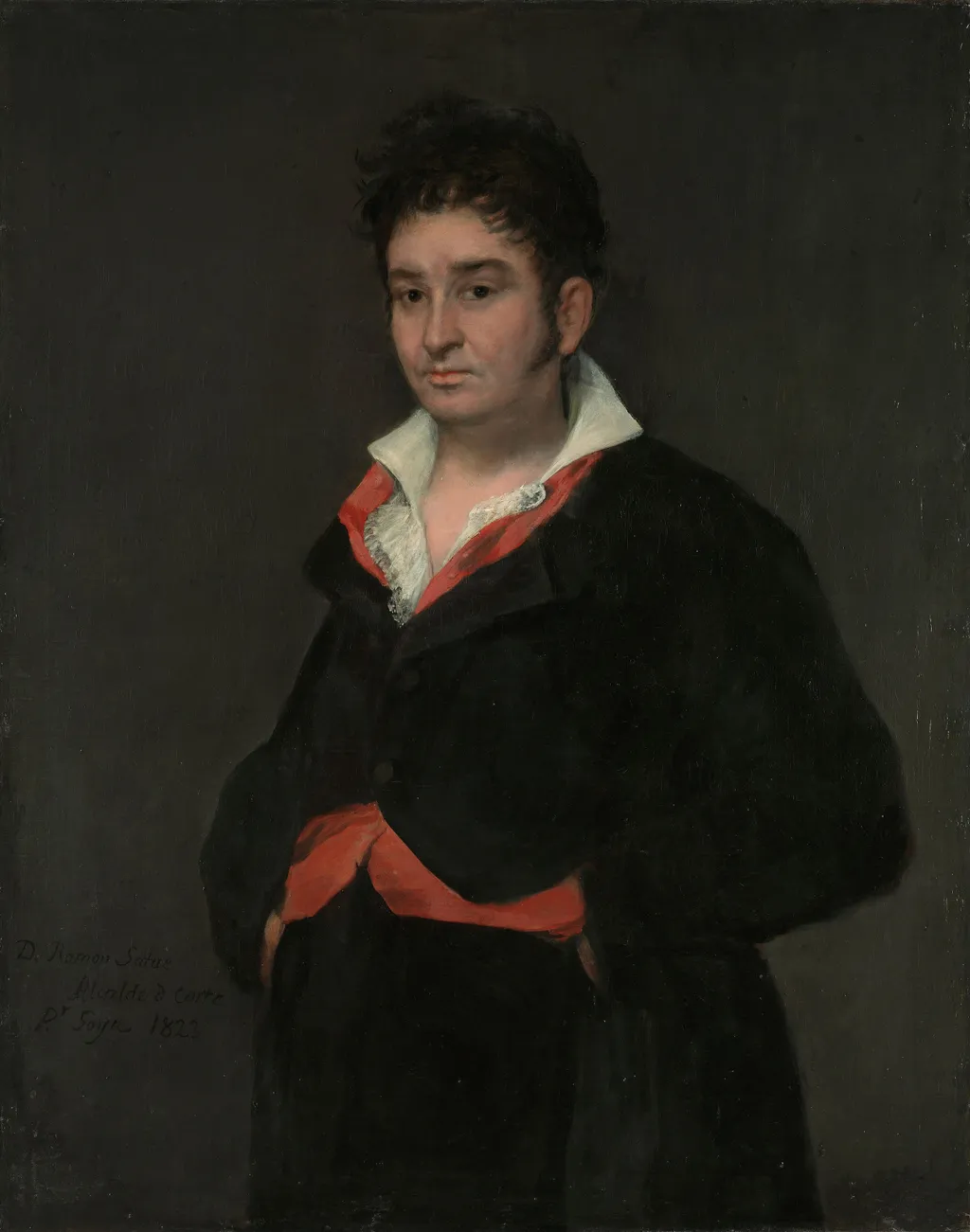
Portrait of Don Ramón Satué is an oil painting by Francisco de Goya. It dates from 1823 and is held in the collection of the Rijksmuseum.
About this work
This is a portrait of Don Ramón Satué. It's an oil painting created in 1823.
The painting is part of the collection at the Rijksmuseum in Amsterdam. It's notable for being the only publicly held work by this artist in the Netherlands.
To learn more about the style and techniques used in this painting, look up the artist: Francisco Goya.
Subject & Meaning
The painting depicts Ramón Satué, a judge of the Supreme Court (Sala de Alcaldes de Casa y Corte), standing half-length with a disheveled appearance.
The painting depicts Ramón Satué, a judge of the Supreme Court (Sala de Alcaldes de Casa y Corte), standing half-length with a disheveled appearance. He wears a black suit with a red vest and an open white shirt, posing with his hands in his trouser pockets. This informal stance was considered a virile expression of self-confidence during the period, while his intense, almost defiant gaze concentrates the work's expressivity against a flat gray background.
Technical analysis revealed a hidden layer beneath the visible image, showing a senior French official adorned with medals, possibly King Joseph Bonaparte, painted around 1810. Scholars conclude that Goya overpainted this earlier portrait in 1823 to avoid the political dangers associated with depicting a French figure after the restoration of Spanish rule. The work thus represents a strategic adaptation to survive shifting political regimes.
Technique & Style
Executed in 1823, this work is an oil painting on canvas measuring 104 by 81.3 cm. The composition presents a half-length, three-quarter view of the subject standing against a flat, grayish background. Goya employs a highly restricted color palette, dominated by the black of the suit and the neutral ground, with the red vest providing the sole chromatic accent. The sitter is depicted with disheveled hair and hands placed casually in his trouser pockets, a posture interpreted as conveying virile self-confidence.
Despite this informal bodily arrangement, the artist concentrates the work's expressiveness entirely within the face, which bears an intense, almost defiant gaze.
Technical analysis using high-intensity X-ray imaging revealed that the current portrait covers an earlier composition, likely depicting a French official or Joseph Bonaparte with medals, painted around 1810. This underpainting was obscured by the 1823 layer, presumably to avoid political repercussions following the change in regime.
History & Provenance
The Portrait of Don Ramón Satué was painted by Francisco Goya in 1823 and originally belonged to the Marquis de Heredia in Madrid. It was sold at auction in Paris in 1890 (Hôtel Drouot, lot no. 3) for 1,500 francs, then resold in 1902 (lot no. 21) for 9,510 francs to Dr. Joachim Carvalho for his property Château de Villandry. In 1922 the Vereniging Rembrandt purchased the work and gifted it to the Rijksmuseum, where it has remained in the collection and featured in all Highlights catalogs.
The painting, an oil on panel measuring 104 cm by 81.3 cm, depicts Judge Ramón Satué standing half‑length, wearing a black suit with a red vest and white shirt, hands in his trouser pockets, and a disheveled appearance. X‑ray analysis revealed an earlier portrait of a French official, possibly Joseph Bonaparte, painted around 1810 during the Peninsular War, which Goya overpainted after 1820 due to political danger.
The Portrait of Don Ramón Satué is held in the collection of the Rijksmuseum in Amsterdam, where it remains the only publicly displayed painting by Francisco Goya in the Netherlands. The museum acquired the work in 1922 following its purchase by the Vereniging Rembrandt, which subsequently gifted it to the institution.
Prior to entering the Dutch national collection, the painting belonged to the Marquis de Heredia in Madrid. It was sold at auction at the Hôtel Drouot in Paris in 1890 for 1,500 francs and appeared again at the same auction house in 1902, selling for 9,510 francs to Dr. Joachim Carvalho for his estate at Château de Villandry. Since its acquisition, the work has been featured in all major catalogs highlighting the Rijksmuseum's holdings.
Context
The work entered the Rijksmuseum collection in 1922 after being purchased by the Vereniging Rembrandt, having previously passed through the 1890 Drouot auction in Paris and a 1902 sale to Joachim Carvalho; it remains the only Goya in a Dutch museum and is noted for its hidden underpainting of a French official, likely Joseph Bonaparte, revealed by X‑ray analysis around 2011. Scholarship emphasizes the apparent chronological inconsistency of depicting Judge Satué in a role he vacated in 1820, leading to hypotheses about a falsified date inscription, while the painting’s provenance, exhibition history, and technical findings are documented in museum records and scholarly publications. The portrait’s style, with its limited palette and understated background, focuses expressive intensity on the sitter’s face, reflecting Goya’s late portraiture within the broader context of his political turbulence and exile.
Art historians situate it among Goya’s late Madrid period, linking it to his relationships with liberal circles and his eventual departure for France in 1824.
Legacy
The portrait of Don Ramón Satué, painted by Francisco Goya in 1823, is recognized as the sole Goya work held in a Dutch museum, the Rijksmuseum in Amsterdam. Its provenance traces back to the Marquis de Heredia in Madrid, who sold it at auction in Paris in 1890, after which it passed through several owners before being acquired by the Vereniging Rembrandt in 1922 and gifted to the Rijksmuseum, where it has featured in every Highlights catalog since. The painting’s significance was heightened in 2011 when X‑ray analysis by Joris Dik and Koen Janssens revealed an underpainting of a French official, possibly Joseph Bonaparte, created around 1810 during the Peninsular War, which Goya later overpainted to avoid political danger.
The work’s composition, limited palette, and depiction of Satué as a confident magistrate reflect Goya’s late portrait style, and its hidden layer has become a key point in discussions of Goya’s political navigation and the legacy of his portraiture.
Overview
Created in 1823, this oil painting on panel depicts Don Ramón Satué and is attributed to the Spanish painter Francisco de Goya. The work resides in the Rijksmuseum in Amsterdam and represents the sole Goya piece held in a public collection within the Netherlands.
Own this work as a print
Artist & collection
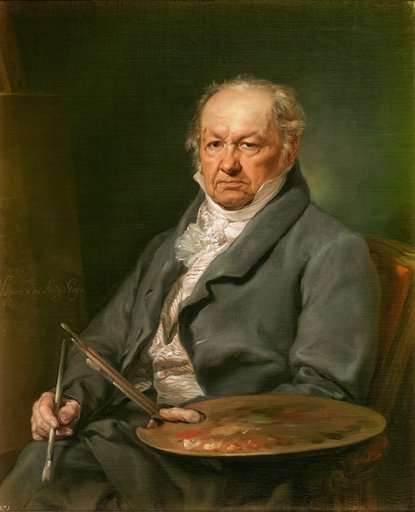
Artist
Francisco José de Goya y Lucientes was a Spanish romantic painter and printmaker.

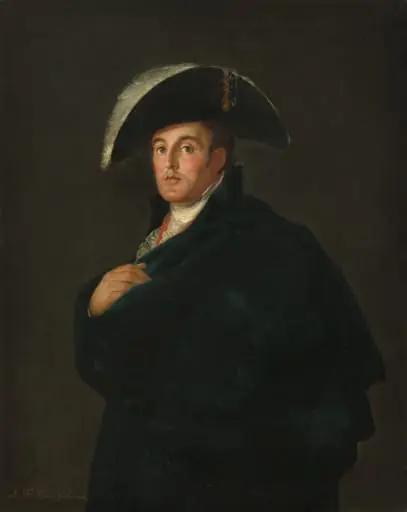
- The Duke of Wellington
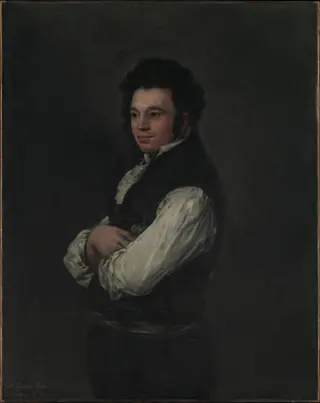 Portrait of Tiburcio Pérez y Cuervo, the Architect
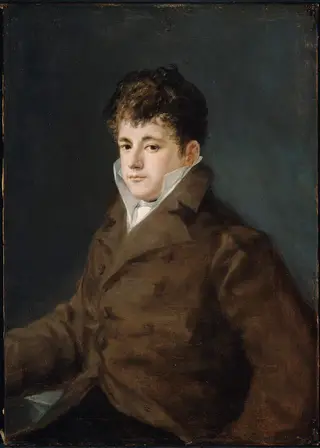 Portrait of a Young Man in Brown, possibly Javier Goya
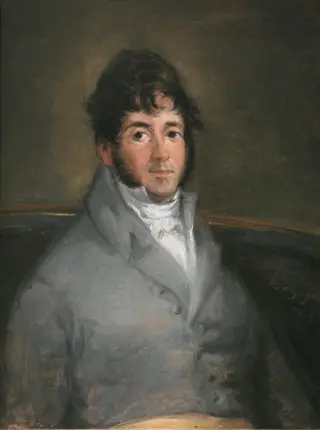 The Actor Isidoro Máiquez
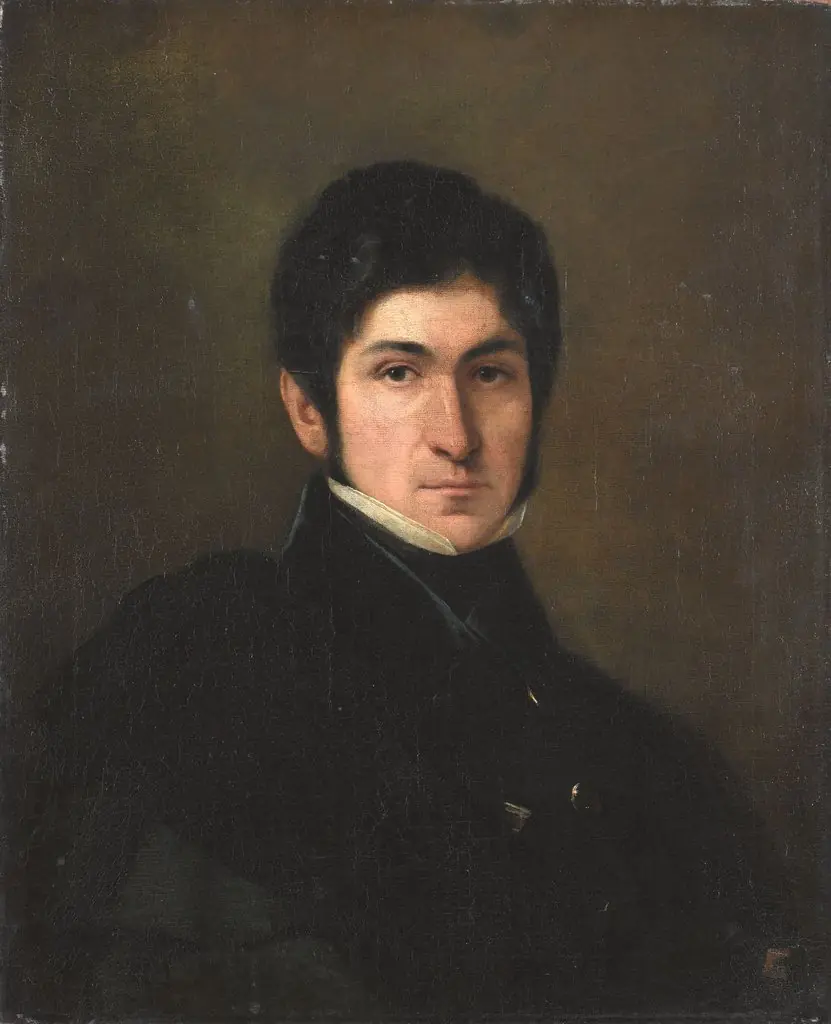 Self-Portrait
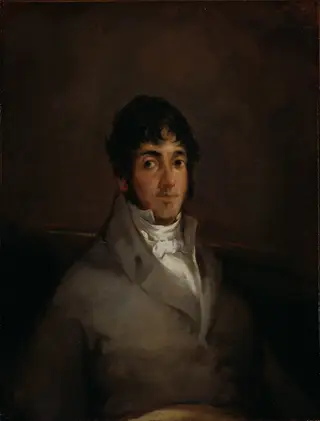 Portrait of Isidoro Maiquez
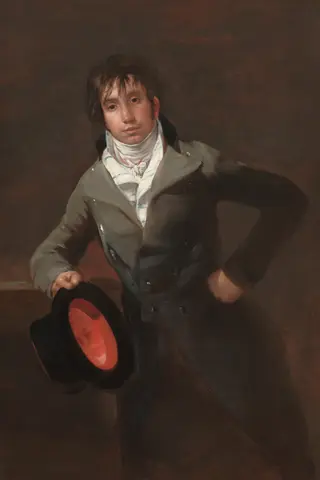 Bartolomé Sureda y Miserol
 Portrait of Valentin Hellmann
 Self Portrait
 Portrait of the Artist's Father
 Portrait of Wojciech Męciński
 Portrait of Juan Antonio Cuervo