Artwork
Mosque guard
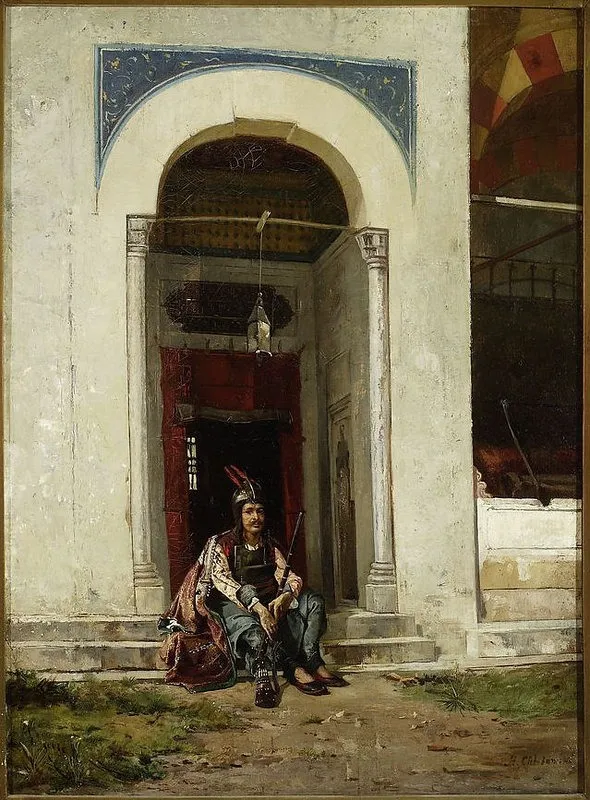
Mosque guard is an oil painting by the Orientalist artist Stanisław Chlebowski. It dates from 1869 and is held in the collection of the National Museum in Warsaw.
About this work
Overview
It portrays a solitary sentinel in traditional dress, positioned before an architectural setting suggestive of a religious structure.
Painted around 1869 by Polish artist Stanisław Chlebowski, Mosque guard is an oil-on-canvas work that reflects the 19th-century European fascination with the Islamic world. It portrays a solitary sentinel in traditional dress, positioned before an architectural setting suggestive of a religious structure. The painting is part of the National Museum in Warsaw’s collection and exemplifies the Orientalist genre, which sought to capture perceived exoticism through detailed, often idealized depictions of Eastern life.
Subject & Meaning
The figure, a guard seated before a building with an arched entrance and red interior curtain, conveys stillness and vigilance. His attire, feathered hat, layered garments, and a side bag, signals cultural specificity, though the scene avoids narrative drama. The quiet posture and restrained environment suggest a moment of pause within daily duty, emphasizing dignity and solitude rather than spectacle. The work invites contemplation of routine life in a foreign context, without overt commentary.
Technique & Style
Chlebowski employed oil paint to render fine textures in fabric, stone, and curtain, using subtle shifts in light to define form and depth. The brushwork is precise but not overly ornate, favoring clarity over theatricality. The composition is balanced, with the figure anchored in the foreground and architectural elements framing the background. Color remains muted, reinforcing the calm atmosphere and avoiding the vivid hues often associated with Orientalist spectacle.
History & Provenance
Created during Chlebowski’s period of engagement with Eastern subjects, the painting was likely informed by his travels or study of contemporary ethnographic sources. It entered the National Museum in Warsaw’s collection in the late 19th or early 20th century, where it has remained as part of its holdings of 19th-century Polish and Orientalist art. No record of prior ownership or exhibition beyond institutional archives is widely documented.
Context
In the mid-19th century, European artists increasingly turned to North Africa and the Middle East as subjects, often through the lens of colonial curiosity. Chlebowski, though Polish, participated in this trend, aligning with broader academic interests in cultural documentation. His work, while less sensational than some contemporaries, reflects a quieter, more observational approach to depicting non-European life within the constraints of Orientalist conventions.
Legacy
Though not widely exhibited outside Poland, Mosque guard remains a representative example of Polish Orientalist painting. It contributes to the understanding of how Eastern themes were interpreted by artists outside the dominant Western European centers. The work’s restrained tone distinguishes it from more flamboyant Orientalist pieces, offering a modest but enduring record of cross-cultural observation in 19th-century art.
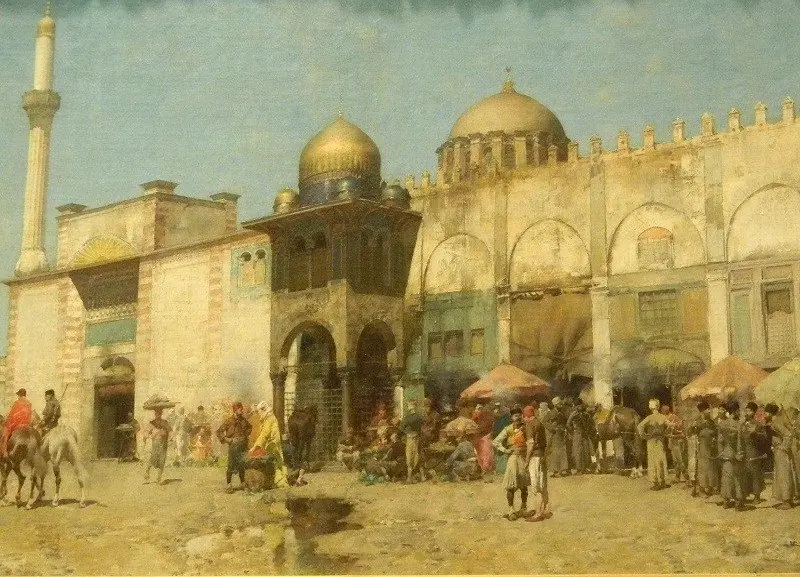
Artist & collection
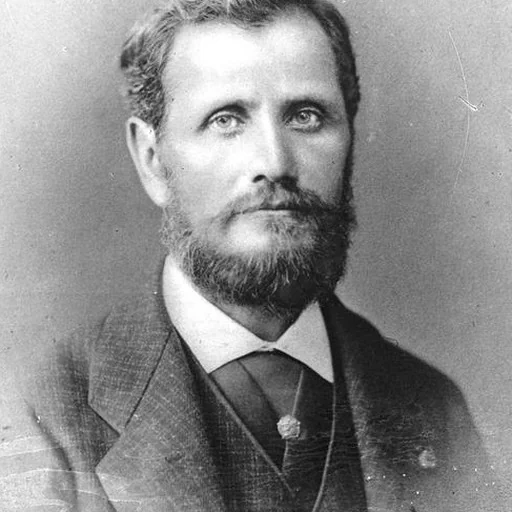
Artist
Stanisław Chlebowski (1835–1884) was a Polish painter. He was a renowned specialist in Oriental themes and history painting.

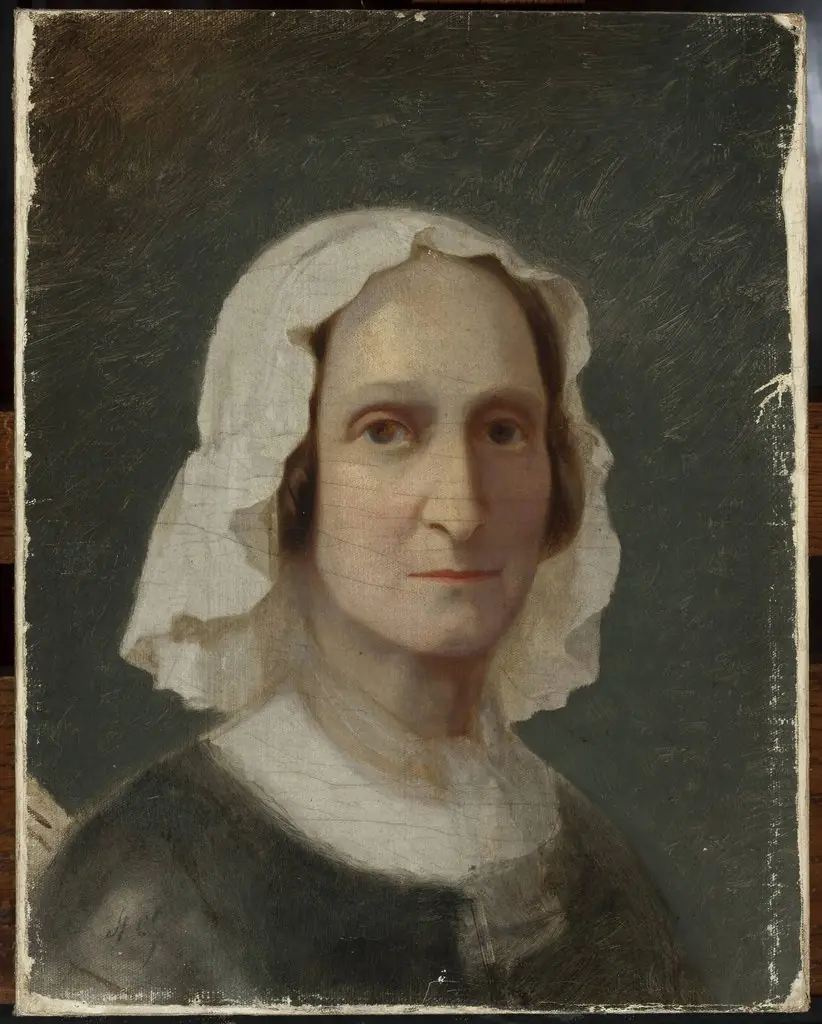 Portrait of Ludwika Czajkowska née Śniadecka (1802–1866), wife of Michał Sadyk Pasha
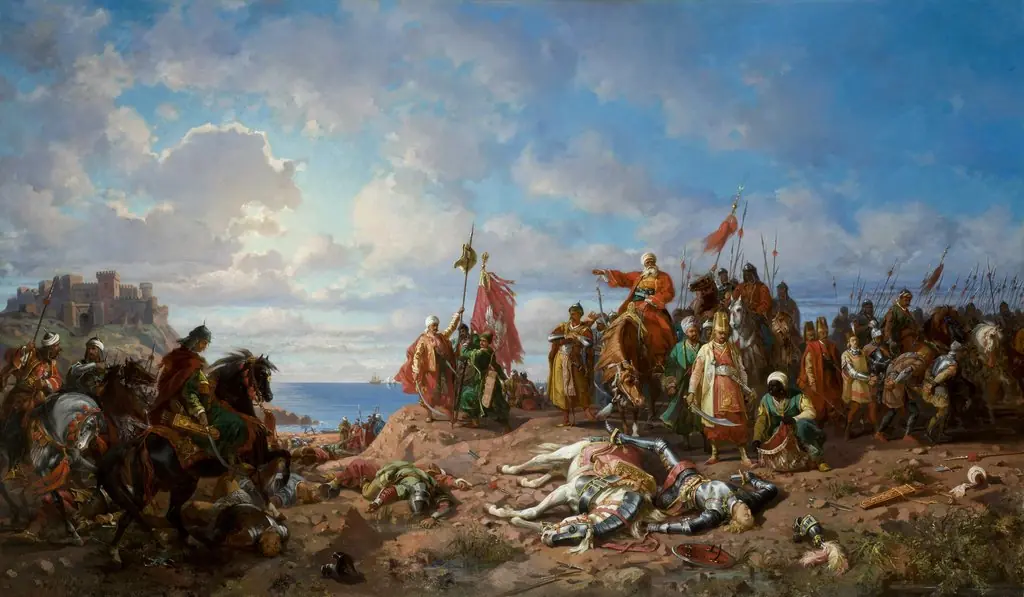 Death of Władysław Jagiellon near Varna
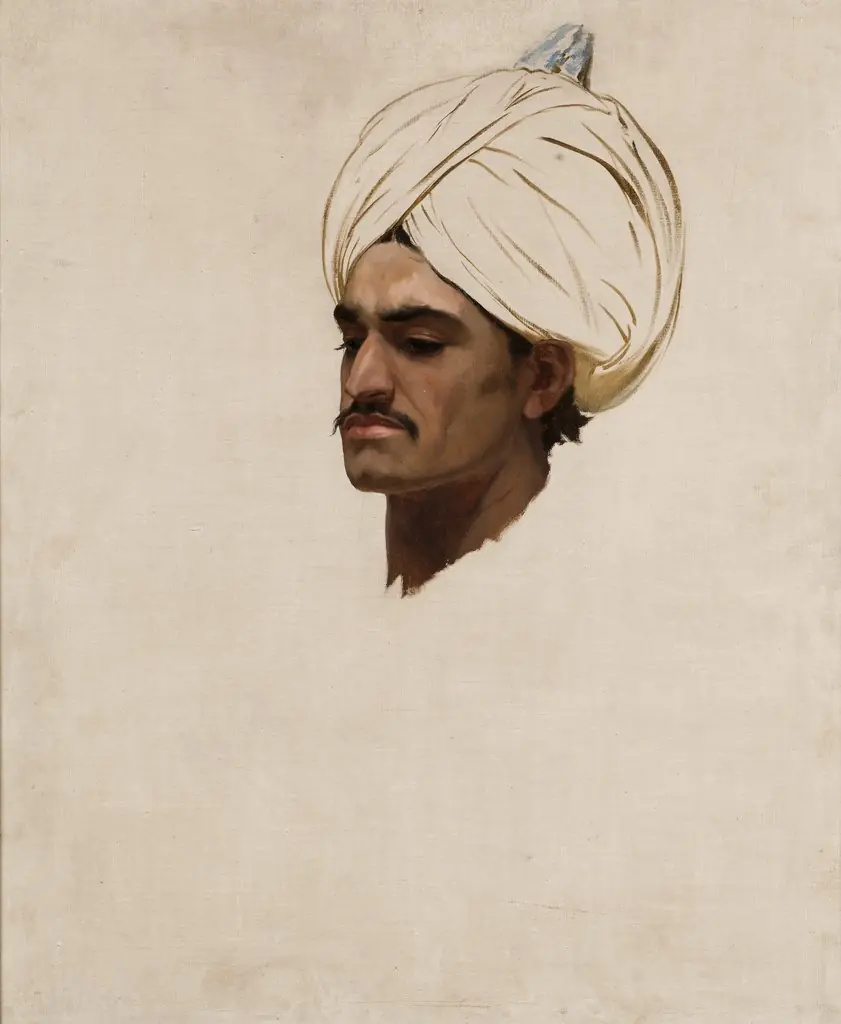 Study of an Arab's Head
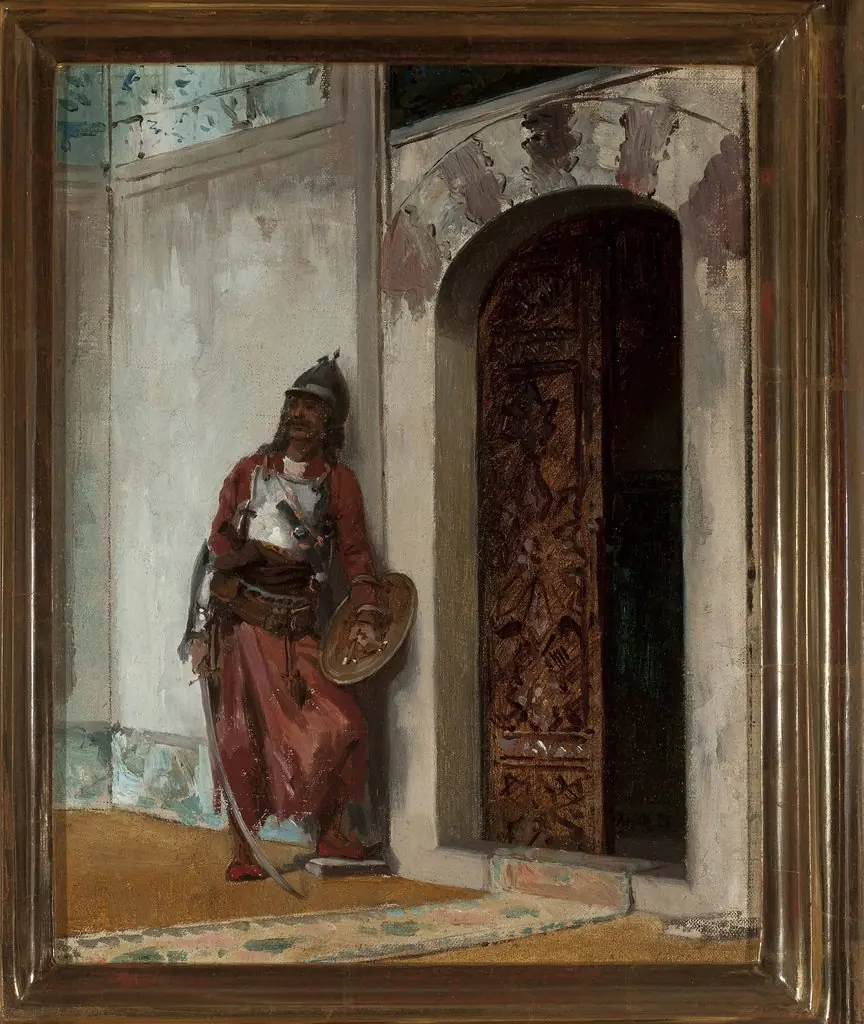 Guard at the entrance to the seraglio
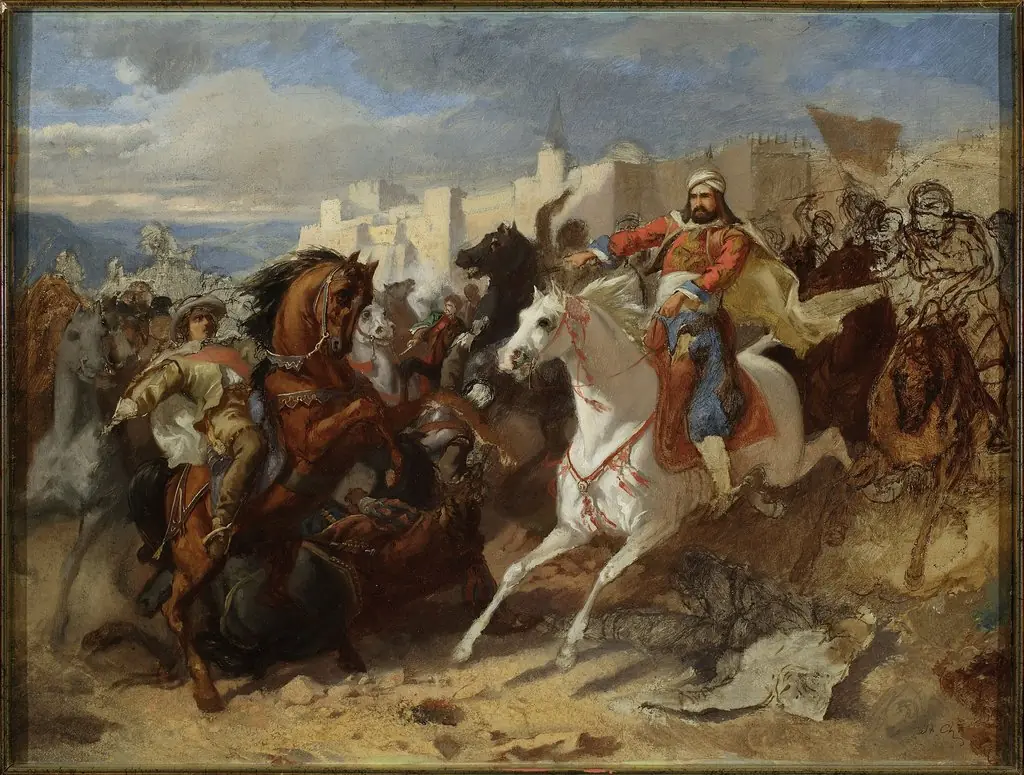 Episode from Austro-Turkish wars, sketch
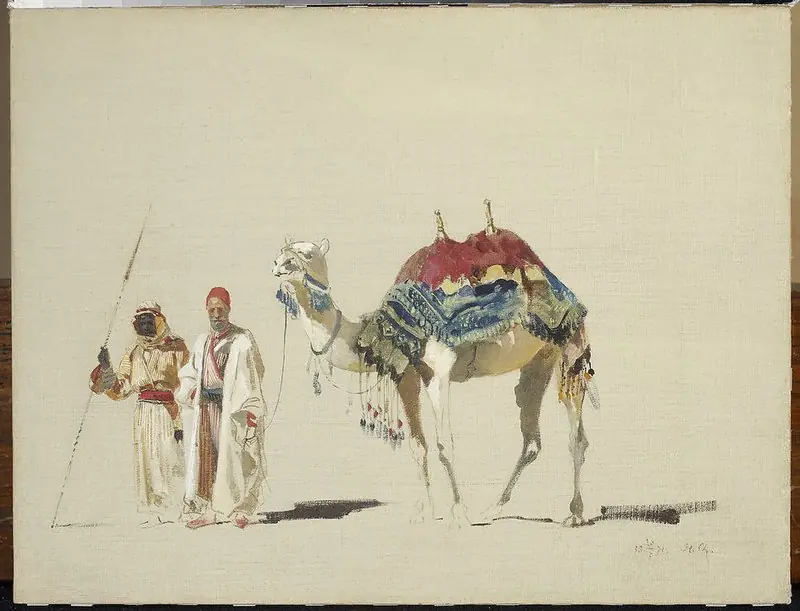 Sultan’s white camel, sketch
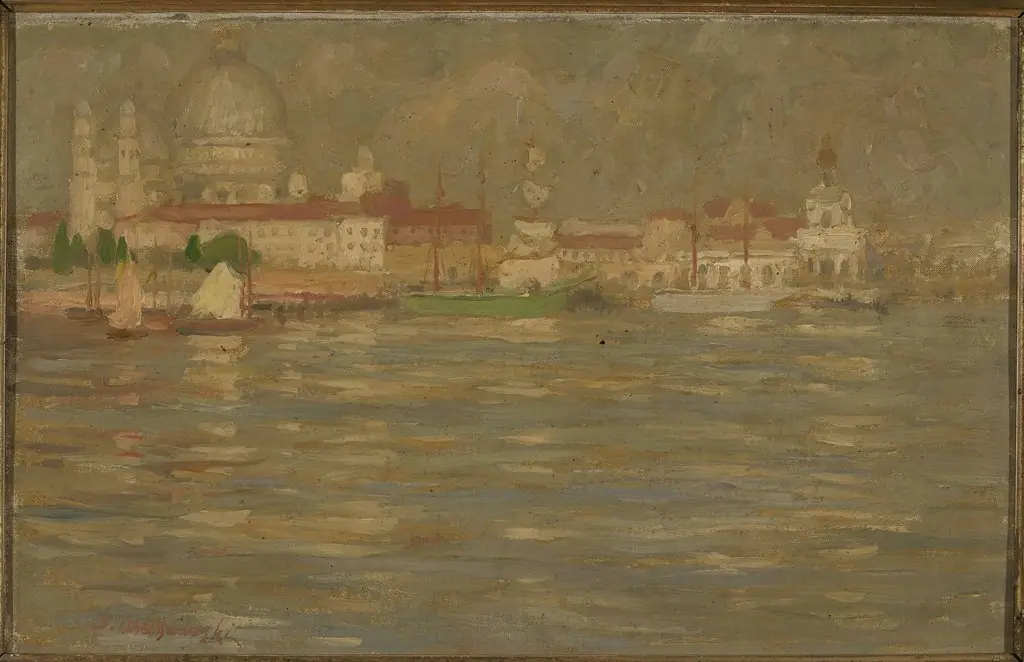 View of the city at waterside
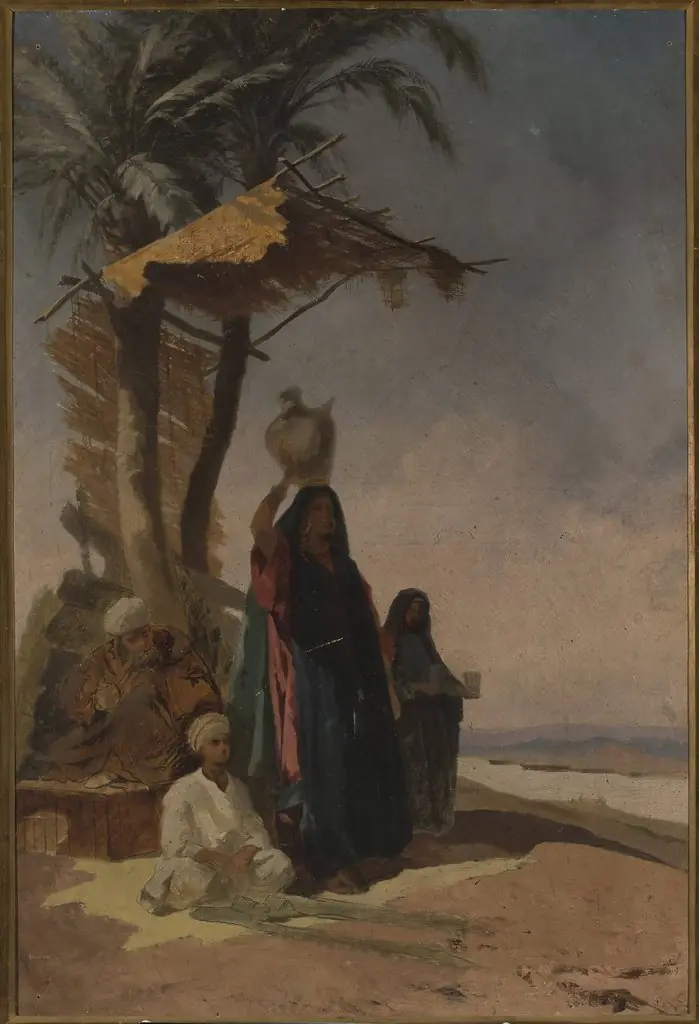 Eastern genre scene under a palm tree
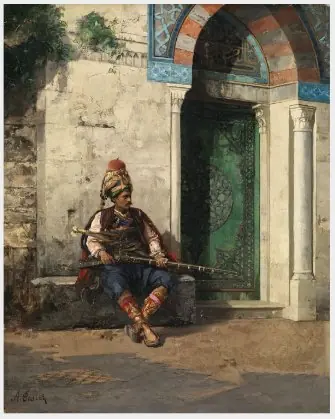 Arab Soldier Seated by a Doorway
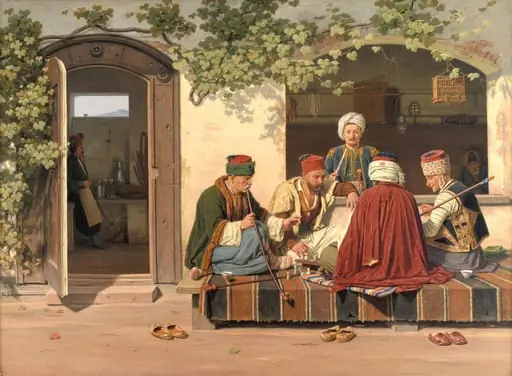 A party of chess players outside a Turkish coffeehouse and barbershop
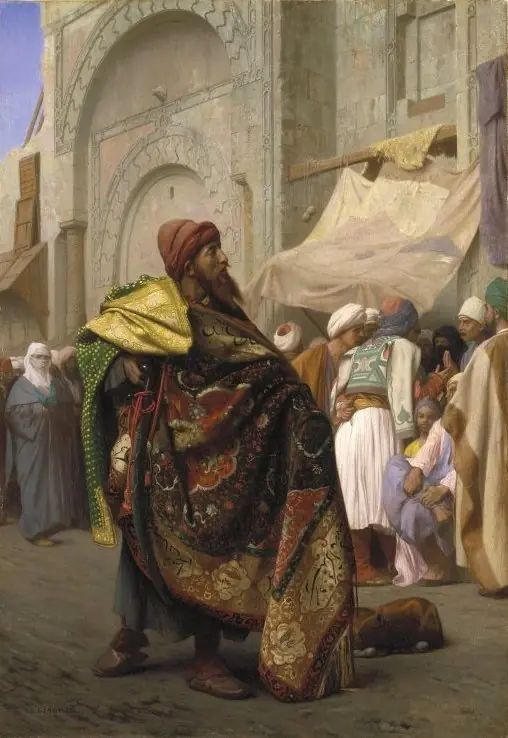 The Carpet Merchant of Cairo
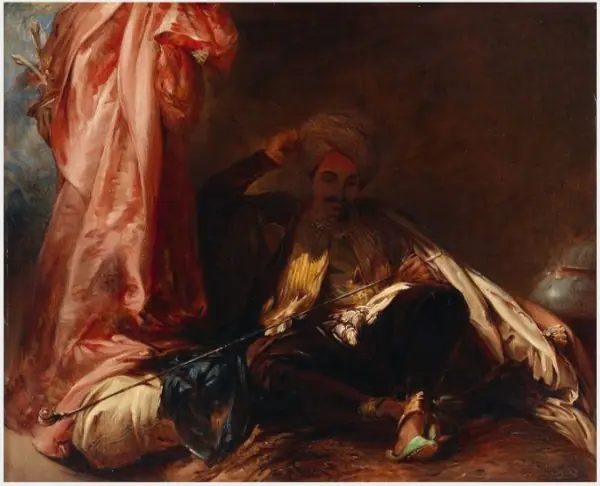 The Chibouk
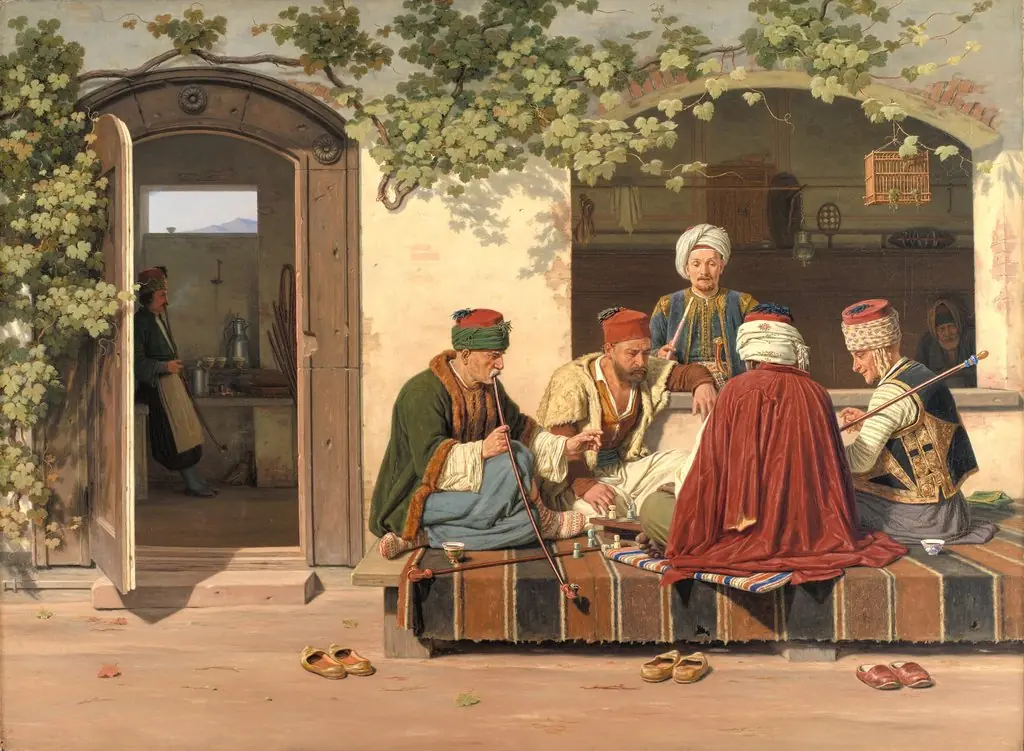 A party of chess players outside a Turkish coffeehouse and barbershop
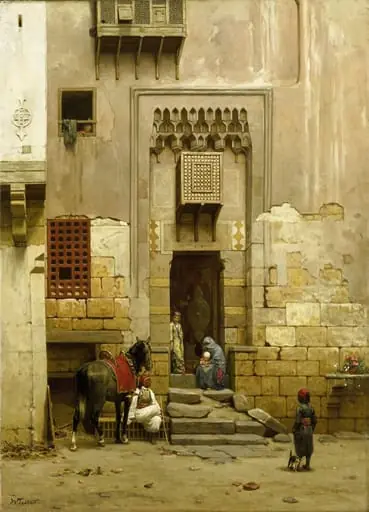 The Courtyard of a house in Cairo
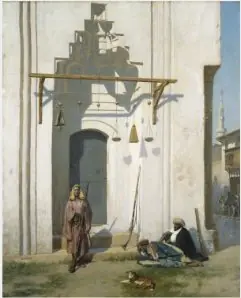 Guards at the Door of a Tomb
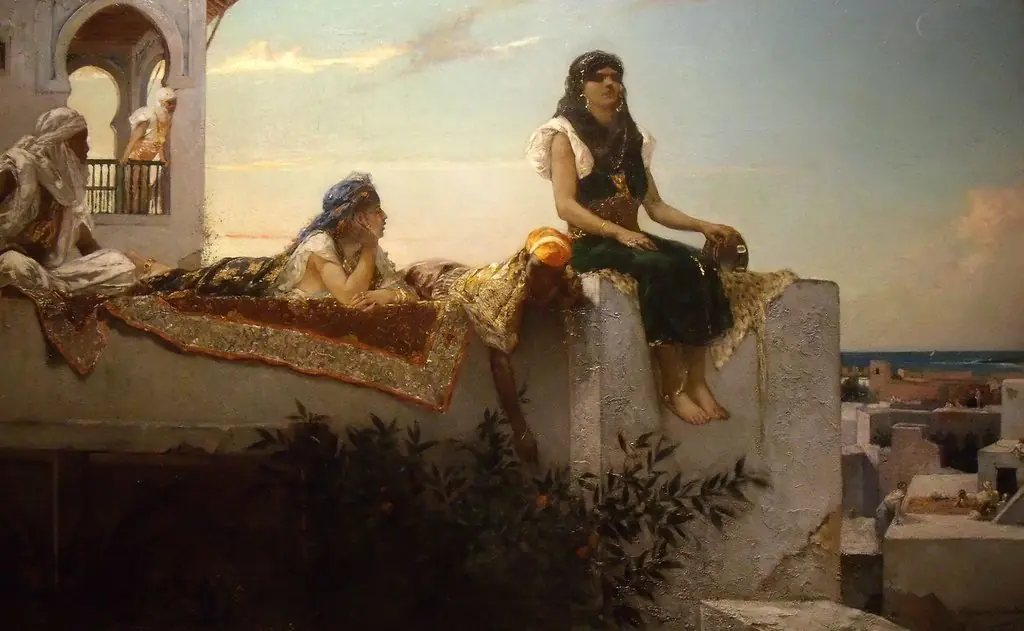 Evening on Terraces (Morocco)
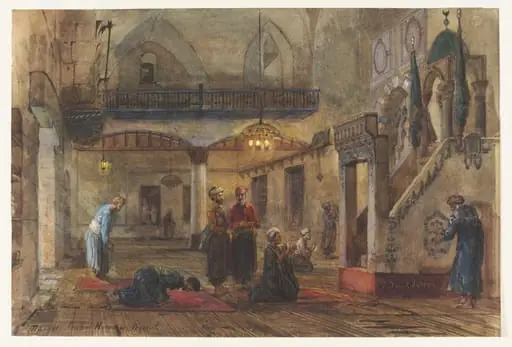 Mosque. Souk el Hommos. Byrout
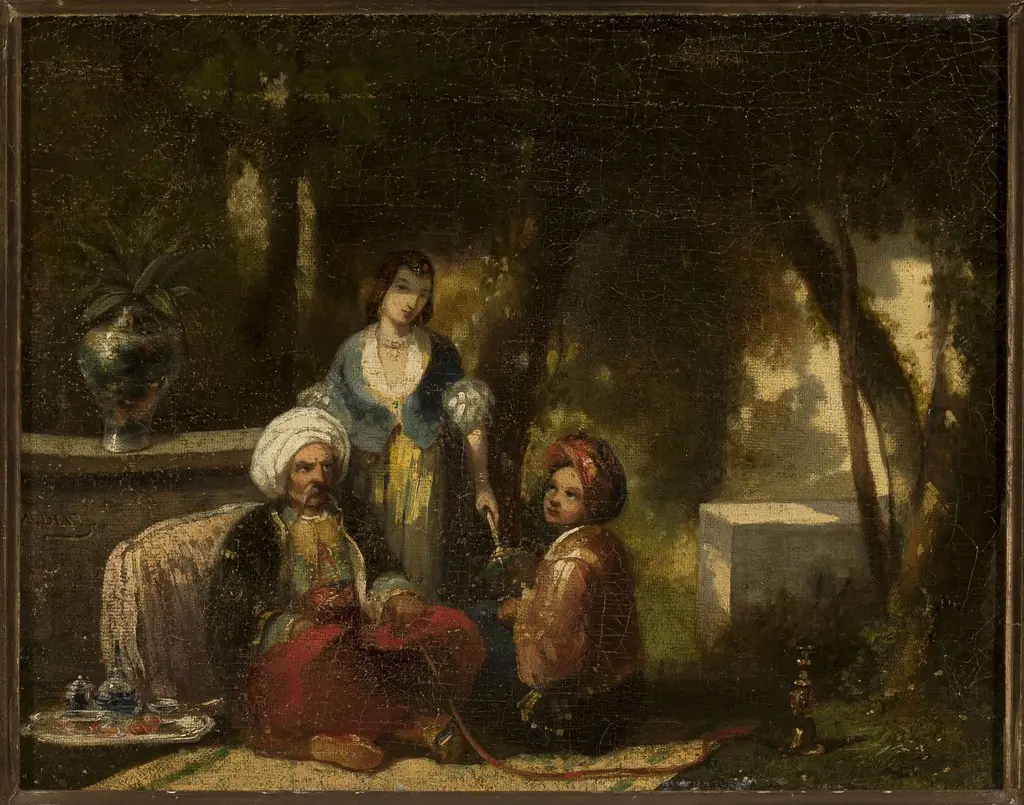 Man with a narghile against forest landscape
- A Mosque